How to Cross-List from Shopify to 2dehands: Complete 2026 Reseller Guide

To cross-list from Shopify to 2dehands, connect your storefront using an automated inventory management tool like Omnivaleur. Export your active Shopify SKUs, map product attributes to Belgian localized categories, configure delivery rates, and push listings directly. Automated tools continuously sync stock counts across both platforms, preventing costly double-sales when an item sells out.
Key takeaways
- Connecting Shopify with 2dehands lets you tap into millions of active Belgian buyers while keeping your standalone store as your primary stock hub.
- Manual copying takes 8-12 minutes per item; automated cross-listing slashes that workflow down to seconds while maintaining SKU parity.
- Category mapping requires manual alignment because 2dehands structures its subcategories around localized Dutch and French search intents.
- Automated stock delisting is necessary to eliminate overselling unique, one-off vintage, refurbished, or second-hand items.
- Realized profits on local marketplaces differ by 10-20% from listed Shopify asking prices due to buyer haggling and local shipping rates.
Running an independent e-commerce store on Shopify gives you total control over your branding, client data, and margins. Yet relying solely on direct web traffic leaves money on the table. In Belgium, 2dehands remains an absolute titan of local trade, pulling in millions of monthly visits from buyers who skip search engines entirely and start their product hunt directly inside secondhand and classified marketplaces. Expanding your reach by bridging these two ecosystems allows you to capture that massive local demand without abandoning your central dashboard.
Every seasoned reseller knows the operational headache of managing multi-channel retail. Manually copying high-resolution images, transferring technical descriptions, translating sizing, and manually matching taxonomies drains hours every week. Worse, when an item sells on your standalone website while you are asleep, you risk selling an already out-of-stock piece on a classified portal hours later. Solving these bottlenecks requires a rock-solid workflow, the right automation stack, and an understanding of platform rules in 2026.
Why Should You Cross-List Products from Shopify to 2dehands?
Shopify serves as an exceptional centralized backend, but driving organic traffic demands constant ad spend, search optimization, and social media marketing. By pushing inventory out to 2dehands, you expose your goods to ready-to-buy consumers within Belgium and border regions of the Netherlands without upfront acquisition costs. It bridges professional e-commerce operations with high-intent peer-to-peer commerce.
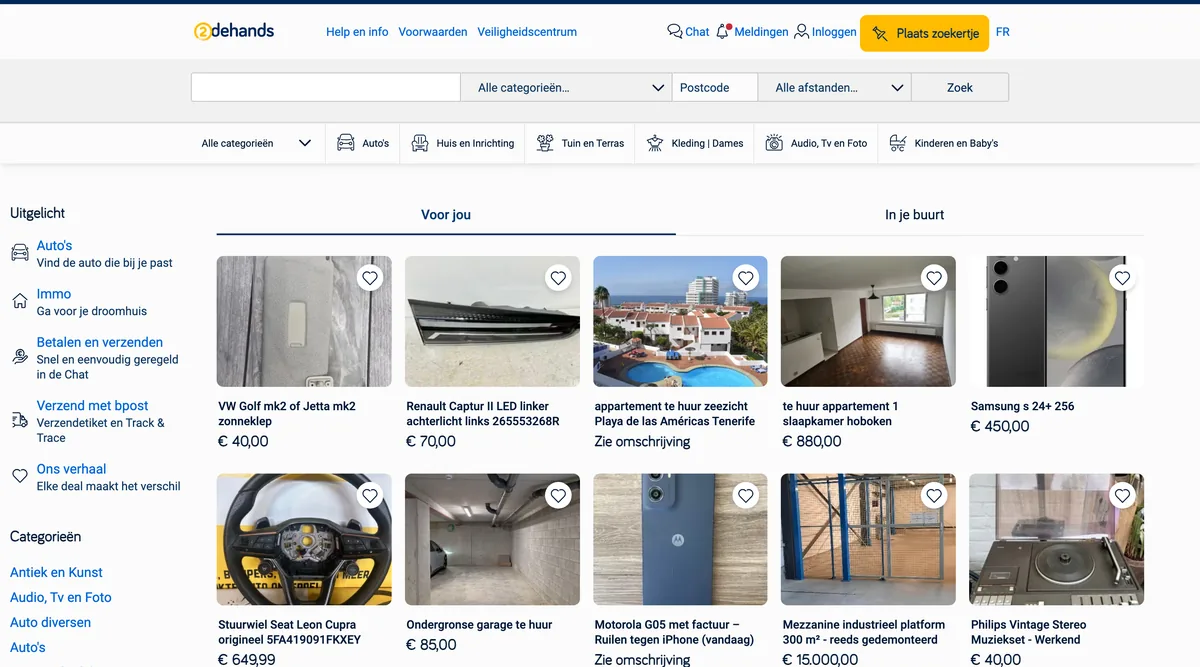
The audience on classifieds behaves differently than typical DTC storefront visitors. Many actively look for vintage pieces, sustainable alternatives, hard-to-find replacement hardware, or localized pickups to avoid shipping fees. If you specialize in niche physical goods, such as 2dehands to Shopify crosslisting items, vintage goods, or surplus stock, listing across both channels increases inventory velocity significantly. Your Shopify store builds long-term brand equity, while 2dehands acts as a fast-turnover liquidity engine.
Furthermore, this diversification protects your bottom line against platform swings. Algorithm updates, rising ad costs, or seasonal downturns on your main website hurt less when you maintain a steady baseline of direct inquiries and cash-flow deals from Belgium's primary marketplace. You can simultaneously test price points: keeping high retail tags on your DTC store while testing dynamic offers across local buyers.
How Do Shopify and 2dehands Compare for Resellers?
Before launching an integration, you need to understand how drastically these two selling environments diverge. Shopify is a full-fledged enterprise content management platform built on strict relational databases, product variants, and international fulfillment workflows. In contrast, 2dehands started as a classifieds board, prioritizing geographic proximity, fast messaging, and flexible deal terms. Understanding these mechanical contrasts will keep your workflow smooth.
| Feature / Metric | Shopify Online Store | 2dehands (Belgium) |
|---|---|---|
| Audience Target | Global or national direct shoppers | Hyper-local (Belgium & Southern Netherlands) |
| Listing Fee Structure | Monthly subscription + payment processing | Free basic consumer tiers; paid Pro tiers |
| Listing Architecture | Structured parent/child variants (sizes, colors) | Single individual listings per SKU/item |
| Order Fulfillment | Automated checkouts, integrated carrier apps | Integrated Bpost/Mondial Relay or local pickup |
| Pricing Strategy | Fixed retail price | Fixed price or "Bieden" (negotiable bidding) |
| Customer Interaction | Automated emails, transactional alerts | Direct built-in chat messaging & counter-offers |
| Tax & Legal Framework | Configurable sales tax, IOSS, standard VAT | Platform reporting under strict EU rules |
As illustrated in the table, moving products between these environments requires structural transformation. On Shopify, you might sell a jacket available in Small, Medium, and Large under one umbrella URL. Classifieds like 2dehands do not natively support product matrices in that manner; each variation must function as a standalone advertisement. Managing that conversion manually across hundreds of products quickly becomes impractical.
Still Wasting Time Listing Manually on Shopify and 2dehands?
A standard manual cross-listing process across European platforms is brutally repetitive. A seller opens their Shopify dashboard, copies title text, saves image files to their desktop, switches tabs to open classifieds, uploads images, copies the description, selects categories from a deep drop-down tree, sets price points, chooses delivery methods, and clicks publish. This routine consumes anywhere from 8 to 12 minutes per item.
If you catalogue 50 new items every week—a modest baseline for any serious reseller dealing with thrift store reselling automation or refurbished goods—you lose 10 hours weekly just on data entry. That is an entire working day sacrificed to administrative copying instead of sourcing inventory, packaging orders, or refining marketing channels. Human error creeps in during manual workflows: wrong weights get entered, SKUs get transposed, or price updates on Shopify fail to reflect on your external channels.
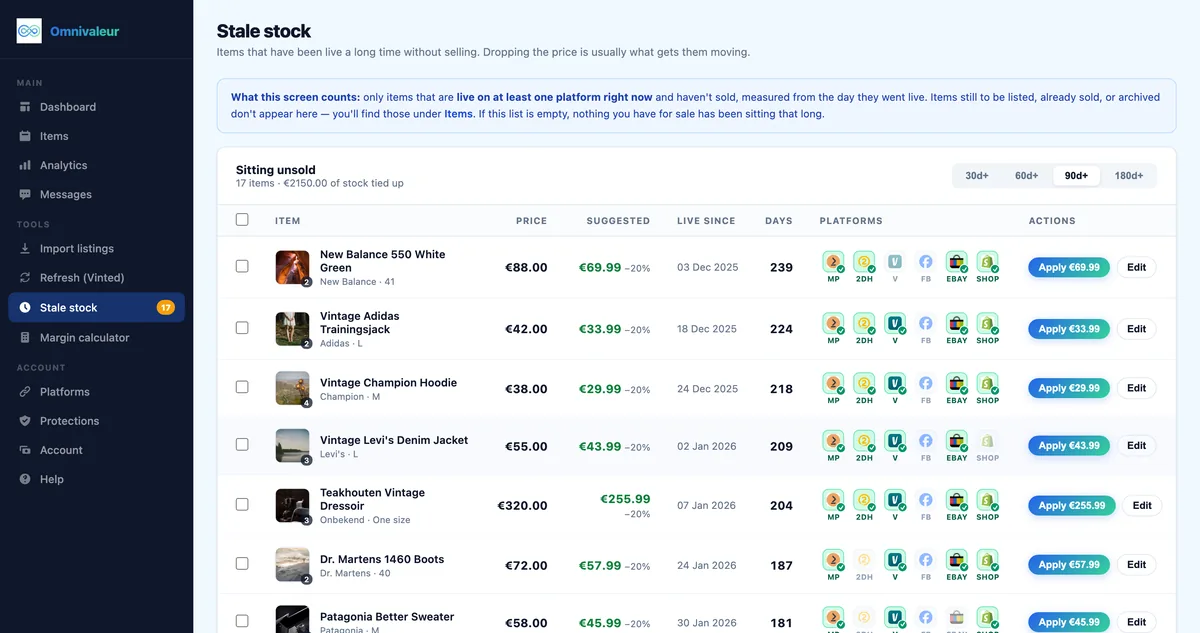
Software automates this entire pipeline. Dedicated tools extract native data stored inside your Shopify product management backend, parse descriptions, downscale image dimensions to platform-supported formats, and automatically map taxonomies to Belgian categories. What once took ten minutes compresses into a three-second review and click. Automation frees you to scale your inventory base from dozens of items to thousands without hiring administrative staff.
Step-by-Step: How to Cross-List Products from Shopify to 2dehands
Building an automated pipeline requires following an exact, orderly series of steps to protect account health and listing data integrity. Follow this structured roadmap to link your storefront directly to the Belgian marketplace.
Step 1: Audit and Prepare Your Shopify Product Catalog
Automation tools depend on clean incoming source data. If your Shopify listings have missing weights, blank vendor tags, or poorly formatted descriptions, those deficiencies transfer downstream. Check that your products contain:
- Clear, clean product titles without unnecessary internal store codes.
- Comprehensive descriptions separating condition, measurements, and technical specifications.
- Explicit product weights, ensuring domestic Belgian parcel shipping estimates calculate accurately.
- High-resolution square or portrait-oriented photos with your primary hero shot positioned first.
Step 2: Connect Your Storefront to a Cross-Listing Solution
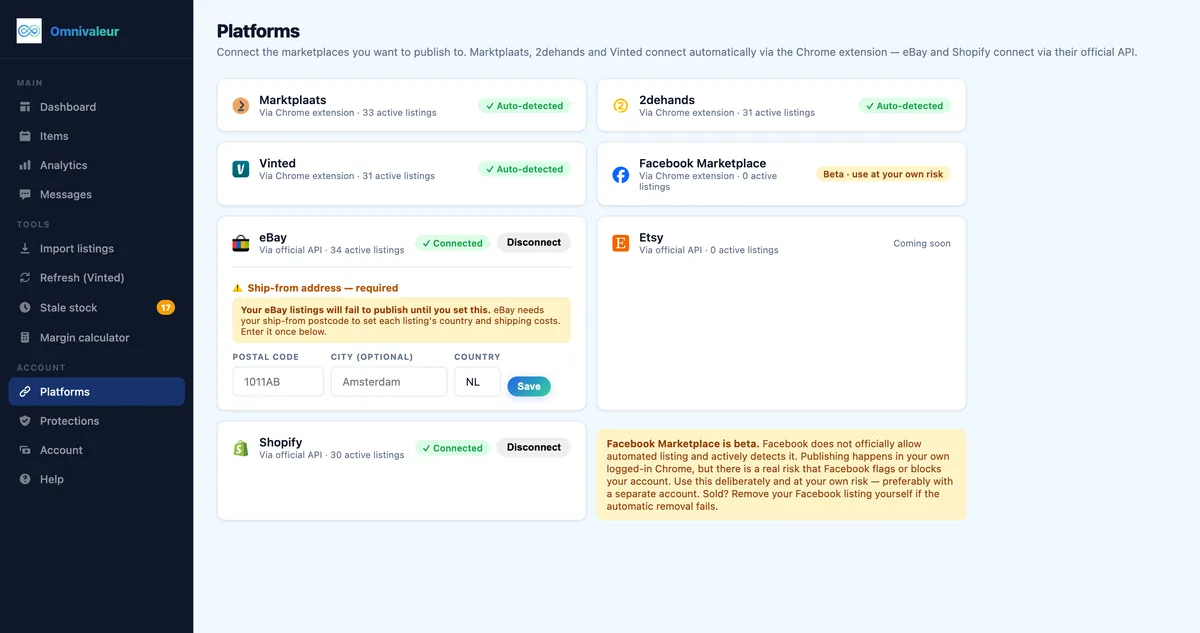
Modern e-commerce infrastructure handles multi-channel synchronization via API handshakes. Connect your Shopify store using an authorized app or cross-listing engine like Omnivaleur. Once authenticated, the system indexes your active catalog, reading product identifiers, variant attributes, inventory quantities, and visual assets without altering your live web storefront.
Step 3: Align Categories and Map Attributes
Classification models differ radically between e-commerce and classified engines. A Shopify taxonomy category like Apparel & Accessories > Clothing > Outerwear > Coats must correctly map to the corresponding Dutch/French categorization on 2dehands. During initial configuration, select your target category and map required platform attributes, including condition ratings (e.g., "New", "As good as new", "Used"), target gender, or manufacturing material.
Step 4: Configure Pricing and Delivery Parameters
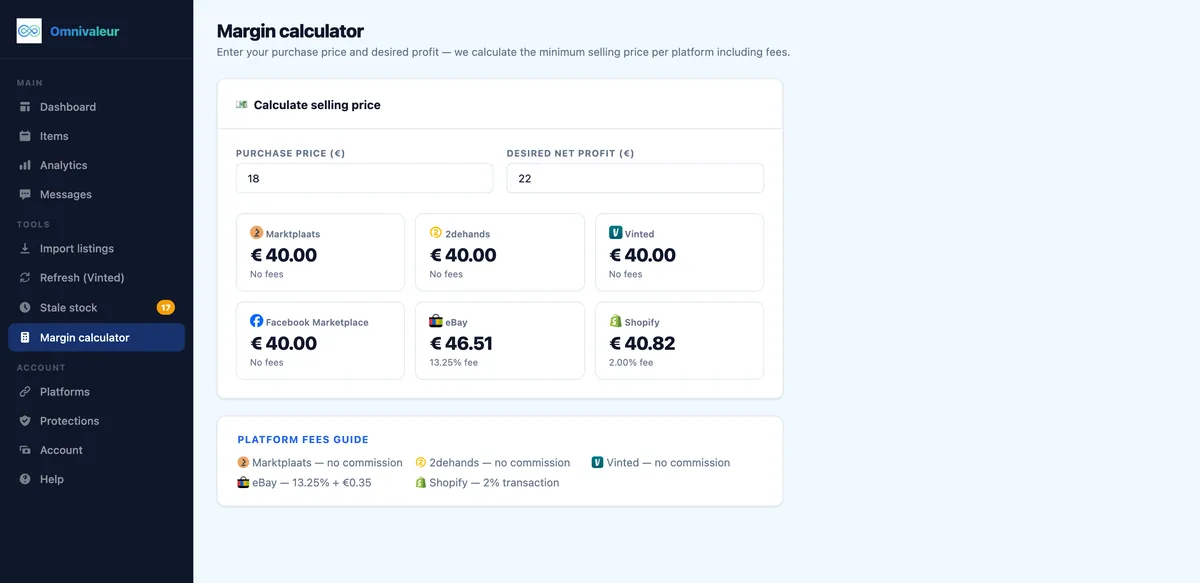
Decide whether you wish to mirror retail pricing exactly or apply a dynamic markup to account for negotiations. On classified portals, buyers frequently submit lower counter-proposals. Many sellers inflate asking prices slightly on classified channels to leave room for bargaining. Simultaneously, configure default fulfillment settings: define whether buyers can collect items in person or if you ship via Belgian parcel carriers, following standard procedures outlined in our guide on how to ship a parcel via 2dehands.
Step 5: Review, Push, and Verify
Run a small pilot batch of three to five items first. Push these test items from your cross-lister to your connected account. Log into the marketplace to verify that image carousels display properly, text breaks format correctly, pricing matches expectations, and shipping specifications match your postal configuration. Once confirmed, you can queue larger catalog batches safely.
How Do You Prevent Duplicate Listing Bans and Platform Flags?
A recurring fear among multichannel sellers is getting penalized for spam or duplicate content. Resellers routinely ask: what are duplicate listings? In classified commerce, a duplicate listing occurs when an account publishes multiple advertisements for the identical physical item, or repeatedly deletes and recreates identical postings within a short window to cheat chronological sorting algorithms.
Every major marketplace enforces anti-spam safeguards. While eBay features an explicit duplicate policy, 2dehands monitors accounts for spamming behaviors that degrade search quality for everyday shoppers. Flooding a specific subcategory with dozens of virtually indistinguishable listings using identical titles and primary photos risks algorithmic dampening, shadow-banning, or direct account suspension.
Protecting your store requires adhering to clean posting hygiene:
- Distinct Product Angles: If selling multiples of similar items, use distinct primary photos for each SKU to prevent automated image-matching flags.
- Staggered Publishing Schedules: Avoid publishing hundreds of live ads within a single minute. Batch your exports with natural delays between records.
- Variant Splitting Logic: When disassembling Shopify multi-variant products (e.g., shoe sizes) into discrete classified ads, ensure the product title explicitly states the variant differentiator (e.g., "Size 42" vs. "Size 44").
- Safe Refresh Limits: Never use brute-force auto-repost tools that violate fair-use policies. Omnivaleur's Vinted refresh tool caps itself at 8 free refreshes per day and states outright that no tool can guarantee a marketplace won't flag an account. That same realistic, safety-first philosophy applies across all European platforms: respecting platform limits is non-negotiable for long-term account survival.
If you need deeper insight into safe multi-account and multi-channel posting, explore our guide on Marktplaats to 2dehands cross-listing, which shares similar algorithmic moderation mechanics under their shared corporate network.
- ✓Check your Shopify listings for clean titles, weights, and condition notes
- ✓Connect your Shopify store to your cross-listing software
- ✓Map your Shopify categories to Dutch and French 2dehands equivalents
- ✓Add a small price buffer to leave room for negotiations on classifieds
- ✓Publish a test batch of a few items to check photos and descriptions
- ✓Turn on automatic delisting so items disappear once sold on your shop
Want to Add an App? Comparing Cross-Listing Software Options
When searching for ways to link your platforms, you will find several different software architectures. Choosing the right stack depends on your budget, catalog size, and target markets. Here is how leading software options compare for European-focused multi-channel merchants in 2026.
| Tool / Solution | Primary Target Markets | Shopify Sync | 2dehands Support | Pricing Model | Ideal Seller Profile |
|---|---|---|---|---|---|
| Omnivaleur | Benelux & Europe (Vinted, Marktplaats, 2dehands, eBay) | Full 2-Way Sync | Native Integration | Predictable tiered SaaS | EU resellers, vintage shops, fashion, secondhand |
| ExportYourStore | US & Global Enterprise (Amazon, eBay, Etsy, Walmart) | Native Direct Sync | Limited / Indirect | Tiered + SKU volume fees | High-volume new-goods retailers, global drop-shippers |
| Crosslist | US & UK focus (Poshmark, Mercari, Depop, eBay) | Form-Fill / Web App | Regional classifieds | Flat monthly subscription | Clothing resellers focused primarily on Anglo-American portals |
| Custom Private API | Bespoke in-house infrastructure | Custom Webhooks | Enterprise API Access | High upfront development costs | Large retail chains with dedicated IT engineering teams |
Large enterprise sync engines like ExportYourStore excel if your primary channels revolve around Amazon and Walmart. However, they frequently overlook regional Benelux requirements. For European merchants, software specifically built around regional quirks—such as language splits, local shipping options, and platform rules—prevents ongoing technical frustration. Resellers evaluating their options can read our direct breakdown of Omnivaleur vs Crosslist to analyze specific feature differences.
Inventory Synchronization: How to Avoid Selling the Same Item Twice
The single greatest operational hazard in multi-platform commerce is double-selling unique inventory. If you deal in one-of-a-kind vintage apparel, refurbished electronics, antique furniture, or individual collectibles, you possess exactly one physical unit. If a customer checks out on your Shopify store at 14:15, and a Belgian buyer commits to purchasing that item on 2dehands at 14:20, you must cancel an order, damaging your buyer reputation.
Handling inventory management correctly demands understanding the mechanics of inventory synchronization:
First, implement automated delisting. When an order event fires on Shopify, your management software must immediately receive a webhook, locate the corresponding cross-listed advert on 2dehands, and unpublish, archive, or mark it as reserved. You can read more about resolving these inventory timing conflicts in our tactical guide on how to stop selling the same item twice.
Second, establish a single Source of Truth. For DTC resellers, Shopify should almost always act as your master catalog inventory hub. Every SKU, primary image file, and baseline condition report lives inside your Shopify admin. Secondary marketplaces function as distribution nodes that draw from that central repository.
Third, account for manual cash transactions. When an item sells on 2dehands via local pickup where the buyer pays in cash, immediately mark the unit as fulfilled in your central dashboard. Automation tools streamline this: closing the deal on the classified app triggers an inventory reduction across your Shopify web store, preserving accurate stock levels across all touchpoints.
European Tax, DAC7, and Legal Realities for Multi-Channel Sellers in 2026
Scaling a multi-channel business across Benelux requires operating within European fiscal compliance. Platforms are no longer isolated digital islands. Under the European Union's DAC7 reporting directive, online marketplaces operating within member states must collect, verify, and transmit seller identification and transaction data to tax authorities annually.
If you exceed 30 completed transactions or generate more than €2,000 in gross proceeds on 2dehands within a calendar year, the platform transmits your sales figures directly to the Belgian tax administration (and via cross-border exchange to the Dutch Belastingdienst if you reside in the Netherlands). Many hobbyist sellers make the mistake of assuming classified sales remain invisible to authorities. In 2026, cross-platform revenue is entirely transparent.
Furthermore, commercial merchants selling on Shopify while offloading inventory to consumers must respect basic European trading standards. Under EU consumer rights directives, professional commercial sellers are required to provide transparent company contact details, honour statutory warranties where applicable, and respect clear cancellation guidelines. If you operate as a registered business, make sure your professional status is properly mirrored on your classified profile.
Real-World Economics: What Do the Profit Numbers Actually Look Like?
A frequent mistake made by e-commerce operators moving into peer-to-peer marketplaces is assuming listed price equals realized cash. On an e-commerce storefront, customers accept your listed price or apply a small coupon code at checkout. On classified platforms, haggling is cultural and pervasive.
Omnivaleur's analytics calculate profit from the real sale price (which sellers confirm per sale), not the asking price — on second-hand marketplaces the two differ by roughly 10-20%. Factoring this gap into your financial projections keeps your business solvent. Let us examine a real-world financial breakdown for an item cross-listed across channels.
| Financial Factor | Shopify Transaction (DTC) | 2dehands Transaction (Marketplace) |
|---|---|---|
| Original Sourcing Cost (COGS) | €25.00 | €25.00 |
| Published Asking Price | €85.00 | €85.00 |
| Final Agreed Selling Price | €85.00 (Fixed cart price) | €72.00 (Negotiated via chat: -15.3%) |
| Payment / Transaction Fees | €1.80 (Stripe / Shopify Payments) | €0.00 (Direct bank / cash on collection) |
| Customer Acquisition Cost (CAC) | €14.50 (Paid Social Ads / Search PPC) | €0.00 (Organic classified traffic) |
| Shipping & Packaging Cost (Net) | €1.50 (Packaging materials) | €1.50 (Packaging materials) |
| Net Realized Profit | €42.20 | €45.50 |
| Net Margin % | 49.6% | 63.2% |
The numbers reveal an illuminating paradox. Even though the final sale price on the marketplace ended up over €13 lower due to buyer negotiation, the net profit collected by the seller was actually higher. Why? Because the direct-to-consumer store required paid advertising spend to acquire the customer. Classifieds provide an existing, free stream of qualified local buyers. Balancing both channels allows you to capture maximum profit across different types of buyers.
Optimizing Listings for Belgian Shoppers
To maximize your sales velocity on 2dehands, you cannot simply copy and paste an English-language Shopify listing and expect runaway success. Belgium is a multilingual market split between Dutch speakers in Flanders and French speakers in Wallonia and Brussels. Adapting your product presentation for this local audience drives significantly higher conversion rates.
Follow these localization principles:
- Bilingual Title Formats: If selling high-value goods, consider including Dutch and French keywords in your listing title (for example, "Vintage Trenchcoat Maat M / Taille M"). This ensures your items appear in searches conducted by both language communities.
- Clear Logistics Terms: Belgian shoppers prioritize convenient pickup and domestic shipping options. Clearly state your municipality for local collections, and offer domestic shipping through familiar options like Bpost or Mondial Relay. Transparent postage fees build trust and eliminate unnecessary messaging back-and-forth.
- Honest Condition Disclosures: Secondhand and overstock buyers inspect items carefully. Highlight any signs of wear, surface scratches, or missing retail packaging openly in both your copy and your photographs. Detailed condition descriptions reduce returns and dispute claims.
- Professional Formatting: While you want to sound approachable, maintain professional clarity. Use bullet points for key specifications (dimensions, compatibility, materials) rather than long paragraphs of marketing fluff. Buyers want to quickly confirm whether your item fits their needs.
By pairing your polished Shopify product catalog with localized, transparent classified listings, you build a powerful retail system that turns aging inventory into realized profit, expands your reach throughout Belgium, and protects your time through modern automation.
Frequently asked questions
Can I use Shopify Payments to process transactions for sales made on 2dehands?
Do I need a registered Belgian business entity to sell on 2dehands from Shopify?
How does shipping work when a customer buys my Shopify product via 2dehands?
Will cross-listing affect the SEO rankings of my main Shopify online store?
Keep reading



Stop copying listings by hand
Omnivaleur publishes your item to every platform at once and syncs stock automatically when something sells.
Start free trial