2dehands to Shopify Crosslisting in 2026: The Complete Guide

Cross-listing from 2dehands to Shopify in 2026 means turning loose classified-style ads into structured products with variants, SKUs and collections on your own store. You'll need a tool that maps photos and descriptions automatically, plus awareness of DAC7 reporting and your new status as merchant of record.
Key takeaways
- 2dehands ads have no SKUs or variants, so every listing needs restructuring before it fits Shopify's product model.
- Selling through your own Shopify store makes you the merchant of record, not just a marketplace seller.
- DAC7 reporting thresholds still apply once you cross 30 sales or €2,000 a year on any connected platform.
- Manual copy-paste between 2dehands and Shopify eats roughly 8-12 minutes per listing at scale.
- Automation tools cut that to under a minute per item, but photo quality still needs separate handling.
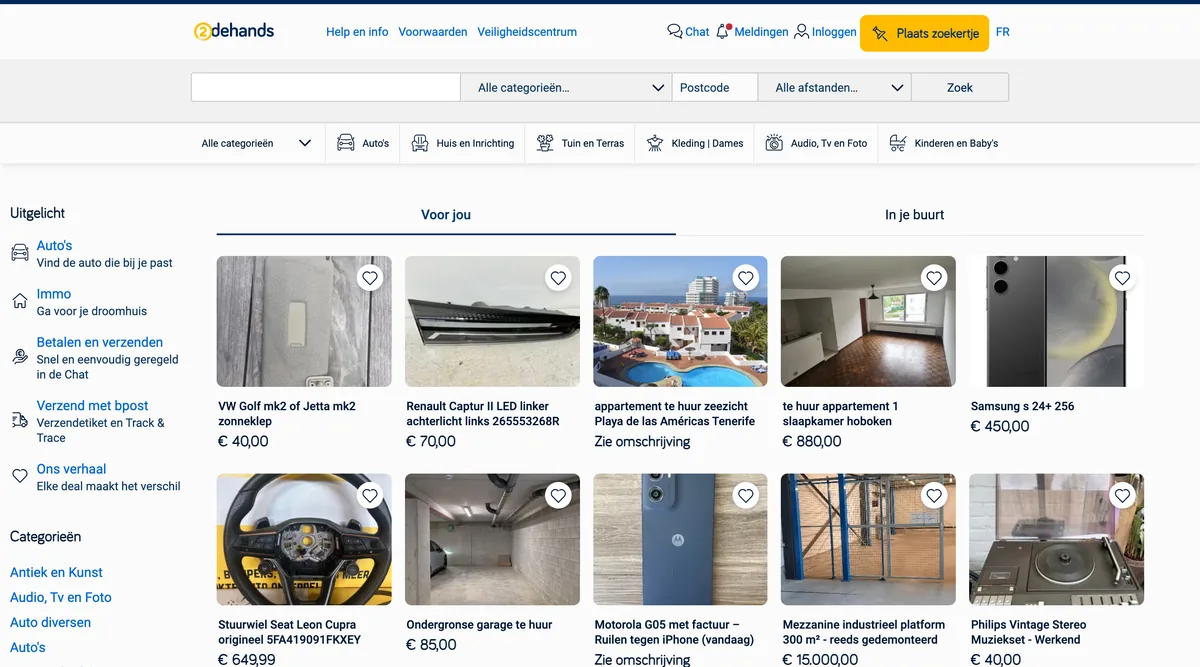
2dehands doesn't give you a product database. It gives you a pile of ads — a title, a price, a couple of photos, maybe a condition tag. Shopify wants the opposite: structured products, variants, inventory counts, SKUs, collections. Cross-listing between the two isn't a copy-paste job, it's a rebuild.
What does cross-listing from 2dehands to Shopify actually involve?
Three things happen at once when you move an item from 2dehands to Shopify. First, the listing format changes — a flat classified ad becomes a structured product with a handle, tags, weight, and shipping profile. Second, your legal position changes: on 2dehands you're a private seller talking to a buyer nearby; on Shopify you're running a storefront and act as the seller of record for consumer protection purposes, as outlined in the EU consumer shopping rights guidance. Third, discovery changes — 2dehands buyers browse by category and location, Shopify buyers arrive via search, ads, or your own marketing, so titles and descriptions need SEO thinking, not just a factual blurb.
None of this is optional if you want the item to actually sell on Shopify. A listing that reads "Ikea kast, goede staat, ophalen Rotterdam" needs to become something like "Vintage Ikea Wardrobe — Solid Pine, Good Condition (Ships from Rotterdam)" with size, material, and shipping cost spelled out as separate fields.
Why move from 2dehands to a dedicated Shopify store in 2026?
2dehands still works well for local, no-shipping sales. But it caps your reach to the Netherlands and Belgium, charges nothing for basic listings but also gives you zero branding, and buries older ads under newer ones fast. A Shopify store lets you:
- Sell across the EU and beyond without relisting per country
- Keep a permanent catalog instead of ads that expire
- Build repeat customers through email and a real checkout
- Bundle related items (a full furniture set, a matching electronics bundle) as one product with variants
The trade-off: you now handle payments, returns, and shipping logistics yourself instead of relying on 2dehands' buyer-seller messaging. If you're already running Marktplaats alongside 2dehands, the same logic applies — see our Marktplaats to Shopify crosslisting guide for the parallel setup.
What changes when you become merchant of record instead of a marketplace seller?
This is the part most cross-listing guides skip. On 2dehands, the platform's terms govern the transaction — check the Marktplaats Help & Info centre (which also covers 2dehands, its Belgian sibling brand) for what's expected of sellers. On Shopify, you write your own return policy, you're responsible for VAT invoicing if you cross registration thresholds, and you're the one liable if a product description misleads a buyer.
In practice this means:
- Draft a return/refund policy page before your first Shopify sale
- Register for VAT if your combined online sales pass your country's threshold
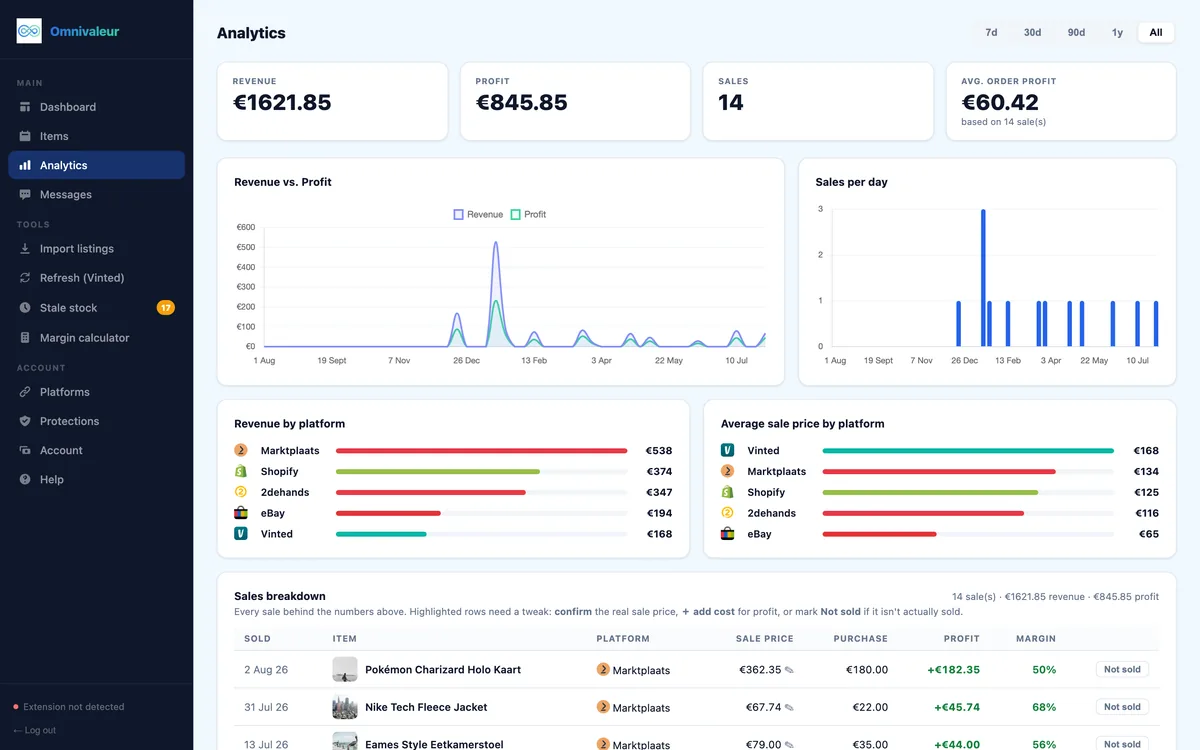
- Keep records of cost basis per item — resale margin calculations get audited differently than casual 2dehands sales
How do 2dehands listings differ from Shopify products structurally?
| Field | 2dehands ad | Shopify product |
|---|---|---|
| Identifier | Ad ID (temporary) | SKU (permanent, trackable) |
| Variants | None — one ad per size/color | Built-in variant matrix (size, color, material) |
| Inventory | Manual "sold" toggle | Automatic stock count, out-of-stock hiding |
| Photos | Up to 20, no alt text | Unlimited, alt text needed for SEO |
| Shipping | Local pickup or ad-hoc courier | Configured shipping zones and rates |
| Lifespan | Expires or gets buried after weeks | Permanent until you archive it |
The variant gap is the one resellers underestimate most. If you list five sizes of the same jacket as five separate 2dehands ads, you need to merge them into one Shopify product with a size variant — otherwise you're duplicating SEO effort and splitting your reviews across five URLs.
What are the 2026 tax and reporting rules resellers need to know?
DAC7 didn't disappear in 2026 — it just became routine. Any platform that facilitates sales, including 2dehands, still reports seller data once you cross 30 transactions or €2,000 in a calendar year, per the Belastingdienst DAC7 information for sellers and the European Commission's DAC7 overview. Shopify itself doesn't report under DAC7 the same way a marketplace does, since it's your own store — but that doesn't mean your income becomes invisible. If you're moving volume from 2dehands to Shopify specifically to dodge reporting thresholds, you're not avoiding tax obligations, just changing which paperwork applies to you.
- ✓Draft a return and refund policy page before your first Shopify sale
- ✓Register for VAT if your combined online sales pass your country's threshold
- ✓Crop out background clutter from 2dehands photos and add clean primary images
- ✓Rewrite descriptions with measurements, expand abbreviations, use consistent condition language
- ✓Merge separate 2dehands ads for the same item in different sizes into one Shopify product with variants
- ✓Set up inventory sync to run at least every 15 minutes if you keep selling on 2dehands too
How do you migrate photos and descriptions without losing quality?
2dehands photos are usually shot for a quick glance, not a storefront. Before pushing them to Shopify:
- Crop out background clutter (2dehands buyers tolerate it, Shopify buyers judge on it)
- Add a plain or lightbox-style background shot as your primary image
- Rewrite alt text with descriptive keywords, not just the filename
- Split multi-item photos into individual product shots where the ad covered a bundle
Descriptions need the same rework — expand abbreviations, add measurements in centimeters and inches, and state condition using consistent language (New, Like New, Good, Fair) so Shopify buyers can compare items across your catalog instead of guessing per listing.
What's the safest way to automate 2dehands to Shopify listings?
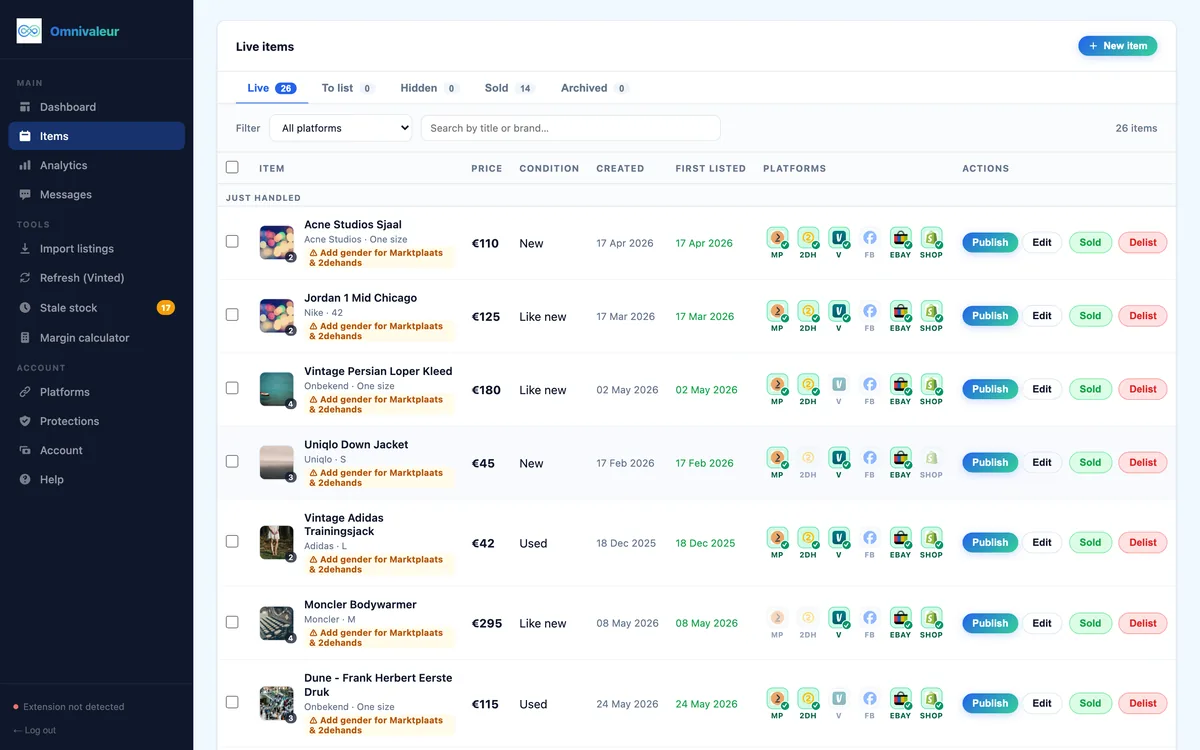
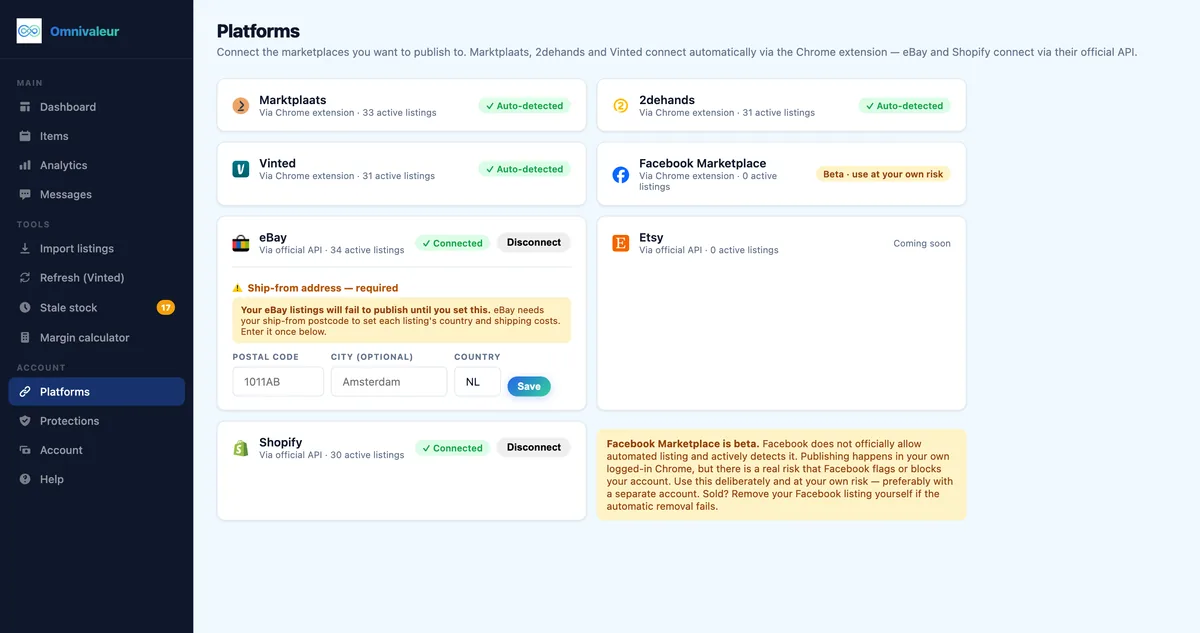
Manual rebuilding works for a handful of items. Past 20-30 listings a week, it stops scaling. A cross-listing tool that pulls your 2dehands data, maps it into Shopify's product schema (title, variants, SKU, collection), and pushes photos in bulk saves hours per week. With Omnivaleur you connect both accounts once, tag which 2dehands ads should become Shopify products, and let the sync handle field mapping — including variant grouping for sizes and colors that started life as separate ads.
If you're comparing tools before committing, our Omnivaleur vs List Perfectly comparison covers how each handles multi-platform variant mapping specifically, which matters more here than in most cross-listing scenarios because Shopify's structure is stricter than any marketplace.
Also worth checking: if your inventory spans both 2dehands and eBay, our 2dehands to eBay crosslisting guide walks through a similar but less structurally demanding migration.
What 2026 platform limits should you plan around?
2dehands caps free listings per category and throttles accounts that post too fast in a short window — spammy bulk uploads get flagged. Shopify, on its Basic plan, has no hard SKU limit but slows down noticeably past a few thousand products without proper collection structuring. Practical planning for 2026:
- Batch your 2dehands-to-Shopify pushes in groups of 20-50, not all at once
- Use Shopify collections by category from day one — retrofitting them later on a large catalog is painful
- Set inventory sync frequency to at least every 15 minutes if you're still selling the same item on 2dehands simultaneously, to avoid double-selling
Should you keep selling on 2dehands after launching Shopify?
Most resellers run both, at least initially. 2dehands still converts fast for local, no-shipping buyers and costs nothing to list. Shopify builds a durable asset — a store you own, with customer emails you control. Running both means you need real-time inventory sync, otherwise you'll sell the same sofa twice in one afternoon. That single risk is why most sellers moving into this dual setup pick automation over spreadsheets within the first month.
Frequently asked questions
Can I use the same product photos on 2dehands and Shopify without editing them?
Does Shopify charge transaction fees on top of my plan if I still use 2dehands for local sales?
How do I handle a 2dehands item that sells locally while it's also live on Shopify?
Do I need a business registration to sell on Shopify if I only had a private 2dehands account before?
Is it worth cross-listing furniture or bulky items from 2dehands to Shopify given shipping costs?
Keep reading



Stop copying listings by hand
Omnivaleur publishes your item to every platform at once and syncs stock automatically when something sells.
Start free trial