Marktplaats to 2dehands Cross-Listing in 2026: The Complete Guide
Marktplaats (Netherlands) and 2dehands (Belgium) are sister platforms owned by the same parent company, so cross-listing between them means republishing one item on both national marketplaces to reach Dutch and Belgian buyers separately. Manual duplication works for a handful of items; automated tools like Omnivaleur sync stock, price and sold status across both accounts.
Key takeaways
- Marktplaats and 2dehands share the same parent company but run as fully separate marketplaces with separate accounts and separate fees.
- The Belgian sister sites of Marktplaats are 2dehands.be for Dutch-speaking Belgium and 2ememain.be for French-speaking Belgium.
- Marktplaats is a C2C platform by default, but professional sellers must mark listings as business sales under Dutch and EU consumer law.
- Selling more than 30 items or earning over €2,000 a year on these platforms triggers DAC7 tax reporting to the Belastingdienst.
- Cross-listing tools that publish in parallel across tabs get accounts rate-limited; one tab at a time is safer and what Omnivaleur uses by design.
What Are the Belgian Sister Sites of Marktplaats?
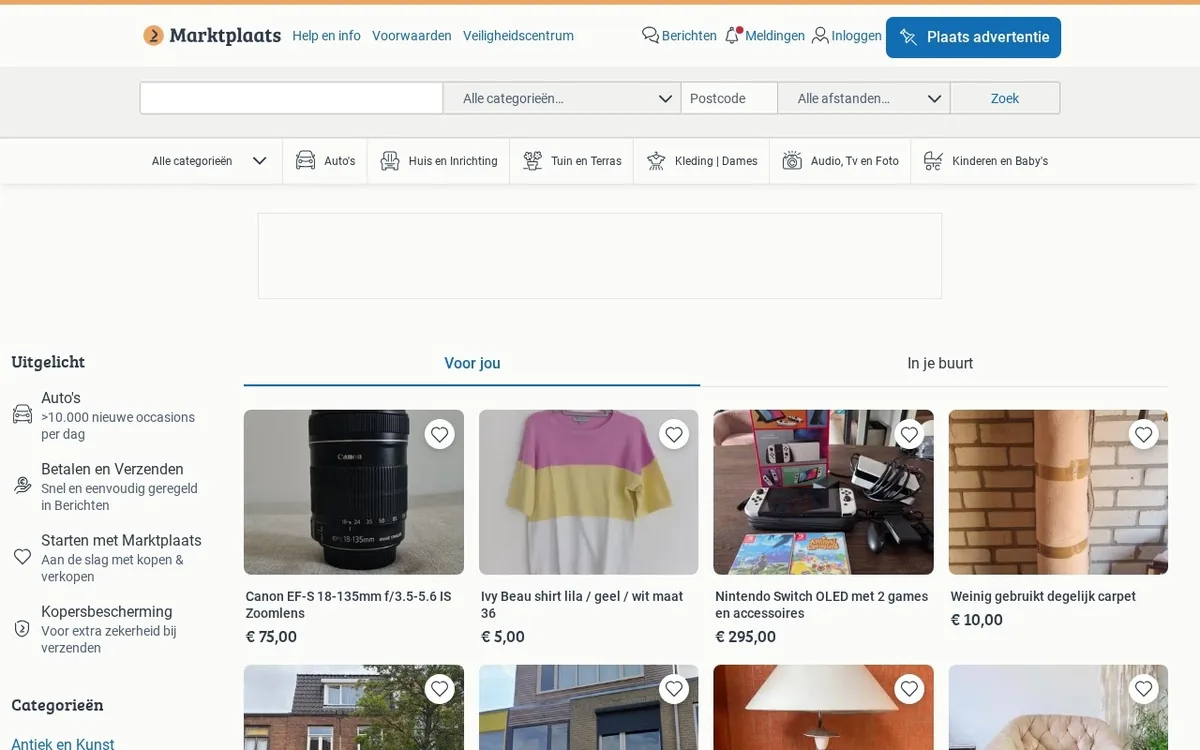
Marktplaats itself only operates in the Netherlands. Its Belgian equivalents are two separate domains run by the same parent group: 2dehands.be for Dutch-speaking (Flemish) Belgium, and 2ememain.be for French-speaking Wallonia. Same underlying platform, same listing structure, different audiences and languages. A reseller who only posts to Marktplaats is missing both Belgian markets, not just one.
This matters because a lot of sellers assume 2dehands is just "Marktplaats but Belgian" and stop there. If your item ships easily (books, small electronics, jewelry), 2ememain.be often has less competition than 2dehands.be simply because fewer Dutch-speaking resellers bother listing there. Check both when you cross-list, not just the one with the familiar name.
How Does Cross-Listing From Marktplaats to 2dehands Actually Work?
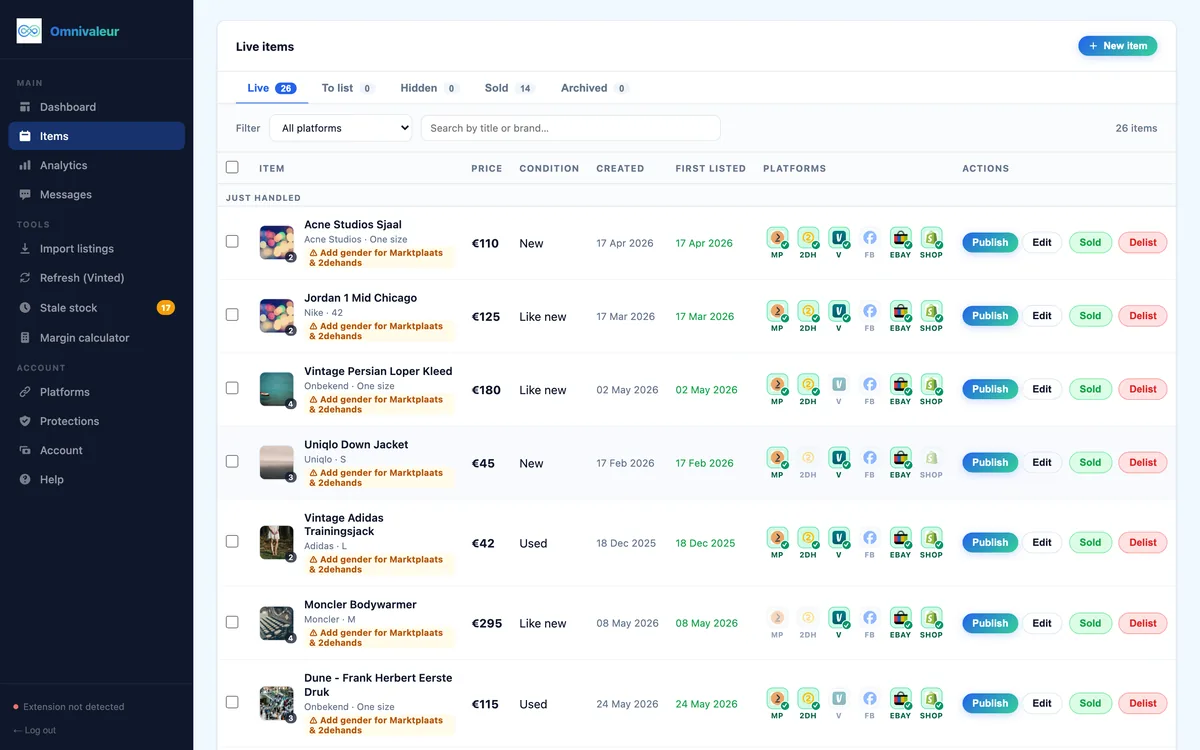
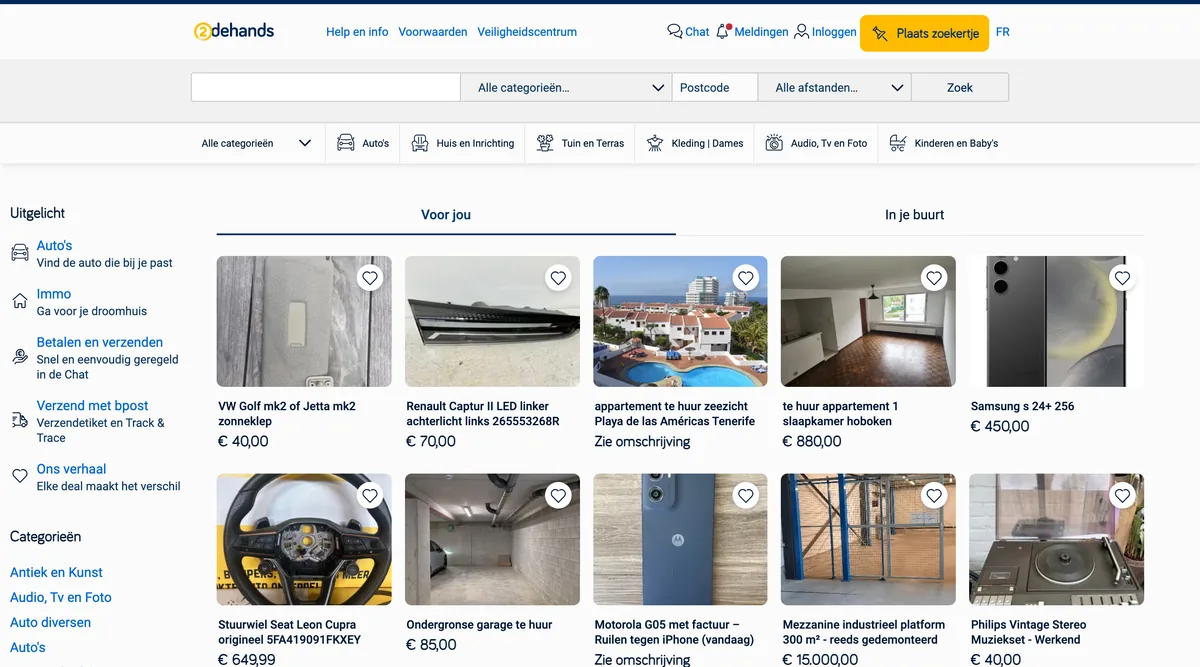
You are not moving a listing from one platform to the other — you are duplicating it. Marktplaats and 2dehands do not share inventory or account data, even though they belong to the same corporate family. Practically, cross-listing means:
- Creating the item once (photos, title, description, price)
- Publishing it to your Marktplaats account and, separately, to your 2dehands account
- Marking it sold or removing it from both the moment it sells on either one
Doing this by hand for 5 items a week is fine. Doing it for 80 items across two platforms, with different category trees and slightly different field requirements, is where resellers start losing hours and losing track of what's already sold where. This is the exact gap tools like Omnivaleur fill: one source listing, published to both accounts, with sold-status tracked back automatically.
| Feature | Marktplaats | 2dehands / 2ememain |
|---|---|---|
| Country | Netherlands | Belgium |
| Language | Dutch | Dutch (2dehands) or French (2ememain) |
| Account required | Yes, separate NL account | Yes, separate BE account |
| Free listings | Yes, most categories | Yes, most categories |
| Business seller badge | Required for commercial sellers | Required for commercial sellers |
Is Marktplaats a B2C or a C2C Platform?
Short answer: both, and the label depends on you, not the platform. Marktplaats was built as a consumer-to-consumer (C2C) classifieds site. But it explicitly supports business sellers too — anyone trading commercially is required to register as a "zakelijke verkoper" (professional seller) rather than listing as a private individual.
Why it matters for resellers: once you're tagged as a business seller, EU consumer protection rules kick in. That includes a statutory right of withdrawal for buyers in most cases, and clearer obligations around warranty and returns, as outlined in the EU's consumer shopping rights guidance. If you're cross-listing 20+ items a month across Marktplaats and 2dehands, you are almost certainly past the point of being a casual private seller in the eyes of both platforms and the tax authority. Check Marktplaats's own seller policies for the current thresholds before you get flagged for it retroactively.
What About B2B Marketplaces in the Netherlands and Belgium?
Neither Marktplaats nor 2dehands is a B2B marketplace. Both are C2C-first platforms with a B2C layer bolted on for registered sellers — they are not built for bulk wholesale trading, invoicing between businesses, or pallet-level liquidation deals. If you're sourcing stock in bulk rather than selling single items to consumers, you're looking at a different category of platform entirely: auction and liquidation sites like Troostwijk Auctions, B2B classifieds like Europages, or industry-specific sites like Mascus for equipment.
Where this connects back to cross-listing: a lot of resellers use a B2B source (a liquidation lot, a bulk buy, a closing-down sale) to acquire stock, then sell it individually through C2C channels like Marktplaats, 2dehands, Vinted and eBay. The buying side is B2B; the selling side is what this article — and Omnivaleur — is actually about. If your category is books, our guide to automating tweedehands boeken verkoop covers exactly this sourcing-to-listing pipeline in detail.
- ✓Check both 2dehands.be and 2ememain.be if you ship to Belgium, not just one
- ✓Create the listing once with photos, title, description and price
- ✓Adjust shipping options and category mapping for the Belgian platform
- ✓Remove visible Dutch text or price tags from photos before uploading
- ✓Publish to each platform separately, not in parallel, to avoid rate limits
- ✓Mark the item sold on both accounts the moment it sells on either one
How Do You Keep Synchronization Across Different Marketplaces?
This is the part that actually breaks reseller workflows. You list an item on Marktplaats and 2dehands. It sells on 2dehands at 9am. If nobody removes it from Marktplaats within the hour, someone in Amsterdam messages you about an item that's already gone — and you've just damaged your seller rating for nothing.
Manual sync means checking both inboxes, both dashboards, multiple times a day. It scales badly past a dozen active listings. Automated sync means the tool watches sold status on one platform and pulls or marks the matching listing on the other, without you touching either dashboard.
Two things worth knowing about how this actually runs in practice, not in theory:
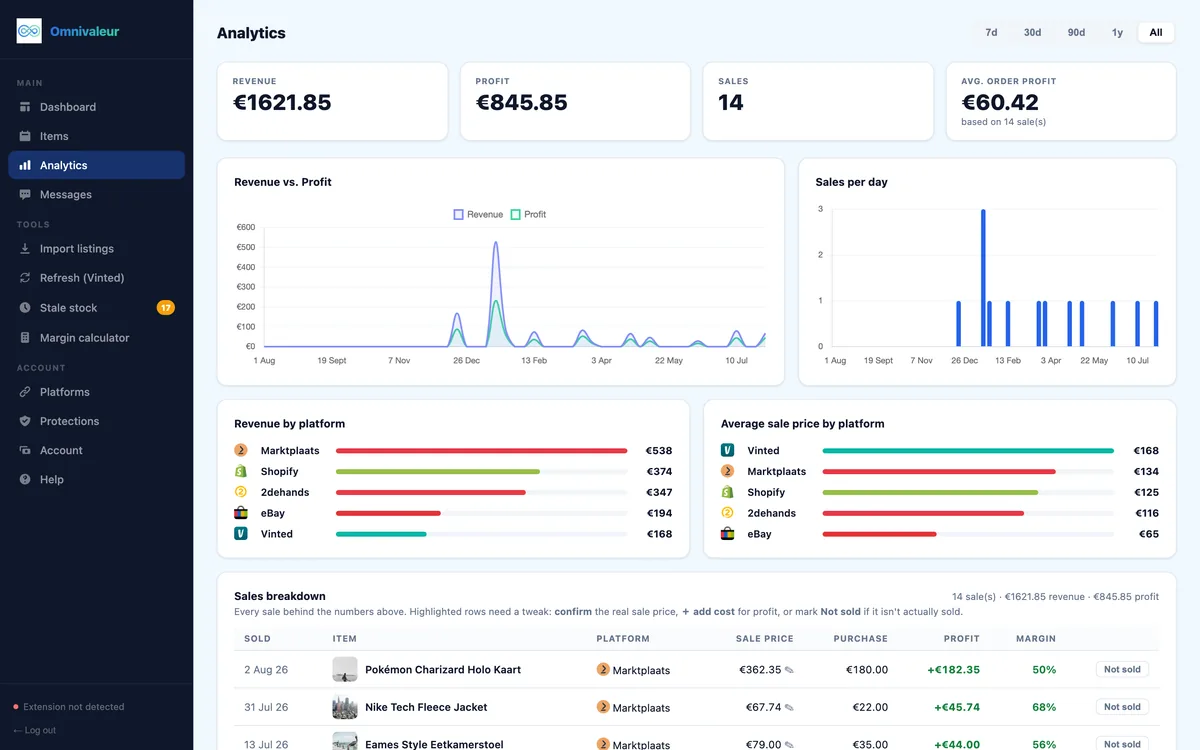
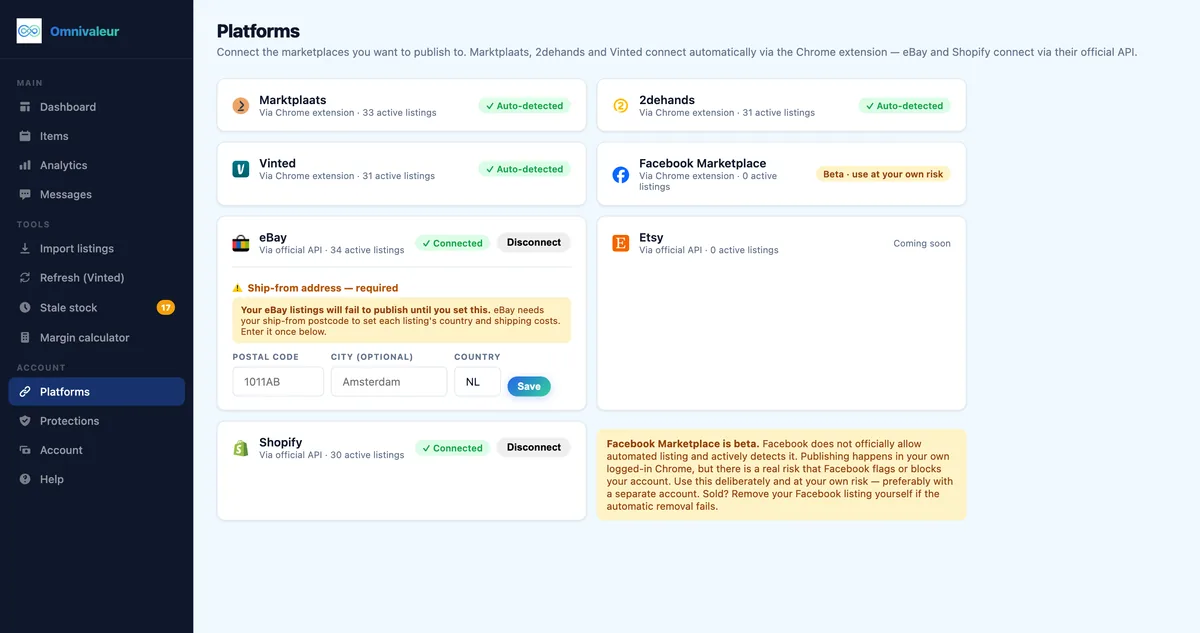
- Stale stock gets buried, not flagged, on most platforms. Omnivaleur's stale-stock view specifically surfaces listings that have been sitting unsold for weeks, instead of letting them quietly sink to page 3 of your own inventory where you forget about them.
- Speed is not always the safe option. Cross-listing in Omnivaleur runs one browser tab at a time, on purpose. Publishing to five tabs in parallel is exactly the pattern that gets marketplace accounts rate-limited or temporarily blocked — both Marktplaats and 2dehands watch for bot-like posting behavior.
If you're running the same synchronization logic between 2dehands and Shopify instead, the same principles apply — see our 2dehands to Shopify Crosslisting 2026: Full Guide for the platform-specific detail.
What Do Fees and Listing Limits Look Like in 2026?
Both platforms keep the core listing free for private sellers in most categories, but paid promotion options (bumping a listing, bold titles, top placement) have crept up in price over the past two years as both companies push sellers toward paid visibility. Business sellers face additional obligations: invoicing requirements, VAT handling if turnover crosses national thresholds, and stricter photo/description standards under consumer protection rules.
| Cost type | Marktplaats | 2dehands / 2ememain |
|---|---|---|
| Basic listing | Free (most categories) | Free (most categories) |
| Vehicle/property categories | Paid listing fee | Paid listing fee |
| Promoted placement | Optional, paid | Optional, paid |
| Business account fees | Subscription tiers apply | Subscription tiers apply |
Always check the current published rates directly — Marktplaats's help center and 2dehands's help center update fee structures without much advance notice, and a number quoted in a blog post from last year is not reliable in 2026.
What Happens to Tax Reporting When You Sell on Both Platforms?
Since 2023, digital platforms including Marktplaats and 2dehands are required to report seller activity under DAC7 rules once you cross either 30 transactions or €2,000 in sales within a calendar year — and that threshold applies per platform, not combined across all of them. Sell 25 items on Marktplaats and 25 on 2dehands and technically neither individually crosses 30, but tax authorities in NL and BE now share this data across borders, so don't treat separate accounts as separate tax identities.
The Belastingdienst's DAC7 guidance for sellers lays out exactly what gets reported and to whom. The European Commission's DAC7 overview covers how this works across all EU member states, which matters if you're running accounts in both NL and BE simultaneously.
What Are the Most Common Mistakes Resellers Make When Cross-Listing?
A few patterns show up constantly among people cross-listing between these two platforms specifically:
- Reusing the exact same photos with visible NL-specific text or watermarks — a listing photographed with a Dutch price tag or postcode visible looks out of place to Belgian buyers and reads as lazily copy-pasted.
- Not adjusting shipping options per country — a courier that's cheap and standard from the Netherlands may be expensive or unavailable as a default option from a Belgian seller account, and vice versa.
- Forgetting category mapping differs slightly — Marktplaats and 2dehands don't always use identical category trees, so an item filed correctly on one can land in the wrong subcategory on the other if you copy blindly.
- Publishing in parallel across both accounts at once — as covered above, this is the exact behavior that trips rate limits on both platforms.
If you're weighing whether a dedicated cross-listing tool is worth it versus doing this by hand, our comparison of Omnivaleur vs OneShop breaks down where automation actually saves time and where it doesn't. And if your next move is expanding from Marktplaats or 2dehands into eBay or Etsy rather than staying within the Benelux, the workflow is nearly identical — see our guides on crosslisten van Marktplaats naar eBay and 2dehands naar Etsy crosslisting.
One last practical note: if you sell vintage or collectible categories specifically, cross-listing rules and buyer expectations shift again. Our sieraden reselling automatisering gids and the Vinted to Marktplaats Crosslisting 2026: Full Guide both cover category-specific quirks worth reading before you scale past a few dozen listings a month.
Frequently asked questions
Can you use the exact same listing photos on Marktplaats and 2dehands?
Do you need separate bank accounts for Dutch and Belgian sales?
What happens if an item sells on 2dehands while still listed on Marktplaats?
Is there a French-only alternative if you only want to target Wallonia?
How many listings can you post per day before risking a spam flag?
Keep reading
Stop copying listings by hand
Omnivaleur publishes your item to every platform at once and syncs stock automatically when something sells.
Start free trial