Omnivaleur vs Crosslist: Which Cross-Listing Tool Wins for European Resellers in 2026?
Omnivaleur is built specifically for European platforms like Marktplaats, 2dehands, and Vinted with direct euro pricing support, whereas Crosslist is a broader global tool designed primarily for US-centric marketplaces. Omnivaleur publishes across six platforms from one intake form using a single sequential browser tab to protect accounts from bans.
Key takeaways
- Omnivaleur focuses heavily on European marketplaces like Marktplaats and 2dehands alongside Vinted, eBay, Etsy, and Shopify.
- Crosslist provides a fast multi-platform workflow with strong global coverage but less native optimization for Benelux-specific selling habits.
- Sequential publishing in Omnivaleur runs one browser tab at a time to prevent marketplace rate-limiting and account suspensions.
- Pricing models differ between the two, making it essential to calculate your actual monthly listing volume and target regions.
If you run an inventory business across multiple online sales channels in Europe, choosing the right cross-listing software dictates whether you spend your evenings typing descriptions or packing sold goods. Two names come up constantly in reseller group chats: Omnivaleur and Crosslist. Both promise to cut out the tedious manual work of copying titles, resizing photos, and re-entering prices. However, they approach the European reselling landscape with entirely different underlying architectures, platform priorities, and pricing structures.
Operating across borders in Europe means dealing with strict regional platform rules, local currency nuances, and aggressive automated security filters that flag unnatural account activity. Whether you source inventory through local thrift stores or scale up through Thrift Store Reselling Automation 2026: Full Setup Guide, your software needs to keep pace without triggering security bans. Let us break down how Omnivaleur and Crosslist stack up against each other across every metric that matters to a working reseller.
How Do Omnivaleur and Crosslist Compare on Core Features and Platform Support?
Platform support is usually the first filter a reseller applies. If a tool cannot list on the specific site where your buyers hang out, everything else is irrelevant. Crosslist has built a strong reputation over the years for supporting a wide array of global marketplaces, particularly those dominant in North America, alongside several European giants. It handles standard bulk operations well and suits sellers who maintain a presence across standard global channels.
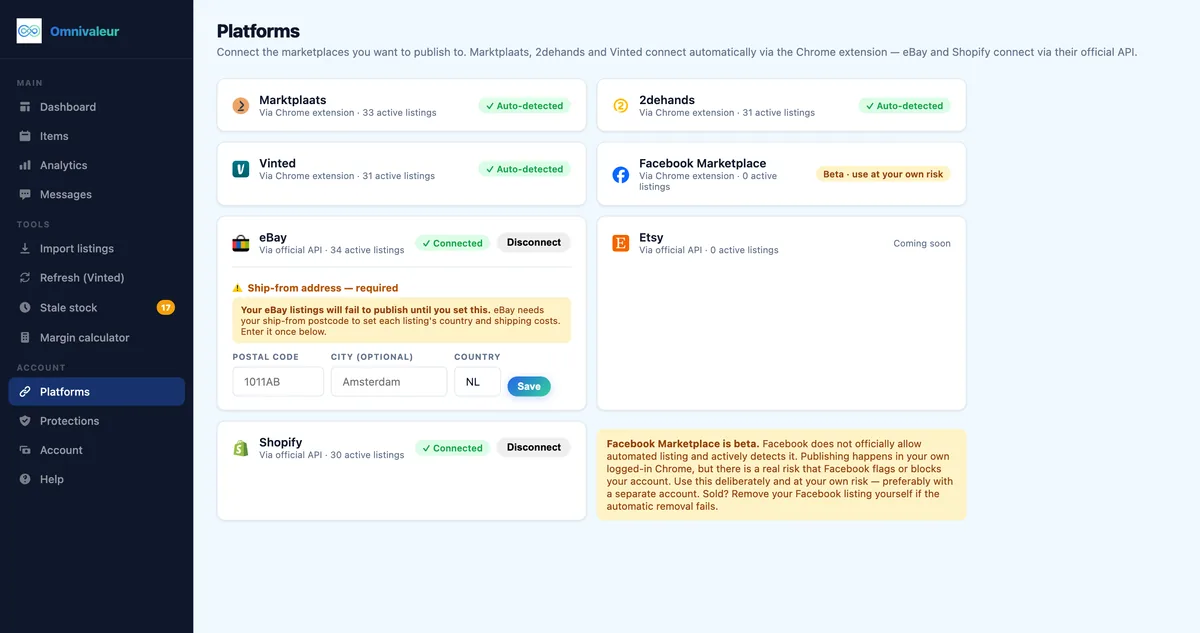
Omnivaleur takes a different route, engineered specifically with the European secondary market in mind. It publishes to six marketplaces from one intake form: Marktplaats, 2dehands, Vinted, eBay, Etsy and Shopify. This makes it a formidable choice for sellers operating in the Netherlands, Belgium, and wider European hubs where platforms like Marktplaats and 2dehands dominate local trade. If your inventory consists of specialized items like vintage cameras, where handling local pickup arrangements or regional shipping rules matters, having native integration with Benelux platforms saves hours of manual re-formatting.
Consider the logistical differences when handling niche categories. A seller moving specialized goods needs a tool that understands regional shipping profiles. For instance, managing heavy items requires precise weight classes that align with local carriers. This is where specialized workflows shine, such as those found in Tool & Equipment Reselling Automation Guide 2026. Neither tool replaces your local knowledge, but Omnivaleur bridges the gap between local European classifieds and global storefronts much cleaner than its competitor.
What Is the Real Cost Comparison Between Omnivaleur and Crosslist?
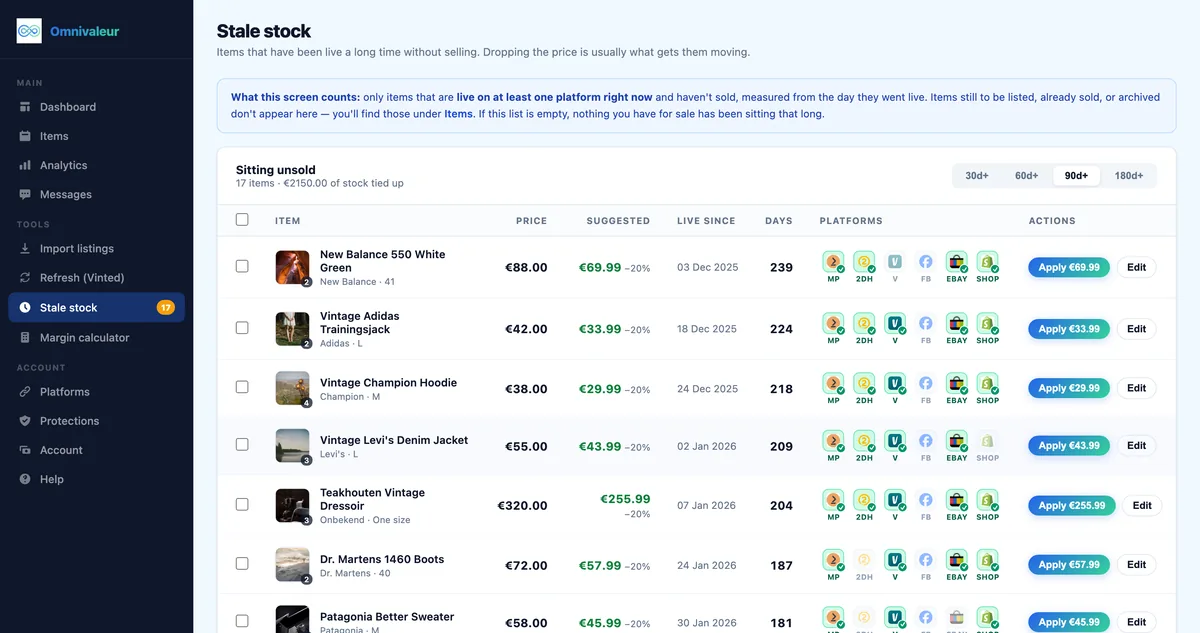
Subscription fees eat directly into your net margins. When evaluating software costs, look beyond the headline monthly fee and examine what tier unlocks essential features like automated stock synchronization and multi-platform delisting. Crosslist typically structures its pricing around monthly subscription tiers based on listing limits or feature sets. Their plans cater well to high-volume operations that need rapid batch processing.
Omnivaleur structures its plans around the realities of modern multi-channel inventory management. Because unexpected platform fees can erode profits, keeping your software overhead predictable is vital. Furthermore, sellers must remain aware of regulatory reporting obligations. Under European tax transparency rules, platforms must report seller data once thresholds are met, as detailed by the European Commission DAC7 overview and the local implementation guidelines provided by the Belastingdienst DAC7 information for sellers. Software that helps you track your multi-channel sales accurately helps you stay compliant without scrambling through spreadsheets at year-end.
Let us look at a side-by-side comparison of how these two solutions position themselves across key operational categories:
| Feature | Omnivaleur | Crosslist |
|---|---|---|
| Primary Market Focus | Europe (Benelux, UK, EU-wide) | Global (US-centric + major EU) |
| Core Supported Channels | Marktplaats, 2dehands, Vinted, eBay, Etsy, Shopify | eBay, Vinted, Depop, Poshmark, Etsy, and others |
| Publishing Speed Architecture | Sequential (one tab at a time for safety) | Automated batch browser automation |
| Euro Currency Handling | Native primary currency support | Multi-currency with conversion settings |
| Best Suited For | European cross-border and classified sellers | High-volume fashion and general goods resellers |
How Do Both Tools Handle Speed, Safety, and Rate Limits?
Every reseller fears waking up to an email stating their marketplace account has been permanently suspended for suspicious automated activity. Marketplaces like Vinted, Marktplaats, and eBay deploy aggressive bot-detection algorithms. If a tool tries to fire off fifty listings simultaneously across multiple tabs, platform firewalls often flag the account instantly.
This is where philosophy diverges sharply. Crosslist pushes for maximum speed and batch-processing capabilities, allowing users to queue up large volumes of items to launch simultaneously. For sellers with robust accounts and high risk tolerance, this speed is addictive. However, it can occasionally trip automated security filters on sensitive platforms.
Omnivaleur takes a deliberate, safety-first approach to account preservation. Cross-listing in Omnivaleur runs one browser tab at a time on purpose: parallel publishing is what gets marketplace accounts rate-listed. By simulating natural human pacing and executing submissions sequentially in a controlled environment, Omnivaleur drastically reduces the risk of triggering bot-detection blocks. When you are managing established accounts with years of positive feedback, a slower, safer publish is always preferable to a lightning-fast ban.
This careful approach extends across all categories, whether you are scaling up your operations using Best Clothing Reselling Automation Tools for 2026 or listing fragile vintage pieces. Protecting your seller reputation across platforms is worth an extra ten seconds per listing.
Which Tool Is Easier to Set Up and Use Day-to-Day?
Time spent configuring software is time not spent sourcing profitable inventory. Crosslist relies heavily on a browser extension model that injects buttons into your existing active marketplace pages, letting you import and export items directly from your browser windows. This workflow feels familiar to seasoned resellers who are used to keeping multiple tabs open.
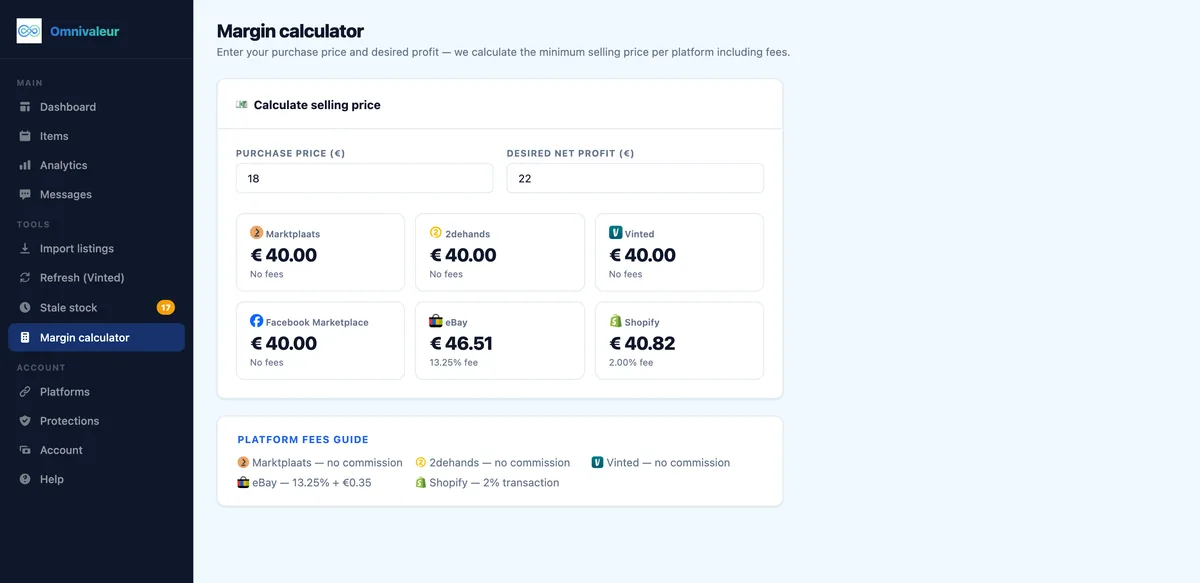
Omnivaleur streamlines the user experience through a centralized dashboard intake form. Instead of bouncing between browser extensions and open marketplace tabs, you input your item details once into a clean interface optimized for speed. From there, you select your destination channels and let the system handle the formatting differences required by each site. Whether you are listing vintage apparel, electronics, or home goods, a centralized dashboard keeps your catalog organized without cluttering your browser window with third-party extensions.
For collectors and niche dealers, this clean structure prevents costly metadata errors. For instance, when listing delicate timepieces or precision instruments, getting the specifications right on the first try is essential. Tools that simplify this intake process—similar to the specialized workflows found in Vintage Watch Reselling Automation Guide 2026—reduce human error and ensure your item specifics match what platform algorithms look for.
- ✓List the platforms where your actual buyers spend time shopping
- ✓Check if the tool handles your regional marketplaces without friction
- ✓Compare how each tool manages auto-delisting when items sell elsewhere
- ✓Test the setup workflow to see if you prefer browser tabs or a dashboard
- ✓Verify the tool's approach to account safety and publishing speed
- ✓Calculate total cost including all subscription tiers you would actually use
How Do Inventory Synchronization and Auto-Delisting Behave?
Overselling is the nightmare of multi-channel reselling. If a vintage jacket sells on Vinted, but your software fails to instantly remove the listing from Marktplaats and Etsy, you risk a canceled order, pissed-off buyers, and damaged metrics on platforms that penalize sellers for out-of-stock cancellations.
Both Crosslist and Omnivaleur feature auto-delisting mechanisms designed to pull duplicate listings across channels once an item sells. However, the reliability of these triggers depends heavily on how well the tool integrates with regional platforms. Global tools sometimes struggle with the API limitations or unique structure of regional European classifieds like 2dehands or Marktplaats, occasionally missing a sale notification and leaving ghost listings active.
Omnivaleur is built from the ground up to handle these specific European integrations seamlessly. When an item moves on any connected channel, the sync triggers reliably across the remaining five platforms. This robust synchronization protects your seller metrics and ensures you never accidentally sell the same item twice. Maintaining strict inventory hygiene also aligns with standard EU consumer rights, which mandate reliable fulfillment and clear stock availability for online transactions.
How Well Do Omnivaleur and Crosslist Handle Regional European Nuances?
If you live and sell in North America, you only need tools that handle eBay, Poshmark, Mercari, and Depop. But if your primary customer base uses Marktplaats in the Netherlands, 2dehands in Belgium, and Vinted across the continent, US-built software often feels like a square peg in a round hole. Currency conversions, local shipping integrations, and regional category trees can cause friction.
Crosslist supports European platforms, but its primary product roadmap and user base remain heavily weighted toward global and US markets. Feature requests and bug fixes often prioritize North American channels first.
Omnivaleur lives and breathes the European reselling ecosystem. It recognizes that European sellers need native euro pricing, correct local weight tiers, and direct integration with classified sites that rely on chat-based offers and local pickup arrangements rather than rigid buy-it-now cart systems. Whether you are expanding your footprint using Marktplaats to Vinted Crosslisting 2026 | Omnivaleur or managing localized inventory across borders, having a tool tailored to your exact geographic region changes your daily workflow.
What Is the Final Verdict: Which Tool Should You Choose?
Choosing between Omnivaleur and Crosslist comes down to your inventory type, target geography, and operational style. There is no universal winner—only the tool that fits your specific business model.
Choose Crosslist if your business is heavily weighted toward global fashion marketplaces, you operate primarily in English-speaking markets, and you prefer an extension-based workflow that lets you manage listings directly inside your browser tabs.
Choose Omnivaleur if you sell within Europe, rely on platforms like Marktplaats, 2dehands, and Vinted alongside eBay, Etsy, and Shopify, and value account safety above all else. Its sequential publishing architecture protects your established accounts from rate-limits, its centralized dashboard streamlines your intake, and its native European focus ensures your euro pricing and local shipping options are always spot on.
Frequently asked questions
Can I use both Omnivaleur and Crosslist at the same time for the same inventory?
What happens to my existing marketplace listings if I switch to Omnivaleur?
Do cross-listing tools like Omnivaleur and Crosslist charge commission on my sales?
How does Omnivaleur handle photo formatting differences between platforms?
Keep reading
Stop copying listings by hand
Omnivaleur publishes your item to every platform at once and syncs stock automatically when something sells.
Start free trial