Book Reselling Automation 2026: Cross-List Books Faster
Book reselling automation means scanning ISBNs once, then auto-listing the same title across Marktplaats, 2dehands, eBay, Etsy and Shopify with synced stock and pricing. In 2026, tools like Omnivaleur pull ISBN metadata automatically, delist sold copies everywhere within minutes, and handle DAC7 income tracking for casual sellers.
Key takeaways
- Vinted still restricts general book listings in most EU markets, unlike Marktplaats and eBay.
- ISBN barcode scanning cuts per-listing time from roughly 4 minutes to under 30 seconds.
- Sellers crossing 30 sales or €2,000 a year trigger DAC7 reporting under Dutch and EU rules.
- Auto-delisting across platforms is the only reliable way to stop double-selling the same used book.
- Etsy works better for rare, signed or vintage editions than for bulk paperback turnover.
Book reselling automation is the practice of scanning a barcode once and having software populate title, author, edition and condition fields, then push that listing to every marketplace you sell on. For resellers moving 50, 200 or 2,000 books a month, doing this by hand is not realistic. Manual listing on five platforms means five separate photo uploads, five description rewrites, and constant risk of selling a copy twice.
What is book reselling automation and how does it work in 2026?
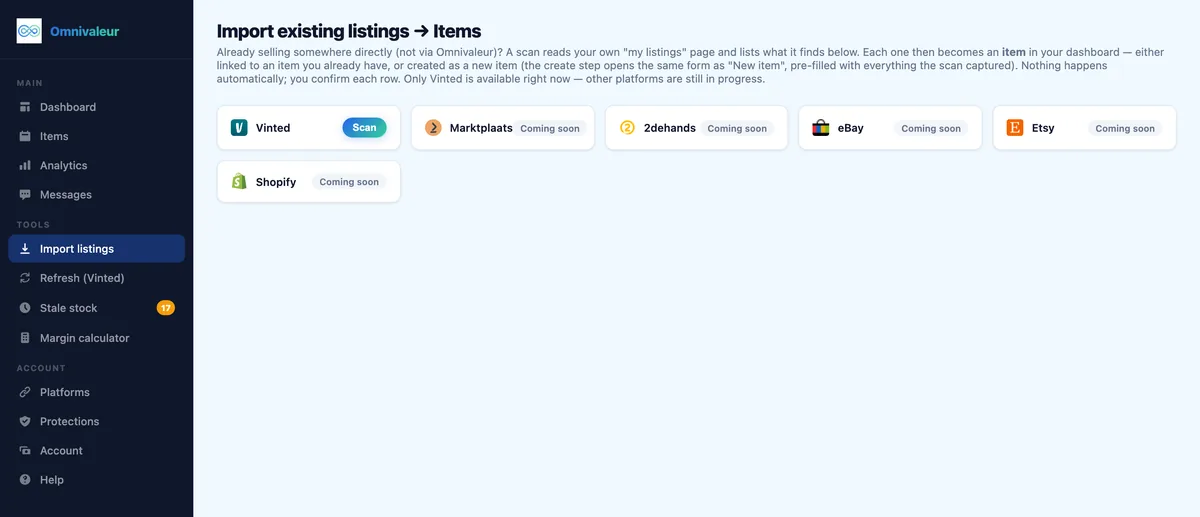
The workflow has three parts: capture, distribute, and sync. Capture uses your phone camera or a dedicated scanner to read the ISBN barcode and pull metadata from a book database — title, author, publisher, edition year. Distribution takes that data and formats it for each marketplace's specific template. Sync watches every connected shop and pulls the listing the moment a copy sells anywhere else.
In 2026, most serious book flippers run a scan-and-batch process: scan 40-60 books in one session, review the auto-filled draft listings, then push them live in one click across connected stores. This is fundamentally different from clothing or furniture reselling, where every item is unique — with books, thousands of resellers list the exact same ISBN, so speed and price competitiveness matter more than unique photography.
Which platforms actually allow book listings in 2026?
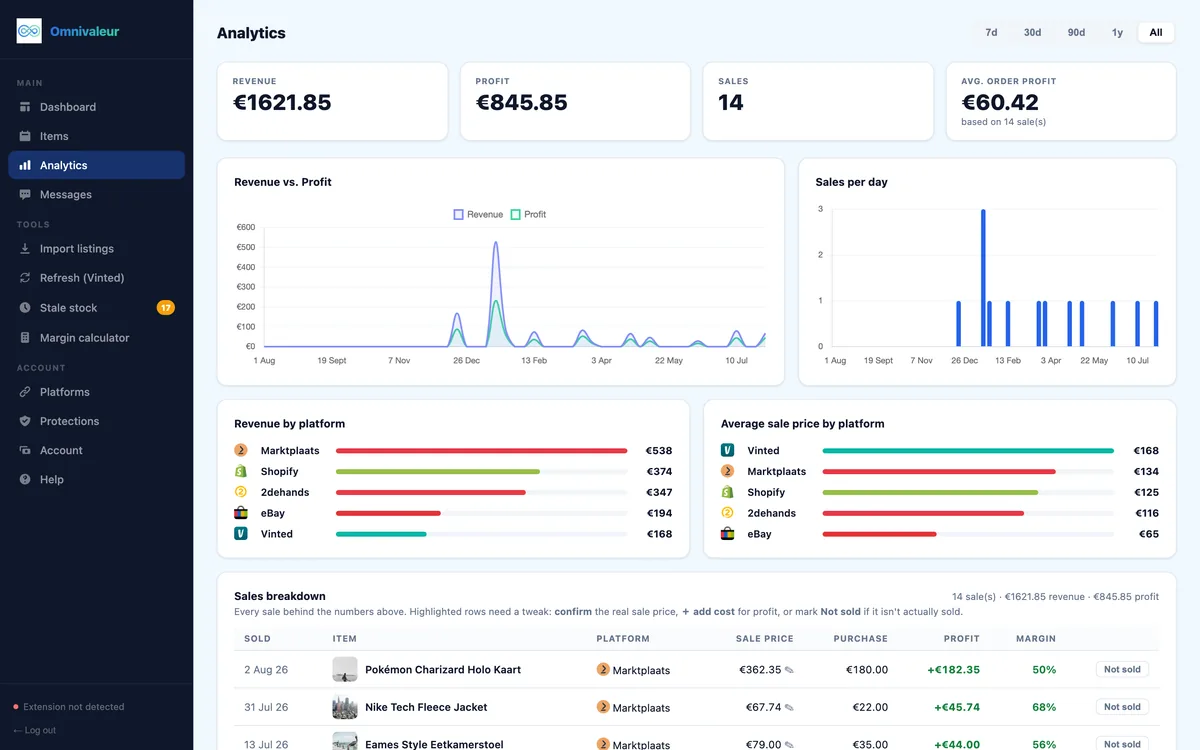
Not every marketplace treats books the same way, and this is the gap most generic guides skip. Vinted, for example, was built for clothing and accessories; general non-fiction and textbooks are heavily restricted or invisible in search on several EU country apps, even though the category technically exists. Check the current rules on the Vinted Help — Selling page before assuming books will get traction there.
| Platform | Book category support | Typical fee | Best for |
|---|---|---|---|
| Marktplaats | Full support, high local search volume | Free listing, optional promoted ad | Bulk paperbacks, textbooks, NL buyers |
| 2dehands | Full support (BE mirror of Marktplaats) | Free listing | Belgian local pickup sales |
| eBay | Full support, media/book category exists | ~10-12% final value fee | Nationwide/international bulk sales |
| Etsy | Allowed, best for vintage/rare/signed copies | Listing fee + 6.5% transaction fee | Collectible and out-of-print editions |
| Vinted | Limited/low visibility for general books | Buyer pays fee | Niche art books, coffee-table titles only |
| Shopify | Full control, your own storefront | Monthly plan + payment processing | Building a branded used-book shop |
Check current category rules on Marktplaats Help & Info and on eBay's listing creation rules before mass-uploading, since both platforms tweak category limits and duplicate-listing policies every year.
How does ISBN barcode scanning speed up bulk book listing?
A phone camera scan takes under two seconds. Pulling the same metadata by typing title and author manually takes 60-90 seconds, and you'll still make typos on author names or edition years. Multiply that across 200 books a week and the time saved adds up to hours, not minutes.
- Scan the barcode with your phone or a Bluetooth scanner.
- Software auto-fills title, author, publisher, page count and cover image.
- You add condition, price and shelf location.
- One click pushes the listing to every connected marketplace.
The real bottleneck after scanning isn't data entry anymore — it's pricing. Automated tools that check live comparable listings on Marktplaats and eBay before you confirm the price save you from underpricing a first edition or overpricing a common paperback nobody wants.
What condition grading standard should you use across platforms?
Book buyers expect consistent grading, and inconsistent terms across your five shops kill trust. Stick to a simple four-tier scale and use it everywhere:
| Grade | Description |
|---|---|
| Like New | No visible wear, unread or barely opened |
| Very Good | Minor shelf wear, no writing or highlighting |
| Good | Noticeable wear, cover creases, possibly some notes |
| Acceptable | Heavy wear, all pages present and readable |
Write this grading key once and reuse it as a description template block on every listing. Buyers under EU consumer shopping rights can return items not matching the description, so accurate grading protects you from disputes just as much as it builds trust.
- ✓Check category support and current rules on each marketplace's help page before uploading
- ✓Scan your first batch of 40 to 60 books with a phone camera or Bluetooth scanner
- ✓Review auto-filled metadata and add condition grade using the four-tier standard consistently
- ✓Set prices by checking live comparable listings on Marktplaats and eBay first
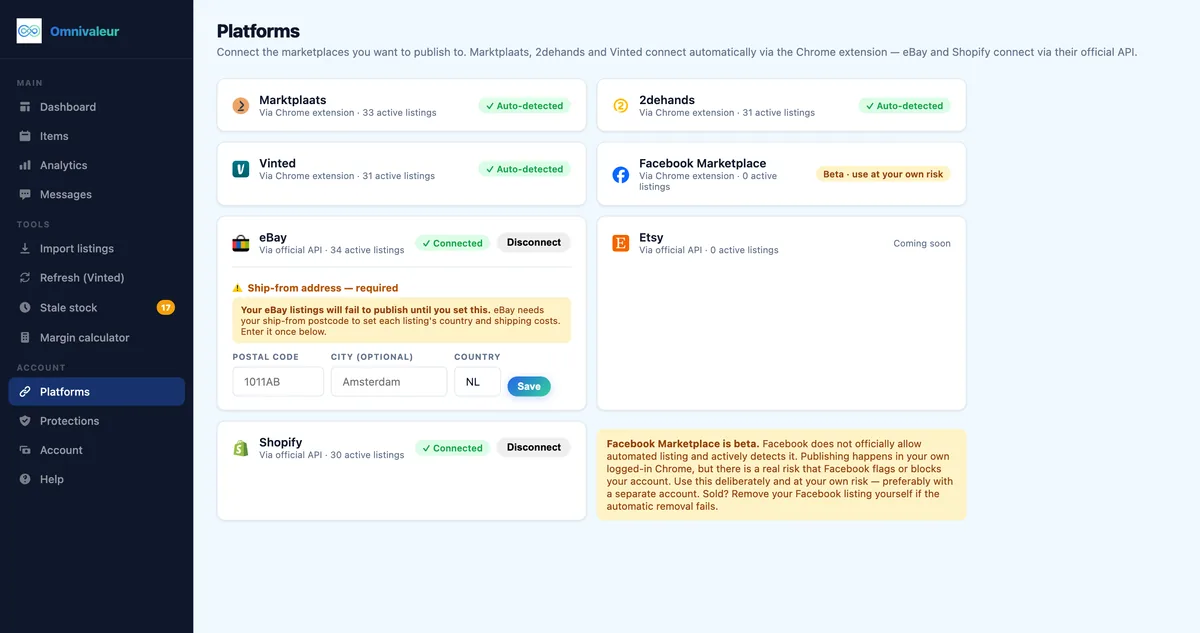
- ✓Connect each marketplace once to your tool so publishing and sync run together
- ✓Confirm real-time delisting works by testing a sale on one platform and watching it disappear from others
Do book resellers need to worry about DAC7 tax reporting in 2026?
Yes, and this is the piece most competitor articles never mention. Under EU-wide DAC7 rules, marketplaces report seller activity once you hit 30 transactions or €2,000 in a calendar year — thresholds that apply per platform, not combined. A reseller doing 40 low-value paperback sales on Marktplaats and another 20 on eBay could get reported by both. The Belastingdienst DAC7 guidance for sellers lays out exactly what data gets shared and when. Automation tools that log sale price, platform and date per book make year-end tax filing far less painful than digging through five separate seller dashboards.
How do you avoid overselling the same book across marketplaces?
This is the single most common complaint from book resellers running multiple shops manually. You sell a copy on eBay at 2pm, but the Marktplaats listing stays live until you remember to pull it — someone buys it there too, and now you're refunding and apologizing. Real-time inventory sync solves this by delisting a sold title everywhere within minutes of the sale confirming.
For resellers who also move clothing or sneakers alongside books, the same sync logic applies across categories — see how it works in practice on the Vinted Reselling Automation page, which covers the identical delisting mechanics for apparel.
Which automation tool fits book resellers best?
Not every crosslisting tool handles ISBN lookups well — some are built purely for clothing tags and photos, which is fine for Vinted sellers but useless for a reseller scanning 300 paperbacks a week. Look for three things: barcode/ISBN scanning built in, real-time cross-platform delisting, and export-friendly sales logs for DAC7 tax purposes.
If you're comparing tools already, the breakdown on Omnivaleur vs List Perfectly covers scanning speed and sync reliability side by side, which matters more for high-volume book flipping than fancy photo editing features.
For rare or collectible titles that do better on Etsy than on volume platforms, treat that inventory separately — list it manually with proper photography rather than forcing it through the same bulk-scan pipeline as your paperback stock.
Frequently asked questions
How many books can I list per day before eBay limits me?
Can I sell textbooks and rare first editions through the same automation tool?
What's the best way to price out-of-print books automatically?
Do I need a registered business to resell books at volume in the Netherlands?
How do returns work for used books sold to EU consumers?
Keep reading

Stop copying listings by hand
Omnivaleur publishes your item to every platform at once and syncs stock automatically when something sells.
Start free trial