Home Decor Reselling Automation 2026: Cross-List Furniture & Decor Faster

Home decor reselling automation means using one tool to publish a single furniture or decor listing to Marktplaats, 2dehands, Vinted, eBay, Etsy and Shopify at once, syncing stock and price. In 2026 the main obstacles are per-platform dimension and weight limits, breakage disputes, and DAC7 tax reporting once you cross 30 sales or €2,000 a year.
Key takeaways
- Home decor items get rejected or downgraded most often for missing dimensions, weight or material fields, not for bad photos.
- Cross-listing one tab at a time protects your marketplace accounts from the rate limits that hit parallel-publishing tools.
- DAC7 reporting kicks in at 30 transactions or €2,000 in sales a year, so decor resellers scaling across platforms need to track totals, not per-platform numbers.
- A stale-stock view that flags unsold decor pieces matters more here than in fashion, because furniture ties up storage space for months.
- Large or fragile decor (mirrors, ceramics, lamps) needs different shipping and return handling on every platform, and automation tools rarely account for that by default.
Home decor reselling automation is the practice of listing furniture, lighting, textiles, mirrors and decorative objects across multiple marketplaces from one dashboard instead of retyping each listing by hand. Vases and small ceramics behave nothing like a sofa when it comes to shipping, dimensions and breakage risk, so a tool built for clothing resale won't cut it without a few extra checks built in.
Most reseller automation guides written in 2025 focused on clothing and sneakers. Decor is a different animal: heavier, bulkier, more fragile, and split across categories that each platform treats differently. This guide covers the parts other articles skip — the dimension fields, the shipping math, the tax reporting, and the account-safety rules that actually decide whether your decor listings survive on five marketplaces at once.
What is home decor reselling automation and how does it work in 2026?
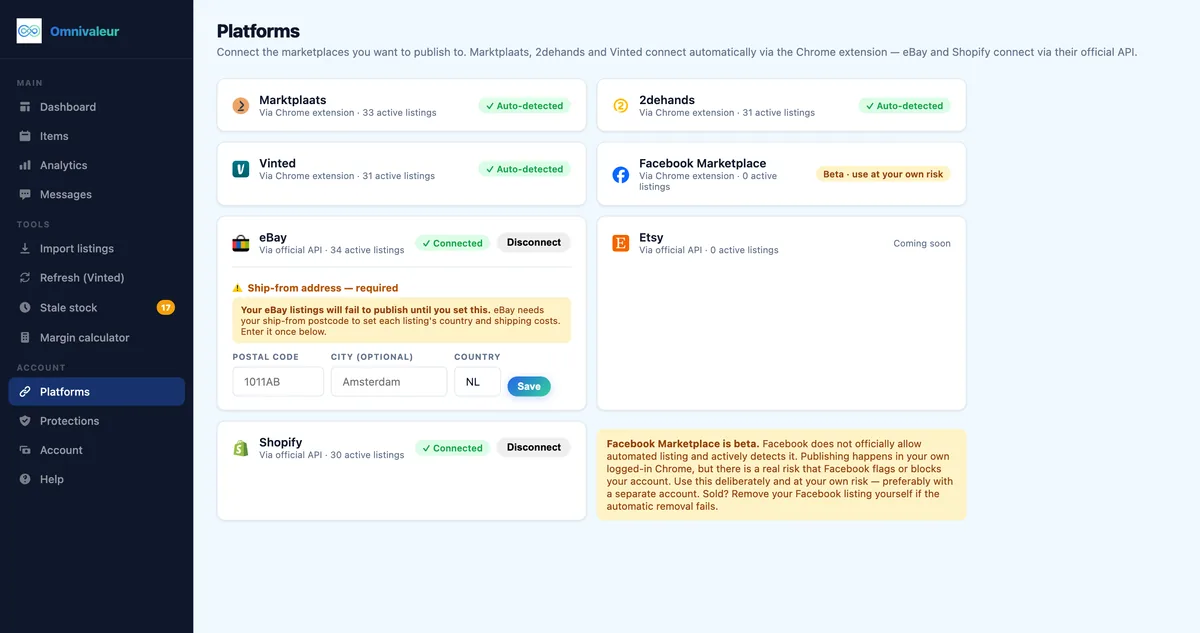
At its core, automation software takes one master listing — photos, title, description, price, dimensions — and republishes it to each connected marketplace using that platform's own template. You upload once. The tool reformats the copy, resizes images to each site's spec, and maps your category (say, "wall mirror") into Etsy's home décor taxonomy, eBay's Home & Garden tree, and Marktplaats' Huis en Inrichting section.
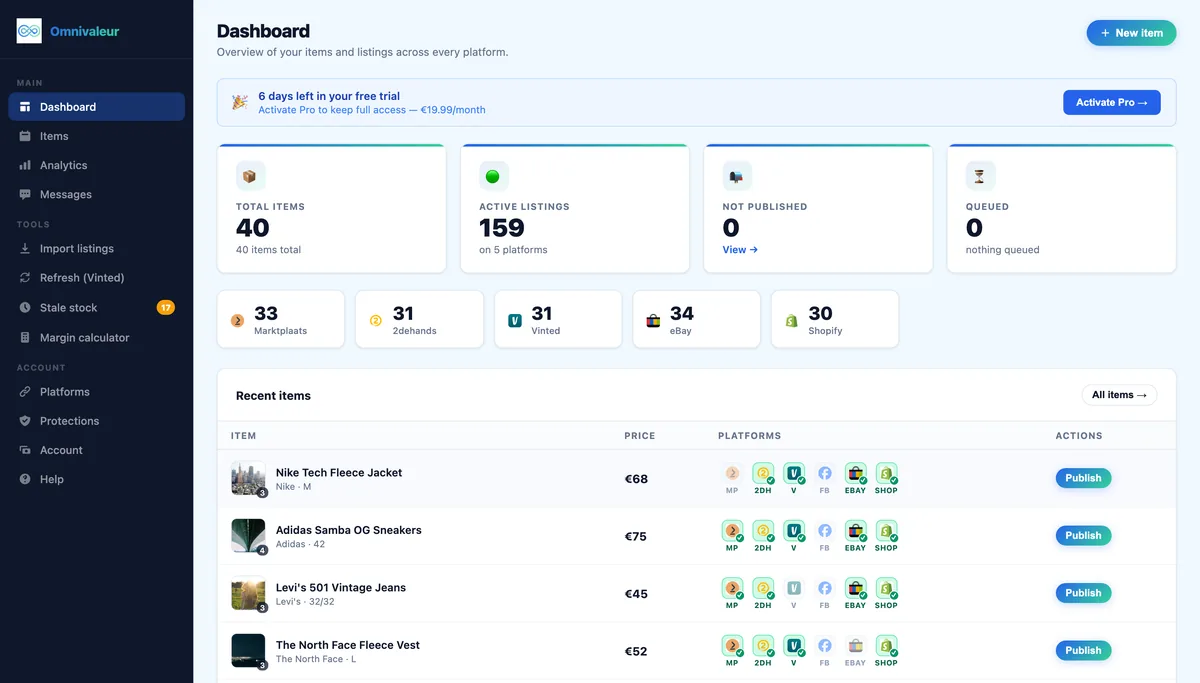
Stock sync matters more for decor than for most categories, because a single lamp or armchair is usually a one-off item. The moment it sells on Vinted, the listing needs to disappear from 2dehands and eBay within minutes, or you risk a double sale — which is worse for a €150 vintage sideboard than for a €12 t-shirt.
Tools like Marktplaats to Shopify crosslisting setups are popular with decor resellers who want a branded storefront for larger furniture pieces while still pulling walk-in buyers from local marketplaces for pickup-only items too bulky to ship.
Which home decor items are hardest to cross-list automatically?
Not everything decor-related is equally easy to move between platforms. Some categories break templates constantly:
- Mirrors and framed art — need exact glass dimensions and weight for shipping calculators; get flagged if left blank on eBay.
- Ceramics and glassware — Etsy and Vinted both ask for "fragile" packaging notes; missing this triggers manual review on some accounts.
- Rugs and textiles — dimension fields (length x width x pile height) differ between Marktplaats and Shopify, so auto-mapping often drops the pile height entirely.
- Furniture over 20kg — most platforms cap standard shipping rates around 20-30kg; anything heavier forces you into local pickup or freight quotes, which automation tools rarely calculate for you.
Vintage and antique decor pieces face an extra layer: buyers on Etsy expect provenance details (era, maker, restoration history) that a generic bulk-upload tool won't generate on its own. If you're already selling vintage collectibles alongside decor, the workflow in our collectibles reselling automation guide covers how to keep that provenance data attached across every listing copy.
How do dimensions and weight limits affect home decor listings across platforms?
This is the single biggest source of rejected or suppressed decor listings in 2026. Every platform has its own threshold before it either charges extra, requires a freight quote, or simply won't let you publish.
| Platform | Standard shipping weight cap | Dimension field required? | Notes for decor sellers |
|---|---|---|---|
| Marktplaats / 2dehands | No fixed cap (mostly local pickup) | Optional but recommended | Best for bulky furniture buyers collect in person |
| Vinted | ~20 kg via Vinted Go | Required for parcel size tier | Home category still smaller than fashion; growing slowly |
| eBay | Varies by carrier, up to ~30 kg standard | Required | Freight calculator kicks in above set thresholds |
| Etsy | Depends on shipping profile | Required for accurate rates | Buyers expect careful packaging notes for fragile items |
| Shopify | Set by your own carrier account | Required for rate accuracy | Full control, but you own the customer service risk |
Skip the dimension fields and two things happen: the listing either gets buried in search (platforms deprioritize incomplete listings) or the buyer gets an inaccurate shipping quote and cancels at checkout. Neither outcome is good for a €200 mid-century lamp you've already photographed and described.
What are the 2026 marketplace rules resellers need to know for furniture and decor?
A few rule changes worth knowing before you scale a decor operation this year:
- Marktplaats and 2dehands both now push "collection only" filters harder in search, meaning large furniture without a clear pickup radius gets less visibility than in 2025.
- Vinted's Home category still restricts certain electrical items (lamps with wiring) unless they carry CE markings visible in photos.
- eBay has tightened its returns policy for "not as described" claims on decor — sellers now need close-up condition photos of any chip, crack or repair, or risk automatic buyer-favored resolution.
- Etsy continues to require handmade or vintage (20+ years) status for its non-mass-produced categories; mislabeling a modern reproduction as vintage decor can get a listing removed.
If you're moving inventory between secondhand marketplaces and Etsy specifically, the category-mapping notes in our 2dehands to Etsy crosslisting guide walk through exactly which fields Etsy's vintage filter checks before it approves a listing.
How does DAC7 tax reporting affect home decor resellers selling across borders?
Once you sell across five platforms, tracking your total turnover gets harder — and that's exactly the point where DAC7 matters. Under the EU's DAC7 rules, marketplaces are required to report seller data to tax authorities once you cross 30 transactions or €2,000 in sales within a calendar year, and that threshold applies per platform, not combined. So a decor reseller doing 12 sales on Vinted, 15 on eBay and 10 on Etsy might stay under the per-platform reporting trigger on each individual site, while still running a real business overall.
The Belastingdienst's DAC7 information for sellers lays out exactly what data Dutch marketplaces are obligated to collect and share. The European Commission's DAC7 overview is useful if you're selling into other EU countries and want the wider legal context rather than just the Dutch implementation.
For decor resellers this matters practically because furniture and vintage pieces often sell at higher average prices than clothing — a single antique cabinet can push you past the €2,000 threshold on one platform in just a handful of sales. Keep a simple running total per marketplace rather than assuming you're safe because your overall volume feels low.
How can you avoid rate limits and account flags when cross-listing decor items?
Automation tools that fire off dozens of listings in parallel across five marketplaces at once look, to those platforms' fraud systems, indistinguishable from bot activity. That's a fast way to get a new seller account temporarily restricted, right when you're trying to move a batch of decor stock before a seasonal peak like Christmas or spring cleaning season.
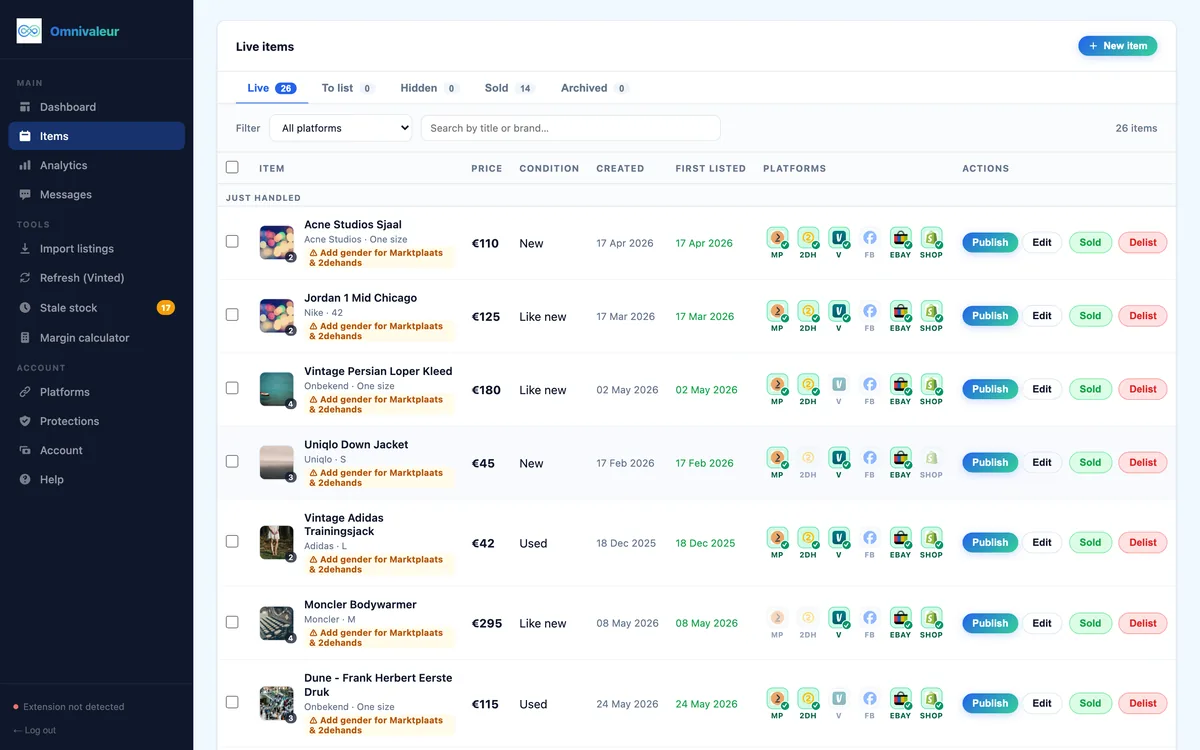
Omnivaleur deliberately publishes one browser tab at a time rather than in parallel, because parallel publishing is exactly what gets marketplace accounts rate-limited. It's slower per listing, but it keeps your account patterns looking human, which matters more for a decor reseller running five to six connected marketplaces than for someone only using two.
Slow-moving decor stock is its own problem. Furniture and larger decor pieces can sit unsold for months, quietly eating storage space while faster-moving categories get all your attention. Omnivaleur's stale-stock view surfaces listings that have been sitting unsold instead of letting them sink to the bottom of your dashboard, so you can reprice or bundle that armchair before it's been listed for six months without a single message.
If you're comparing tools before committing to one, the breakdowns in Omnivaleur vs List Perfectly and Omnivaleur vs Vendoo both cover how each platform handles listing speed and rate-limit safety, which matters more once you're juggling bulky decor items alongside faster fashion turnover.
How do you handle damaged or disputed decor shipments across the EU?
Fragile decor generates more shipping disputes than almost any other resale category. A ceramic vase or framed mirror can arrive cracked even with good packaging, and buyers across the EU have real protections when that happens. The Your Europe consumer shopping rights page outlines the baseline: EU buyers generally have the right to a repair, replacement or refund if goods arrive damaged or don't match the description, regardless of which platform the sale happened on.
Practical steps that cut disputes for decor sellers:
- Photograph the item packed, before sealing the box — this is your evidence if a buyer claims it arrived broken due to poor packaging.
- State exact material and fragility in the listing ("hand-blown glass, ships in reinforced box") rather than a generic condition note.
- Use tracked shipping for anything over roughly €50 in value; untracked parcels make every damage claim harder to resolve in your favor.
- Keep a written note of the packaging materials used, in case a platform's resolution team asks for proof of due care.
What does a realistic home decor cross-listing workflow look like?
A workable weekly routine for a decor reseller running Marktplaats, 2dehands, Vinted, eBay, Etsy and Shopify together looks something like this:
- Photograph new stock with a consistent background, including close-ups of any wear, chips or repairs.
- Enter dimensions and weight once, in the master listing, so every connected marketplace inherits accurate shipping data.
- Publish to local marketplaces first (Marktplaats, 2dehands) for pickup-friendly bulky pieces, then to shippable-friendly platforms (Vinted, eBay, Etsy) for smaller decor.
- Check the stale-stock view weekly and reprice anything sitting past four to six weeks unsold.
- Reconcile sold quantities across platforms daily so a single sofa doesn't get double-sold from two marketplaces the same afternoon.
Resellers running mixed inventory — vintage decor alongside vintage toys or vinyl, for instance — often find the same workflow scales cleanly across categories. The setup notes in our vintage toy reselling automation guide and vinyl record reselling automation guide cover similar dimension and provenance challenges if decor isn't your only category.
Whichever tool you settle on for 2026, the decor-specific test is simple: does it handle dimension fields, fragile shipping notes and cross-platform stock sync without you manually re-entering the same data six times? If it doesn't, you'll spend more time patching listings than actually sourcing and selling.
Frequently asked questions
Can I cross-list large furniture that only ships by pallet or courier quote?
Do I need different photos for decor listings on Etsy versus Vinted?
How do I price decor items that have almost no direct comparables online?
Should I list decor items with visible wear differently across platforms?
What happens if a decor item sells simultaneously on two platforms before sync updates?
Keep reading



Stop copying listings by hand
Omnivaleur publishes your item to every platform at once and syncs stock automatically when something sells.
Start free trial