Sneaker Reselling Automation Platforms in 2026: What Actually Works
Sneaker reselling automation platforms sync listings, prices, and inventory across marketplaces like eBay, Vinted, Marktplaats, Etsy, and Shopify, so one sale delists everywhere else. In 2026, the best tools also handle DAC7 tax reporting, condition-specific templates, and size-run bulk listing — critical for resellers moving 20+ pairs a week.
Key takeaways
- Cross-listing tools save 5-8 hours a week once you list more than 15 pairs monthly.
- DAC7 forces every EU marketplace to report your sales data from your first transaction, not after a threshold.
- eBay and Vinted now require size and authenticity fields to be filled before a sneaker listing publishes.
- Manual relisting across six platforms creates duplicate-sale risk the moment inventory syncing isn't automated.
- Automation platforms differ mostly on how well they handle size variants, not on raw listing speed.
What actually counts as a sneaker reselling automation platform in 2026?
Not every "listing tool" qualifies. A real sneaker reselling automation platform does three things at once: it pushes one listing to multiple marketplaces, syncs stock so a sold pair vanishes from every other channel within minutes, and keeps size/condition variants intact across platforms with wildly different form fields. Basic browser extensions that just copy-paste text don't do this — they still leave you manually delisting duplicates.
For sneakers specifically, the pain point isn't posting a listing. It's managing size runs. A single Jordan 1 restock might mean nine size variants, each needing its own listing on Vinted but a single variant-based listing on Shopify. Tools that treat sneakers like generic clothing usually mangle this.
Which marketplaces actually work for sneaker resale, and what do they charge?
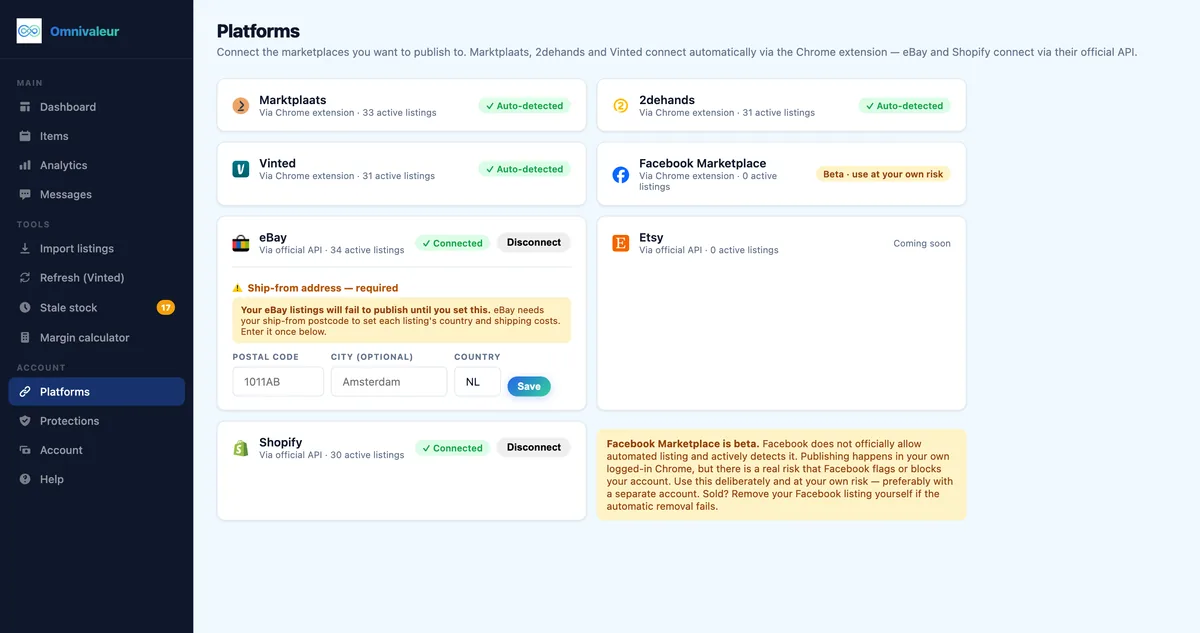
Most European sneaker resellers spread inventory across a mix of general marketplaces rather than sneaker-only platforms like StockX or GOAT, mainly to avoid their authentication fees eating into margin on sub-€150 pairs. Here's how the six most common channels compare in 2026:
| Platform | Typical seller fee | Sneaker-specific requirement |
|---|---|---|
| eBay | ~13% final value fee | Size + condition fields mandatory before publishing |
| Vinted | Buyer pays protection fee, seller pays 0% | Brand + size dropdown required, no bulk photo skip |
| Marktplaats / 2dehands | Free listing, paid boosts optional | No authentication field, price transparency expected |
| Etsy | €0.20 listing fee + ~6.5% transaction fee | Best for vintage/deadstock storytelling, not fast turnover |
| Shopify | Monthly subscription + payment processing (~2.9%) | You own the storefront, no marketplace fee cap |
The margin math changes fast once you're cross-listing the same pair across four or five of these. A €120 sneaker sold on eBay nets meaningfully less than the same pair sold on Marktplaats — which is exactly why most serious resellers don't pick one platform, they run all of them in parallel and let automation handle the friction.
How does DAC7 tax reporting affect sneaker resellers in 2026?
This is the part most sneaker-bot articles skip entirely, and it's the one that actually costs resellers money. Since DAC7 came into force, every marketplace operating in the EU — Vinted, Marktplaats, eBay, Etsy — must report your sales data to national tax authorities once you cross 30 transactions or €2,000 in a calendar year, whichever hits first. If you're running inventory across six platforms manually, tracking that combined threshold yourself is close to impossible.
The Belastingdienst's DAC7 guidance for sellers spells out exactly what gets reported and when, and the European Commission's DAC7 overview covers how the rule applies across all EU member states, not just the Netherlands. A platform that consolidates your sales history across marketplaces makes it far easier to see where you actually stand against that threshold before a tax authority letter shows up.
What listing limits and authentication rules changed for 2026?
Platform rules aren't static, and sneaker categories get tightened more often than general clothing does because of counterfeit risk. eBay's current listing policy requires brand, size, and condition to be filled in before a sneaker listing goes live — check the specifics on eBay's listing rules page since these fields get audited more strictly than in past years. Vinted's seller help section now flags listings missing a size selection before they can be boosted or featured, which quietly kills visibility on incomplete uploads.
Marktplaats hasn't added a formal authentication requirement, but it has increased manual review flags on high-value sneaker listings priced suspiciously low, which slows down publishing for accounts without sales history. None of this is catastrophic, but it means a listing template built in 2023 might get silently throttled in 2026 if it's missing fields the platforms now weight for trust scoring.
Practical checklist before you bulk-list a size run
- Fill size, brand, and condition on every single variant — don't leave placeholder text.
- Photograph the sole and box label separately; this is now a soft trust signal on both eBay and Vinted.
- Price consistently across channels — big spreads between platforms trigger manual review more than they used to.
- Keep a running count of transactions per platform so DAC7 thresholds don't sneak up on you.
- ✓Fill size, brand, and condition on every variant without placeholder text
- ✓Photograph the sole and box label separately for trust signals
- ✓Price consistently across channels to avoid manual review flags
- ✓Keep a running count of transactions per platform for DAC7 tracking
- ✓Check that your automation tool syncs stock in real time across all marketplaces
Do sneaker bots still matter if you're not scalping releases?
Most sneaker reselling discussion online is still about release-day bots, and that's a different game entirely — buying limited drops before checkout bots get blocked. If your business is buying second-hand or overstock sneakers and reselling them across marketplaces, bots are irrelevant to you. Your bottleneck is listing speed and inventory sync, not queue-jumping a Nike SNKRS drop. Confusing the two leads a lot of resellers toward the wrong tool entirely — a release bot won't help you list 40 pairs of used Yeezys across five marketplaces without duplicate sales.
How do you cross-list sneaker inventory without duplicate listings or overselling?
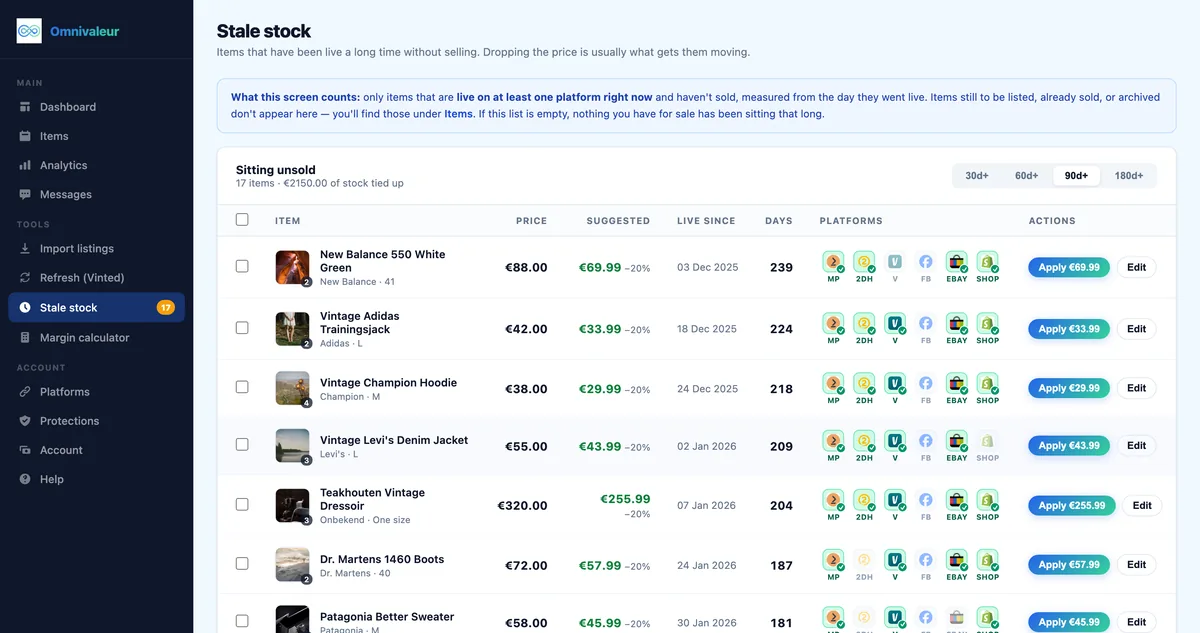
The failure mode every reseller hits eventually: a pair sells on eBay at 9am, but the Vinted listing stays live until someone manually notices at 6pm and it sells there too. Now you're refunding one buyer and eating a negative review. Real-time inventory sync closes this gap by delisting across every connected platform the moment one sale confirms.
If you're already moving inventory between Dutch marketplaces and Vinted, the mechanics are similar to what's covered in this Marktplaats to Vinted crosslisting guide — the size-variant logic for sneakers just adds one more layer on top of the standard clothing workflow. And once eBay sales pick up, moving that same inventory onto a Shopify storefront for repeat buyers follows the pattern in this eBay to Shopify crosslisting guide.
Which automation tool actually fits a sneaker reseller's workflow?
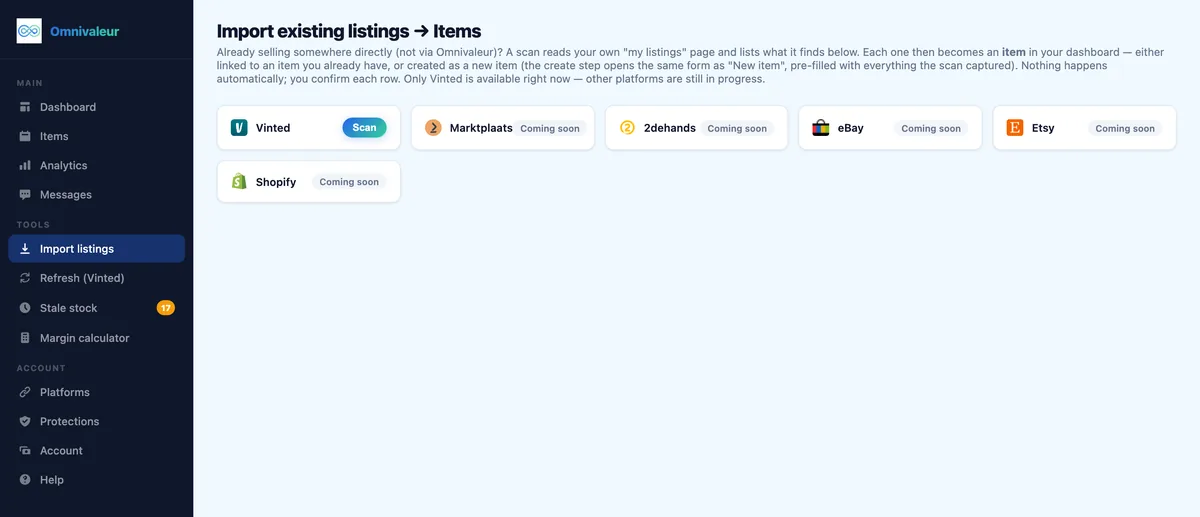
Not every crosslisting tool handles size-run inventory well — some were built for one-off vintage clothing items and choke on nine-variant sneaker drops. Before picking one, check whether it supports variant-level sync (not just item-level), bulk photo reuse across sizes, and native connections to all six marketplaces you're actually using rather than just two or three. Comparison breakdowns like Omnivaleur vs Vendoo are worth reading before committing, since pricing tiers and per-listing limits vary more than most marketing pages admit.
Frequently asked questions
Do I need third-party authentication before listing sneakers on Vinted or eBay?
Can automation platforms bulk-list every size in a sneaker size run at once?
What happens if a sneaker sells on two platforms within the same hour?
Is dropshipping sneakers allowed on Vinted or Etsy in 2026?
How much does sneaker reselling automation software typically cost per month?
Do EU consumer return rights apply differently to used sneakers versus new ones?
Keep reading

Stop copying listings by hand
Omnivaleur publishes your item to every platform at once and syncs stock automatically when something sells.
Start free trial