2dehands to Vinted Crosslisting in 2026: The Reseller's Playbook

Yes, you can crosslist from 2dehands to Vinted in 2026, but only fashion, accessories and homeware fit Vinted's rules — 2dehands allows almost anything. Use a tool like cross-list to copy eligible listings, reformat titles and photos for Vinted's mobile buyers, and sync stock so you never sell the same item twice.
Key takeaways
- Vinted only accepts fashion, accessories and select home items — your 2dehands electronics and furniture stay put.
- Vinted charges buyers a Buyer Protection fee, so your item price can stay clean while 2dehands keeps its own listing structure.
- DAC7 reporting hits both platforms in 2026 once you pass 30 sales or €2,000 in a year.
- Reformat titles and photos when moving listings — 2dehands buyers scroll desktop, Vinted buyers swipe on mobile.
- Stock sync is the difference between smooth crosslisting and double-selling embarrassment.
Two marketplaces, two very different crowds. 2dehands is the Belgian classifieds giant where people hunt for sofas, bikes, tools and the occasional designer coat. Vinted is a fashion-first app where buyers swipe through clothing, shoes and bags on their phones. Moving your listings between them doubles your reach — but only if you respect what each side actually allows.
Which of your 2dehands items can you actually list on Vinted?
This is where most resellers trip. 2dehands is a general classifieds platform. You can sell a lawnmower, a PlayStation and a wedding dress in the same afternoon. Vinted is narrow by design.
Vinted accepts clothing, shoes, accessories, beauty products, and a limited range of home and kids' items. It rejects almost everything else. Before you crosslist, sort your 2dehands inventory into two piles.
| 2dehands category | Fits Vinted in 2026? |
|---|---|
| Women's / men's clothing | Yes |
| Shoes, bags, accessories | Yes |
| Kids' clothing & toys | Yes (limited) |
| Home textiles, small decor | Partly — check category |
| Furniture, large appliances | No |
| Electronics, phones, consoles | No |
| Tools, bikes, car parts | No |
Check the current list on the Vinted selling rules before you push anything over. Their catalogue shifts, and listing a banned item gets it pulled fast. So keep your furniture and gadgets on 2dehands, and only crosslist the wardrobe.
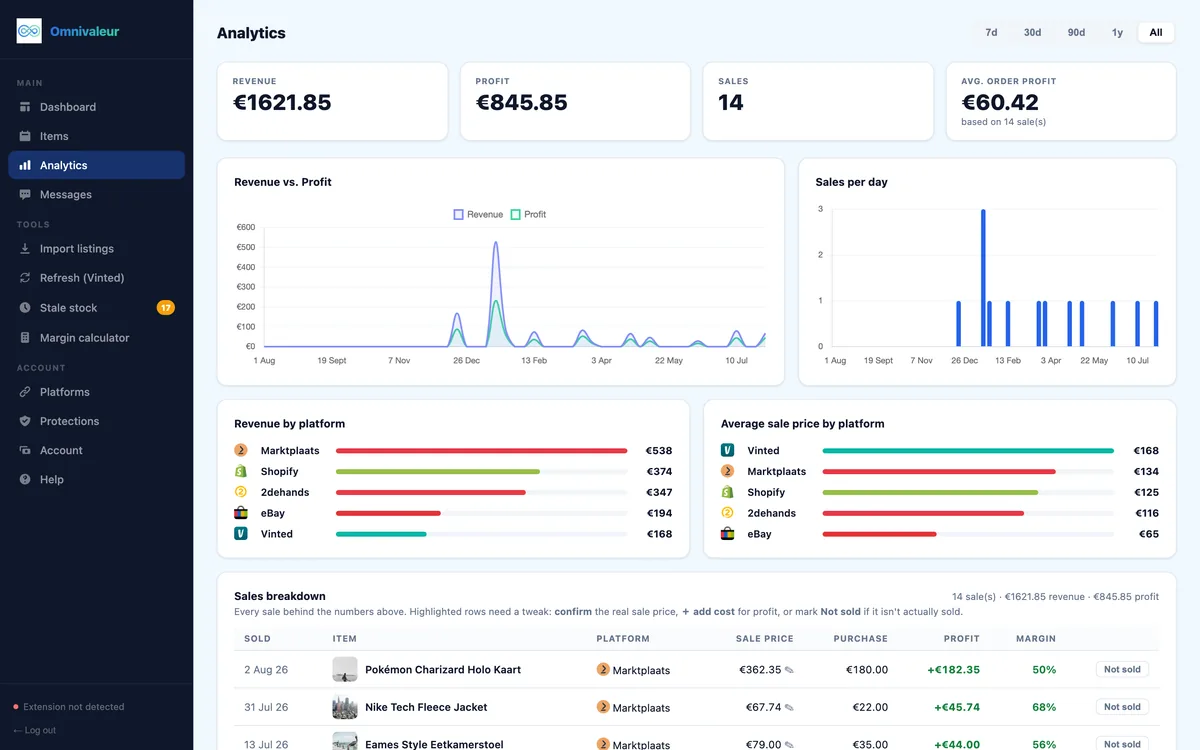
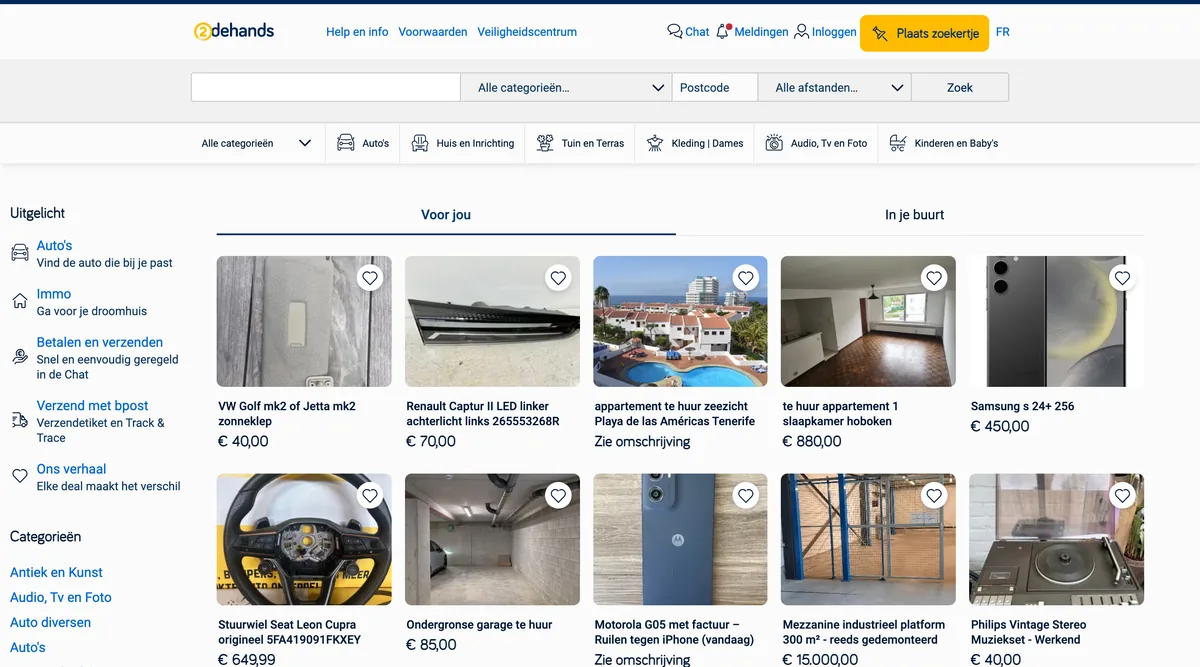
How do 2dehands and Vinted actually differ for sellers?
The listing philosophy is completely different, and that changes how you write each listing.
Classifieds vs. managed marketplace
On 2dehands, you post an ad. Buyers message you, you arrange pickup or shipping, and money changes hands however you agree. It feels like a local noticeboard. Vinted runs the whole transaction — payment held in escrow, shipping labels generated, buyer protection baked in.
That means a 2dehands listing built around "come pick it up in Antwerp" won't translate. Vinted buyers expect shipping. Rewrite accordingly.
Fees and who pays them
2dehands is mostly free to list, with optional paid boosts. Vinted takes no seller fee — the Buyer Protection fee is added on top of your price and paid by the buyer. So your €25 jacket stays €25 in your pocket, while the buyer pays roughly €26.50. Price your Vinted items the same as 2dehands and you actually earn more per sale on Vinted.
| Factor | 2dehands | Vinted |
|---|---|---|
| Listing cost | Free (paid boosts) | Free |
| Seller commission | None | None |
| Buyer fee | None | Buyer Protection (buyer pays) |
| Payment handling | You arrange it | Escrow, automatic |
| Shipping | Optional / pickup | Expected, label provided |
| Buyer type | Local, mixed goods | National, fashion-focused |
What breaks when you copy a 2dehands listing straight onto Vinted?
Plenty. A straight copy-paste looks lazy on Vinted and kills your conversion. Here's what needs reworking.
- Titles. 2dehands titles can be long and keyword-stuffed. Vinted uses a separate brand field, size field and condition field. Fill those properly instead of cramming everything into the title.
- Photos. 2dehands buyers scroll on desktop. Vinted buyers swipe on mobile. Bright, square, well-lit shots on a plain background win. That blurry photo of a coat on a hanger in a dark hallway? Reshoot it.
- Measurements. Clothing on Vinted sells on fit. Add chest, length and waist in cm. 2dehands buyers rarely ask; Vinted buyers always do.
- Condition tags. Vinted uses standardised condition labels — "New with tags", "Very good", "Good", "Satisfactory". Map your description to those exactly.
A good crosslisting tool handles most of this reformatting automatically, but you still review before it goes live. This mirrors the workflow we cover in our Marktplaats naar Vinted crosslisten 2026 guide, since 2dehands and Marktplaats share the same parent structure.
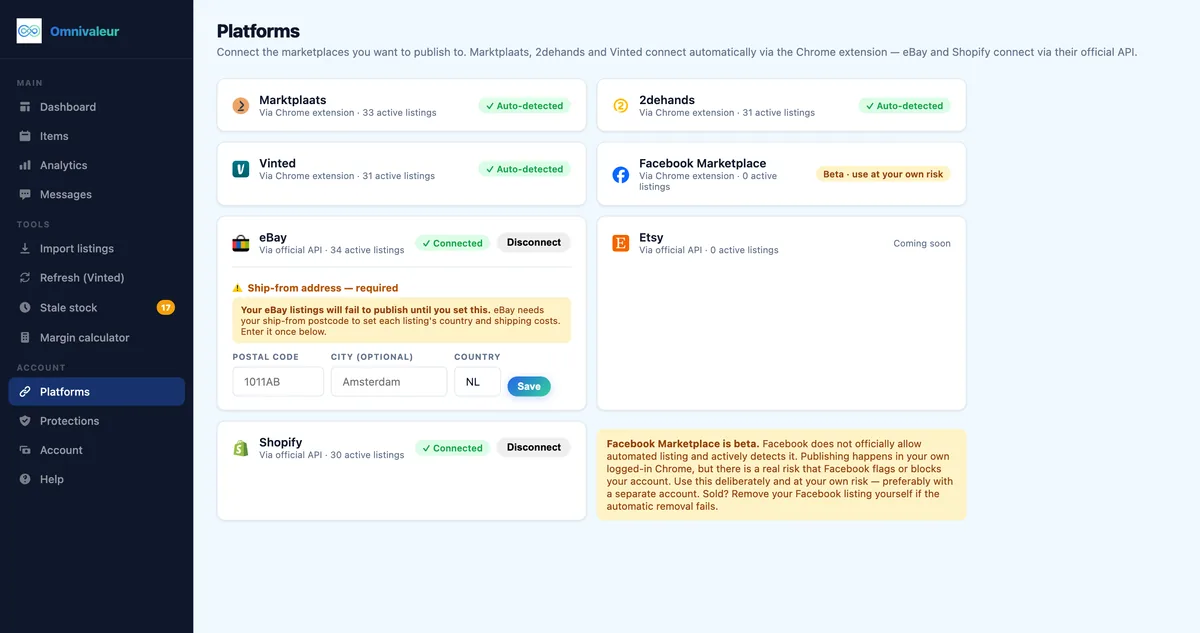
How does Omnivaleur move items from 2dehands to Vinted?
The flow is straightforward once your accounts are connected.
- Connect both accounts. Link your 2dehands and Vinted logins inside Omnivaleur.
- Import your 2dehands ads. The tool pulls titles, photos and descriptions.
- Filter for Vinted-eligible items. Only fashion and accessories carry over. Everything else stays on 2dehands.
- Auto-reformat. Titles get cleaned, condition maps to Vinted's labels, and category matches Vinted's catalogue.
- Review and publish. You check each draft, then push it live.
- Sync stock. Sell on one platform, and the tool marks or removes the item on the other.
That last step matters most. Selling the same coat twice — once on 2dehands, once on Vinted — means one buyer gets refunded and one gets angry. Stock sync stops that.
What DAC7 rules hit resellers on both platforms in 2026?
If you sell across marketplaces, tax reporting caught up with you a while ago. Under DAC7, EU platforms must report seller data to tax authorities once you cross a threshold.
The trigger is 30 or more sales OR more than €2,000 in total sales per platform per year. Hit that on Vinted, and Vinted reports you. Hit it on 2dehands, and 2dehands reports you separately. Crosslisting spreads your volume, but the thresholds are per platform, so watch each one.
Read the specifics on the Belastingdienst DAC7 page for sellers and the broader European Commission DAC7 overview. Occasional wardrobe clear-outs usually stay under the radar. Genuine reselling business does not — keep records.
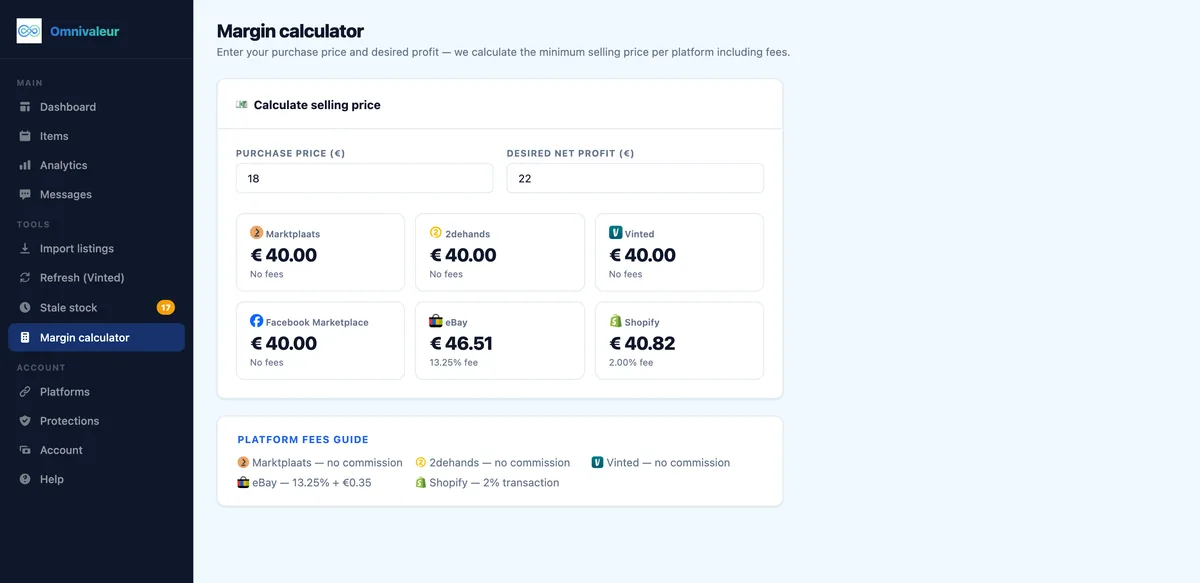
How do you keep both listings consistent without double-selling?
Consistency is more than stock. Price, availability and condition all need to match, or buyers lose trust.
Pricing across two audiences
2dehands buyers negotiate. Vinted buyers use the "make an offer" button but expect firmer prices. You can list slightly higher on Vinted since the buyer covers protection fees anyway. Don't undercut yourself — pricing the same item at €40 on one and €25 on the other tells buyers you're guessing.
Handling offers and messages
Both platforms push notifications. Reply fast. Vinted rewards active sellers with better feed placement, and 2dehands buyers move on quickly. A tool that centralises messages saves you jumping between two apps all day.
When an item sells, act immediately
Manual crosslisting means you must delete the other listing the second something sells. Miss it, and you're refunding. Automated sync does this for you within seconds. This is the same principle that makes crosslisting from Vinted to eBay work without headaches.
What consumer and platform rules should you know before selling?
Selling as a private individual is different from selling as a business. Once you list regularly for profit, EU consumer law may treat you as a trader — which means return rights and warranties apply.
The EU consumer rights portal lays out what buyers are owed. On Vinted specifically, buyer protection covers disputes, so describe items honestly. A "small stain" you didn't mention becomes a refund and a bad review. Full policy details sit in the Marktplaats help centre, which shares 2dehands' framework.
Should you crosslist manually or use a tool in 2026?
Do the math on your own time. Manual crosslisting a single clothing item — reshoot photos, rewrite title, map condition, set measurements — takes 8 to 12 minutes per platform. Twenty items across two platforms is most of a day.
| Approach | Time per 20 items | Double-sell risk | Best for |
|---|---|---|---|
| Fully manual | ~5–6 hours | High | Under 5 items/month |
| Crosslisting tool | ~45–60 min | Low (auto sync) | Regular resellers |
If you list a handful of items a year, manual is fine. If you're clearing a wardrobe every month or running a genuine side business, a tool pays for itself in the first weekend. For a deeper walkthrough in English, the Marktplaats to Vinted crosslisting guide covers the same mechanics with the sister platform.
What's the fastest way to start?
Pick your ten best fashion items on 2dehands. Reshoot their photos in daylight against a plain wall. Connect both accounts in Omnivaleur. Filter for Vinted-eligible items, let the tool reformat drafts, review each one, and publish. Turn on stock sync so nothing sells twice.
Start small, watch what moves, then scale up. The wardrobe that's been sitting on 2dehands for months often clears within days once it reaches Vinted's fashion crowd.
Frequently asked questions
Can I sell furniture from 2dehands on Vinted too?
Do Vinted and 2dehands share my seller data with each other?
Will my 2dehands reviews carry over to Vinted?
Is it worth crosslisting if I only sell clothes occasionally?
How do I price the same jacket on both platforms fairly?
What happens if I accidentally sell one item on both platforms?
Keep reading


Stop copying listings by hand
Omnivaleur publishes your item to every platform at once and syncs stock automatically when something sells.
Start free trial