How to Automate Vintage Camera Reselling Across Marketplaces in 2026
Vintage camera reselling automation means cross-listing one photographed camera to Marktplaats, 2dehands, Vinted, eBay, Etsy and Shopify from a single intake form, syncing stock so a sold Leica or Rolleiflex delists everywhere else, and tracking DAC7-relevant income automatically. It saves 15-25 minutes per listing versus manual re-entry on each platform.
Key takeaways
- Vintage camera listings need platform-specific edits (Etsy loves collector language, eBay buyers want shutter speed test results) — pure copy-paste hurts conversion.
- DAC7 reporting kicks in at 30 transactions or €2,000 in sales per platform per year, and most active camera flippers cross that line by Q2.
- Cross-listing tools that fire all six marketplaces at once are the fastest way to get an account rate-limited or shadow-banned.
- Omnivaleur publishes from one intake form to Marktplaats, 2dehands, Vinted, eBay, Etsy and Shopify, and deliberately runs one browser tab at a time to protect your accounts.
- Battery type (mercury cells, lithium packs) and export documentation matter more for cameras than for almost any other resold category.
Vintage camera reselling is a strange niche: half the value is in the glass, half is in the story, and none of it fits neatly into a single marketplace template. A 1962 Rolleiflex needs a different description than a 2003 digital point-and-shoot, and a buyer on Etsy wants a different pitch than a buyer on eBay. Automation, done right, doesn't flatten that nuance — it just stops you from retyping it six times.
What does "reselling automation" actually mean for camera sellers?
For someone flipping cameras, automation covers three separate jobs: writing the listing once, publishing it everywhere buyers actually search, and keeping stock in sync so you never sell the same Nikon FM2 twice. That last part matters more for cameras than for clothing, because a working vintage body with a matched lens is genuinely one-of-one. There's no "restock" button.
Good automation also means the tool adapts copy per platform instead of dumping an identical block of text six times. eBay buyers scan for shutter speed accuracy and light-seal condition. Etsy buyers respond to provenance and aesthetic language. Vinted buyers in the Netherlands and Belgium mostly want price and condition photos, fast. A tool that understands this distinction is doing more than "posting" — it's translating the listing for each audience, the same way it should for general collectibles reselling automation or vintage toy reselling.
Which marketplaces are worth cross-listing vintage cameras to in 2026?
Not every platform is worth your time for every camera. A €40 Kodak Instamatic barely justifies an Etsy listing fee. A €900 Leica M6 body absolutely does. Here's a rough breakdown of where camera resellers actually get traction in 2026, and what each platform costs to sell on.
| Platform | Best for | Typical seller cost | Camera buyer type |
|---|---|---|---|
| eBay | Higher-end SLRs, rare lenses, working medium format | ~12-13% final value fee | Global collectors, tested buyers who read specs |
| Etsy | Aesthetic/display cameras, "wall decor" vintage | ~6.5% + €0.20 listing fee | Design-focused buyers, not always functional-use |
| Vinted | Budget point-and-shoots, disposable-adjacent items | Free for sellers (buyer pays protection fee) | Local, price-sensitive, Gen Z film revival crowd |
| Marktplaats | Local pickup of bulky medium/large format gear | Free listing, paid featured spots | Dutch local buyers, often collectors testing before buying |
| 2dehands | Belgian mirror of Marktplaats behaviour | Free listing, paid featured spots | Same profile, Flemish market |
| Shopify | Your own curated vintage camera storefront | Monthly subscription, no per-sale cut | Repeat collectors, higher trust, no marketplace algorithm |
The pattern that works for most resellers: local marketplaces (Marktplaats, 2dehands, Vinted) for anything under roughly €150 or anything heavy enough that shipping eats the margin, and eBay plus Etsy for the pieces worth international shipping insurance. Shopify becomes worthwhile once you've built a repeat buyer list, which usually happens after 40-60 completed sales. If you're weighing similar cross-border decisions for other niches, the Marktplaats to eBay crosslisting guide and 2dehands to Etsy crosslisting guide walk through the fee math in more detail.
How do DAC7 tax reporting rules affect vintage camera sellers in 2026?
This is the part almost nobody selling vintage cameras online has fully priced in. Under DAC7, EU marketplaces must report sellers who complete 30 or more transactions, or earn more than €2,000, in a calendar year — per platform. If you're flipping cameras as a side hustle across Vinted, Marktplaats and eBay simultaneously, it's entirely possible to trigger reporting on two platforms without hitting the threshold on either one individually if you're not tracking totals.
The Belastingdienst's DAC7 guidance for sellers lays out exactly what platforms collect and forward: your tax ID, bank details, and transaction totals, once you cross the threshold. The European Commission's DAC7 overview confirms this applies across all EU member states, not just the Netherlands, so Belgian 2dehands sellers face the identical rule.
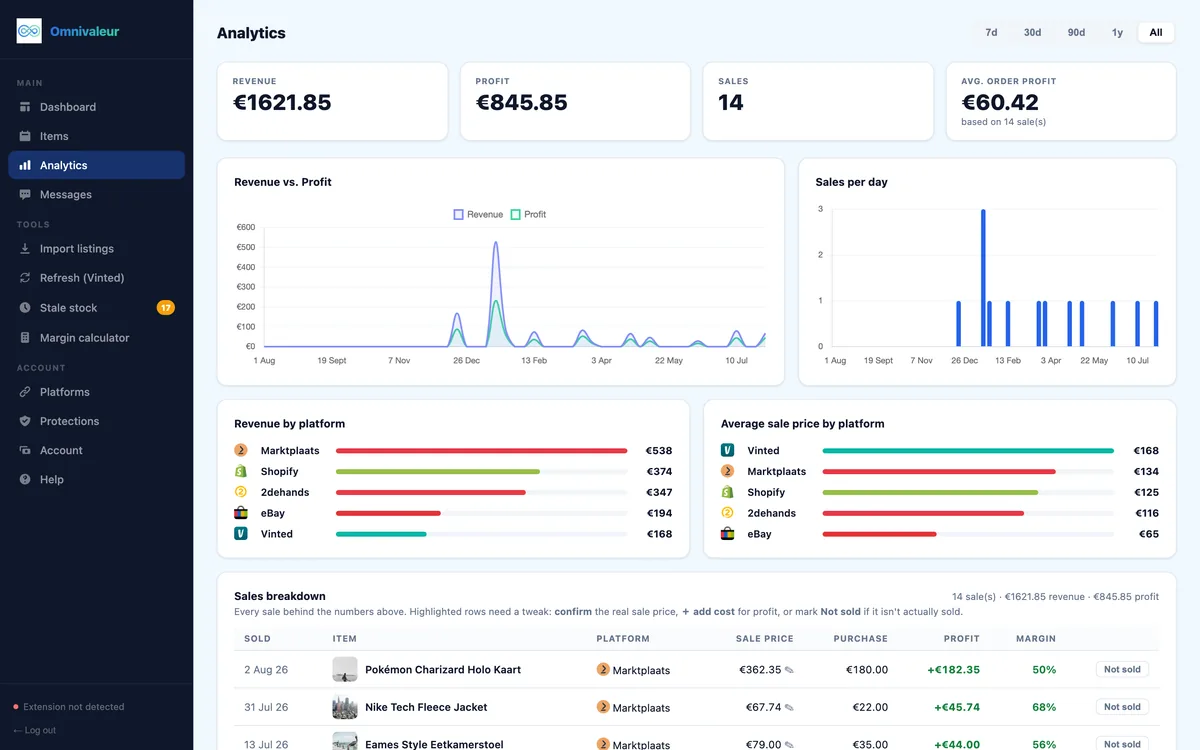
Practically, this means a reseller doing serious volume in vintage cameras should track sales per platform, not just total revenue. A spreadsheet works. Automation that logs sold price and platform at the moment a listing delists works better, because manually reconstructing 200 transactions in December is miserable.
Why do parallel listing tools get vintage camera accounts flagged?
Camera accounts get flagged more often than clothing accounts, and there's a specific reason: high-value items trigger extra fraud review on most platforms, and posting a burst of €300-1000 listings in the same 90 seconds reads exactly like a bot dumping stolen inventory. eBay in particular throttles new sellers who post fast, and Marktplaats has quietly tightened its bot detection since 2023 after a wave of scam-account crackdowns.
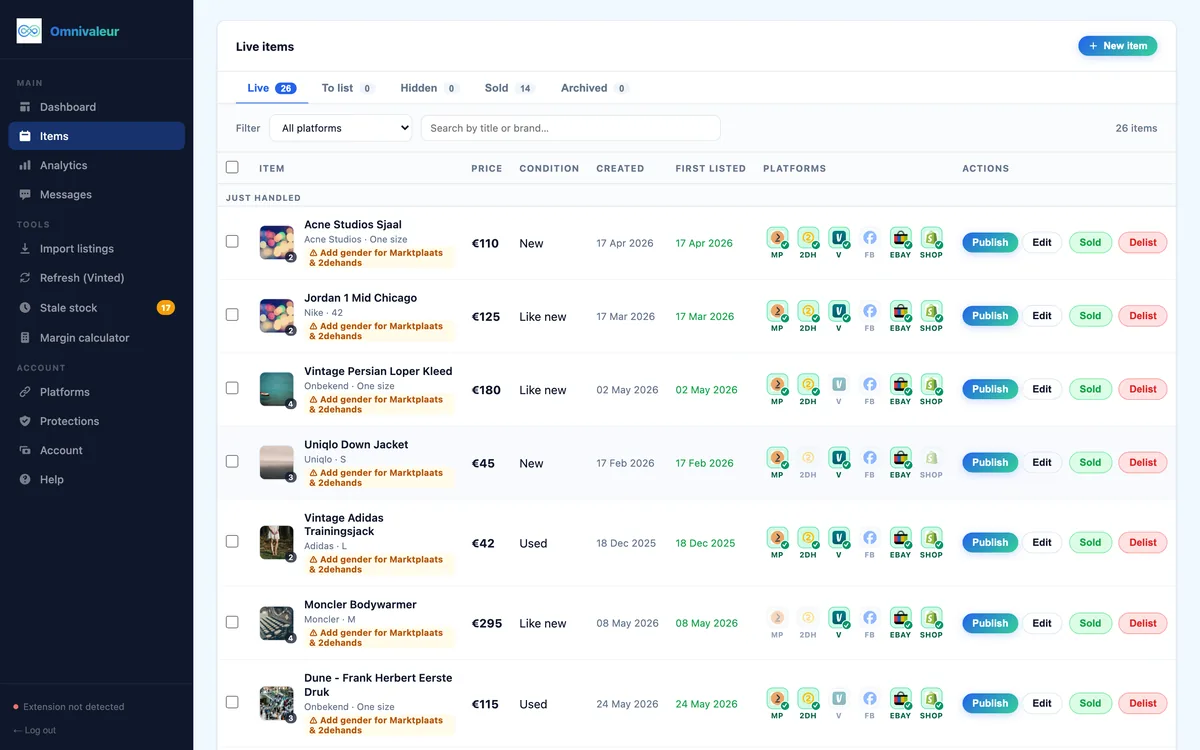
This is one reason Omnivaleur runs cross-listing one browser tab at a time, on purpose. Parallel publishing across six tabs might feel faster, but it's precisely the pattern marketplaces watch for when they rate-limit or suspend an account. A single sequential flow — list, wait, list — looks like a human being careful, because that's what it's mimicking.
It also means when a camera sells on one platform, delisting the duplicates elsewhere happens in the same measured order, instead of six simultaneous API calls that can trip Vinted's or eBay's automated abuse filters. If you've had an account warned or suspended before, this pacing difference is usually the fix, not a new proxy or VPN trick.
How should you write and grade condition for vintage cameras at scale?
Condition grading is where most automated listings fall apart for cameras, because "used - good condition" tells a buyer nothing. Vintage camera buyers specifically want to know: does the shutter fire at all speeds, is there fungus or haze in the lens, do the light seals need replacing, does the meter respond to light, and does the film advance mechanism catch or skip.
A repeatable template solves this without slowing you down. For each body, note:
- Shutter speed test result (tested on B, 1/500, 1/60, 1/8 — even a rough check beats none)
- Lens clarity: clear, minor dust, haze, fungus, or scratches
- Light seal condition, since foam seals from the 1970s-90s degrade almost universally by now
- Battery compartment corrosion, especially on cameras that sat with old cells inside
- Included accessories: strap, case, lens caps, original box
Write this once per item in your intake form, then let per-platform copy adapt tone around the same facts. eBay buyers want the bullet list up front. Etsy buyers want a sentence woven into the story ("this Yashica has light haze on the front element, giving that soft vintage glow collectors chase"). Same facts, different framing — that's the actual value of automation, not just faster posting. The same logic applies to grading nuance in vinyl record condition grading or general electronics resale automation.
What shipping and battery rules matter for vintage camera resellers?
Cameras built before the mid-1990s often shipped with mercury oxide button cells (common in light meters on Rolleiflex and early Nikon bodies), which are now restricted or banned under EU battery regulations. If a camera still has its original battery installed, remove it before shipping and note the removal in the listing — most carriers will reject a parcel that declares a mercury cell inside.
Lithium batteries in later film and early digital cameras fall under separate air-freight restrictions, which matters if you're shipping a 1990s point-and-shoot with a built-in lithium pack internationally via eBay or Etsy. Declare the battery type on the customs form; undeclared lithium is one of the most common reasons a cross-border camera parcel gets held at customs.
Weight is the other quiet cost. Medium and large format bodies (Rolleiflex TLRs, Mamiya RB67s) often weigh 1.5-2.5kg with a case, which pushes shipping from a flat €5-8 tier into a heavier bracket fast. Factor that into your listed price before you commit to free shipping on eBay, or you'll eat the difference on every sale. For buyers, the EU's consumer shopping rights guidance is worth linking in your own listings too, since return expectations differ by platform and buyers increasingly check this before bidding on higher-value gear.
How much time does cross-listing automation actually save on cameras?
Manually listing one camera across six marketplaces — writing platform-specific copy, resizing photos, re-entering condition notes — takes most resellers 25-40 minutes per item once you include the fiddly bits like category selection on eBay or tag optimisation on Etsy. Multiply that by 15 cameras a week and you're at 6-10 hours just on listing, before any actual sourcing or customer messages.
Omnivaleur cuts that to one intake form that publishes to Marktplaats, 2dehands, Vinted, eBay, Etsy and Shopify, adjusting title, tags and description per platform automatically. For a reseller doing 15-20 cameras weekly, that's roughly the difference between a side hustle and a job that eats every evening. It also matters for delisting: when a Leica sells on eBay, the identical listing on Vinted and Marktplaats needs to disappear within minutes, not whenever you remember to check.
If you're comparing tools to handle this volume, it's worth reading an honest breakdown rather than taking a vendor's word for it — see Omnivaleur vs Vendoo or Omnivaleur vs List Perfectly for a side-by-side on stock-sync speed and pricing, both directly relevant to how fast a sold camera clears from your other listings.
What's a realistic starter workflow for a new vintage camera reseller in 2026?
Start narrow. Pick two platforms — typically Marktplaats or 2dehands for local, quick-turnover sales, plus eBay for anything worth international shipping — and get your condition-grading template solid before adding Etsy and Vinted. Cameras reward patience in photography (natural light, no flash glare on the lens glass) more than almost any other resale category, so don't automate the photo step; automate everything after it.
Once you're comfortable, layer in Shopify as a standing storefront for repeat collectors who've bought from you before — those buyers convert without marketplace fees eating the margin. This mirrors the growth path resellers use in adjacent niches like gaming equipment reselling or sneaker reselling automation: local first, then international, then owned storefront.
Frequently asked questions
Do vintage film cameras need to be tested before listing them for sale?
Can you legally export vintage cameras with original leather cases outside the EU?
How do you price a vintage camera that has no comparable recent sales?
Should you disclose lens fungus or haze even if it's not visible in photos?
Is it worth cross-listing cheap point-and-shoot cameras (under €30) at all?
Keep reading

Stop copying listings by hand
Omnivaleur publishes your item to every platform at once and syncs stock automatically when something sells.
Start free trial