How to Price Second-Hand Items for Maximum Profit in 2026

Price second-hand items by researching real sold listings on platforms like eBay and Vinted, then deduct 30 to 50 percent from original retail value based on condition, brand demand, and category depreciation. Factor in platform fees, shipping costs, and leave a 10 percent buffer for buyer negotiations.
Key takeaways
- Research completed sales rather than active asking prices to find true market value
- Apply standard depreciation rules based on item category and historical demand
- Always include a negotiation buffer in your starting price to accommodate lowball offers
- Account for platform selling fees and shipping expenses before locking in your final price
- Use automated analytics to track historical sales data and adjust slow moving stock
Setting the right price for used goods separates profitable resellers from hobbyists who end up clearing out their storage units for pennies. Too high, and your inventory sits collecting digital dust while platform algorithms penalize your store for low visibility. Too low, and you leave easy money on the table, failing to cover your sourcing time, cleaning costs, and shipping supplies. In 2026, modern reselling requires a data-driven approach that combines historical platform demand, accurate condition grading, and a firm grasp of category-specific depreciation curves.
Whether you are listing a single designer jacket or managing thousands of items across multiple storefronts, pricing is not a guessing game. It is a repeatable formula based on active market supply, verified transaction history, and buyer psychology. As cross-listing across ecosystems like Marktplaats, 2dehands, and Vinted becomes standard practice for scaling operations, understanding how prices shift between local pickup platforms and international shipping apps is essential for protecting your margins.
What Is the Fairest Way to Value Used Items?
Fair market value is never what the original owner paid, nor is it what they emotionally feel the item is worth. The fairest and most accurate valuation method relies strictly on historical transaction data. When you look up an item, ignore the active listings where sellers are asking high prices; look exclusively at sold and completed listings. Active listings only tell you what has not sold. Sold listings tell you what a real buyer with real money was willing to part with.
To establish this baseline, search for your exact item or the closest comparable model across multiple marketplaces. If you are evaluating a vintage camera body, check both local platforms and specialized niches. For a deeper dive into automating specific inventory types, review our Vintage Camera Reselling Automation 2026 Guide to see how niche demand impacts baseline valuation.
Once you have three to five recent sales data points, calculate the median price. This median acts as your absolute anchor. From there, adjust upward for exceptional condition, original packaging, or rare colorways, and downward for missing parts, heavy wear, or generic branding. If you want to expand your inventory sourcing across borders without spending hours manually recalculating values, tools like Omnivaleur vs Zipsale: Honest 2026 Reseller Comparison offer insights into how modern cross-listing platforms handle multi-channel pricing strategies.
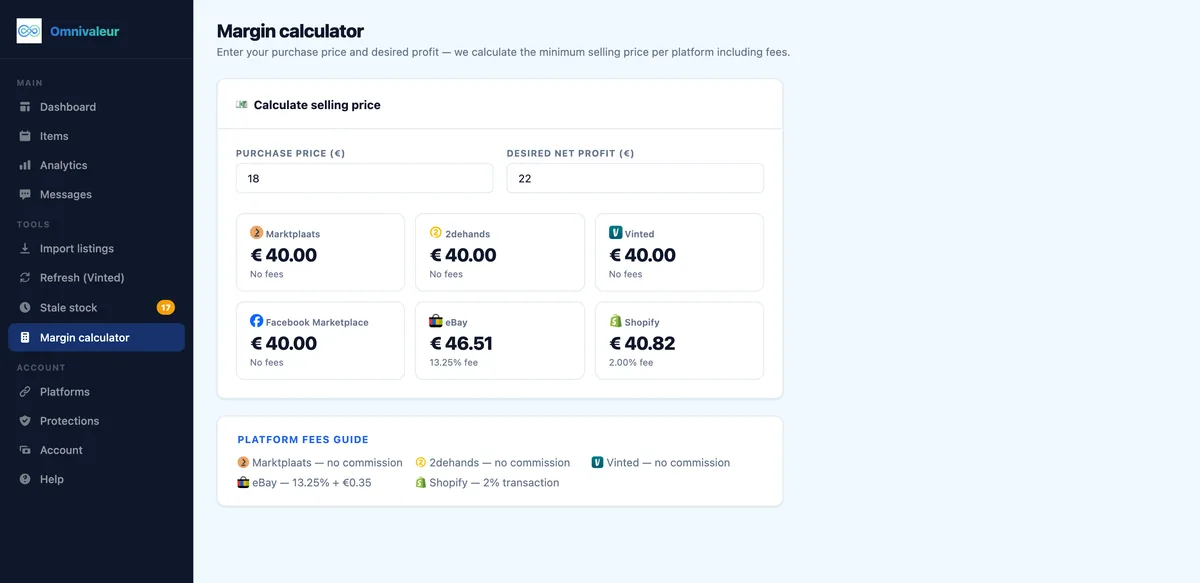
How Do You Calculate the Price for a Second-Hand Item?
Calculating a profitable selling price requires a structured formula that accounts for all hidden expenses. Many beginner resellers calculate their profit based on the listing price, which is a critical mistake. In practice, sellers rarely receive full asking price on peer-to-peer marketplaces. Data shows that the actual final sale price on second-hand platforms differs from the initial asking price by roughly 10% to 20% due to offers, bundle discounts, and promotions.
Here is the foundational calculation every professional reseller uses:
- Find Retail Baseline: Identify the original retail price or current MSRP of the item.
- Apply Category Depreciation: Multiply the retail price by the category depreciation factor (detailed in the next sections).
- Adjust for Condition: Subtract or add percentage points based on physical wear, functional tests, and completeness.
- Add Fees and Buffer: Add platform commission fees, payment processing percentages, and a 10% negotiation margin.
For example, if a branded kitchen appliance retailed at €150, experiences a standard 50% appliance depreciation, and has minor cosmetic scratches, your baseline drops to €70. Adding 12% for platform fees and a small shipping buffer brings your target listing price to around €82. If you are scaling your operations to include specialized goods, understanding the platform rules is just as vital as the math. Read up on regulatory shifts through the official European Commission DAC7 tax transparency overview to ensure your sales volume remains fully compliant.
What Is a Fair Price for a Used Item Across Different Categories?
Different product categories age at entirely different rates. Treating a vintage leather handbag the same way you treat a used smartphone will destroy your profitability. Understanding category-specific rules of thumb allows you to price items instantly during sourcing trips without needing to look up every single piece.
Let us break down the primary categories:
| Category | Standard Depreciation Rate | Key Pricing Driver | Primary Risk Factor |
|---|---|---|---|
| Consumer Electronics | 50% to 70% in year one | Battery health, original accessories | Rapid obsolescence, firmware lockouts |
| Fast Fashion Clothing | 70% to 85% off retail | Brand tier, current micro-trends | Seasonality, fabric pilling |
| Solid Wood Furniture | 40% to 60% off retail | Mid-century modern design, maker mark | High local pickup logistics cost |
| Board Games & Tabletop | 10% to 30% off retail (if OOP) | Out-of-print status, complete components | Missing tiny tokens or rulebooks |
| Power Tools & Equipment | 30% to 50% off retail | Working condition, brushless motor tech | Hidden mechanical wear, cord damage |
For fashion items, brand tier dictates everything. High-end designer pieces retain up to 60% of their value, while fast-fashion mall brands drop near zero almost instantly. To dive deeper into clothing valuation and multi-platform syndication, explore the Best Clothing Reselling Automation Tools for 2026.
How Do Condition and Demand Change the Value?
Condition is the multiplier that can either elevate a common item into a quick sale or render a rare item completely worthless. Buyers online cannot touch, smell, or inspect goods in person, making your condition grading system the primary trust signal. Professional resellers use a standardized tier system ranging from Brand New with Tags (BNWT) down to Heavily Distressed / For Parts.
When grading condition, be brutally honest. If a vintage sweater has a tiny moth hole near the hem, photographing and disclosing it allows you to price it fairly at a 20% discount rather than risking a return claim and negative feedback. Conversely, high demand can override minor cosmetic flaws. If an item is trending on social media or has gone out of production entirely, scarcity creates an upward pricing pressure that defies standard depreciation curves.
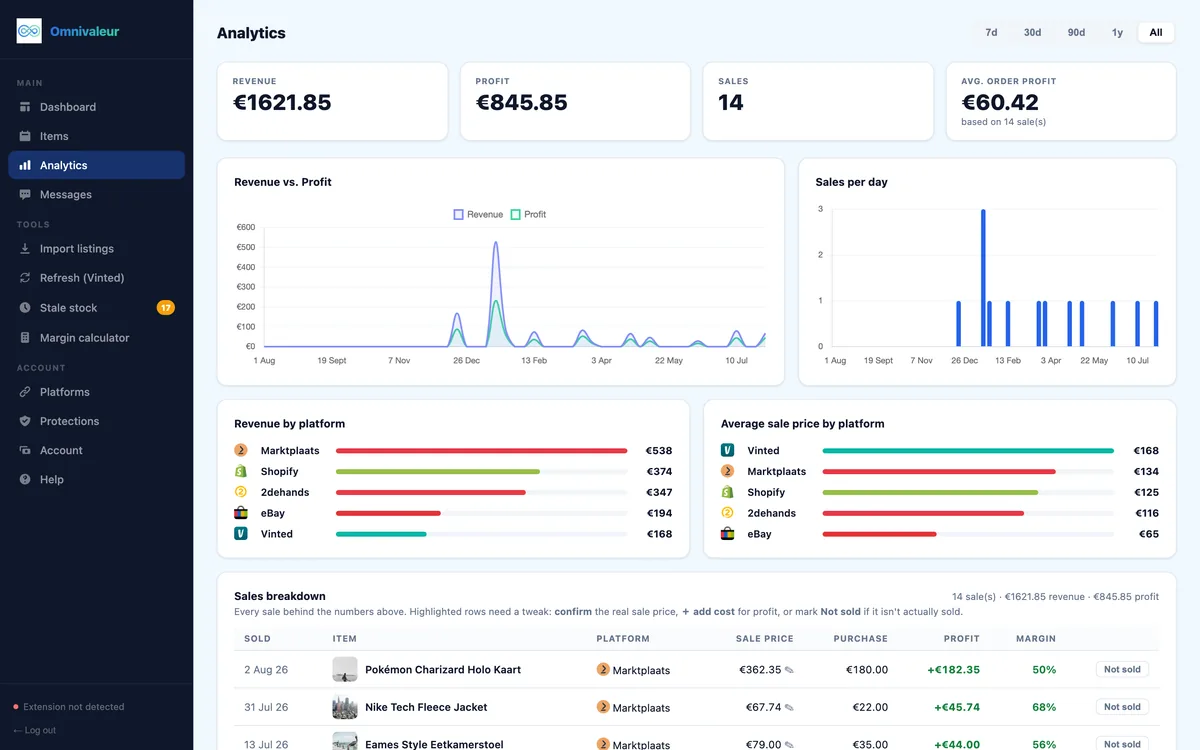
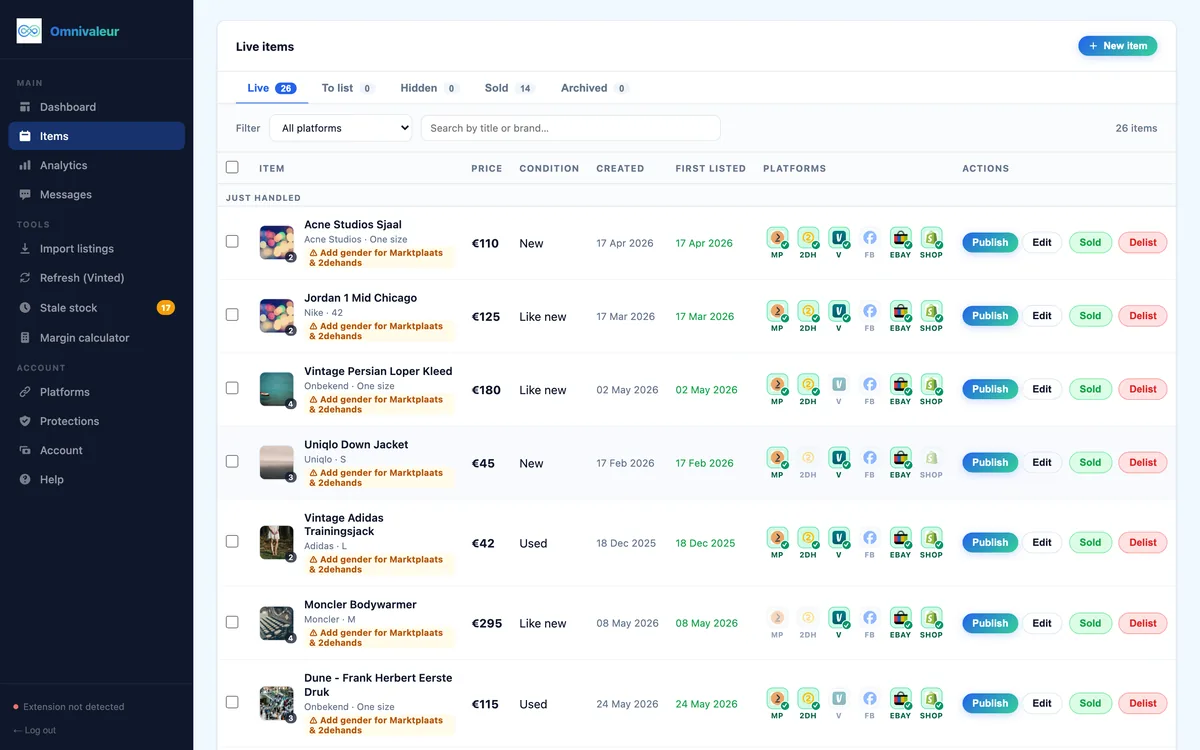
Managing inventory across multiple online channels requires keeping track of which items are sitting too long. Omnivaleur's stale-stock view flags listings that have been sitting unsold, so slow inventory surfaces instead of sinking down the list, allowing you to trigger targeted price drops before an item becomes completely stagnant.
How Do I Find Out What My Used Items Are Worth?
Finding accurate worth requires utilizing built-in platform filters. On eBay, always check the "Completed Items" and "Sold Items" toggles in the left sidebar. This displays items that successfully transacted in green text, alongside failed listings in red. If twelve items sold for €40 and three sold for €65 because they included original boxes, your target price is locked at €40 unless you also possess that box.
Beyond eBay, scan local marketplaces like Marktplaats and 2dehands to see what regional buyers are paying. Shipping costs and local pickup preferences alter regional pricing significantly. Heavy items like solid oak dining tables command higher prices when local pickup is enforced, whereas lightweight electronics sell faster on national shipping platforms where buyers have buyer protection.
If you are managing cross-border inventory between the Netherlands and Belgium, make sure your shipping and tax calculations align with local regulations. Check out the Belastingdienst DAC7 information for sellers to understand when your volume crosses statutory reporting thresholds.
What Percentage of Retail Should I Price Used Items?
The classic rule of thumb for general goods is the fifty-thirty-ten guideline, though experienced resellers adapt this based on item quality. For a standard, gently used item in great functional condition, starting at 50 percent of the original retail price is a reliable baseline. If the item is practically new, never opened, or from a highly sought-after collaboration, you can push that starting point up to 70 or 80 percent of retail.
Items that show moderate wear, missing manuals, or faded colors should drop immediately to 30 percent of retail or lower. Anything below 20 percent of retail usually signals that the item has reached commodity status, where convenience and speed of turnover matter more than maximizing profit per unit. When automating your pricing tiers across different software solutions, comparing tool features can save you hundreds of hours per month. Review the insights in Omnivaleur vs OneShop: Honest 2026 Comparison to select the ideal workflow for your store.
Why Isn't My Item Selling?
If an item has been listed for thirty days without a single favorite or message, your pricing is almost certainly out of alignment with the current market, or your listing SEO is failing. Before lowering your price, check your search keywords, update your photographs, and verify that similar items are not currently flooding the platform at a lower price point.
If your SEO and photos are pristine, the problem is price elasticity. Buyers on second-hand marketplaces are bargain hunters by definition. A price reduction of just 10% to 15% is often the psychological tipping point that moves an item from someone's saved favorites list straight into their shopping cart. For physical goods where storage space costs money, rapid turnover beats holding out for maximum profit every single time.
- ✓Look up recent completed and sold listings instead of active ones
- ✓Calculate the median sold price to use as your anchor
- ✓Adjust the price up or down based on wear and completeness
- ✓Add platform selling fees and any packing costs to your total
- ✓Add a small negotiation buffer if you plan to accept offers
Should I Price Firm or Accept Offers?
Setting your pricing strategy involves choosing between a firm price and an open-offer approach. On platforms like Vinted and Marktplaats, buyers expect to negotiate. Setting a price 10% to 15% higher than your actual target allows you to accept reasonable lower offers without cutting into your core margins, while making the buyer feel like they secured a great deal.
However, for rare collectibles, high-demand electronics, or items priced aggressively to sell fast, marking them as firm prevents endless streams of lowball messages. Test both strategies based on the category. For clothing and home decor, build in negotiation room. For niche technical gear or items with fixed collector value, state your price is firm right in the description.
When scaling your business across platforms, automating your inventory synchronization prevents the nightmare scenario of selling the exact same item twice on different apps. Read our guide on How to Avoid Selling the Same Item Twice (2026 Guide) to safeguard your seller ratings.
How Much Do Electronics Depreciate?
Consumer electronics suffer the steepest depreciation curve of any reselling category. The moment a new smartphone, laptop, or gaming console model is announced, the previous generation drops by 20% overnight. In their first year of ownership, most consumer electronics lose 50% of their original retail value.
When pricing used electronics, condition and verification are paramount. Battery health percentages on smartphones, shutter counts on cameras, and verified boot tests on laptops dictate whether you can command top dollar. If you sell tech accessories, explore the setup tips in Mobile Phone Reselling Automation 2026 | Guide to streamline your listing workflow.
Ready to Save Hours on Listings?
Manual pricing and repetitive data entry eat into the hours you should be spending sourcing profitable inventory. When you cross-list items across multiple marketplaces, keeping prices updated and tracking stale stock manually becomes unsustainable as your catalog grows past a few hundred listings.
Smart tools streamline this entire workflow. By integrating automated analytics that calculate real profit based on actual transaction values rather than vanity asking prices, you maintain healthy margins across every channel. For a direct comparison of top-tier automation tools available today, check out Omnivaleur vs Crosslist: Honest 2026 Reseller Comparison to find the setup that fits your business model.
Frequently asked questions
How do I handle shipping costs when pricing heavy second-hand items?
What should I do if an item receives zero views after two weeks?
Are original receipts necessary to price items higher?
How do seasonal trends impact second-hand pricing?
How can I protect myself against fraudulent return claims on high-priced items?
Keep reading


Stop copying listings by hand
Omnivaleur publishes your item to every platform at once and syncs stock automatically when something sells.
Start free trial