Omnivaleur vs Zipsale: Which Cross-Listing Tool Wins in 2026?
Omnivaleur and Zipsale both automate multi-channel reselling, but they serve different regions. Zipsale focuses heavily on UK platforms and general cross-listing. Omnivaleur is built specifically for European sellers, integrating seamlessly with Marktplaats, 2dehands, Vinted, eBay, Etsy, and Shopify while handling EU tax and localized euro-currency pricing.
Key takeaways
- Zipsale was originally built with a strong focus on UK marketplaces and secondhand platforms.
- Omnivaleur specializes in European platforms like Marktplaats and 2dehands alongside Vinted and eBay.
- Cross-listing in Omnivaleur runs one browser tab at a time to protect accounts from sudden rate-limiting.
- Omnivaleur's stale-stock view flags long-sitting listings so you can re-optimize stagnant inventory.
- Both platforms aim to eliminate manual data entry, but regional shipping and fee structures differ significantly.
Running a reselling business across multiple online marketplaces saves you from relying on a single channel, but managing inventory manually quickly becomes a full-time job. When you sell an item on one platform, removing it from another before a duplicate sale happens is stressful. Cross-listing software solves this bottleneck by synchronizing your inventory across sites.
Two prominent names in the automation space are Omnivaleur and Zipsale. While both tools aim to get your items in front of more buyers, they approach the market with different regional strengths, feature sets, and pricing structures. If you operate within Europe, understanding how these two platforms compare can save you hours of wasted effort and prevent costly overselling mistakes.
What Are the Core Differences in Platform Support and Regional Focus?
The biggest differentiator between these two tools lies in where their respective user bases operate. Zipsale gained initial traction among UK-based vintage sellers. Its integrations lean heavily toward platforms popular in the UK and North America. For European sellers who rely on regional giants, this can sometimes create friction with local shipping labels, category trees, and localized listing requirements.
Omnivaleur was engineered from the ground up for the European reselling ecosystem. It natively supports platforms that dominate continental trade, making it a natural choice if your primary storefronts include Marktplaats in the Netherlands, 2dehands in Belgium, and Vinted across the EU. When cross-listing items, matching local shipping methods and complying with regional consumer protection standards is just as important as the listing speed itself. You can read more about regional strategies in our Marktplaats to Vinted Crosslisting 2026 | Omnivaleur guide.
Furthermore, navigating cross-border trade means dealing with varying tax regulations. Under EU law, digital platforms must report seller data once certain thresholds are met. Knowing how your software handles these reporting requirements is vital. You can review the official regulations directly through the Belastingdienst DAC7 information for sellers or read the broader scope via the European Commission DAC7 overview.
How Do Omnivaleur and Zipsale Handle Pricing and Plan Structures?
Pricing structures dictate whether a cross-listing tool remains profitable as your inventory scales. Both platforms offer tiered subscription models, but the value you receive per euro spent depends heavily on the marketplaces you use and your monthly listing volume.
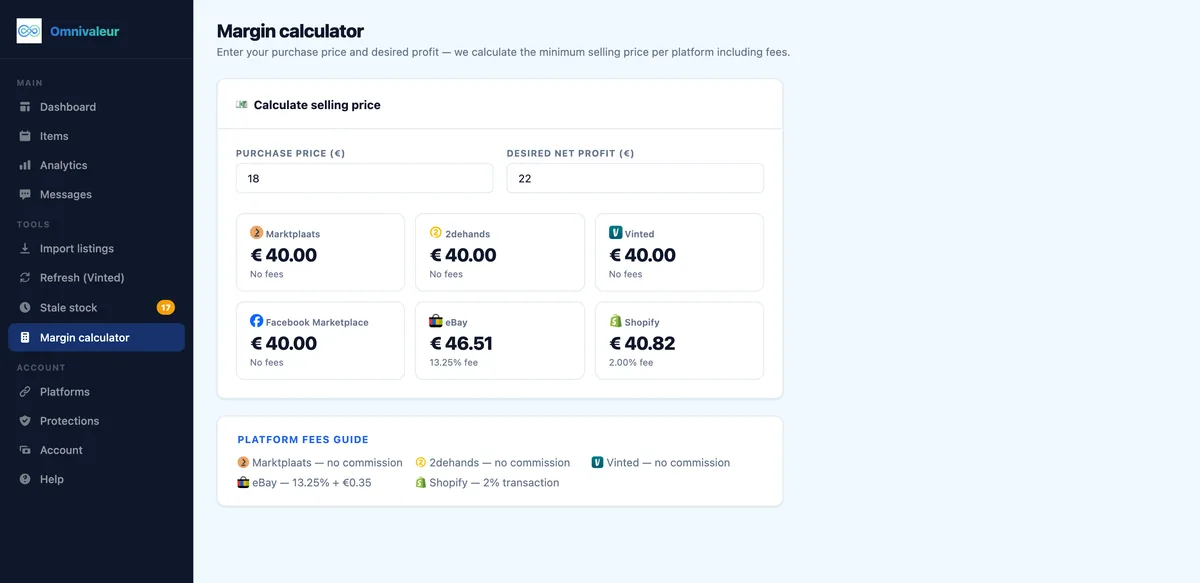
Zipsale typically charges based on active inventory tiers or flat monthly fees, which works well for sellers with massive, steady catalogs. However, if your inventory fluctuates seasonally—common among vintage clothing vendors or specialized collectors—paying for unused slots can cut into your margins. Omnivaleur structures its pricing with active European resellers in mind, ensuring that scaling across platforms like Shopify or Etsy does not trigger punishing overage fees.
Let us break down the key structural differences in a direct comparison table:
| Feature | Omnivaleur | Zipsale |
|---|---|---|
| Primary Region Focus | Europe (NL, BE, EU-wide) | UK, US, and general international |
| Marktplaats & 2dehands Support | Native, optimized integrations | Limited or indirect support |
| Publishing Speed Control | Sequential tab publishing (anti-ban) | Bulk automation focus |
| Inventory Management | Advanced stale-stock flagging | Standard multi-channel sync |
| Shopify & Etsy Integration | Fully integrated | Varies by plan tier |
When calculating your software overhead, always factor in the time saved versus the subscription cost. If a tool saves you five hours a week on manual copy-pasting, even a mid-tier subscription pays for itself quickly. For deeper insights into how tool features compare against other market alternatives, check out the Vendoo Alternative for European Resellers: Omnivaleur vs Vendoo (2026) review.
What Are the Key Differences in Inventory Sync and Relist Behavior?
Inventory sync is the safety net that stops you from selling the exact same vintage camera or designer jacket twice. If an item sells on Vinted, the software needs to instantly delist it from eBay, Marktplaats, and Shopify. A delayed sync leads to canceled orders, angry buyers, and potential account penalties from marketplace algorithms.
Zipsale offers robust multi-channel synchronization, but because its architecture serves a global audience, syncing speed can occasionally lag on regional European servers where API rate limits differ. Omnivaleur utilizes a direct integration approach tailored to European API limits, ensuring rapid delisting across regional platforms.
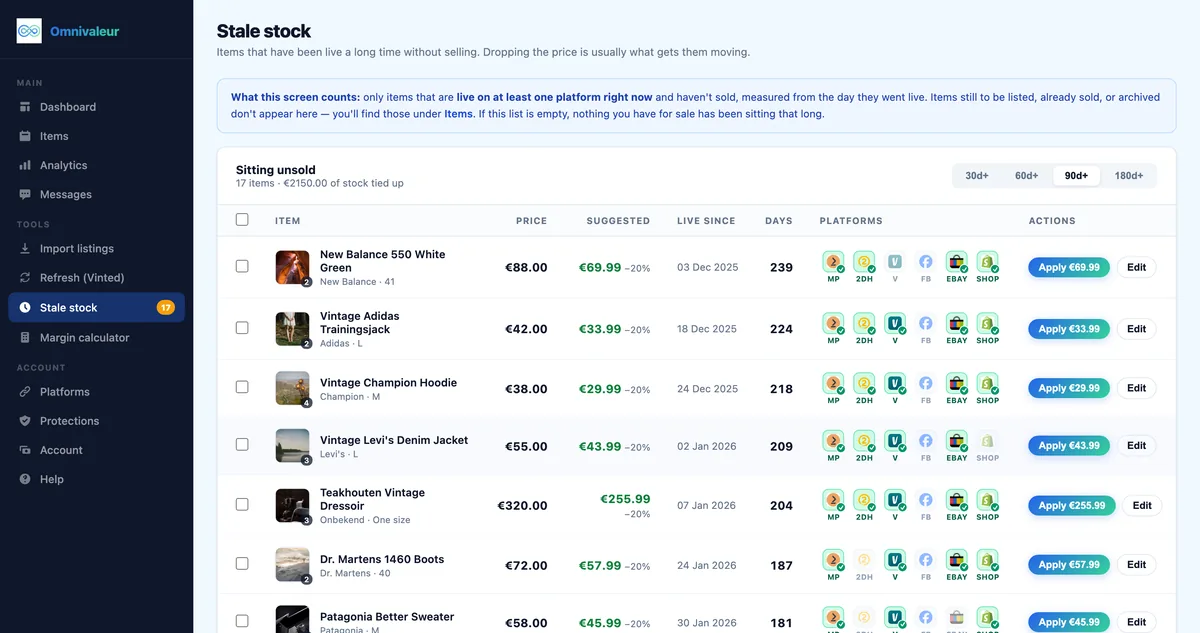
Another crucial aspect of inventory management is dealing with stagnant items. Omnivaleur’s stale-stock view flags listings that have been sitting unsold, so slow inventory surfaces instead of sinking down the list. Instead of guessing which items need a price drop or a fresh set of photos, your dashboard highlights your dead stock automatically. This proactive approach keeps your capital moving, whether you are selling Vintage Clothing Reselling Automation Platforms 2026 Guide items or high-turnover consumer goods.
Why Does Sequential Tab Publishing Matter for Account Safety?
One of the most misunderstood aspects of cross-listing software is publishing speed. Many beginners assume that faster is always better—that hitting a button to blast one item across ten marketplaces simultaneously in two seconds is the ultimate feature.
In reality, marketplace security algorithms hate unnatural bot-like behavior. If a platform detects twenty listings popping up from a single account within three seconds, its anti-spam filters can flag your account for automated activity, leading to shadowbans or permanent suspension.
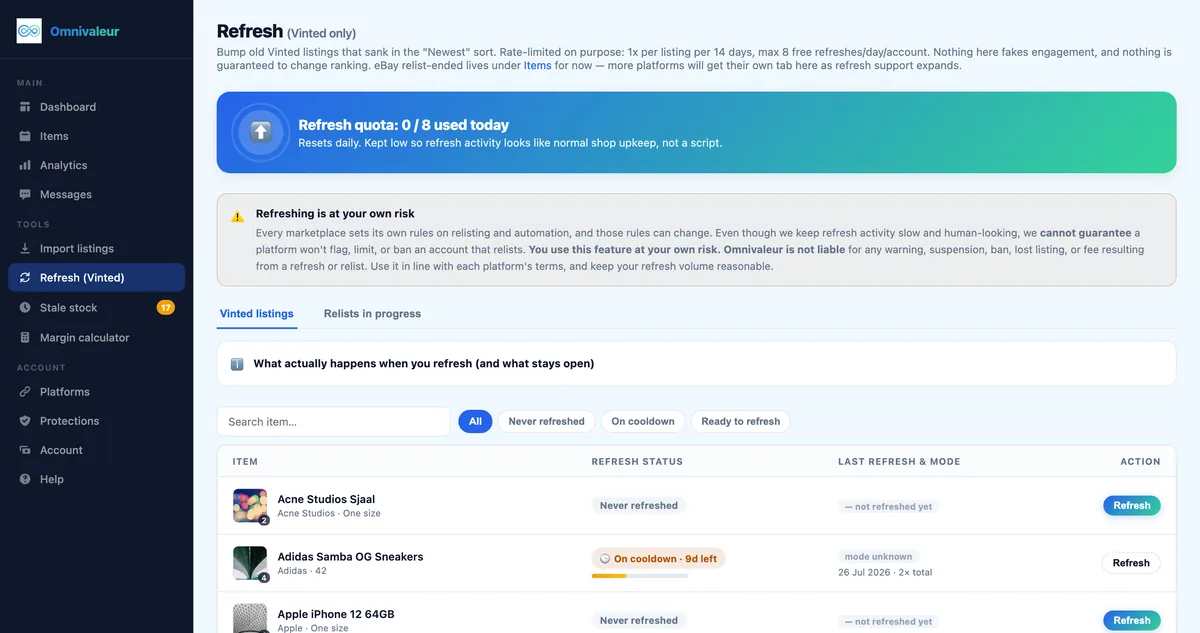
This is why cross-listing in Omnivaleur runs one browser tab at a time on purpose: parallel publishing is what gets marketplace accounts rate-listed. By pacing the publishing process naturally, Omnivaleur mimics human behavior, protecting your valuable seller accounts from sudden bans while still saving you immense amounts of manual effort.
Maintaining account health is especially critical when dealing with stricter consumer regulations within the EU. Familiarize yourself with buyer protection laws to ensure your listings comply with local return expectations by checking the guidelines at Your Europe consumer shopping rights.
- ✓Compare your primary selling regions against the software focus
- ✓Check if local shipping methods match your regional platforms
- ✓Review inventory sync speeds to prevent duplicate sales
- ✓Use sequential tab publishing to protect accounts from bans
- ✓Surface stale stock to keep your working capital moving
How Do Both Tools Handle Ease of Use and Onboarding?
Time spent fighting with a complex user interface is time not spent sourcing inventory. Both Omnivaleur and Zipsale offer browser extensions and dashboard interfaces designed to capture item details—such as titles, descriptions, categories, and prices—and format them for external sites.
Zipsale provides a clean dashboard with extensive setup guides, though its interface is tuned primarily toward sellers familiar with UK resale conventions. Navigating category mappings for continental European sites can sometimes require manual overrides.
Omnivaleur minimizes setup friction for European users by pre-populating category trees native to Marktplaats, 2dehands, and Vinted. The dashboard workflow is structured around the daily habits of professional resellers. Whether you are listing hundreds of items from a thrift store haul or managing a curated boutique, the transition from draft to published across multiple channels is streamlined. To see how other minimalist options compare, look over our Omnivaleur vs Crosslist: Honest 2026 Reseller Comparison.
Which Tool Offers Better Support and Reliability for European Sellers?
When an API update breaks your listing sync right before the weekend, responsive customer support is non-negotiable. Software reliability separates amateur tools from professional business infrastructure.
Zipsale boasts an active support community, primarily centered around UK seller groups and helpdesk tickets operating on UK business hours. While effective, response times can vary if your issue pertains specifically to continental European payment flows or regional shipping integrations.
Omnivaleur maintains dedicated support attuned to the specific quirks of European marketplaces. Because the platform was built around regional requirements—such as handling euro currency conversions, localized shipping carriers, and regional DAC7 compliance questions—the support team understands the exact roadblocks European resellers face daily.
For more detailed breakdowns on specific niche categories, you can also explore our vertical guides such as the Designer Clothing Reselling Automation Guide 2026.
The Final Verdict: Which Cross-Listing Software Should You Choose?
Choosing between Omnivaleur and Zipsale ultimately comes down to your geographic focus and your target marketplaces.
If your business relies heavily on UK-centric platforms, or if you manage a global operation spanning North America and the UK, Zipsale is a capable, well-established tool with a strong feature set for international sellers.
However, if your reselling empire is anchored in Europe—selling across Marktplaats, 2dehands, Vinted, European eBay domains, Etsy, and Shopify—Omnivaleur is the clear winner. From its native understanding of EU tax regulations and euro pricing to its account-safe sequential publishing and stale-stock management, Omnivaleur is built specifically to maximize European reselling efficiency.
Frequently asked questions
Can I use Zipsale if I sell primarily on Marktplaats and 2dehands?
Does Omnivaleur automatically delist items when they sell?
Why does Omnivaleur list items one tab at a time?
How does Omnivaleur help me manage slow-moving inventory?
Is Omnivaleur suitable for professional Shopify store owners?
Keep reading
Stop copying listings by hand
Omnivaleur publishes your item to every platform at once and syncs stock automatically when something sells.
Start free trial