Vintage Book Reselling Automation in 2026: Cross-List Rare Titles Faster

Vintage book reselling automation means using one tool to list a rare or out-of-print book across Marktplaats, 2dehands, Vinted, eBay, Etsy and Shopify simultaneously, syncing inventory, price and sold status. Omnivaleur publishes from a single intake form to all six, so a first edition sells wherever a buyer finds it first, without manual re-entry.
Key takeaways
- Omnivaleur publishes one listing to six marketplaces at once, cutting per-book listing time from roughly 20 minutes to under 3.
- A single vintage book typically runs 3-5 active listings simultaneously, each tracked separately so you know exactly where it sold.
- Etsy requires items to be 20+ years old to qualify as vintage, which matters for how you categorize pre-1990s hardcovers.
- DAC7 reporting kicks in at 30 transactions or 2,000 euros per year, a threshold casual book flippers hit faster than they expect.
- Condition grading (Fine, Very Good, Good, Fair) needs to be consistent across platforms or you'll get return disputes.
Selling one battered first edition manually across six sites takes roughly 20 minutes of typing, photographing and re-typing the same description with slightly different formatting each time. Automation tools cut that to a couple of minutes by reusing one intake form for every platform. That's the whole pitch — but vintage books have quirks that generic reselling software doesn't handle well, and this is where most guides stop short.
What Makes Vintage Book Reselling Different From Regular Book Flipping?
Regular used-book flipping is barcode-driven. Scan the ISBN, pull a price from a database, list, done. Vintage books break that model constantly. Anything printed before roughly 1970 often has no ISBN at all — ISBNs only became standard in 1970 and weren't universal until the mid-1980s. That means you're cataloging by title, author, publisher, edition statement and printing year, manually, every single time.
There's also the value curve. A common 1990s paperback might be worth 2 euros. A 1962 first edition of the same title, with an intact dust jacket and no foxing, can run 80-300 euros depending on print run and author demand. Automation tools that only check "does this have a barcode" miss that entire category of value, which is exactly why generic book reselling automation setups need a vintage-specific layer on top: separate fields for edition points, printing markers and jacket condition.
Which Marketplaces Actually Sell Vintage and Rare Books in 2026?
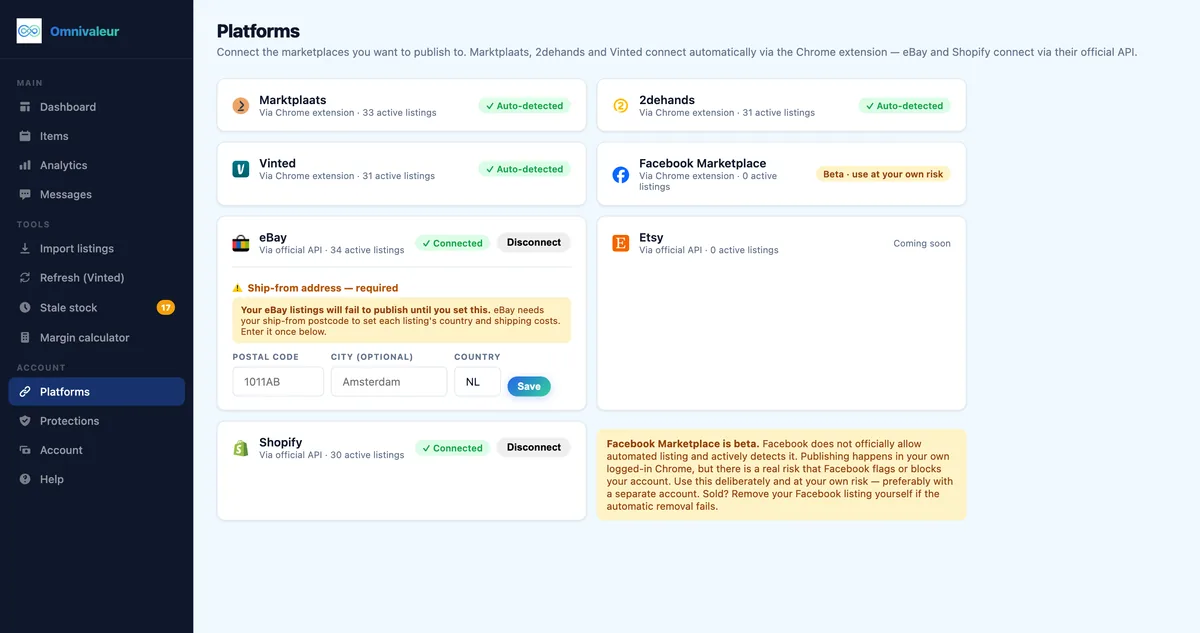
Not every platform is equally good for books, and that's worth knowing before you cross-list blindly.
| Platform | Book category strength | Fees (approx. 2026) | Best for |
|---|---|---|---|
| eBay | Strong, dedicated Antiquarian & Collectible category | ~13% final value fee | Signed copies, first editions, auction-format rarities |
| Etsy | Good, but must qualify as "vintage" (20+ years old) | 6.5% + listing fee | Aesthetic/decorative vintage sets, gift buyers |
| Marktplaats | Solid local demand, low fees | Mostly free for private sellers | Regional buyers, heavy lots, no shipping needed |
| 2dehands | Belgian mirror of Marktplaats | Mostly free | Dutch-speaking Belgian buyers |
| Vinted | Limited but growing "Books, Films & Music" category in some markets | Buyer pays protection fee | Low-friction casual buyers, quick turnover titles |
| Shopify | Your own store, no marketplace fees | Monthly subscription only | Building a repeat-buyer collector base over time |
The takeaway from that table: no single platform covers your whole audience. A first edition might sell to a collector on eBay for 150 euros while a common reading-copy of the same book moves faster at 4 euros on Vinted to someone who just wants to read it. Listing on both isn't wasted effort, it's how you catch different buyer intent.
How Do You Automate Listing Vintage Books Across Six Platforms at Once?
The mechanics are the same as any cross-listing workflow, with a few book-specific fields added. You photograph the book (cover, spine, title page, copyright page showing printing number, and any flaws), fill in one intake form, and the tool republishes that data with platform-appropriate formatting.
With Omnivaleur, that intake form publishes to Marktplaats, 2dehands, Vinted, eBay, Etsy and Shopify at once. A typical vintage book ends up with 3-5 active listings running simultaneously, and the app tracks each platform's status independently — so if it sells on eBay, the other four or five listings get pulled automatically instead of you finding out three days later that you promised the same first edition to two buyers.
Practical setup tips specific to books:
- Photograph the copyright page every time — printing number and "first edition" statements are the detail buyers zoom into first.
- Note ex-library markings (spine labels, stamped pockets) as a separate field, since they tank value and need disclosing on every platform.
- Weigh the book before listing if it's over 500g — shipping cost errors on heavy hardcovers eat margin fast.
If you're coming from a different niche automation setup, the workflow logic is nearly identical to what's covered in the vintage camera reselling automation guide or the vintage toy reselling automation guide — same principle of one form, multiple platform-specific outputs, just with different condition-grading fields.
What Platform Limits and Rules Change for Book Sellers in 2026?
Rules shift yearly and books get caught in changes that aren't written with them in mind. A few worth knowing for 2026:
- Etsy's vintage threshold stays at 20+ years, so a book from 2006 doesn't legally qualify as "vintage" on Etsy yet — list it as used instead or risk a category strike.
- eBay's authenticity guarantee program has been expanding into higher-value collectibles categories; signed first editions over a certain price threshold may require additional verification steps before payout.
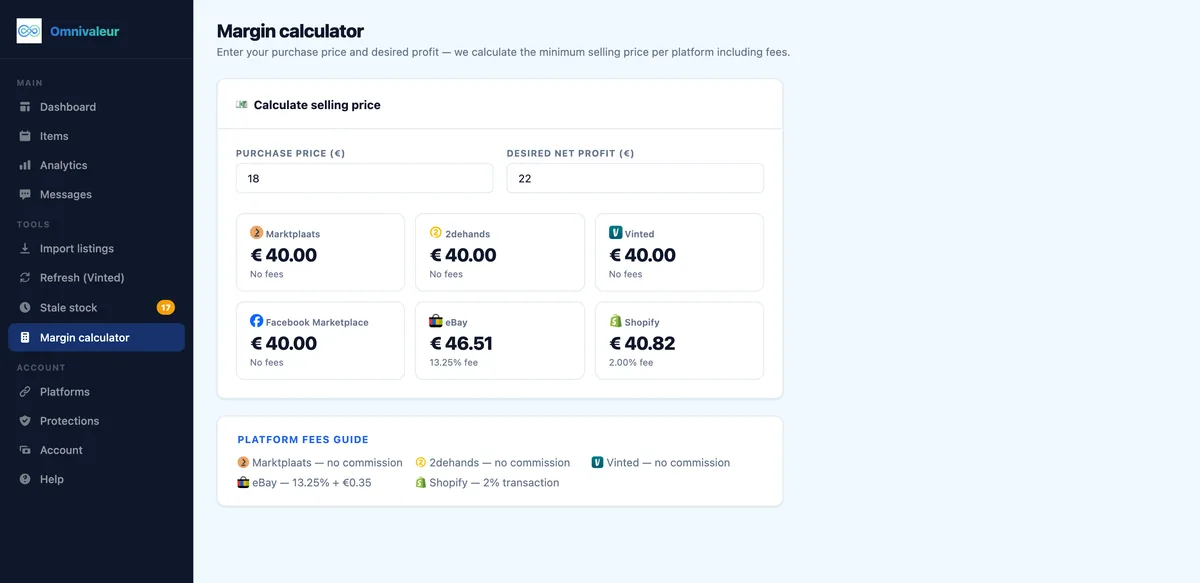
- Vinted's book category is not available in every country yet, so a listing that publishes fine in one market can silently fail in another — check platform-specific status per listing rather than assuming success everywhere.
- Marktplaats and 2dehands still favor local pickup for heavy items, which matters for full box lots and encyclopedia sets that are expensive to ship.
If you're weighing which cross-listing tool actually keeps up with these per-platform quirks, it's worth reading an honest comparison like Omnivaleur vs List Perfectly before committing to a subscription.
How Should You Price and Describe Condition for Vintage Books Without ISBNs?
Without a barcode to auto-fill a price, pricing becomes research work. Check sold (not active) listings on eBay for the same title, edition and printing. A book listed at 200 euros that's sat unsold for eight months tells you nothing — a book that actually sold at 45 euros last month tells you what buyers will actually pay.
Use consistent condition grading across every platform. The book trade's standard scale works well and buyers recognize it:
- Fine — as new, no flaws.
- Near Fine — minor shelf wear only.
- Very Good — light wear, no tears, may lack original dust jacket.
- Good — noticeable wear, possible small tears or foxing.
- Fair — heavy wear, complete but rough.
- Poor — reading copy only, significant damage.
Grade the same way on Marktplaats as on eBay. A "Very Good" that turns out to be closer to "Good" once shipped is one of the fastest ways to trigger a return, and under EU consumer shopping rights, buyers in most cases keep a 14-day right of withdrawal on online purchases regardless of what your listing disclaimer says. Photograph flaws honestly and you avoid most of that friction before it starts.
Do You Need to Worry About DAC7 Tax Reporting as a Vintage Book Reseller?
Yes, once you cross a threshold that's lower than most casual sellers expect: 30 transactions or 2,000 euros in a calendar year, whichever comes first. Above that, platforms operating in the EU are required to report your sales data to tax authorities under DAC7 rules. That threshold is easy to hit with books specifically, because individual sale prices are often low — 30 books at 15 euros each is nothing unusual for someone clearing out a family collection, and it crosses the line well before the 2,000-euro mark would.
The Belastingdienst's DAC7 information page lays out exactly what gets reported for Dutch sellers, and the European Commission's DAC7 overview covers the EU-wide framework if you're selling from Belgium or elsewhere. Neither page is book-specific, but the thresholds apply identically whether you're moving vintage hardcovers or vintage cameras.
How Do You Avoid Overselling the Same Rare Book on Multiple Platforms?
This is the single biggest practical fear with one-of-a-kind vintage items, and it's a fair one. Unlike a t-shirt in five sizes, a first edition is exactly one object. List it in five places and sell it twice, and you're issuing a refund and an apology instead of a sale.
Manual cross-listers handle this by checking each platform's dashboard separately after every sale — slow, and it's exactly the step people skip when they're busy. Automated delisting solves it by pulling the item everywhere else the moment one platform confirms a sale. That's the mechanism behind why an item in Omnivaleur usually shows 3-5 active listings with each platform's status tracked on its own — the moment eBay flips to "sold," the Marktplaats, Vinted and Etsy copies get pulled within the same sync cycle instead of sitting live for hours.
Edge cases still happen. A buyer messages "is this still available" on Vinted four minutes after it sold on Etsy — sync delay, not a broken system, but worth building a quick manual check into busy weekends when volume spikes. If you're running vintage books alongside another category, the same overselling logic applies whether it's collectibles or vinyl — one sale, everywhere else pulled, no exceptions.
Which Cross-Platform Combinations Work Best for Vintage Books?
Some platform pairings just move better for books than others, based on where buyers actually search.
- 2dehands to Etsy — good for Belgian sellers targeting international vintage/gift buyers; see the 2dehands to Etsy crosslisting guide for the setup specifics.
- Vinted to Etsy — casual buyers on Vinted, collector buyers on Etsy; covered in the Vinted to Etsy crosslisting guide.
- Marktplaats to Shopify — local pickup plus a permanent storefront for repeat collector customers; details in the Marktplaats to Shopify crosslisting guide.
None of these require running separate accounts by hand. One intake form, six destinations, and the pairing that fits your buyer base does the rest.
Frequently asked questions
Can you sell a book with a musty smell or foxing on all six platforms?
Do first-edition identification points need to be verified before listing?
What's the fastest way to batch-photograph a box lot of vintage books for automation?
Does Vinted actually support book sales everywhere in 2026?
How do you price a book with no comparable sold listings anywhere?
Keep reading
Stop copying listings by hand
Omnivaleur publishes your item to every platform at once and syncs stock automatically when something sells.
Start free trial