Vintage Toy Reselling Automation: The Complete 2026 Guide
Vintage toy reselling automation means using one tool to list a toy once and push it to Marktplaats, Vinted, eBay, Etsy and Shopify simultaneously, then sync stock when it sells. In 2026, the biggest wins come from avoiding rate-limit bans, catching stale inventory early, and staying DAC7-compliant across borders.
Key takeaways
- Cross-listing a single vintage toy across five marketplaces manually takes 20-35 minutes; automation cuts that to under 5.
- Parallel publishing across accounts is the fastest way to trigger a marketplace rate-limit flag — sequential, one-tab listing avoids it.
- DAC7 rules mean any EU platform must report your sales data to tax authorities once you cross 30 transactions or €2,000 a year.
- A dedicated stale-stock view catches toys that have sat unsold for 60+ days before they quietly drag down your account's visibility.
- Condition grading and authenticity documentation matter more for vintage toys than almost any other resale category.
Vintage toys break the normal resale playbook. A single Star Wars Kenner figure from 1978 might be worth €8 loose or €400 sealed on card — and the difference lives entirely in details a generic lister won't capture: mold marks, paint variants, original packaging inserts. Automating this category isn't just about speed. It's about not losing the details that make a €20 toy into a €200 one.
Most reseller software was built for clothing. Vintage toys need something that respects condition grading, handles collector jargon in the title, and doesn't nuke your account by publishing to six platforms at once. Here's what actually matters in 2026.
What is vintage toy reselling automation and how does it actually work?
At its core, automation for vintage toys means three things happening without you retyping anything: cross-listing one item to multiple marketplaces, syncing stock so a sold toy disappears everywhere else, and flagging items that need attention — price drops, relisting, or a fresh photo.
You photograph the toy once, write one description with condition notes (paint wear, missing parts, box condition), and the tool reformats that for each platform's quirks. Etsy wants vintage-category tags and a story. eBay wants exact model numbers and a condition grade. Vinted wants a casual tone and fewer keywords. A good automation layer handles the translation between those styles without you rewriting five listings.
The category-specific playbooks matter here — a general collectibles automation guide covers cards and figurines broadly, but toys have their own quirks: loose vs. carded pricing gaps, reproduction parts, and licensing-era variants that change value by a factor of 10.
Which marketplaces should you cross-list vintage toys to in 2026?
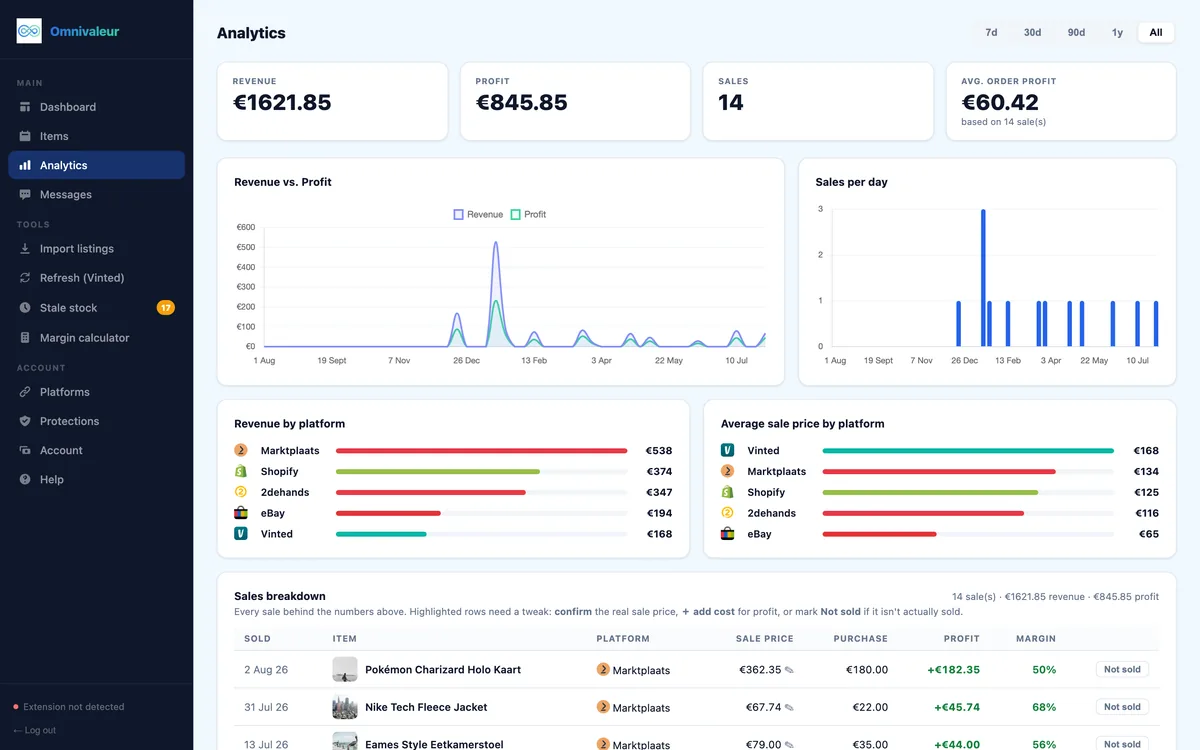
Not every platform suits every toy. Sealed 1980s action figures do best on eBay and dedicated collector Etsy shops. Loose vintage toys in playable condition move faster on Marktplaats and Vinted, especially bundles sold to parents rather than collectors. Here's a rough breakdown based on what actually sells where:
| Platform | Best for | Typical fee (2026) |
|---|---|---|
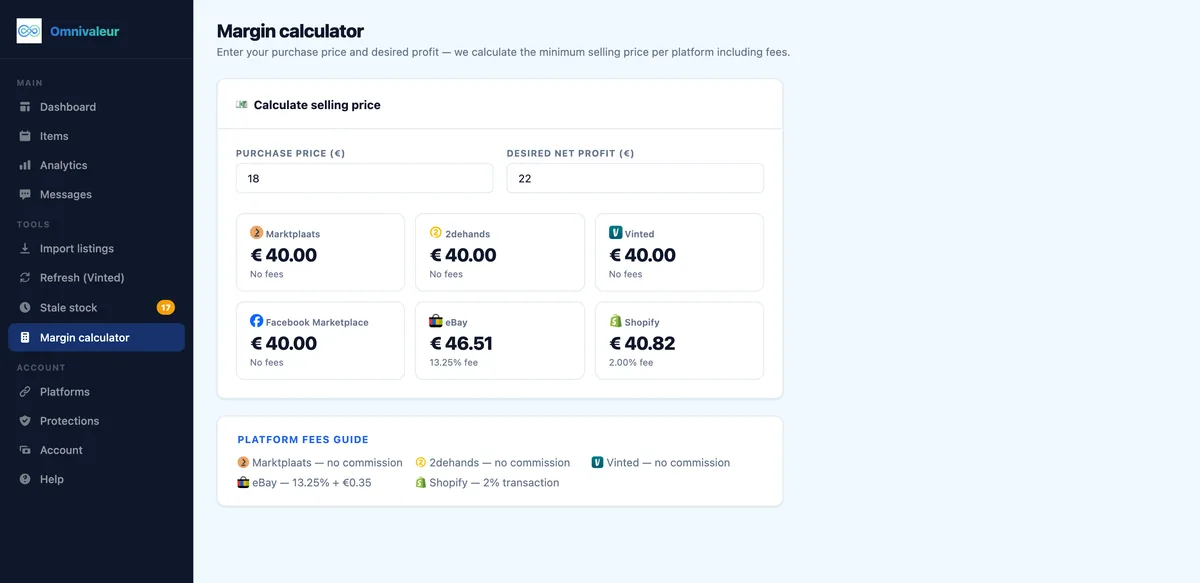
| eBay | Sealed/graded, rare variants, international buyers | ~12.9% final value fee |
| Etsy | Curated vintage, story-driven listings | 6.5% transaction + $0.20 listing |
| Vinted | Loose bundles, playsets, quick local sale | Buyer pays protection fee, seller free |
| Marktplaats | Bulky toys, local pickup, bundles | Free for most private listings |
| Shopify | Your own storefront, repeat collectors | Monthly subscription, no per-item fee |
If you're moving stock between these platforms rather than just cross-listing new arrivals, the Marktplaats to Vinted crosslisting guide and 2dehands to Etsy crosslisting guide walk through the category mapping differences that trip up new sellers — a "toy" category on one platform often splits into three sub-categories on another.
How do you avoid marketplace rate limits when listing vintage toys in bulk?
This is the mistake that kills toy resellers with large lots. You buy a storage unit with 200 vintage toys, then try to list all 200 in an afternoon across five platforms using a tool that opens parallel browser sessions. Within an hour, your eBay account gets a listing cap warning. Your Vinted account gets a temporary review flag. Both happen because the platforms detect non-human posting speed.
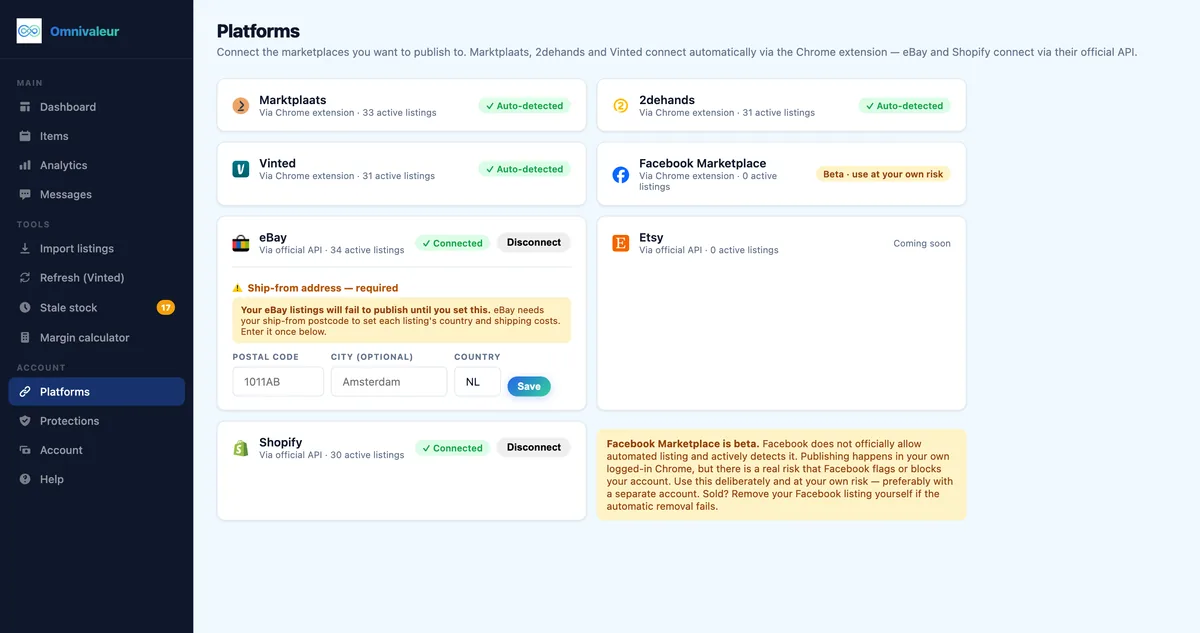
Omnivaleur handles this differently: cross-listing runs one browser tab at a time on purpose, because parallel publishing is exactly what gets marketplace accounts rate-limited. It's slower per-listing, but it's the difference between listing 200 toys over three days versus getting your eBay account suspended after 40.
A practical rule for large toy lots: cap yourself at 25-30 new listings per platform per day for the first two weeks on a new or reactivated account. Ramp up gradually. Platforms track listing velocity as a trust signal, and a sudden spike from zero to 200 reads as bot activity, not enthusiasm.
What are the DAC7 tax reporting rules for vintage toy resellers in 2026?
If you're selling across EU marketplaces and cross a threshold of 30 transactions or €2,000 in a calendar year, the platform is legally required to report your sales data to tax authorities under DAC7. This applies whether you're selling one rare Steiff bear lot or clearing out 300 loose Matchbox cars. The Belastingdienst's DAC7 guidance for sellers lays out exactly what gets reported and when, and the European Commission's DAC7 overview covers how this works across member states, not just the Netherlands.
Toy resellers get caught out here more than most, because vintage toy lots are often bought as one bulk purchase and sold as dozens of individual line items. Fifty transactions from a single storage-unit find is easy to hit inside a month. Keep purchase receipts for lots, not just individual toys — if a tax authority asks about cost basis, "I paid €150 for a box of 40 toys" needs a paper trail.
Separately, if you're selling to EU consumers, buyers retain return rights under EU consumer shopping rights rules for most online sales — vintage condition disclosed clearly in the listing is your best protection against disputed returns on toys sold as "used" or "as-is."
How do you catch stale vintage toy inventory before it drags down your account?
Vintage toy inventory ages differently than clothing. A jacket that doesn't sell in 30 days needs a price cut. A rare 1960s tin robot might sit for four months waiting for the right collector to search the exact model name — that's not necessarily a pricing problem, it's a visibility problem.
The trap is that most sellers only notice stale stock when they're scrolling through 300 active listings and stumble on something from six months ago. Omnivaleur's stale-stock view flags listings that have been sitting unsold, so slow inventory surfaces automatically instead of sinking to the bottom of the list where you'll never see it. For a toy seller running listings across five platforms at once, that's the difference between noticing a dead listing in week 2 versus month 5.
Once flagged, the fix depends on the toy. For common items (Fisher-Price, generic diecast), drop price 15-20% and refresh the photos. For rare items, the better move is often adding the listing to a specialist Etsy shop section or a themed Shopify collection page, since generic search on eBay buries niche vintage terms under bulk sellers.
What condition and authenticity issues are unique to vintage toys?
Clothing resale has size and fabric condition. Vintage toys have a much messier set of variables that buyers actually search for:
- Mold variants and factory markings — the same toy made in different years or countries can carry wildly different values (a Hong Kong-made 1970s figure vs. a China-made reissue).
- Reproduction parts — collectors pay a premium for original accessories; a reproduction sword or shield needs to be disclosed, or you'll get a return claim.
- Box and packaging grading — "MIB" (mint in box), "MOC" (mint on card), and "loose" aren't interchangeable terms, and mislabeling one as another is the single biggest cause of buyer disputes in this category.
- Battery corrosion damage — for wind-up and battery-operated vintage toys, undisclosed corrosion inside the battery compartment is a common return trigger.
Write condition notes once, in detail, and let your automation tool carry that exact text across every platform. Don't summarize it down for Vinted and expand it for eBay — inconsistent condition descriptions across platforms are what trigger "not as described" disputes when a buyer cross-checks your other listings.
How much time and money does automation actually save on vintage toy resale?
Run the math on a modest operation: 40 new toy listings a week, across three platforms, manually. At roughly 15 minutes per listing per platform (photos, description rewrite, category mapping), that's 30 hours a week just on listing — before you've packed a single box.
With cross-listing automation, that same 40-item batch drops to roughly 6-8 hours a week, since the photos and base description get reused and only the platform-specific formatting changes. For a solo reseller, that's the difference between toy reselling as a side hustle and toy reselling as a business that scales past 50 hours a month.
The other cost is subtler: missed sales from listings that never got cross-posted because manual work fell behind. A toy that sits only on Marktplaats when it could also be on Vinted and Etsy is a toy earning a third of its potential exposure. If you're weighing which cross-listing tool actually fits a toy-heavy catalog rather than a fashion-first one, the Omnivaleur vs Vendoo comparison breaks down how each handles category-specific fields like condition grading, which matters more for toys than for apparel.
Should you specialize in one toy category or cross-list everything?
Broad toy resellers who buy storage units and estate lots end up with a mix: Hot Wheels, dolls, board games, plush, action figures. Specializing sounds appealing for building an audience, but the practical reality of sourcing (auctions, storage units, estate sales) means most sellers end up generalist by necessity.
The fix isn't narrowing your sourcing, it's narrowing your listing categories per platform. Put diecast and mechanical toys on eBay where collectors search by model number. Put dolls and plush on Etsy where buyers browse by aesthetic and era. Put bulky playsets and bundles on Marktplaats and Vinted where local pickup solves the shipping problem entirely. If your toy inventory also crosses into furniture-adjacent categories — dollhouses, wooden toy chests, rocking horses — the crossover with the vintage furniture reselling automation guide is worth checking, since shipping and local-pickup logistics overlap heavily with bulky toys.
For sellers running toy inventory alongside other categories on Vinted and eBay simultaneously, the mechanics of moving stock between the two are covered in the Vinted to eBay crosslisting guide — the category mapping between Vinted's casual listing format and eBay's structured item specifics is one of the more fiddly parts of toy resale specifically, since eBay demands a model number field that Vinted doesn't have at all.
Frequently asked questions
Can I use the same photos across all marketplaces for a vintage toy listing?
Do vintage toys need different shipping insurance than clothing?
How do I price a vintage toy I can't find any sold comps for?
What happens if the same toy sells on two platforms at once?
Are reproduction or bootleg vintage toys worth reselling?
Keep reading
Stop copying listings by hand
Omnivaleur publishes your item to every platform at once and syncs stock automatically when something sells.
Start free trial