Collectibles Reselling Automation 2026: Tools, Tax Rules and Platform Limits
Collectibles reselling automation means syncing Lego sets, Funko Pops, trading cards and other collectibles across Marktplaats, Vinted, eBay, Etsy and Shopify from one dashboard — auto-updating stock, prices and delisting sold items. In 2026, the real bottleneck isn't listing speed, it's variant tracking, DAC7 tax reporting and per-platform category limits.
Key takeaways
- Collectibles need variant-level tracking (set number, condition, sealed vs opened) that generic crosslisting tools often skip.
- DAC7 reporting kicks in once you hit 30 sales or €2,000 on a single platform in a calendar year.
- Marktplaats and Vinted cap active listings differently, which matters for high-volume collectibles sellers.
- Grading and authenticity claims (PSA, CGC, "Vinted authenticate") create legal exposure most automation guides ignore.
- Profit per platform varies by 15-20% for collectibles once fees, insurance and returns are factored in.
Most "reselling automation" guides are written for clothing racks or thrift-store pallets. Collectibles are a different animal. A Lego Millennium Falcon, a graded Charizard, a chase-variant Funko Pop — each needs its own condition notes, box-state tags and often a certificate number. Automating that across five marketplaces means more than a "post everywhere" button.
What makes collectibles reselling automation different from clothing or electronics automation?
Clothing automation cares about size and brand. Electronics automation cares about serial numbers and warranty status. Collectibles automation cares about variant identity: the specific set number, print run, box condition and grading slab. Get that wrong and you refund a buyer who paid €300 for a "mint sealed" box that was actually opened once for photos.
Three things collectibles sellers automate that clothing resellers don't:
- Retiring-set alerts — pricing that shifts the moment Lego or a manufacturer announces a set is discontinued.
- Grading metadata — PSA/CGC slab numbers pulled into the listing title and description automatically.
- Box-condition tiers — sealed, resealed, opened-complete, opened-incomplete, each needing separate SKUs, not just a note in the description.
Which EU marketplaces limit collectibles listings in 2026, and how do the limits compare?
Every platform caps something differently, and collectibles sellers with 200+ SKUs hit these limits faster than clothing sellers realize.
| Platform | Typical fee on collectibles | Listing limit (2026) | Best for |
|---|---|---|---|
| Marktplaats | Free basic, paid boosts extra | No hard cap, but spam flags apply above ~500/day | Local pickup, Lego/Funko bulk lots |
| Vinted | Buyer pays protection fee, seller pays 0% on item price | No published hard cap, but bot-like posting gets throttled | Smaller collectibles like pins, small figures |
| eBay | ~10-13% final value fee | Store subscription tiers set monthly listing quotas | Graded cards, international collectors |
| Etsy | 6.5% + €0.20 listing fee | No hard cap but relisting fees add up fast | Vintage/handmade collectible crossover items |
| Shopify | Monthly subscription, no per-item fee | Unlimited | Owning your collector customer list long-term |
eBay's listing creation and management rules spell out category-specific restrictions for trading cards and graded items — worth checking before you bulk-upload a card collection, since eBay treats "trading cards" as a restricted category with its own authenticity guarantee program.
How does DAC7 tax reporting affect collectibles resellers in 2026?
DAC7 isn't new, but 2026 is the third full reporting year, and platforms have gotten stricter about flagging accounts near the threshold. If you sell more than 30 items or earn over €2,000 on a single platform in a calendar year, that platform reports your sales, name and bank details to the tax authority automatically. Collectibles sellers get caught out here more than clothing resellers because a single graded card or sealed Lego set can blow past €2,000 in one sale.
The Belastingdienst DAC7 guidance for sellers lays out exactly what gets reported and when. The European Commission's DAC7 overview covers how this applies across all EU marketplaces, not just Dutch ones. If you're cross-listing the same collectible on Marktplaats, Vinted and eBay simultaneously, each platform tracks your thresholds separately — automation software that consolidates your sales ledger across platforms saves you from a nasty surprise at tax time.
How do you automate variant and set-tracking for Lego, Funko Pop and trading cards?
Spreadsheets break down once you're past 50 active SKUs, because collectibles need nested variants a normal inventory row can't hold cleanly.
- Tag by set number first, condition second. "75192-sealed" and "75192-opened" should be two SKUs, never one with a note.
- Pull grading data automatically. If a card is PSA-graded, the slab number and grade should populate the title template, not get typed manually each time.
- Sync sold status instantly. A retiring Lego set sells fast once it's known to be discontinued — a 10-minute sync delay between Vinted and Marktplaats means double-selling the same physical box.
- Auto-adjust pricing on retirement news. Set a rule: when a manufacturer confirms retirement, bump price 15-20% across all channels at once.
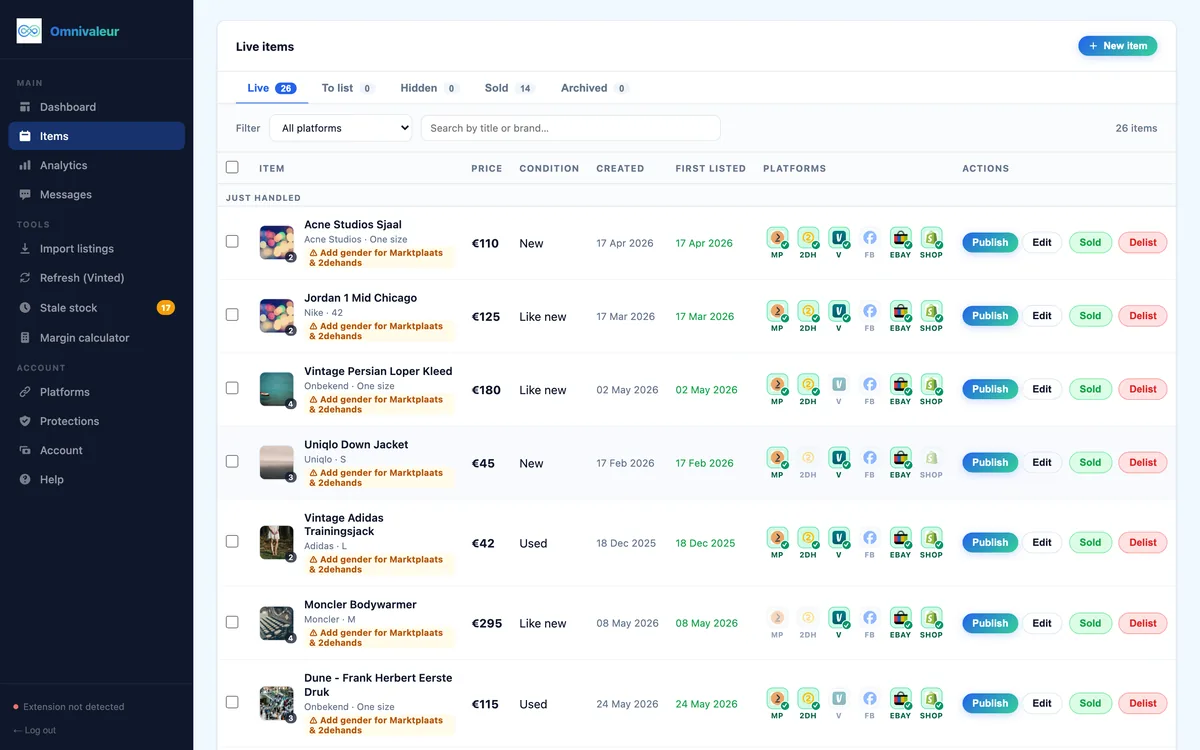
This is where a proper cross-listing tool earns its subscription fee. With Omnivaleur you set the variant structure once, and every connected marketplace inherits it — condition tags, set numbers and photos included, without re-typing the same listing five times.
What are the biggest platform policy risks for collectibles sellers in 2026?
Counterfeit Funko Pops and reproduction trading cards are a bigger enforcement priority in 2026 than they were two years ago. Vinted's selling rules explicitly ban counterfeit and unauthorized reproduction items, and repeated violations can suspend your whole account, not just the one listing. Marktplaats runs similar enforcement through its help centre policies, with manual review triggers on collectible categories flagged for counterfeit reports.
Practical rules that keep collectibles accounts clean:
- Never use manufacturer stock photos for a used/opened item — always your own photo of the actual piece.
- State grading company and cert number explicitly if claiming "graded," never imply it.
- Disclose reproduction or replica status even if the buyer probably won't notice — it's the difference between a warning and a ban.
EU buyers also have baseline protection under the EU consumer shopping rights rules, including return rights on private cross-border sales in some cases — factor that into your return policy before listing high-value graded items abroad.
- ✓Tag by set number first, condition second, so sealed and opened versions get separate SKUs
- ✓Pull grading data like PSA slab numbers into title templates automatically, never type them manually
- ✓Set up instant sync between marketplaces to avoid selling the same physical item twice
- ✓Calculate real profit per platform accounting for packaging, insurance and returns before listing
- ✓Use your own photos of actual pieces, never manufacturer stock photos for used items
- ✓State grading company and cert number explicitly if claiming graded status
How do you calculate real profit per platform before listing a collectible?
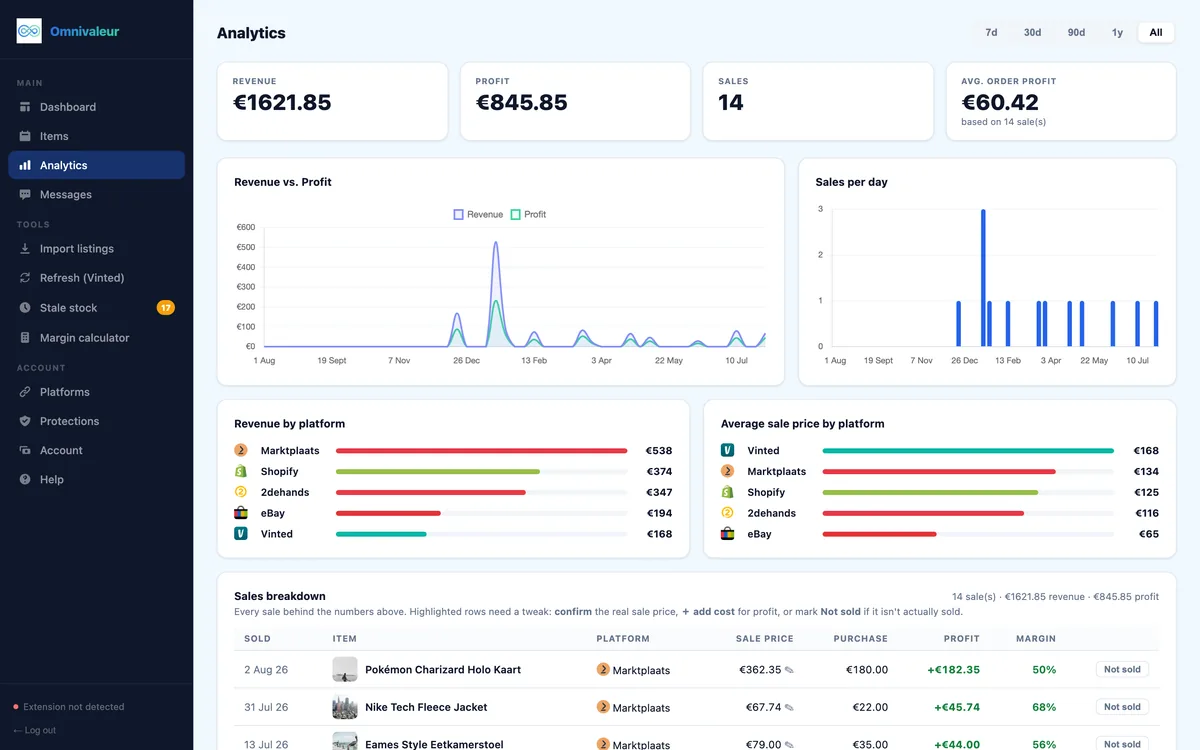
List price minus fee percentage isn't the real number. Collectibles carry extra costs generic profit calculators skip: shipping insurance for sealed boxes, breakage-proof packaging, and higher return rates on graded cards that arrive with a cracked slab.
| Cost factor | Clothing | Collectibles |
|---|---|---|
| Packaging cost/item | €0.50-1 | €3-8 (bubble mailers, boxes) |
| Insurance | Rarely needed | Recommended above €75 value |
| Return rate | ~5-8% | ~2-4% but higher-cost when it happens |
| Platform fee | 0-13% | 0-13%, same range |
Run this math before choosing where to list, not after. A Funko exclusive that nets 20% margin on eBay after insurance might net 28% on Vinted where shipping insurance isn't customary practice for smaller items.
Which automation tools actually work for collectibles resellers in 2026?
Generic crosslisters built for fashion often flatten variant data into one description field, which is exactly the wrong move for a graded card collection. Look for tools that support custom attribute fields (set number, grade, box condition) as first-class data, not free text. If you're weighing Omnivaleur against alternatives, the honest Omnivaleur vs List Perfectly comparison breaks down which platform handles custom variant fields better for niche categories like collectibles.
If you also resell sneakers or limited-edition drops alongside collectibles, the same automation logic applies — see the sneaker reselling automation platforms guide for overlap in how release-date pricing and hype-driven demand get automated. And once a collectible sale grows into a full storefront, moving from marketplace-only to owning a Shopify front end follows the same playbook covered in the eBay to Shopify crosslisting guide.
Frequently asked questions
Can I automate crosslisting for graded trading cards without re-entering the cert number on every platform?
Do sealed Lego sets need different shipping automation than opened figures?
How often should collectibles pricing update automatically in 2026?
What happens if a collectible sells on two platforms at once despite automation?
Should I track collectibles inventory separately from clothing or electronics inventory?
Keep reading
Stop copying listings by hand
Omnivaleur publishes your item to every platform at once and syncs stock automatically when something sells.
Start free trial