Best Vintage Records Reselling Automation Platforms in 2026
The best vintage records reselling automation platforms in 2026 let you photograph and describe a record once, then publish it to Marktplaats, 2dehands, Vinted, eBay, Etsy and Shopify from a single intake form — without triggering marketplace rate-limits or duplicate-listing flags. Omnivaleur does this by publishing one tab at a time, deliberately, instead of blasting listings in parallel.
Key takeaways
- Six marketplaces, one intake form: Marktplaats, 2dehands, Vinted, eBay, Etsy and Shopify all get filled from a single vinyl listing.
- Sequential publishing, one browser tab at a time, is what keeps reseller accounts off marketplace rate-limit blacklists.
- Discogs still needs manual entry since it sits outside most automation platforms, including the six marketplaces above.
- DAC7 reporting kicks in around 30 sales or €2,000 per year, and record flippers cross that line faster than they expect.
- Condition grading disputes are the number one return reason for vinyl, not shipping damage.
Vinyl records are one of the few secondhand categories where condition grading is almost a language of its own — Mint, Near Mint, VG+, VG, Good, Poor — and every marketplace interprets it differently. That mismatch is exactly why generic "list anywhere" tools trip up on records more than on, say, sneakers or handbags. This guide covers the platform-specific rules, fee structures and 2026 tax thresholds that actually determine whether a vintage record reselling automation setup pays for itself.
What makes vintage record reselling different from other secondhand categories?
Records carry three pieces of data that clothing or electronics listings never need: the matrix/runout number, the pressing year, and a separate grade for the vinyl itself versus the sleeve. Buyers on eBay and Discogs expect both grades listed independently — "VG+ vinyl, VG sleeve" is a normal, expected phrase. Skip it, and you get return requests that have nothing to do with the actual disc.
This also means templates matter more here than almost anywhere else. A description field that just says "used, good condition" undersells a £40 first pressing and gets ignored by serious collectors. Automation only helps if the tool lets you keep a reusable template with grading fields baked in, then swap out the artist, catalogue number and price per listing.
Which marketplaces actually sell vinyl records best in 2026?
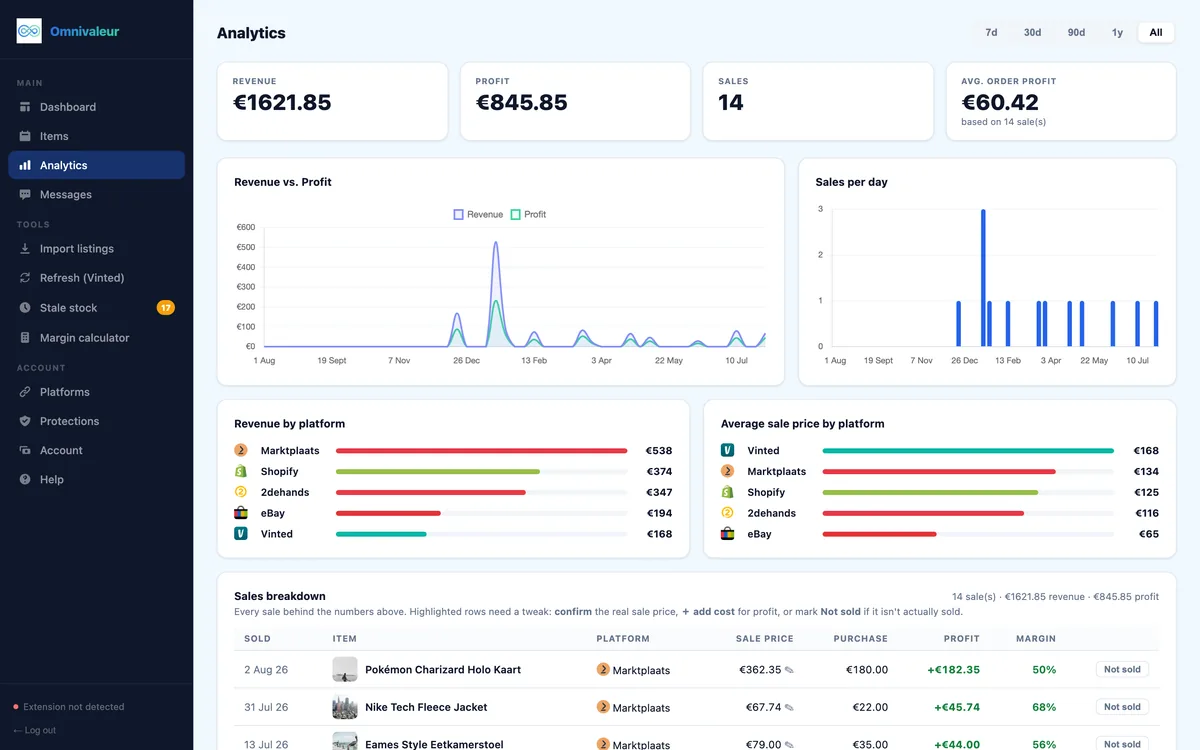
Not every platform is worth your listing time. Here's how the six marketplaces Omnivaleur publishes to compare for records specifically, alongside Discogs as the category benchmark.
| Marketplace | Typical seller fee | Best for | Weak point for records |
|---|---|---|---|
| Marktplaats / 2dehands | Free listings, paid boosts optional | Local bulk lots, crate clear-outs | No grading standard, buyers haggle hard |
| Vinted | Buyer pays protection fee, seller pays nothing | Single popular titles, quick turnover | Weak category structure for genres |
| eBay | ~13.25% final value fee on media | Rare pressings, international buyers | Fee eats into low-value common titles |
| Etsy | 6.5% transaction fee + $0.20 listing fee | Decor-buyers, gift market, curated crates | Not a collector-first audience |
| Shopify | Monthly subscription, no per-sale cut | Your own storefront, repeat collectors | You bring your own traffic |
| Discogs (manual) | 9% marketplace fee | Serious collectors, price benchmarking | Not automatable inside most cross-listing tools |
That last row matters. Discogs is where most collectors check prices first, but it sits outside the standard cross-listing stack. Plan for a short manual step there — automate the other six, keep Discogs as your five-minute manual add-on for genuinely rare finds.
How does cross-listing automation actually work for vinyl records without breaking marketplace rules?
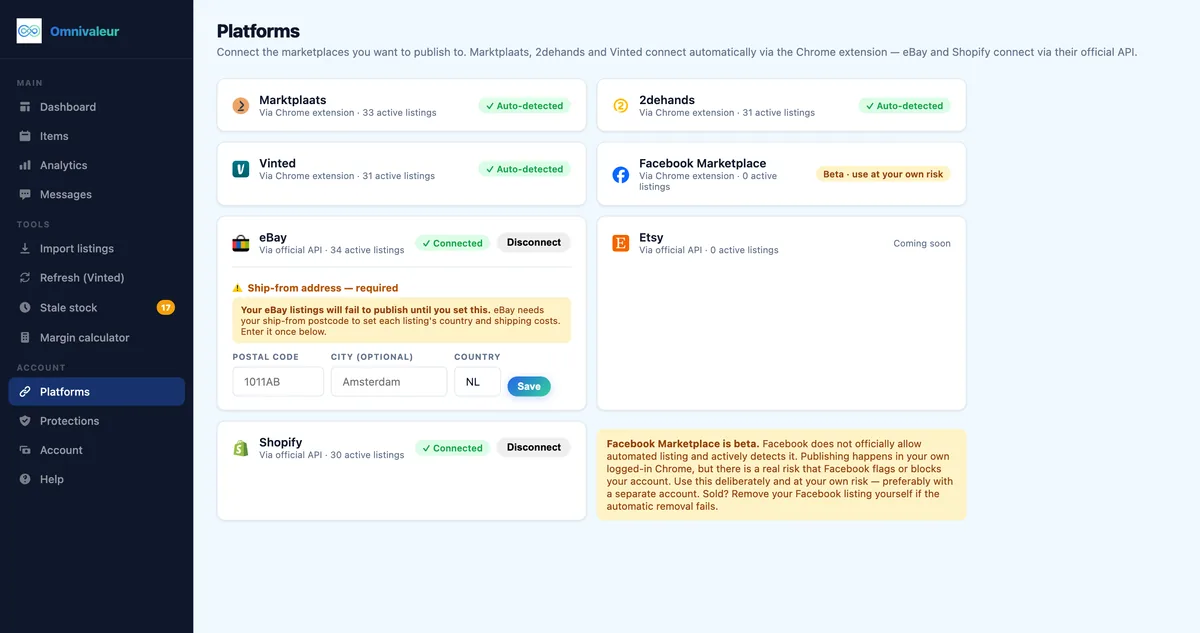
The mechanics matter more than the marketing copy. Omnivaleur fills out one intake form per record — photos, grading fields, catalogue number, price — and then publishes that single listing to Marktplaats, 2dehands, Vinted, eBay, Etsy and Shopify. What it deliberately does not do is fire all six publishes at once. It runs one browser tab at a time, on purpose, because parallel publishing across marketplaces is exactly what gets accounts flagged for rate-limiting or bot-like behaviour. A sequential, human-paced publish takes longer per listing but keeps every one of your six accounts in good standing.
If you're moving between specific marketplace pairs rather than all six at once, the mechanics are documented in detail elsewhere — see the guides on cross-listing from Marktplaats to Vinted and on Vinted to Etsy cross-listing, both of which apply directly to record crates as well as clothing.
What are the biggest platform-specific rules and limits record resellers hit in 2026?
Three rule changes catch record flippers off guard heading into 2026:
- eBay's media category caps — bulk lot listings (10+ records under one SKU) now require individual condition disclosure per item, not a blanket grade, after complaint volume rose in the media category.
- Vinted's genre and era filters — records without a decade tag get buried in search. Tagging "1970s Prog Rock" instead of just "Rock" changes visibility noticeably.
- Marktplaats and 2dehands duplicate-listing detection — relisting the exact same photo set across two accounts, or reposting an unsold record too quickly, can trigger a temporary listing hold. Sequential, spaced-out publishing avoids this far better than bulk uploaders that fire everything at once.
None of these are catastrophic on their own, but stacked together they explain why so many resellers with 200+ records in inventory quietly lose 15-20% of their listings to holds, buries or rejections every quarter — without ever getting a clear notification explaining why.
How does DAC7 tax reporting affect resellers who cross-list vinyl across borders?
Under the EU's DAC7 framework, marketplaces report seller activity to tax authorities once you cross roughly 30 sales or €2,000 in a calendar year — whichever comes first. Record dealers cross that threshold fast, because a single decent crate clear-out can hit 30 individual sales in a month during festival season or a house clearance.
In the Netherlands specifically, the Belastingdienst's DAC7 seller information page lays out exactly what Marktplaats, Vinted and eBay report on your behalf. Selling the same crate across six platforms doesn't multiply your tax exposure, but it does mean six separate reporting streams tracking the same underlying income — worth reconciling once a quarter rather than at tax time, when six CSV exports land at once.
Buyers have rights here too. Under EU consumer shopping rights, secondhand goods sold by anyone acting as a trader still carry basic conformity guarantees — which is one more reason accurate grading matters more than a fast bulk upload.
Which automation platform features actually matter for record dealers?
Skip the feature lists that read the same for every category. For records specifically, prioritise these:
- Custom grading fields that separate vinyl condition from sleeve condition in the template, not just a single "condition" dropdown.
- Bulk photo reuse with per-listing swaps — the same crate shot works for the outer listing photo across all six marketplaces, but each record needs its own runout-groove close-up.
- Sequential publishing rather than simultaneous, for the rate-limit reasons covered above.
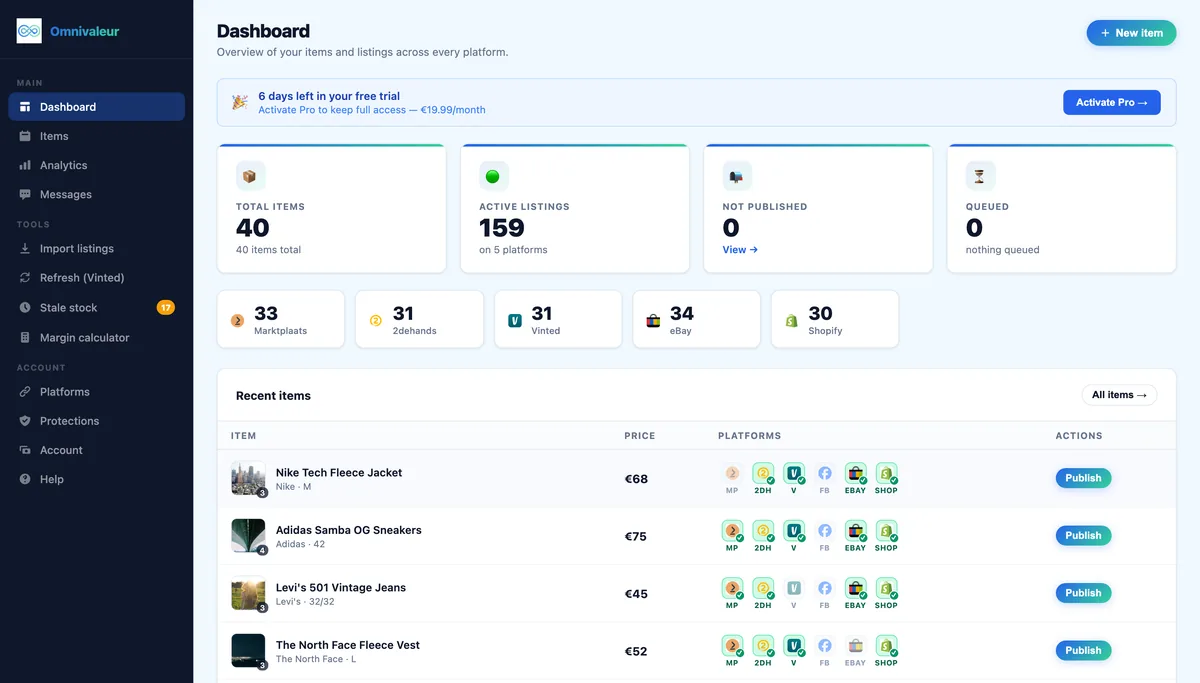
- Price sync without race conditions — when a record sells on Vinted, the other five listings need delisting before someone else buys a copy that no longer exists.
- Category-specific templates you can duplicate across genres — jazz, prog, soul — instead of rebuilding descriptions from scratch every time.
This is the same logic that applies to other collector-driven niches. The collectibles reselling automation guide covers grading-heavy categories in general, and the dedicated vinyl record reselling automation guide goes deeper into genre tagging strategies specific to vinyl.
How do you choose between the main cross-listing tools for a record shop?
Most tools on the market were built for clothing first and bolted on media categories later — which shows in how they handle grading fields and catalogue numbers. Before committing, check three things: whether the tool supports custom fields for matrix numbers, whether it publishes sequentially or in parallel, and whether it actually covers the marketplaces where records sell, not just where clothing sells.
| Comparison | Where to read it |
|---|---|
| Omnivaleur vs OneShop | Omnivaleur vs OneShop, 2026 comparison |
| Omnivaleur vs List Perfectly | Omnivaleur vs List Perfectly, honest 2026 comparison |
Both comparisons are written from a reseller's chair, not a sales deck, and cover pricing tiers, per-marketplace support and how each tool actually handles publish speed versus account safety — the trade-off that matters most once your crate count passes a few hundred records.
What's the realistic setup for a small vinyl reselling business in 2026?
A one-person record flip operation moving 40-60 records a month doesn't need enterprise software. Start with one intake template per genre, photograph the runout groove alongside the sleeve every time, and let the cross-listing tool push to all six marketplaces from that single form. Expect the sequential publish to take a few minutes longer per record than a bulk-upload tool that fires everything simultaneously — that extra time is the cost of not getting a marketplace account suspended mid-season.
Track sales per platform for the first two months. Most record dealers find Vinted and Marktplaats/2dehands move common titles fastest, while eBay and Etsy carry the rare pressings at higher margins despite the fees. Shopify becomes worth the monthly cost once you've built a repeat collector base that doesn't need a marketplace search to find you.
Frequently asked questions
Do I need separate photos for every marketplace when cross-listing vinyl records?
How many records can I list per day without triggering marketplace limits?
Should I list common records as bulk lots or individually?
Is Discogs worth the manual extra step if I'm already automating six marketplaces?
What's the biggest reason vinyl listings get returned?
Keep reading
Stop copying listings by hand
Omnivaleur publishes your item to every platform at once and syncs stock automatically when something sells.
Start free trial