Vinyl Record Reselling Automation 2026: Cross-List Records Faster
Vinyl record reselling automation means writing one listing with grading, catalog number and photos, then pushing it automatically to Marktplaats, 2dehands, Vinted, eBay, Etsy and Shopify at once. Tools like Omnivaleur sync stock across all six, so a sold LP disappears everywhere within minutes instead of you manually deleting five duplicate posts.
Key takeaways
- Record sellers who list manually spend 15-25 minutes per pressing across five platforms; automation cuts that to under 5.
- Omnivaleur publishes from one intake form to six marketplaces: Marktplaats, 2dehands, Vinted, eBay, Etsy and Shopify.
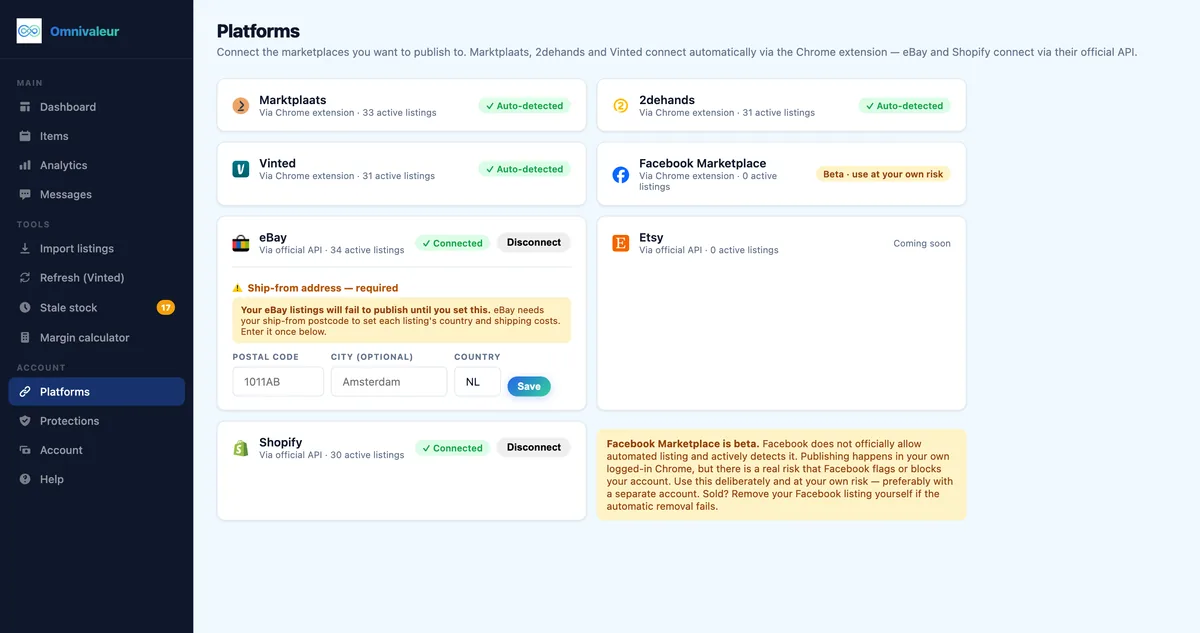
- A single vinyl listing in Omnivaleur usually runs as 3-5 live listings at once, each tracked with its own platform status.
- DAC7 reporting applies to vinyl sellers too once you cross a transaction threshold, regardless of which platform sold the item.
- Grading inconsistency between Discogs-style codes and marketplace condition fields is the single biggest cause of vinyl return disputes in 2026.
Vinyl reselling is a volume business hiding inside a niche hobby. A seller with 800 pressings in a garage isn't running a shop, they're running a small warehouse with no barcode scanner. That's the gap automation closes: one description written once, pushed everywhere, tracked everywhere.
What does vinyl record reselling automation actually mean in practice?
It means separating three jobs that used to be one manual task: writing the listing, publishing it, and keeping stock accurate across platforms. A tool captures the record's details — artist, pressing, catalog number, matrix code, sleeve grade, vinyl grade — through a single intake form. From there it generates platform-specific listings and pushes them out simultaneously.
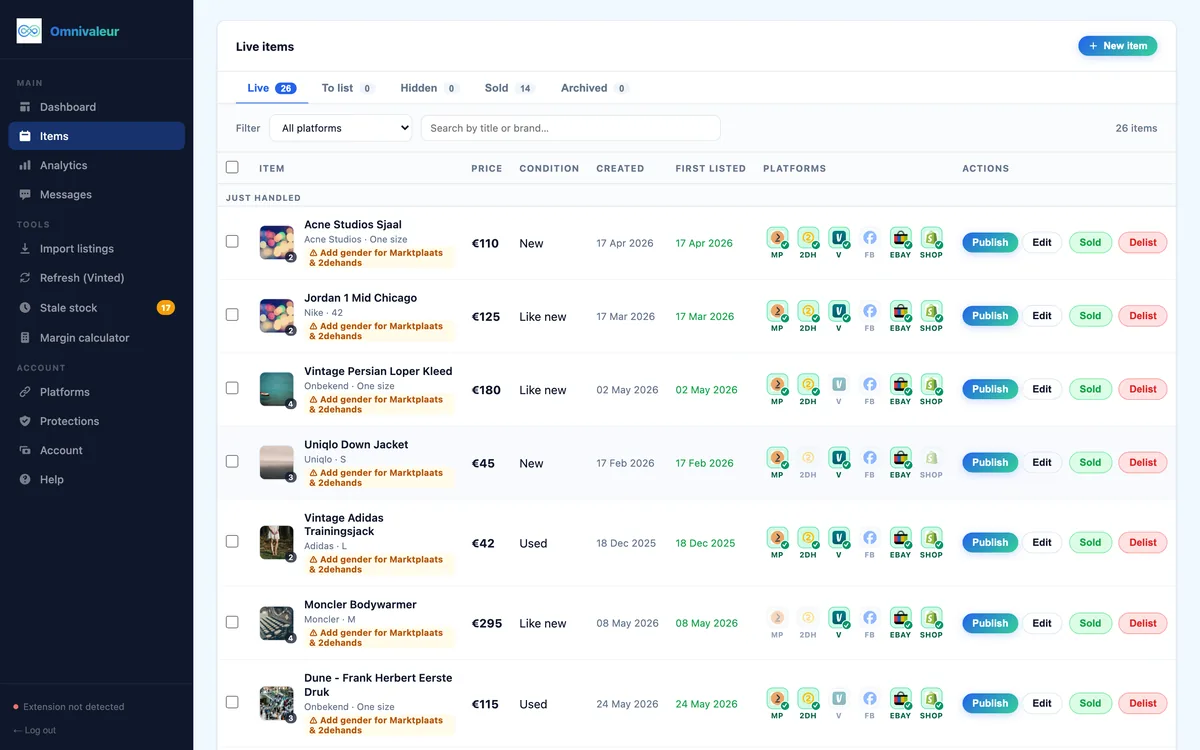
Omnivaleur handles this by publishing to six marketplaces from one form: Marktplaats, 2dehands, Vinted, eBay, Etsy and Shopify. You photograph the record once, fill in the grading fields once, and the app formats the title, description and category mapping differently for each destination, because eBay's music category structure has nothing in common with Vinted's clothing-first layout repurposed for media.
The reselling automation logic used for other collector categories applies directly here. If you already know how collectibles reselling automation handles condition grading and rarity flags, vinyl works almost identically — swap "mint/near mint/VG+" for whatever grading scale a coin or trading card seller uses, and the workflow logic is the same.
Why is manual vinyl listing slower than almost any other resale category?
Because a record has more identifying data points than a t-shirt, a sneaker, or a used phone. A seller listing a jacket writes size, brand, condition. A seller listing a 1978 pressing needs:
- Artist and title, including alternate titles for foreign pressings
- Label and catalog number
- Matrix/runout etching, which changes value dramatically between pressings
- Sleeve condition and vinyl condition, graded separately
- Country of pressing, since a Dutch pressing and a US pressing of the same album can differ 3-4x in price
Type that manually into eBay, then Etsy, then Marktplaats, and you've spent 20 minutes on one record. Multiply by a 300-record backlog and you understand why so many sellers give up and just dump crates into one marketplace instead of spreading exposure across six.
Which marketplaces actually make sense for vinyl in 2026?
Not every platform is equally useful for records. Here's how the six main ones compare for a typical mid-range seller in 2026:
| Platform | Best for | Fee structure (2026) | Vinyl-specific note |
|---|---|---|---|
| eBay | Rare/collector pressings, international buyers | ~13% final value fee on most categories | Strong search traffic from Discogs-style buyers cross-checking prices |
| Etsy | Vintage-branded, curated crates | 6.5% transaction + listing fee per item | Buyers expect "vintage" framing, not bulk-lot language |
| Marktplaats | Local Dutch buyers, bulky collections, no shipping | Free for private listings, paid for business accounts | Ideal for offloading common pressings without postage risk |
| 2dehands | Belgian mirror of Marktplaats behavior | Similar free/business split | Cross-post from Marktplaats listings with minimal edits |
| Vinted | Younger buyers, lower-price crate diggers | Buyer pays protection fee, seller side mostly free | Media category is newer here, still growing traffic |
| Shopify | Your own store, repeat collectors, no marketplace cut | Monthly subscription, no per-sale commission | Best long-term for a serious record shop brand |
Most experienced record resellers don't pick one. They run rare and graded pressings on eBay and Etsy for reach, common stock on Marktplaats and 2dehands for local no-shipping sales, and use Shopify as the permanent home once a buyer becomes a repeat customer. That's exactly why cross-listing tools exist — nobody wants to manage six separate inboxes for one hobby turned side business.
If you're weighing whether Marktplaats or eBay wins for a given lot, the mechanics of moving stock between the two are covered step by step in the Marktplaats to eBay crosslisting guide, and the reverse direction for Etsy-first sellers is in the Etsy to eBay crosslisting guide.
How does grading actually break automated vinyl listings?
This is the content gap none of the current tools address well. Vinyl grading uses the Goldmine scale — Mint, Near Mint, Very Good Plus, Very Good, Good, Poor — but marketplaces don't. eBay has a five-tier condition dropdown that doesn't map to Goldmine at all. Vinted has "new with tags," which makes no sense for a 1974 pressing. Etsy allows free-text condition but buyers still expect Goldmine terms in the description.
A badly mapped grade is the fastest way to trigger a dispute. If a listing says "VG+" in the title but the platform's own condition field says "Used - Acceptable," a buyer will screenshot the mismatch and file a return under EU consumer shopping rights, which cover items not matching their description regardless of which marketplace processed the sale. Good automation solves this by letting you set a Goldmine grade once, then mapping it consistently to each platform's own condition taxonomy instead of leaving that translation to guesswork at 11pm.
What 2026 platform rule changes should vinyl resellers actually watch?
A few concrete shifts matter more than the generic "algorithm changed" advice floating around forums:
- eBay's media category photo requirements now push sellers toward multi-angle shots including the runout groove, since counterfeit and mis-pressed claims rose alongside collector prices.
- Vinted's media/collectibles section is still maturing, meaning search visibility for records is inconsistent week to week compared to clothing categories.
- Marktplaats business-account thresholds tightened again, so sellers moving from occasional to frequent listing get pushed into paid tiers faster than in 2024.
- Etsy's "vintage" tag enforcement got stricter — a record has to actually be 20+ years old to use the vintage label, not just "look old."
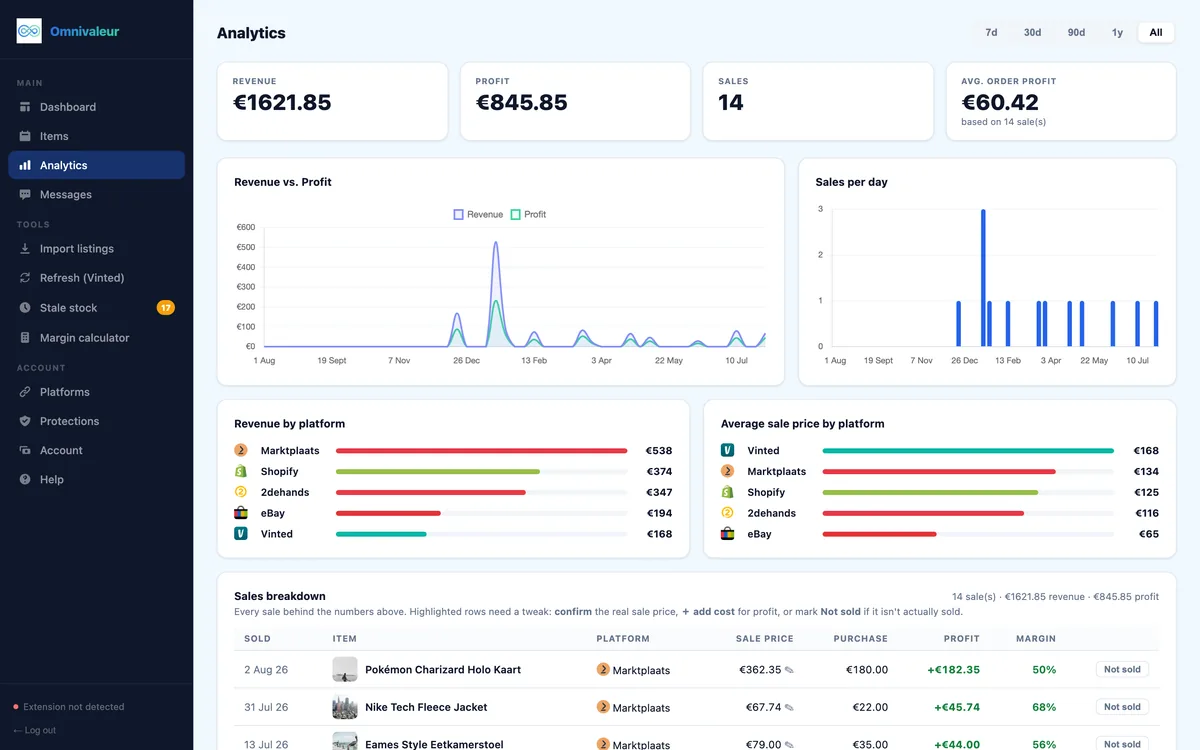
None of these are catastrophic on their own. Together, they mean a listing strategy that worked in 2024 needs small adjustments in 2026, and that's exactly the kind of maintenance manual sellers skip because it's tedious across six separate seller dashboards.
Do vinyl resellers need to worry about DAC7 tax reporting?
Yes, and this gets missed constantly because sellers think DAC7 is only for clothing or electronics flippers. It isn't. Under the EU's DAC7 rules, any marketplace seller who crosses 30 transactions or €2,000 in a calendar year gets their sales data reported to tax authorities, and vinyl sellers running crates through eBay, Etsy and Marktplaats in parallel hit that threshold faster than they expect, because each platform counts separately but the tax authority sees the combined picture.
Dutch sellers can check exact reporting mechanics on the Belastingdienst DAC7 page for sellers. The practical takeaway: keep a single record of what sold where and for how much, because reconciling six separate CSV exports in January is worse than any listing chore.
How should you handle box sets, lots and bundles across platforms?
Bundling is where automation tools genuinely save time, but also where sellers make the most mistakes. A 5-LP box set isn't "one item" the same way on every platform. eBay treats it as a single SKU with one price. Etsy buyers often expect the option to buy individual records from a set, which means splitting the listing into linked variations. Marktplaats buyers almost always want the whole lot or nothing, especially for bulky classical box sets nobody wants to ship piece by piece.
A workable rule: list rare individual pressings separately across all six channels, and reserve true bundle listings for common stock where per-record value is under roughly €8-10. Below that price, the time cost of six separate single listings exceeds the extra revenue from splitting them up.
This is also where Omnivaleur's per-platform status tracking earns its keep. A single item typically runs as 3-5 active listings at once, and the app tracks each platform's status independently — so a box set sold on eBay gets pulled from Etsy and Marktplaats automatically, instead of you remembering to delete four duplicate posts by hand.
What edge cases trip up vinyl sellers using automation tools?
A few recurring problems that beginners hit within the first month:
- Weight-based shipping miscalculation — a double LP in a mailer weighs almost double a single, and platforms that auto-calculate shipping from a generic "media" category often underquote postage, eating margin on every sale.
- Photo reuse across pressings — using stock cover art instead of your actual copy's condition photos triggers "item not as described" disputes faster than any other category.
- Currency and pricing drift — a record priced in USD-equivalent on eBay US and EUR on Marktplaats needs manual price syncing unless your tool handles currency conversion automatically.
- Category mismatch on Vinted — records occasionally get filtered under "home" instead of "media," killing discoverability until you fix the tag manually.
None of these are dealbreakers, but they're the difference between a smooth six-platform operation and a support-ticket backlog. If you're comparing tools specifically to see which handles these edge cases better, the Omnivaleur vs List Perfectly comparison breaks down how each platform manages category mapping and shipping profiles for collector goods.
How does vinyl automation compare to automating other collector niches?
Vinyl shares more DNA with vintage toys and trading cards than with clothing resale. Grading matters more than size. Rarity drives price more than brand recognition. Photos of tiny defects matter more than lifestyle shots. If you already run a side business in another collector category, the setup transfers almost directly — the vintage toy reselling automation guide covers the same condition-grading logic applied to figures and packaging instead of sleeves and vinyl.
Sellers moving stock between secondhand platforms and dedicated marketplaces face similar friction too. The 2dehands to Etsy crosslisting guide is written for general secondhand goods but the platform-fee logic and category mapping steps apply just as cleanly to a crate of records as to furniture or electronics.
Is it worth automating if you only sell 20-30 records a month?
Below roughly 15 listings a month, manual posting on one or two platforms is fine. Above that, the math flips fast. If each record takes 15 minutes to list manually across three platforms, 30 records eats 7.5 hours a month just on posting, before packaging or customer messages. Automation tools typically charge a monthly fee that pays for itself once you're saving more than 3-4 hours, which most sellers hit around the 20-record mark once they're listing to more than two marketplaces at once.
Frequently asked questions
Can I automate cross-listing for a mixed collection of vinyl, CDs and cassettes?
Do marketplace algorithms favor vinyl listings with more photos?
How do I price the same record differently across six marketplaces without manual math?
What happens if the same record sells on two platforms within minutes of each other?
Does automating vinyl listings help with SEO on each platform's internal search?
Keep reading
Stop copying listings by hand
Omnivaleur publishes your item to every platform at once and syncs stock automatically when something sells.
Start free trial