When Does Reselling Become a Business? KVK Rules for 2026
Reselling becomes a business when you buy items with the primary intention of making a profit, trade regularly, and take on commercial financial risks. If you occasionally sell old personal items, you remain a private seller. However, buying stock consistently to flip for gain triggers mandatory KVK registration and income tax obligations.
Key takeaways
- KVK registration is mandatory the moment you run a structural, profit-driven trade operation.
- Private sales of old personal items do not require a business registration or VAT filings.
- Platforms report your sales automatically under DAC7 rules once you cross thresholds.
- Using tools like Omnivaleur helps you track inventory status across six marketplaces.
- Tax authorities examine your intent, turnover frequency, and capital investment.
Stepping out of the casual garage sale zone and into regular secondary trade requires navigating strict legal lines in Europe. If you started out clearing your own attic on Marktplaats or Vinted and now find yourself hunting for inventory at thrift stores, estate sales, or wholesale liquidation lots, you have likely crossed an invisible threshold. The Dutch Chamber of Commerce, known as KVK, and the tax administration do not judge your status based on your feelings or whether you call your side hustle a hobby. They look at cold, hard operational facts.
For independent sellers operating across Europe, understanding these criteria prevents unexpected retrospective tax assessments, platform blocks, and administrative fines. Whether you are scaling up your operations or just starting to list items on multiple channels, this comprehensive guide covers everything you need to know about KVK thresholds, income tax classifications, value-added tax obligations, and modern platform reporting requirements for 2026.
The Core Legal Criteria: Hobby Versus Commercial Enterprise
Neither the KVK nor the tax authorities maintain a single, magical revenue threshold that instantly transforms a private citizen into a legal business. Instead, they apply a multi-factor test to determine if your reselling activities constitute an economic enterprise. Understanding how these institutions evaluate your storefront is essential for staying compliant.
Intent to Make Profit
The primary driver behind your activity matters immensely. If you sell your old winter coat for twenty euros because you no longer wear it, you are recovering residual value from a depreciated personal asset. You suffered a net loss on the original purchase price. Conversely, if you buy vintage jackets at five euros apiece with the deliberate goal of cleaning them up, photographing them, and listing them at forty euros, you harbor a structural profit motive. The moment you acquire goods with the explicit intent of resale at a markup, the legal framework shifts.
Participation in Economic Traffic
Operating as a business means you actively and openly offer goods or services to the broader public on a continuous basis. Having a permanent or recurring presence on digital marketplaces demonstrates this participation. If you list items daily, maintain active inventory, respond to customer inquiries professionally, and accept returns or offer exchanges, you mirror a traditional retail store. The frequency and regularity of your transactions signal to regulators that you are engaged in commercial trade rather than isolated private cleanouts.
Independence and Financial Risk
True commercial entities operate independently and bear financial risk. When you invest your own capital into buying bulk stock, pay for shipping supplies, absorb the cost of damaged or lost items, and manage your own profit margins, you act as an entrepreneur. If an investment in inventory fails to sell and sits in your garage depreciating, you carry the financial burden. This risk-bearing characteristic is a textbook marker of business ownership.
How the Tax Administration Evaluates Reseller Income
Even if you have not registered with the KVK, the tax administration can still categorize your earnings as resultaat uit overige werkzaamheden, which translates to income from miscellaneous activities. This classification sits right between tax-free hobby income and full business profits. Tax inspectors examine the permanence of your work, the amount of time you spend on it, and your gross revenue.
When your reselling operation grows large enough that you generate structural profits, you must declare this income on your annual tax return. Failing to do so can result in severe audits. For a deeper look at how platform sales data flows into official channels, review the official Belastingdienst DAC7 information for sellers, which details how online marketplaces automatically transmit your annual sales volume and transaction counts to tax regulators.
Understanding DAC7 Reporting Thresholds and Platform Transparency
The regulatory landscape changed drastically with the implementation of EU-wide DAC7 directives. Online marketplaces are legally mandated to track your sales data and report it directly to tax authorities if you exceed specific activity levels within a calendar year.
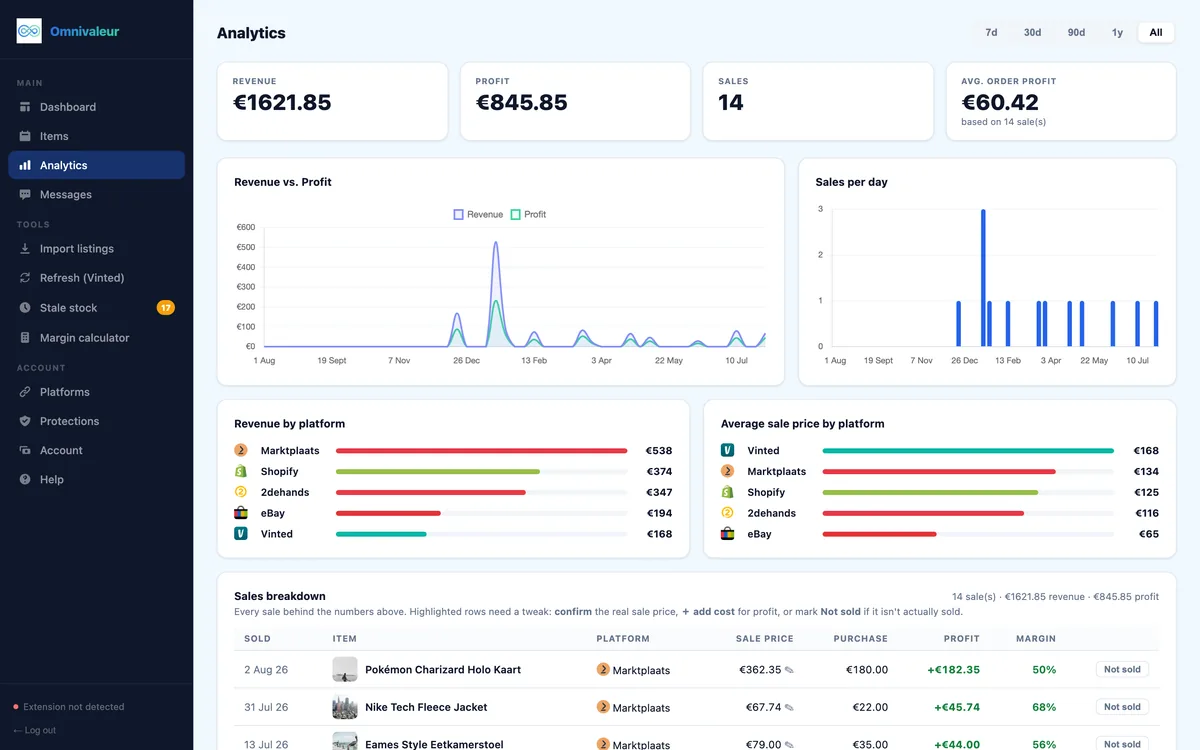
If you execute 30 or more sales transactions, or if your total sales revenue exceeds two thousand euros within a single calendar year on any single platform, that platform must report your identity and financial data to the tax authorities. This rule applies regardless of whether you consider your store a hobby or a registered business. To understand the broader European context of these transparency laws, consult the official European Commission DAC7 overview.
Because modern sellers rarely rely on just one channel, maintaining accurate records across platforms is vital. Sellers expanding their reach often utilize Vinted Reselling Automation 2026 | Omnivaleur to streamline cross-channel workflows while keeping track of individual platform limits.
KVK Registration: Step-by-Step for Resellers
Once you determine that your reselling activity meets the legal criteria for an enterprise, registering your business with the Chamber of Commerce is mandatory. Operating a commercial business without a KVK number while generating structural profits violates commercial registry laws.
The registration process involves selecting a legal form, such as a sole proprietorship, which is the most common choice for independent resellers. You will need to visit a KVK office or complete verification online, provide valid identification, and pay a one-time registration fee. During registration, you define your business activities using standardized industry classification codes, known as SBI codes, which accurately reflect retail sale via internet or second-hand goods trade.
When scaling your inventory operations, efficiency becomes your primary competitive advantage. Professional multi-platform vendors frequently rely on systems where Omnivaleur publishes to six marketplaces from one intake form: Marktplaats, 2dehands, Vinted, eBay, Etsy and Shopify. This setup ensures your catalog synchronizes seamlessly as you expand.
Value-Added Tax Obligations and the Margin Scheme
Registering a business introduces VAT responsibilities. In the European Union, standard commercial sales require you to charge, collect, and remit VAT. However, the second-hand trade benefits from a specialized legal mechanism known as the margeregeling, or margin scheme.
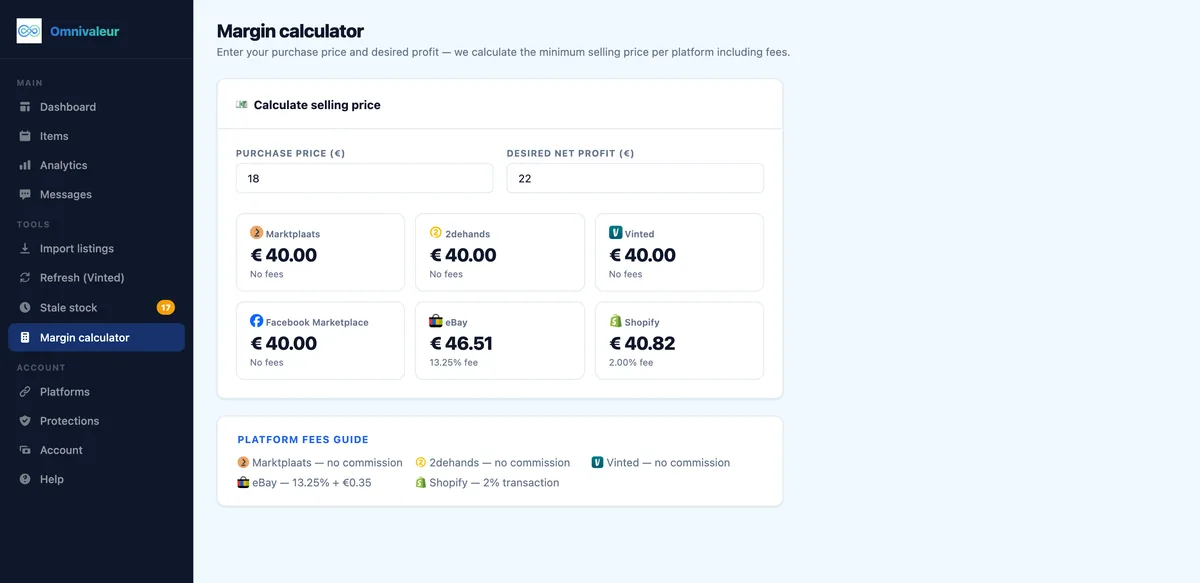
Under the margin scheme, if you buy second-hand goods from private individuals who could not charge you VAT, you do not pay VAT over the entire selling price. Instead, you calculate and remit VAT only over your gross profit margin—the difference between what you sold the item for and what you paid for it. This prevents double taxation on pre-owned goods.
For cross-border digital commerce within the EU, specific VAT collection rules apply. To ensure your business model aligns with community standards, refer to the official EU VAT rules for online sellers provided by the European Union.
- ✓evaluate whether your buying habits involve a structural profit motive
- ✓track your total annual sales revenue and transaction counts per platform
- ✓register your commercial enterprise with the chamber of commerce
- ✓apply the margin scheme for second-hand goods to calculate vat
- ✓keep your multi-channel inventory synchronized to prevent overselling
The Small Businesses Scheme and Administrative Relief
Small-scale entrepreneurs generating limited annual revenue can apply for exemptions that simplify their tax filings significantly. In the Netherlands, the Small Businesses Scheme allows qualifying entrepreneurs to be exempt from charging VAT to their customers and filing periodic VAT returns, provided their annual turnover remains below twenty thousand euros.
While this scheme eliminates the administrative burden of filing quarterly VAT returns, it also means you cannot reclaim VAT on your business expenses, such as shipping supplies, packaging materials, or equipment investments. You must calculate whether the administrative savings outweigh the lost input VAT deductions based on your specific inventory costs.
Managing Multi-Channel Inventory Without Overselling
Scaling a reselling operation across multiple platforms simultaneously magnifies your administrative workload. Listing the same vintage watch, sneaker, or camera on Marktplaats, Vinted, and eBay drastically increases your market exposure, but it also creates the operational hazard of selling the exact same item twice before you can pull it down from other channels.
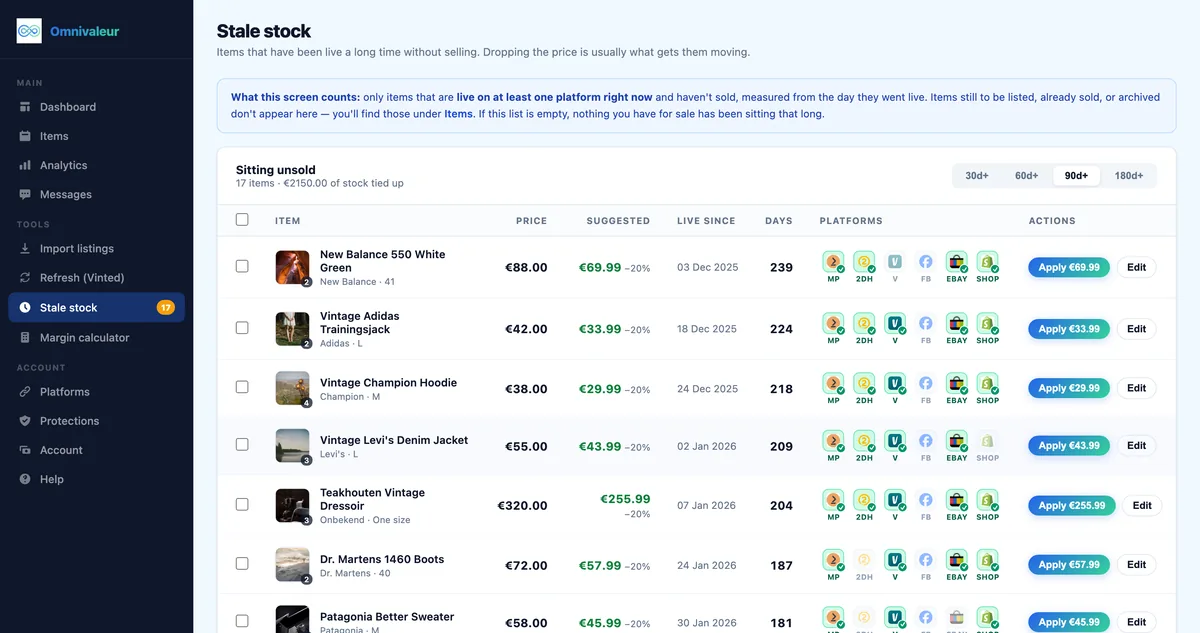
Professional inventory management requires real-time tracking systems. In a typical multi-platform setup, a single item in Omnivaleur typically carries 3-5 active listings at once; the app tracks each platform's status separately and removes concurrent listings the moment a buyer completes a purchase anywhere. This prevents order cancellations, angry customers, and platform penalty flags.
To explore platform-specific synchronization strategies when listing your inventory across borders, check out this guide on 2dehands to Vinted Crosslisting 2026 Guide.
Consumer Rights and Warranties for Commercial Resellers
Operating a registered business means you are legally bound by consumer protection laws. Unlike private sales—where the principle of buyer beware generally applies—selling goods as a commercial enterprise grants your buyers statutory rights, including mandatory reflection periods and return windows.
When a buyer purchases an item from a registered business webshop or professional profile, they typically hold a statutory right of withdrawal within fourteen days of receiving the product, allowing them to return it for any reason. Furthermore, you as the seller are responsible for ensuring the goods conform to the sales agreement. For a comprehensive overview of statutory consumer protections across member states, consult the official EU consumer rights guidelines.
Practical Scenarios: Hobbyist or Entrepreneur?
To ground these legal concepts in reality, consider three common reselling scenarios that clarify where the line is drawn:
| Scenario | Activity Description | Legal Classification | KVK / Tax Status |
|---|---|---|---|
| The Wardrobe Purge | Selling 45 items of personal old clothing on Vinted over two months. | Private management of personal property | No registration needed, tax-free hobby income. |
| The Weekend Flips | Visiting flea markets every weekend, buying vintage items specifically to clean and resell at a markup on Marktplaats. | Systematic profit-seeking enterprise | Mandatory KVK registration and income tax filing required. |
| The Bulk Liquidator | Purchasing commercial pallet liquidations and running a full-time online store across Shopify and eBay. | Full commercial retail business | Mandatory KVK registration, standard or margin VAT, and full corporate/income tax compliance. |
Reviewing these scenarios helps clarify your own operational posture. If your activities resemble the second or third row, delaying your formal registration only creates unnecessary financial and legal exposure.
Conclusion and Action Plan for Resellers
Transitioning from a casual basement cleaner to a professional online reseller brings professional freedom, but it also demands strict adherence to regulatory frameworks. Monitor your sales frequency, track your revenue against DAC7 thresholds, register with the KVK the moment your intent turns commercial, and choose the right administrative tools to keep your multi-channel listings synchronized.
By treating your reselling operation with professional discipline from day one, you protect your business from regulatory friction and position your store for sustainable long-term growth across the European secondary market.
Frequently asked questions
Can I run my reselling business from my home address without informing my landlord or municipality?
What happens if the tax authorities discover I have been running an unregistered reselling business for years?
Do I need a business bank account if I register my reselling activity with the KVK?
Are items bought at thrift stores considered tax-free when I resell them?
Can I deduct shipping supplies and packaging costs from my taxes as a reseller?
Keep reading
Stop copying listings by hand
Omnivaleur publishes your item to every platform at once and syncs stock automatically when something sells.
Start free trial