Where to Source Items for Second Hand Reselling in 2026
The best places to source items for second-hand reselling depend on your niche and capital. Thrift stores and garage sales offer the highest profit margins for hands-on pickers, while online arbitrage and liquidation pallets provide scalable inventory without leaving your desk. Successful 2026 resellers combine local hunting with multi-channel selling to maximize turnover.
Key takeaways
- Local thrift stores and garage sales yield the highest profit margins for physical goods.
- Online arbitrage allows you to source inventory directly from your computer without traveling.
- Liquidation pallets offer scale but carry a higher risk of unviable or unsellable stock.
- Sourcing margins must factor in platform fees, shipping costs, and realistic selling prices.
- Diversifying your sourcing channels protects your business against supply chain dry spells.
Finding a consistent supply of profitable inventory is the single most important challenge every second-hand reseller faces. Whether you run a side hustle selling vintage clothing on Vinted or manage a full-time operation moving electronics across Marktplaats, 2dehands, and eBay, your business is only as healthy as your sourcing pipeline. Without a reliable stream of underpriced goods, your listings dry up, your algorithm rankings drop, and your revenue stalls.
The reselling landscape has evolved rapidly. Increased competition, shifting platform algorithms, and stricter tax reporting frameworks mean that old, sloppy sourcing habits no longer guarantee a profit. You cannot simply walk into a random thrift store, buy anything with a recognizable brand name, and expect a guaranteed return. Modern inventory acquisition requires strategy, math, and an understanding of where different categories of goods naturally congregate.
This comprehensive guide examines every major sourcing channel available to European and international resellers. We will look at startup costs, time investments, realistic margins, and specific operational pitfalls. Along the way, we will also explore how managing your inventory effectively once you have bought it—such as when deciding on how to price second-hand items—determines whether a sourced item turns a healthy profit or sits gathering digital dust.
What Is the Most Efficient Process for Sourcing Inventory to Resell in 2026?
Efficiency in sourcing is defined by a simple metric: net profit generated per hour invested, factoring in both acquisition time and processing time. Many beginner resellers fall into the trap of measuring only their purchasing cost while ignoring the hidden labor hours spent driving to remote locations, cleaning items, photographing them, and listing them across various channels.
An efficient sourcing process begins with niche selection before you ever leave your house. If you try to be a generalist buying everything from baby clothes to industrial power tools, your knowledge remains shallow, and you waste valuable time evaluating items with zero market demand. Professional resellers specialize in two or three related categories—such as retro electronics, designer fashion, or vintage homeware—and build a repeatable route or digital scanning routine around those specific items.
The modern sourcing workflow follows a strict funnel:
- Market Research: Check completed and sold listings on platforms like eBay, Vinted, and Marktplaats to verify current market value before purchasing.
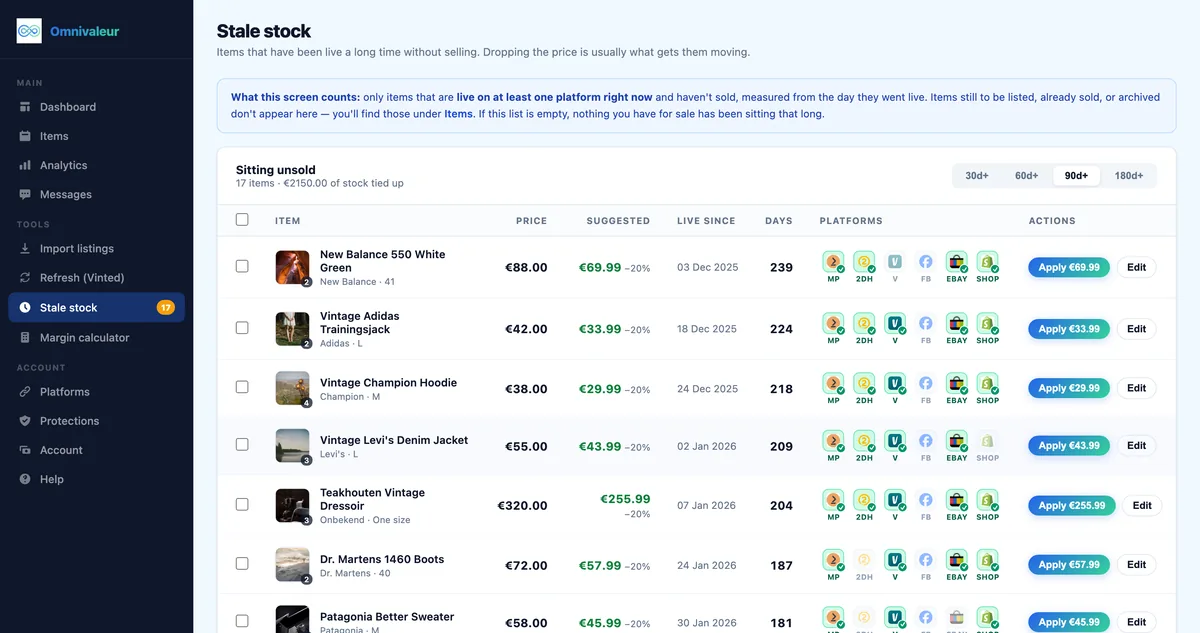
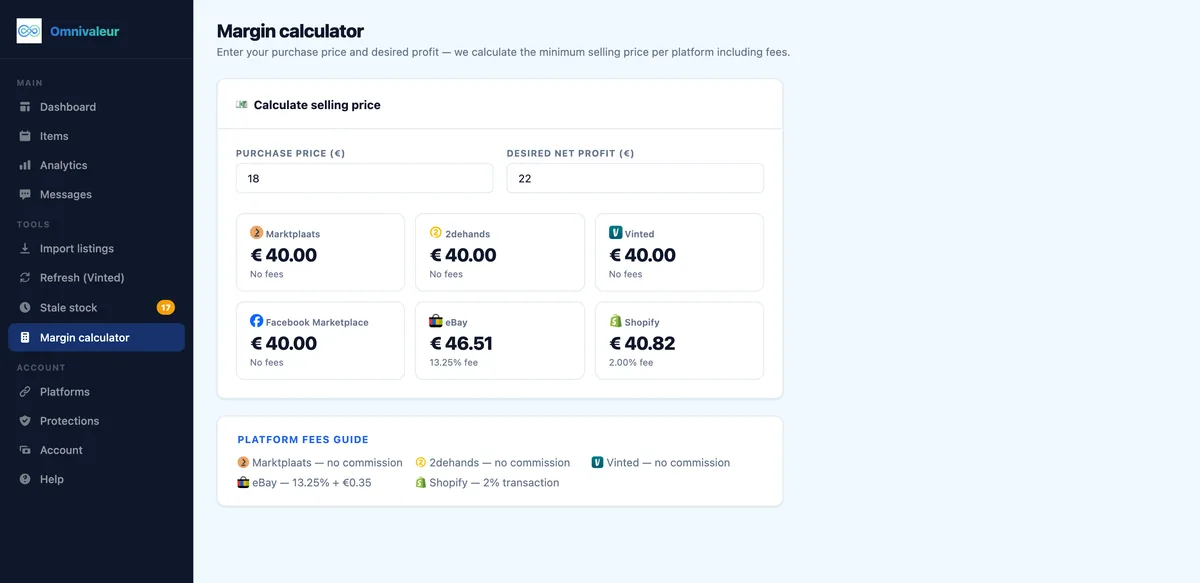
- Cost Calculation: Subtract purchase price, estimated platform fees, shipping materials, and platform commissions from the verified market price.
- Condition Inspection: Thoroughly check for functional flaws, stains, missing parts, or authenticity issues that could trigger a return or a buyer dispute.
- Immediate Processing: Once sourced, items should move straight into your cataloging system rather than sitting in unorganized piles in your garage or spare room.
If you source physical goods locally, batch your trips. Visiting a single thrift store forty minutes away for one item is a losing proposition once fuel and vehicle depreciation are factored in. Instead, map out a cluster of three thrift stores, a local market, and a community drop-off point along a single efficient loop.
Which Sourcing Channel Should Beginner Resellers Start With — Thrift Stores or Garage Sales?
For most beginners entering the second-hand market, the debate comes down to physical local channels: traditional brick-and-mortar thrift stores versus weekend garage sales, yard sales, and local street markets (such as the famous Dutch Koningsdag markets or Belgian neighborhood sales).
Thrift stores offer consistency. They are open regular hours, five to six days a week, regardless of the weather. You can drop in on your lunch break or during a quiet Tuesday morning. This makes thrift stores the foundational training ground for learning brand recognition, material quality, and pricing trends. However, thrift stores are also heavily picked over by professional full-time pickers who arrive the moment the doors open. Prices in commercial thrift chains have also risen significantly in recent years as operators realize the true market value of donated goods.
Garage sales and local markets, by contrast, offer vastly superior profit margins per dollar spent, but they suffer from severe temporal and geographical limitations. They are restricted to weekends, primarily run during the spring and summer months, and require you to wake up at dawn to beat competing buyers. Furthermore, garage sale sellers are private individuals clearing out their attics, not trained retail staff. This means you can often negotiate prices down aggressively, picking up items for a fraction of a euro that would cost ten times as much in a specialized vintage boutique.
To help you decide where to direct your initial energy, consider the following direct comparison:
| Sourcing Channel | Startup Cost | Time Investment | Average Profit Margin | Consistency |
|---|---|---|---|---|
| Brick-and-Mortar Thrift Stores | Very Low (€10 - €50) | Medium (Regular weekly hours) | Moderate (50% - 150%) | High (Year-round access) |
| Garage Sales & Yard Sales | Very Low (€10 - €30) | High (Weekend-only hunting) | High (200% - 500%+) | Low (Seasonal, weather-dependent) |
| Online Arbitrage & Marketplaces | Low to Medium (€50 - €200) | High (Constant digital browsing) | Moderate (40% - 100%) | High (24/7 availability) |
| Liquidation Pallets | High (€300 - €1,500+) | Low to Medium (Bulk delivery) | Variable (-50% to 300%) | Medium (Dependent on supplier stock) |
If you are just starting out with limited capital, begin with local thrift stores to hone your product knowledge without large financial risk. Once you have mastered your chosen category—whether that is designer clothing reselling or vintage camera reselling—you can expand your operations into weekend garage sales and estate clearances where deep discounts hide.
How Do Liquidation Pallet ROI Numbers Compare to Thrift Store Sourcing?
As resellers scale their operations past the local thrift store phase, many look toward liquidation pallets and customer return lots as a shortcut to bulk inventory. The allure is undeniable: buying an entire pallet of returned goods from major European online retailers for a few hundred euros and receiving boxes of consumer electronics, home goods, or fashion items delivered directly to your doorstep.
However, the reality of liquidation sourcing is starkly different from the highlight reels posted on social media. While thrift store sourcing allows you to inspect every single item for defects, authenticity, and completeness before handing over your money, liquidation pallets are inherently gambling. You are buying "manifested" or unmanifested lots where a large percentage of the items may be broken, missing critical accessories, or outright counterfeit.
Let us look at realistic Return on Investment (ROI) numbers:
- Thrift Stores: Sourcing costs are low (e.g., buying a branded jacket for €5 and selling it for €45). After platform fees and shipping, your net margin on individual items regularly exceeds 200% to 300% on your initial cash outlay. Your bottleneck is time, not capital.
- Liquidation Pallets: Upfront capital requirements are high. A pallet might cost €800 including freight shipping. When you open the boxes, you might find that 40% of the goods are dead-on-arrival or missing parts, 40% sell quickly at modest margins, and 20% are unsellable junk that you must pay to dispose of. Realized net ROI often hovers between 30% and 70% once all duds and disposal fees are accounted for.
Furthermore, when dealing with electronics, appliances, or branded goods sourced from liquidation, consumer protection laws and platform regulations are strict. If you sell a returned item that fails shortly after delivery, you face costly returns and negative reviews. For categories like consumer electronics reselling, testing every unit before listing is mandatory, making liquidation palettes far more labor-intensive than they first appear.
- ✓check completed and sold listings to verify current market value
- ✓subtract purchase price, fees, and shipping from market price
- ✓thoroughly check for functional flaws, stains, or missing parts
- ✓move items straight into your cataloging system after sourcing
Are Thrift Store Sourcing Trips Worth the Time Investment for Part-Time Resellers?
Part-time resellers often struggle with the brutal economics of physical sourcing. If you work a standard 40-hour week, your available hours for side-hustle business operations are precious. Spending three hours driving to four different thrift stores only to return empty-handed—or with three low-margin books—is deeply disheartening and threatens the long-term viability of your side hustle.
Are thrift store trips worth it? The answer depends entirely on your system and your niche. If you treat thrift store hunting as a casual weekend hobby without tracking your hourly yield, it is a pleasant way to spend a Saturday. But if you treat reselling as a serious business, physical hunting must be optimized or supplemented with digital sourcing methods.
Many successful part-time sellers transition to a hybrid model. They limit physical thrift store visits to one targeted weekly trip during off-peak hours (such as a weekday morning when restocking happens), and they spend the rest of their sourcing hours hunting online. Digital sourcing—scanning local classifieds, scouring Facebook Marketplace, or monitoring niche auction sites—allows you to evaluate dozens of potential inventory items while sitting at your desk during your lunch break.
When you do source online or offline, keeping precise track of your inventory acquisition cost is vital. Professional analytics tools calculate profit based on the real sale price—which sellers confirm per sale—rather than the initial asking price. On second-hand marketplaces, asking prices and final realized prices differ by roughly 10-20% due to offers, counter-offers, and negotiated bundles. Sourcing calculations must account for this margin shrinkage from day one.
Moreover, once items are successfully sourced and prepped, managing them across multiple sales channels is essential to maintain cash flow. Whether you are cross-listing your finds across Marktplaats and Vinted or expanding into broader European platforms, automating your inventory synchronization prevents catastrophic double sales. When an item sells on one platform, automated tools ensure it is instantly removed everywhere else, protecting your seller rating.
What Are the Hidden Pitfalls and Legal Obligations When Sourcing Second-Hand Stock?
Sourcing inventory is not just about finding cheap items; it is also about ensuring that those items can be legally and safely resold without landing you in regulatory trouble. As European e-commerce regulations tighten, resellers can no longer operate in a legal gray area.
First, consider tax compliance. In the European Union, the implementation of the DAC7 directive means that digital platforms are legally required to report your sales data to national tax authorities if you exceed specific thresholds (typically 30 transactions or €2,000 in gross revenue per calendar year). When you source items, you must keep proper purchase records, digital receipts, or ledger entries. If you purchase items from private individuals at garage sales where no official invoice is provided, keep a detailed purchase log including date, description, and amount paid to substantiate your business expenses.
Second, be acutely aware of platform rules regarding commercial versus private accounts. If you source large volumes of brand-new items from liquidation or wholesale channels and resell them continuously, platforms like Vinted or Marktplaats may require you to register as a professional merchant. Operating as a business brings distinct consumer protection obligations, including adherence to EU consumer return rights and statutory warranty rules, depending on whether you are selling as a registered trader.
Third, guard against counterfeit goods. Sourcing vintage designer items, luxury accessories, or high-end sneakers without deep authentication knowledge is a fast track to financial ruin. Platforms employ automated AI moderation and strict manual review teams to catch counterfeit listings. If you sell an unverified counterfeit item—even if you bought it in good faith at a reputable-looking thrift store—your account can be permanently banned overnight. For specialised categories like luxury handbag reselling or sneaker reselling, investing in professional authentication equipment or training is just as important as the capital you spend on the inventory itself.
How Do You Scale from Local Sourcing to Wholesale and Supplier Networks?
Every successful reseller eventually hits a ceiling with local sourcing. There are only so many thrift stores in your region, garage sales are seasonal, and scanning Facebook Marketplace all day consumes unsustainable amounts of time. When your business reaches the point where you need hundreds of identical or high-quality items per month to feed your multi-channel sales engine, you must transition to professional supplier networks.
Scaling to wholesale and B2B sourcing requires a shift in mindset. You are no longer hunting for a single rare treasure hidden amongst junk; you are buying consistency, volume, and predictable margins. Wholesale sourcing channels include:
- Brand Liquidators: Direct suppliers who buy excess inventory, overstock, or shelf pulls directly from major European department stores and fashion brands.
- Authorized Distributors: Companies that supply brand-new goods directly from manufacturers, allowing you to sell new-in-box items with full manufacturer backing.
- Specialized Estate Liquidators: Professional auction houses and clearance companies that handle entire household liquidations, allowing you to buy curated lots of vintage furniture, art, or collectibles by the truckload.
When dealing with professional suppliers, minimum order quantities (MOQs) come into play. You may need to invest €1,000 or more in a single purchase order. This makes cash flow management critical. You cannot tie up all your working capital in slow-moving wholesale stock without a robust distribution system.
This is where multi-channel listing execution becomes the backbone of your profitability. Sourcing wholesale goods means you have depth in inventory—multiple units of the same item or large batches of similar goods. Listing those items manually on one platform is inefficient. Using dedicated multi-market software allows you to push inventory simultaneously across Shopify, eBay, Amazon, and local European classifieds, ensuring your bulk-sourced inventory turns over rapidly before storage costs eat your margins.
Whether you choose to spend your weekends digging through boxes at damp village garage sales or negotiating pallet prices with commercial liquidators, the golden rule of reselling remains unchanged: You make your profit when you buy, not when you sell. Master your sourcing metrics, know your niche inside and out, and keep your inventory moving across multiple sales channels to build a resilient, profitable second-hand business that thrives in 2026 and beyond.
Frequently asked questions
How do I calculate whether a sourced item has enough margin to cover platform fees and shipping?
Is it legal to resell items purchased at retail clearance sales or thrift stores?
How can I protect myself from buying broken or incomplete items at physical garage sales?
What should I do with sourced inventory that does not sell after 90 days?
How do professional resellers store and organize large volumes of sourced inventory?
Keep reading



Stop copying listings by hand
Omnivaleur publishes your item to every platform at once and syncs stock automatically when something sells.
Start free trial