Luxury Handbag Reselling Automation: Cross-List Designer Bags in 2026

Luxury handbag reselling automation means using software like cross-list to list one photographed, authenticated bag simultaneously across Vinted, eBay, Etsy, Marktplaats and Shopify, syncing stock the moment it sells. In 2026 this matters more than ever because DAC7 tax reporting, tightened authentication checks and per-platform fee changes have made manual multi-listing slow and risky for high-value items.
Key takeaways
- Manual cross-listing a €900 bag across 5 platforms takes 25-40 minutes; automation cuts that to under 5.
- DAC7 forces Vinted, eBay and Marktplaats to report your sales to tax authorities once you pass 30 transactions or €2,000 a year.
- Not every marketplace authenticates luxury bags the same way — Etsy and Marktplaats do not verify at all.
- Selling the same bag twice because of a sync delay is the single most expensive mistake in luxury resale.
- A bag over roughly €500 usually sells faster on eBay or a specialist platform than on Vinted.
Reselling a €50 t-shirt and reselling a €1,200 Chanel flap bag are not the same job. One bad photo or a slow inventory sync costs you nothing on the t-shirt. On the bag, it can mean a chargeback, a counterfeit flag, or a duplicate sale you have to refund out of your own margin. Luxury handbag reselling automation is the practice of using cross-listing software to publish, price and sync a single authenticated bag across every marketplace where luxury buyers actually shop — without touching each listing by hand.
What makes luxury handbags different from ordinary reselling automation?
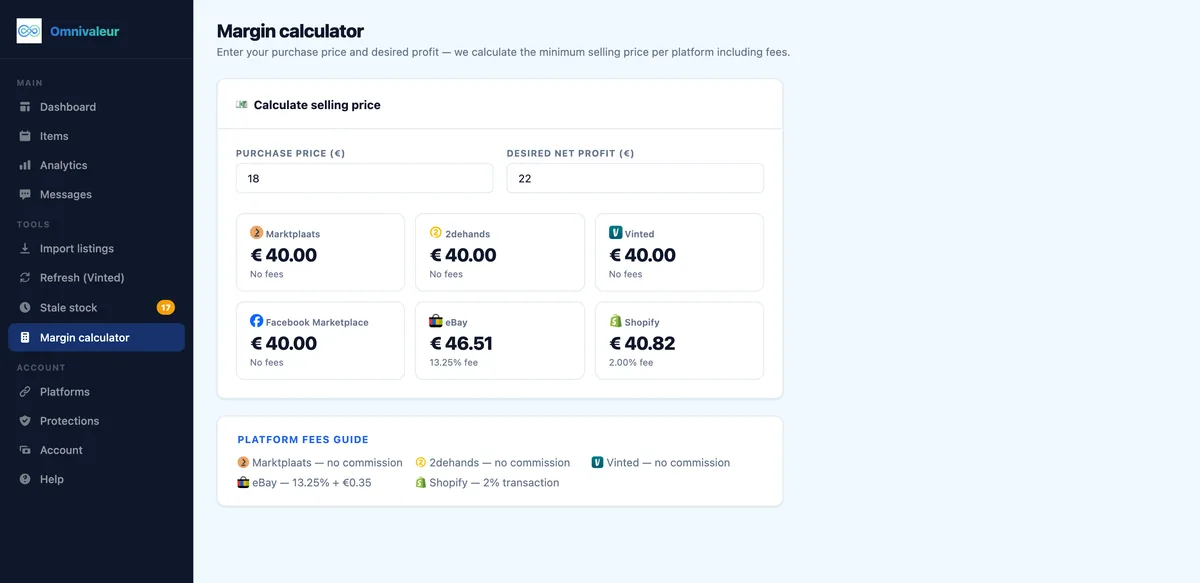
Volume resellers list fast and accept some loss. Luxury resellers do the opposite: fewer items, higher stakes, longer research per unit. A €40 flip and a €1,400 flip both take roughly the same photo-and-list effort — but a single sync error on the second one can wipe out an entire month's margin. That's why generic fashion reselling automation platforms need extra safeguards for high-value inventory: serial number fields, authentication certificate uploads, and instant delist-on-sale so the same bag never sits live on two marketplaces after it's gone.
Which 2026 platform rules affect luxury handbag resellers most?
Three changes are shaping the game this year:
- Stricter authentication triggers. Several marketplaces now auto-flag listings above certain price thresholds for manual review, adding 24-72 hours before a bag goes fully live.
- DAC7 reporting thresholds are unchanged but enforcement tightened. Platforms are now required to report seller data more consistently across the EU (see the European Commission's DAC7 overview).
- Photo and video limits changed. Vinted expanded photo counts for premium designer categories, which matters if your automation tool caps uploads per listing — check the Vinted selling rules before batch-uploading.
None of this is optional reading. A tool that hasn't updated its field mapping for 2026 will still let you list a bag missing a required serial number field, which gets it pulled within hours.
How does DAC7 tax reporting apply to designer bag resale in 2026?
If you sell more than 30 items or earn over €2,000 in a calendar year on a covered platform, that platform must report your sales data to tax authorities under DAC7. Because a single luxury handbag can hit €2,000 alone, one sale is sometimes enough to trigger reporting. Check your obligations directly through the Belastingdienst DAC7 seller information page if you're based in the Netherlands, or the EU-wide overview linked above if you sell cross-border. This isn't a reason to avoid multi-platform selling — it's a reason to keep clean records per platform, which automation tools generally export as CSV anyway.
Which marketplaces actually authenticate luxury handbags — and which don't?
| Platform | Authentication offered? | Best for | Typical fee on a €1,000 bag |
|---|---|---|---|
| Vinted | No formal authentication service | Mid-range designer, fast turnover | Buyer pays protection fee, seller pays 0% |
| eBay | Authenticity Guarantee on eligible categories/prices | High-value bags, international reach | ~13.25% final value fee |
| Etsy | No authentication, vintage/handmade focus | Vintage or discontinued designer pieces | 6.5% + payment fee |
| Marktplaats | No authentication | Local pickup, no shipping risk | Listing fee for certain categories |
| Shopify | You handle it yourself | Your own storefront, repeat buyers | Payment processor fee only |
Read the exact scope of eBay's listing rules before assuming every price point gets the Authenticity Guarantee stamp — it's tiered by category and price, not universal.
What cross-listing limits or restrictions apply to high-value items?
Several platforms cap how many high-value listings a new or unverified account can publish per week, specifically to slow down counterfeit sellers. This is a 2026 pain point competitors barely mention: your automation tool needs to respect per-platform daily/weekly listing caps, or you'll get throttled and lose your queue. Good cross-listing software staggers publish times automatically instead of firing all five listings at once.
How do you keep serial numbers, dust bags and authentication cards straight across five listings?
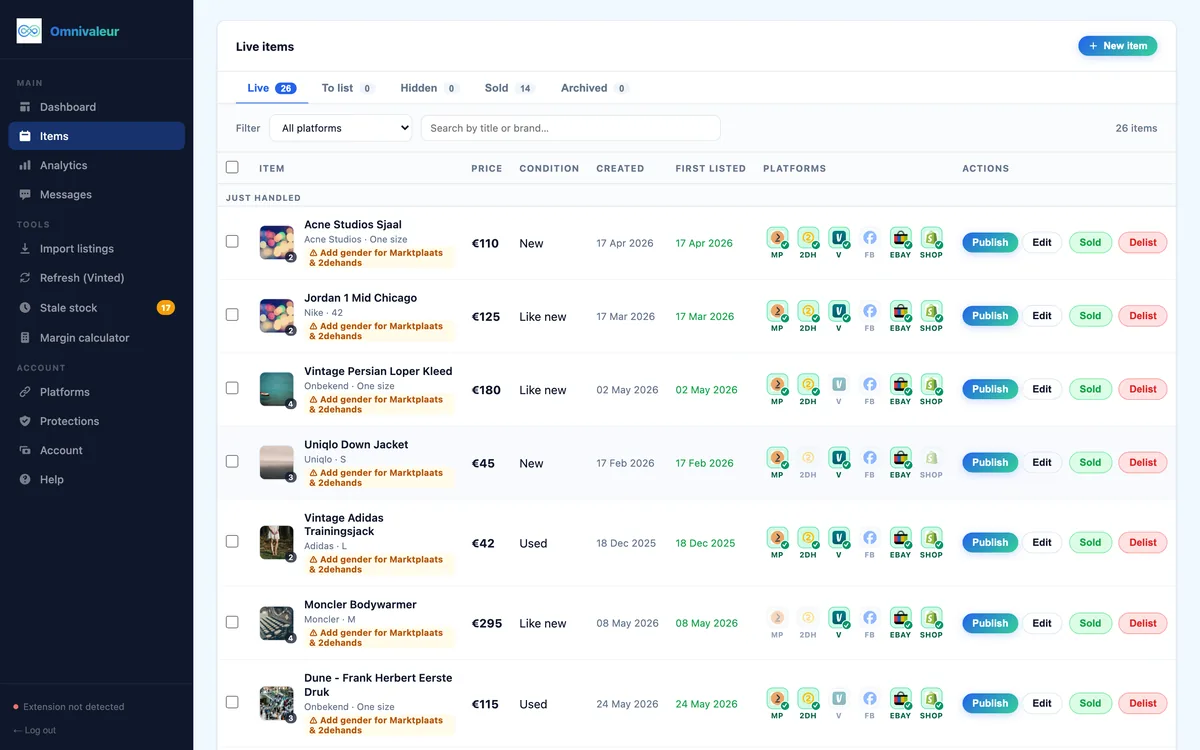
Manually, you'd retype the same details five times — brand, model, serial, hardware condition, included accessories. That's where mismatches creep in: one listing says "includes authenticity card," another forgets it, and a buyer disputes the sale later. Automation tools solve this with a single source-of-truth listing template that pushes identical structured data to every marketplace, then adjusts only what's platform-specific (category taxonomy, required fields, shipping profile). If you're already running Vinted clothing automation for your regular inventory, adding a luxury tier just means turning on stricter fields for items above your chosen price threshold.
Which platform combo actually works for reselling luxury handbags in 2026?
Based on what resellers report, a typical winning combo looks like:
- Vinted for bags under €400 — fast audience, zero seller fees.
- eBay for anything over €500 — global reach, buyer trust from Authenticity Guarantee.
- Etsy for genuinely vintage or discontinued pieces — buyers there pay a premium for story and rarity.
- Shopify once you've built a repeat-buyer base — no marketplace fees at all, full brand control.
Running all four by hand means four separate photo uploads, four description rewrites, four price updates every time you adjust for a slow-moving item. That's the exact workflow gap automation closes — see how tools stack up in this Omnivaleur vs List Perfectly comparison if you're evaluating options.
What does manual cross-listing actually cost you in lost margin?
Say you handle 15 bags a month, spending 30 minutes each on manual multi-platform listing. That's 7.5 hours monthly just on admin — before you even factor in the risk of a double-sale refund, which on a €1,000 bag instantly erases weeks of that labor's value. Sellers moving from single-platform to automated cross-listing in other high-value categories report the same pattern: the time saved matters less than the errors avoided.
Do you need to worry about buyer protection rules when selling internationally?
Yes — a buyer in France or Germany has the same statutory return rights as one in the Netherlands under EU consumer law. Review the EU consumer shopping rights guide before you write a "no returns" clause into a luxury listing; it may not be enforceable depending on how you're registered as a seller.
Frequently asked questions
Do I need to register as a business to resell luxury handbags across multiple platforms?
Can the same handbag legally be listed on Vinted and Marktplaats at the same time?
What happens if a marketplace flags my luxury bag listing as potentially counterfeit?
Is Etsy actually a good fit for designer handbags, or just vintage pieces?
How many photos should I use per platform for a high-value handbag listing?
Keep reading
Stop copying listings by hand
Omnivaleur publishes your item to every platform at once and syncs stock automatically when something sells.
Start free trial