Best Electronics Reselling Automation Platforms for 2026
Electronics reselling automation platforms sync inventory, specs, IMEI/serial numbers and pricing across Marktplaats, eBay, Vinted, Etsy and Shopify from one dashboard. In 2026 the best ones handle category restrictions (Vinted blocks most electronics), DAC7 tax thresholds, and battery shipping rules automatically — cutting relisting time by hours per week.
Key takeaways
- Vinted restricts most electronics categories, so automation tools need to route those listings to eBay, Marktplaats or Shopify instead.
- DAC7 reporting triggers at 30 transactions or €2,000 in a calendar year, and phones or laptops often cross that line fast.
- IMEI and serial number fields stop you from accidentally relisting a blacklisted or stolen device across multiple sites.
- Battery-containing electronics need hazmat-aware shipping labels — top platforms now generate these automatically in 2026.
- eBay's Authenticity Guarantee now touches some electronics categories, which changes what a listing must include.
Selling a phone on Marktplaats is easy. Selling 40 phones a month across five marketplaces without losing your mind is a different job entirely. That's what electronics reselling automation platforms actually solve — not "automation" in the abstract, but the specific mess that comes with used electronics: serial numbers, battery warnings, warranty claims, and tax thresholds that arrive faster than in almost any other resale category.
What counts as an electronics reselling automation platform in 2026?
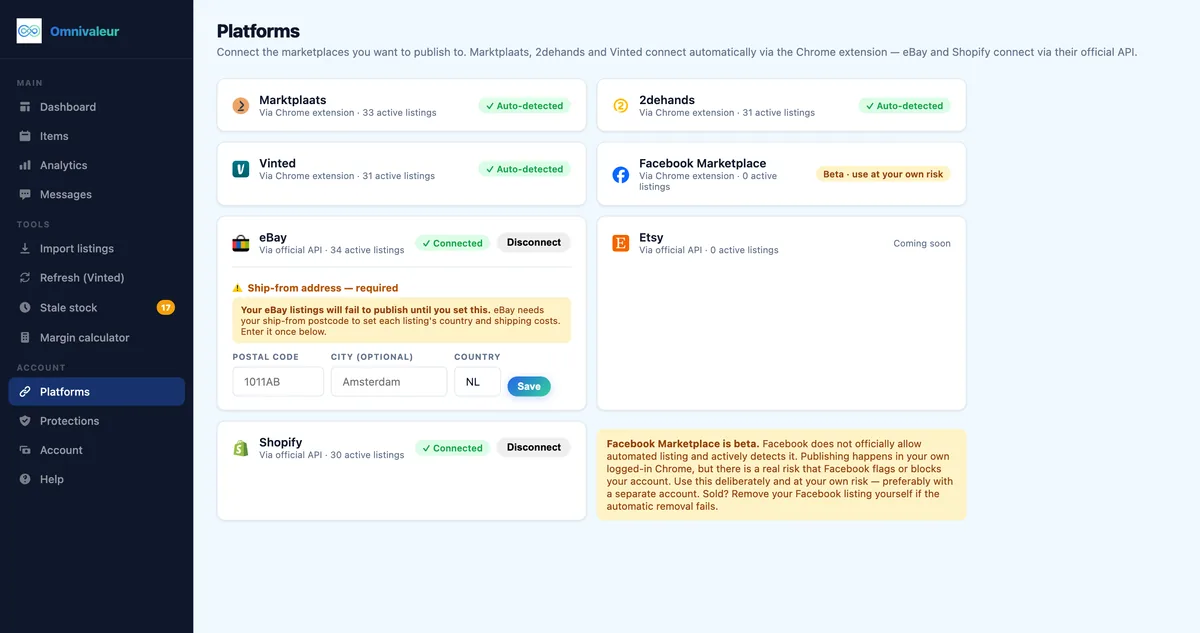
It's software that lets you list one item once, then push it to multiple marketplaces — Marktplaats, 2dehands, eBay, Etsy, Shopify, sometimes Vinted — while keeping stock levels synced so you never sell the same unit twice. For electronics specifically, that base feature set isn't enough. You also need fields for IMEI or serial number, storage capacity, battery health percentage, included accessories, and grading (A/B/C condition). Generic ecommerce automation tools built for apparel or home goods usually don't have these fields at all, which is the gap most "best automation tools" roundups miss entirely.
Which marketplaces actually allow electronics resale in 2026?
This is the part most generic guides skip, and it matters more for electronics than for almost any other category. Vinted's selling rules restrict most consumer electronics — no smartphones, laptops, or gaming consoles in the general marketplace flow, with a few narrow exceptions for accessories. That means a cross-listing tool that's great for clothing may be functionally useless for a phone reseller.
- Marktplaats / 2dehands — fully open to electronics, largest Dutch/Belgian audience for used tech.
- eBay — strongest for graded, tested electronics; supports structured item specifics (RAM, storage, model number) that automation tools can auto-fill.
- Etsy — works only for vintage electronics (20+ years old) or refurbished audio gear marketed as collectible.
- Shopify — your own storefront, best for repeat electronics sellers who want to build a returning customer base outside marketplace fees.
- Vinted — largely off-limits for electronics; automation tools should skip this channel or flag it for manual review.
If you're already running a eBay to Shopify crosslisting workflow for other categories, the same logic applies here — electronics just need extra fields inside that pipeline.
How does DAC7 tax reporting affect electronics resellers specifically?
Electronics resellers hit DAC7 thresholds faster than clothing or book sellers because the average transaction value is higher. Under the EU DAC7 framework, marketplaces must report sellers who complete more than 30 transactions or earn over €2,000 in a calendar year. Sell ten used laptops at €250 each and you've already crossed the euro threshold — well before you'd notice with lower-priced goods. Dutch sellers can check their exact reporting obligations directly through the Belastingdienst DAC7 seller information page. A decent automation platform should let you export sales history by platform and date range in one click, because reconstructing 200 individual eBay and Marktplaats transactions manually at tax time is a genuinely bad way to spend an evening.
What automation features actually matter for electronics listings?
Skip the generic feature list ("bulk editing," "analytics dashboard") and focus on what electronics resellers actually need day to day:
- IMEI/serial capture — scan or type once, auto-populate across every listing so buyers can verify authenticity.
- Spec templates — save a "iPhone 13, 128GB" template once, reuse it for every unit in stock instead of retyping specs 40 times.
- Condition grading presets — A/B/C/D grading with pre-written descriptions that match each platform's tone (eBay buyers expect more technical detail than Marktplaats buyers).
- Battery health disclosure fields — increasingly expected by buyers post-2025, and required on some eBay refurbished categories.
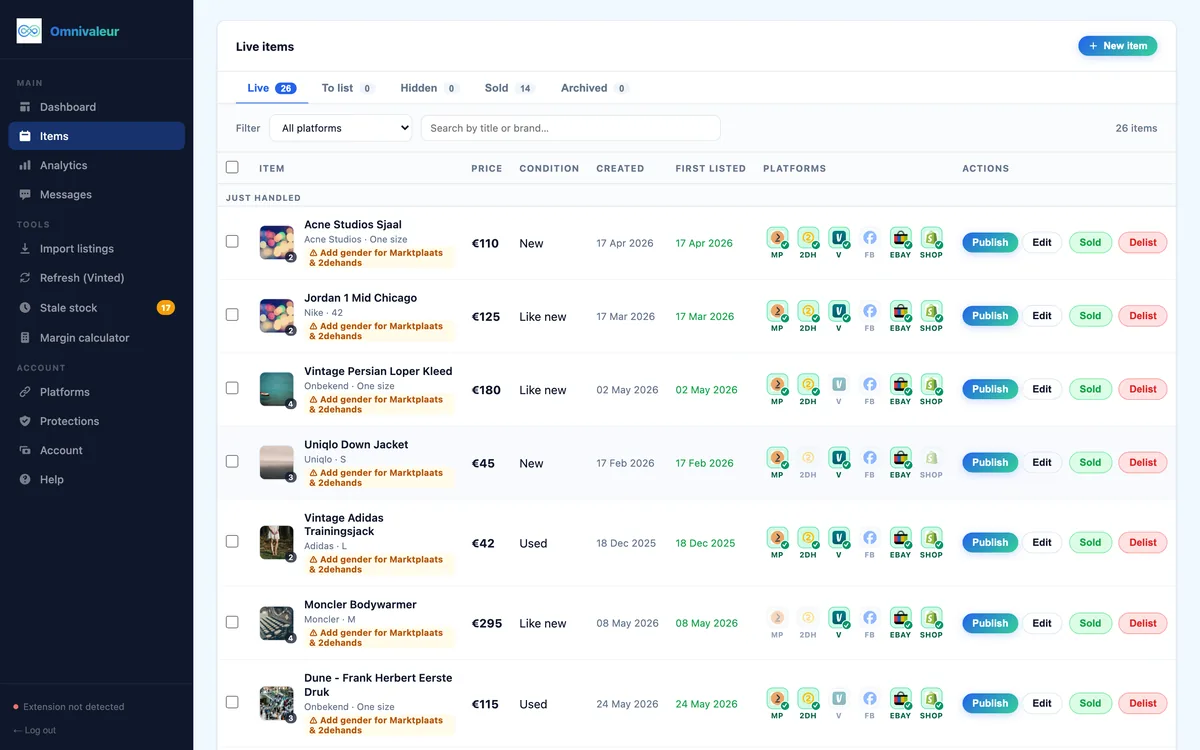
- Delisting sync — the moment a unit sells on one channel, it disappears everywhere else. For electronics, where duplicate sales create real refund headaches, this single feature often justifies the subscription cost alone.
- ✓Pick your two strongest channels first, usually Marktplaats plus eBay for European sellers
- ✓Build spec templates for your five most common electronics models before listing anything
- ✓Turn on inventory sync immediately to avoid selling the same unit twice across channels
- ✓Set a DAC7 tracking habit from day one and export sales monthly by platform
- ✓Add Shopify or Etsy only once your first two channels are running smoothly without breaking things
Which platforms compare best for electronics cross-listing in 2026?
Here's how the main cross-listing tools stack up specifically for electronics resale, not general apparel resale:
| Platform | Electronics-ready fields (IMEI, battery health) | Marketplaces covered | DAC7-friendly export | Starting price/mo |
|---|---|---|---|---|
| Omnivaleur | Yes, custom fields per category | Marktplaats, 2dehands, eBay, Etsy, Shopify (Vinted for accessories only) | Yes, CSV by platform/date | €19 |
| Vendoo | No dedicated IMEI field | Poshmark, eBay, Mercari, Depop | Limited | $19 |
| List Perfectly | Manual custom fields only | eBay, Etsy, Mercari, Poshmark | No | $29 |
| Zenlister | No | eBay, Vinted (apparel-focused) | No | €15 |
| OneShop | Basic condition tags only | eBay, Poshmark, Depop | No | $13.99 |
Full head-to-head breakdowns exist if you want the wider context: see Omnivaleur vs Vendoo for a deeper comparison of general cross-listing workflows outside electronics specifically.
What shipping and battery rules should electronics resellers automate around?
Lithium batteries are the single biggest operational headache electronics resellers face that clothing or book resellers never think about. Most carriers require specific hazmat labeling for lithium-ion devices shipped internationally, and rules tighten yearly — 2026 has seen several EU carriers add stricter watt-hour disclosure requirements for laptop and power bank shipments. A good automation setup flags any listing containing a battery over 100Wh and prompts you to select the correct shipping class before the label prints, rather than finding out after a parcel gets returned at customs. eBay's listing creation rules also require accurate item condition and functionality disclosures for used electronics — misrepresenting battery health or storage capacity is one of the fastest ways to trigger a buyer dispute.
How do you build a practical 2026 workflow for cross-listing electronics?
Start narrow. Most electronics resellers overcomplicate this in month one.
- Pick your two strongest channels first — usually Marktplaats plus eBay for European sellers, since both allow full electronics categories.
- Build spec templates for your five most common models before listing a single item. This saves more time than any other single setup step.
- Turn on inventory sync immediately, not after your first double-sale mistake.
- Set a DAC7 tracking habit from day one — export monthly, don't wait until you're already over threshold.
- Add Shopify or Etsy only once channels one and two are running smoothly; adding five marketplaces on day one just multiplies the number of things that can break.
If you already resell in an adjacent category, the setup logic is nearly identical — the sneaker reselling automation platform guide covers the same channel-prioritization approach, just with different condition-grading criteria.
What should electronics resellers double-check before scaling up?
Buyer protection rules differ by platform and by country. The EU consumer shopping rights guidance is worth reading once if you sell used electronics cross-border within the EU, since return windows and warranty expectations for "used but functional" tech can surprise new sellers. Building that awareness into your listing templates now avoids a stack of disputes later — much cheaper than fixing it after 200 listings are already live.
Frequently asked questions
Can automation platforms auto-fill IMEI numbers from a barcode scan?
Why does Vinted block most phone and laptop listings?
What happens once I cross the DAC7 reporting threshold selling electronics?
Do I need to disclose battery health percentage by law?
How many electronics listings can I realistically automate per week as a solo reseller?
Keep reading

Stop copying listings by hand
Omnivaleur publishes your item to every platform at once and syncs stock automatically when something sells.
Start free trial