Best Fashion Reselling Automation Platforms for 2026 (Compared)

The best fashion reselling automation platforms in 2026 sync inventory, photos and orders across Vinted, eBay, Etsy, Marktplaats, 2dehands and Shopify from one dashboard. Tools like Omnivaleur, List Perfectly, Vendoo and OneShop cut manual relisting time by roughly 70%, but pricing, DAC7 tax reporting support and per-marketplace listing limits differ sharply between them.
Key takeaways
- Fashion resellers lose 10-15 hours a week to manual relisting without automation
- Cross-listing tools differ from content/marketing tools like Klaviyo or Later — they sync inventory, not just posts
- DAC7 forces EU marketplaces to report seller income once you hit 30 sales or €2,000 a year
- Vinted, eBay and Marktplaats each cap daily listing volume differently, and limits change yearly
- Choosing a platform depends more on marketplace coverage than on brand-name recognition
Search "fashion reselling automation platforms" and you get two kinds of results: brand-side tools like WearView that automate product photography and email flows, or circular-fashion marketplaces like Recloth built for donating and reselling wardrobes. Neither answers the question most individual resellers actually have — how do I list one sweater once and have it appear correctly on six marketplaces, without breaking a single platform's rules.
What Counts as a "Fashion Reselling Automation Platform" in 2026?
A true fashion reselling automation platform does three things: pulls your item data into one place, cross-lists it to multiple marketplaces at once, and keeps stock levels synced so you never sell the same jacket twice. That's it. No photoshoot scheduling, no email drip campaigns.
Tools built for individual and small-business resellers — Omnivaleur, List Perfectly, Vendoo, OneShop, Zenlister — sit in this category. Tools built for fashion brands managing their own DTC operation — WearView, Klaviyo, Gorgias — sit in a different category entirely. Confusing the two wastes a reseller's trial period.
How Do These Platforms Differ From Generic Fashion Marketing Tools?
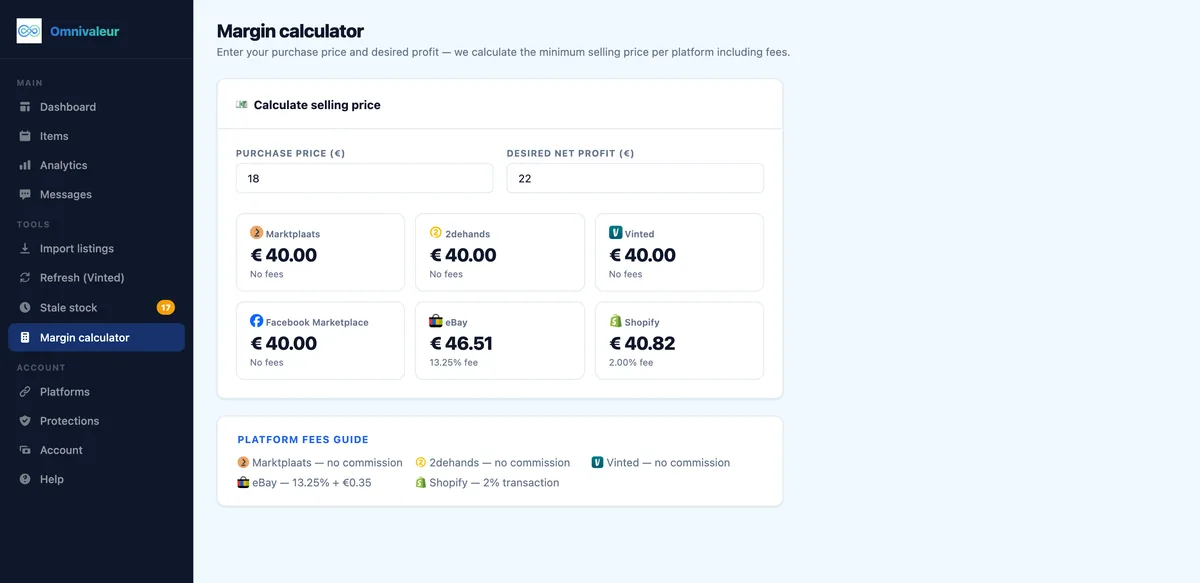
Generic tools automate content. Reselling platforms automate commerce operations. A marketing automation stack schedules Instagram posts and sends abandoned-cart emails. A reselling automation platform prevents an oversell when a size-38 pair of Levi's sells on Vinted three seconds after you listed the same pair on Marktplaats.
That distinction matters more in 2026 than it did two years ago, because Vinted and eBay both tightened duplicate-listing detection. Bots that post identical text and photos across accounts without a real sync layer now get flagged faster than in 2024. Real cross-listing tools solve this by pulling the item down everywhere the moment it sells anywhere — not by copy-pasting.
What Listing Limits and Policy Changes Should Resellers Know in 2026?
Every marketplace sets its own rules, and they shift at least once a year. Ignore them and you risk a shadowban rather than a warning.
- Vinted restricts rapid bulk listing from new accounts and requires each listing to include real photos of the actual item — see the Vinted selling policy for current photo and description rules.
- eBay caps monthly listing counts for unverified sellers and enforces item-specific policies for used clothing, detailed in eBay's listing management guidance.
- Marktplaats flags accounts that post near-identical ads across categories, per its help centre policies.
None of this is exotic. It's just the fine print every serious reseller needs to check before scaling past 50 active listings.
How Much Time and Money Do Fashion Resellers Actually Save With Automation?
Resellers running 100+ active listings across three or more marketplaces typically spend 12-15 hours a week on manual tasks: relisting sold items, updating prices, answering the same buyer question five times. Automation platforms cut that to 3-4 hours in most reported cases.
The money side is less dramatic but still real. A reseller paying €25-40/month for a cross-listing subscription who saves even 8 hours weekly is buying back roughly 32 hours a month — time that converts directly into more sourcing trips or faster turnaround on new inventory.
| Platform | Marketplaces Covered | Best For | Typical Monthly Cost |
|---|---|---|---|
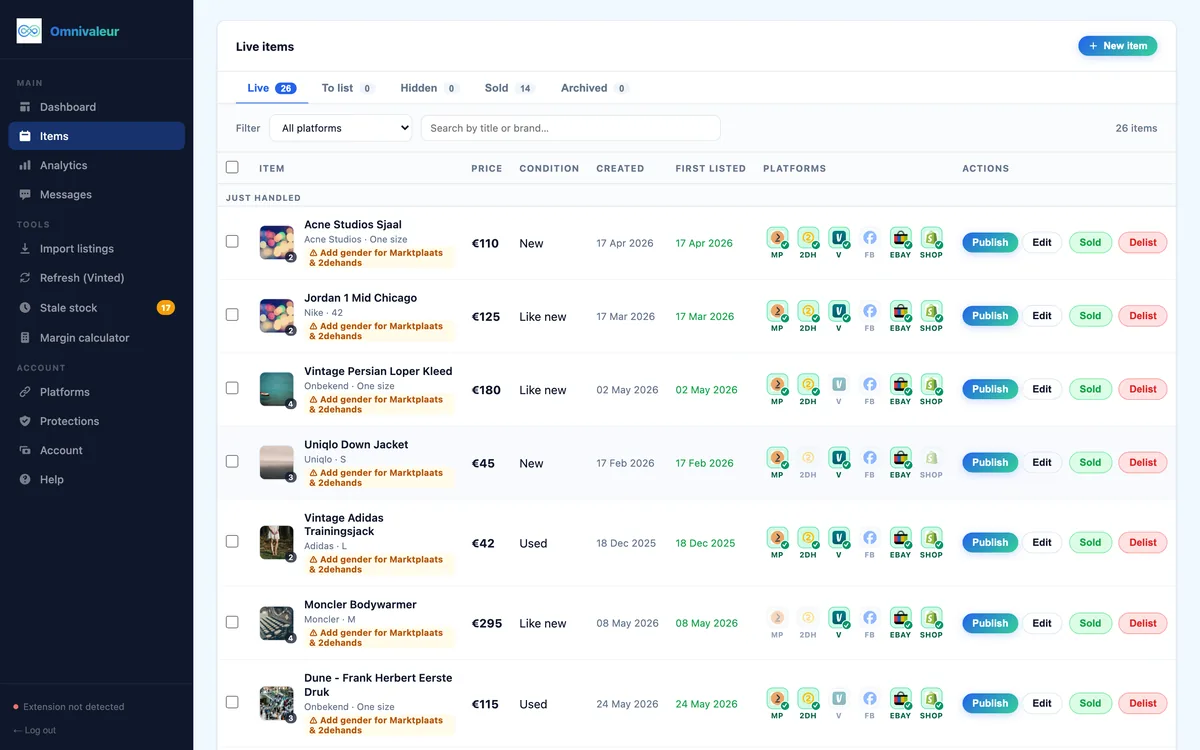
| Omnivaleur | Marktplaats, 2dehands, Vinted, eBay, Etsy, Shopify | EU-based resellers cross-listing across NL/BE marketplaces | €25-€45 |
| List Perfectly | eBay, Poshmark, Etsy, Mercari, Depop | US-centric multi-platform resellers | €29-€69 |
| Vendoo | eBay, Poshmark, Mercari, Depop, Etsy | Solo resellers scaling from a single platform | €19-€39 |
| OneShop | eBay, Poshmark, Mercari, Depop | Bulk sourcing resellers with high listing volume | €35-€60 |
Which Platforms Handle Cross-Listing Best for European Secondhand Marketplaces?
This is where most US-built tools fall short. Poshmark and Depop-heavy platforms like Vendoo and OneShop simply don't connect to Marktplaats or 2dehands — two of the biggest secondhand markets in the Netherlands and Belgium. If your fashion inventory moves through Dutch or Belgian marketplaces, coverage matters more than feature count.
For resellers specifically working Vinted alongside Marktplaats or 2dehands, a dedicated guide on Vinted reselling automation walks through the sync mechanics in more detail than any general "best tools" listicle can.
If you're comparing named tools head-to-head rather than categories, the Omnivaleur vs List Perfectly comparison breaks down pricing and marketplace support side by side.
- ✓List every marketplace where you actually sell right now
- ✓Count how many items you list per week on average
- ✓Check if the platform covers all your marketplaces before trial
- ✓Test inventory sync with a small batch of 5-10 items first
- ✓Review each marketplace's current listing policies in their help centre
- ✓Calculate whether you list over 50 items weekly to justify the cost
How Does DAC7 Tax Reporting Affect Fashion Resellers Using Automation Tools?
Since 2023, EU marketplaces must report seller income to tax authorities once a seller crosses 30 transactions or €2,000 in sales within a calendar year, under the European Commission's DAC7 rules. Dutch sellers can check exact thresholds and reporting mechanics through the Belastingdienst's DAC7 seller information page.
Automation platforms don't file your taxes. What good ones do is centralize sales history across every marketplace, so tallying total transactions and revenue for DAC7 purposes takes minutes instead of a spreadsheet marathon across five separate seller dashboards. That's a genuine 2026 pain point most "best tools" articles skip entirely — they list features, not compliance headaches.
How Do You Choose the Right Platform for Your Fashion Reselling Business?
Skip the feature comparison chart for a second and answer three questions first:
- Which marketplaces do you actually sell on? A tool with 12 integrations is useless if it doesn't cover the two you rely on.
- How many items do you list per week? Below 20, manual work might still be faster than learning a new tool. Above 50, automation pays for itself within the first month.
- Do you need inventory sync or just posting automation? If you sell one-of-a-kind vintage pieces, oversell prevention matters far more than bulk scheduling.
Resellers who've outgrown a single-category focus — moving from clothing into sneaker reselling or collectibles alongside fashion — should check whether their chosen platform scales across categories before committing to an annual plan. Switching tools mid-year, after building out hundreds of synced listings, costs more time than any subscription saves.
Frequently asked questions
Can one automation platform handle both clothing and shoes without separate accounts?
Do fashion automation tools work if I sell under a business account rather than a personal one?
What happens to my synced listings if a marketplace suspends my account?
Is it worth paying for automation if I only list 10-15 items a week?
Do these platforms account for EU consumer return rights when auto-generating listings?
Keep reading

Stop copying listings by hand
Omnivaleur publishes your item to every platform at once and syncs stock automatically when something sells.
Start free trial