Handbag and Accessories Reselling Automation: The Complete 2026 Guide
Handbag and accessories reselling automation means cross-listing bags, jewelry, belts, sunglasses and watches to Vinted, eBay, Etsy, Marktplaats, 2dehands and Shopify from one dashboard, keeping condition notes, authenticity details, hardware photos and pricing synced so a sale on one platform pulls the listing everywhere else automatically.
Key takeaways
- Vinted, eBay and Etsy each treat "luxury" handbags differently — Etsy blocks most branded bags outright unless labelled vintage
- Interior lining, serial tag and hardware close-ups matter more for handbag listings than for clothing
- DAC7 reporting kicks in once a seller crosses roughly 30 sales or €2,000 in a calendar year on a single platform
- Real profit on handbags depends on the confirmed sale price, which typically runs 10-20% below the original asking price
- A stale-stock view catches accessories that quietly stop getting views, before they turn into dead capital
Selling handbags and small accessories across multiple marketplaces is not the same job as cross-listing a t-shirt. A £400 bag needs an interior photo, a hardware close-up and a serial tag reference before eBay or Vinted buyers trust it enough to click "buy." Handbag and accessories reselling automation handles that repetitive photo, description and pricing work across platforms, so a reseller managing forty bags doesn't retype the same brand, material and condition notes six times over.
This guide covers what changed in 2026 for accessory sellers specifically — platform restrictions on branded bags, authentication expectations, DAC7 thresholds, and the profit-tracking mistakes that cost resellers money without them noticing.
What Makes Handbag and Accessories Reselling Different From Clothing Automation?
Clothing automation mostly needs size, brand and condition. Handbags need more structured data before a listing even qualifies as trustworthy:
- Hardware condition — zippers, clasps, buckle plating, and whether they're original or replaced
- Interior state — lining stains, pen marks, structural sagging
- Serial or date codes — required by eBay's authenticity guarantee program for bags over £500
- Dust bag, authenticity card, receipt — whether original packaging is included, which materially changes resale value
A generic cross-listing tool built for fashion apparel often has no field for any of this, so resellers end up copy-pasting the same paragraph into every description by hand. Purpose-built designer clothing reselling automation workflows solve part of this, but handbags and accessories need their own condition template because the failure points — hardware wear, interior odor, strap stretching — don't map onto how a jacket or a pair of jeans gets graded.
Which Marketplaces Actually Allow Luxury Handbag Listings in 2026?
Policy differences here trip up more resellers than fees do. As of 2026:
| Marketplace | Branded bag policy | Typical seller fee | Best for |
|---|---|---|---|
| Vinted | Allowed, but Vinted's authenticity check can hold funds on items over €50 flagged as designer | Buyer pays protection fee, seller pays 0% | Mid-range designer, everyday accessories |
| eBay | Allowed; Authenticity Guarantee mandatory for many bags over £500 | ~13% final value fee | High-value bags, watches |
| Etsy | Branded bags mostly restricted unless clearly vintage (20+ years) or handmade | 6.5% + payment processing | Vintage or artisan accessories only |
| Marktplaats | Allowed, no authentication layer, buyer risk higher | Free for private listings | Local pickup, bulkier accessory lots |
| 2dehands | Same rules as Marktplaats (Belgian sister site) | Free for private listings | Belgian local buyers |
| Shopify | No platform restriction, seller sets own policy | Payment processor fee only | Building a repeat-buyer accessory storefront |
Etsy is the one that catches new sellers out. A genuine Chanel bag from 2019 will get pulled from Etsy because it isn't old enough to qualify as vintage there, even though the exact same listing is perfectly fine on eBay or Vinted. Cross-listing software needs to know this and either skip Etsy for that item or flag it for manual review, rather than pushing a listing that gets auto-removed a day later.
What Photos and Details Do Automation Tools Need for Handbags and Accessories?
A good handbag listing template pulls from a checklist, not a memory. At minimum, resellers should capture:
- Front, back, both sides, base (to show shape and structural wear)
- Interior fully open, including corners
- Serial tag or date code, photographed straight-on and legible
- Hardware close-up (zipper pulls, clasp, feet)
- Strap and handle attachment points, where cracking usually starts first
Automation tools that reuse this photo set across Vinted, eBay and Marktplaats save real time — five to eight photos per bag, shot once, distributed six ways. Resellers doing this manually typically spend 12-15 minutes per bag just re-uploading and re-cropping images per platform; automation cuts that to under three minutes.
How Do Authentication and Counterfeit Rules Affect Cross-Listing Handbags?
Authentication is the single biggest platform-specific risk in this category. eBay's Authenticity Guarantee physically intercepts the bag and inspects it before it reaches the buyer, for qualifying brands and price bands. Vinted uses a similar third-party check above certain price thresholds and can freeze payout until it clears. Marktplaats and 2dehands do neither — the entire trust burden sits on the description and photos.
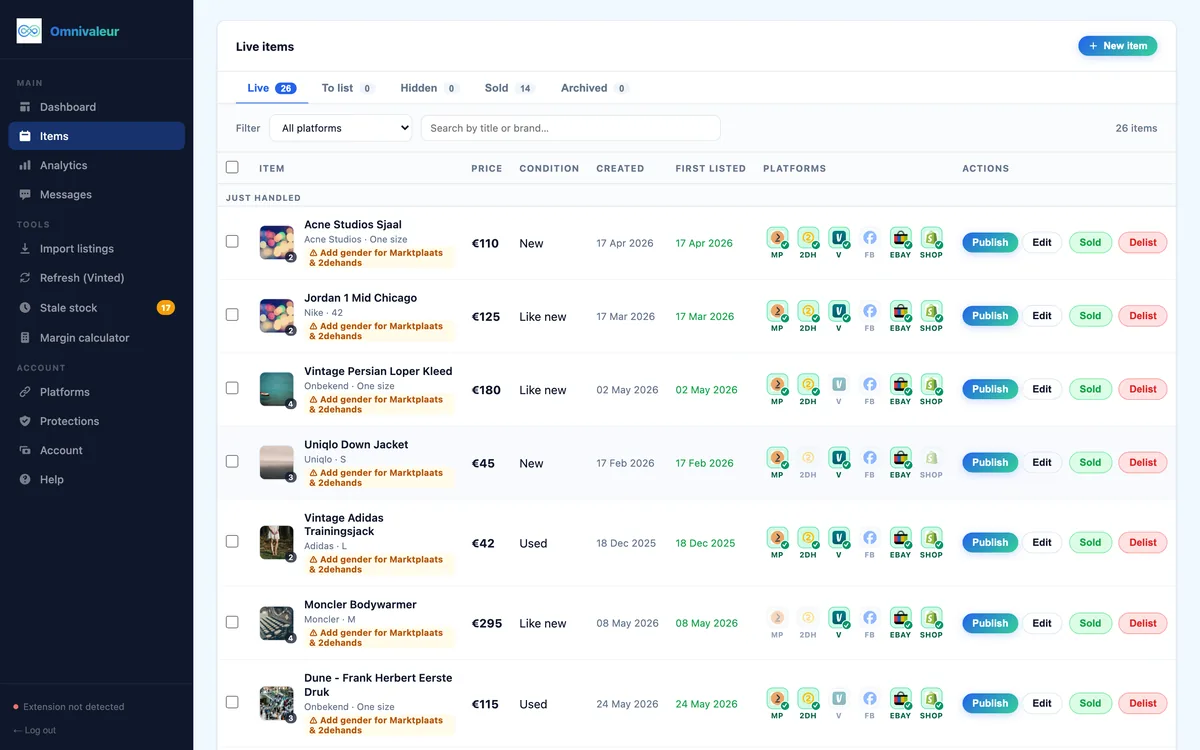
Practically, this means a bag sold on eBay can take 5-10 extra business days to complete versus a Marktplaats sale, and resellers who cross-list the same bag everywhere need to remember to pull it from other channels the moment it sells, or risk shipping a bag that's currently sitting in an eBay authentication warehouse. This is exactly the kind of timing gap that automatic delisting solves — one sale anywhere removes the listing everywhere else within minutes, not at the end of the day when someone remembers to check.
Buyers also have legal protection worth knowing about: under EU consumer rules, items described inaccurately (including authenticity claims) can be returned, which is covered in detail on the EU's consumer shopping rights guide. Overstating a bag's authenticity or condition isn't just a platform risk, it's a legal one.
How Much Does Reselling Automation Save on Fees and Time for Accessory Sellers?
Fee stacking is where a lot of accessory resellers lose margin without noticing. A £300 bag sold on eBay carries roughly £39 in final value fees plus payment processing. The same bag on Vinted, sold to a private buyer, costs the seller nothing directly — the buyer absorbs the protection fee. That's a meaningful spread when deciding where to prioritise a listing.
Time is the other side of the equation. A reseller listing 30 bags a week manually, at roughly 20 minutes per listing across platforms, spends 10 hours a week just on listing mechanics — before photography or sourcing. Cross-listing tools that sync one master listing to six marketplaces routinely bring that down to under two hours for the same volume, freeing the rest of the week for sourcing and customer messages.
How Does DAC7 Tax Reporting Apply to Handbag and Accessory Resellers?
DAC7 requires marketplaces to report seller data to tax authorities once a seller crosses roughly 30 transactions or €2,000 in sales on a single platform in a calendar year — a threshold accessory resellers hit fast, since even mid-range bags clear €50-150 each. This reporting obligation sits with the platform, not the software, but it means Vinted, eBay and Etsy are all collecting seller tax ID information under the rules described by the Belastingdienst's DAC7 guidance for sellers and the European Commission's DAC7 overview.
For a reseller cross-listing the same bag on four platforms, that means four separate DAC7 counters ticking simultaneously, even though only one of them ever actually sells the item. Keeping a single source of truth for what's sold, where, and for how much matters here — not just for margin tracking but for reconciling what each platform reports at year-end.
How Do You Track Real Profit on Handbags When Asking Price and Sale Price Differ?
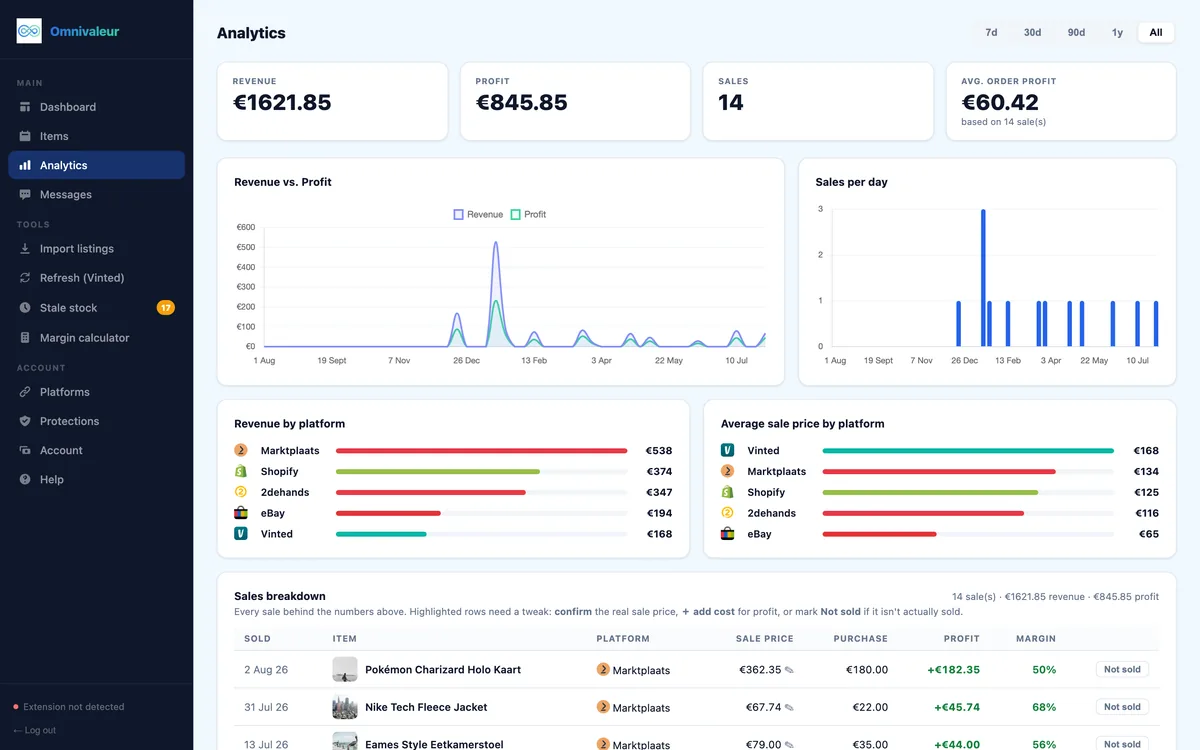
This is where a lot of resellers overstate their own margins. Listing a bag at €220 and eventually accepting €185 after negotiation is normal on Vinted and Marktplaats — the gap between asking price and confirmed sale price typically runs 10-20% on second-hand marketplaces. Spreadsheets built off the listed price, rather than the actual accepted price, quietly inflate every margin calculation in the sheet.
Omnivaleur's analytics calculate profit from the real sale price that sellers confirm per sale, not the asking price, precisely because that 10-20% gap compounds fast across a few dozen bags a month. A reseller who thinks they're clearing €4,000 a month on paper might actually be sitting closer to €3,400 once every accepted offer is counted honestly. Jewelry sellers run into the identical problem — the jewelry reselling automation guide covers how negotiated discounts on rings and watches distort margin tracking in the same way.
How Do You Handle Slow-Moving Handbag and Accessory Stock?
Handbags age differently to clothing. A trend bag can go from must-have to unsellable in a season, while a classic tote sits fine at the bottom of inventory for a year without losing value. The problem isn't the bag itself, it's that slow stock disappears down a long inventory list and stops getting attention entirely.
Omnivaleur's stale-stock view flags listings that have been sitting unsold for longer than a set window, so a €150 crossbody that's had zero views in six weeks surfaces at the top of the dashboard instead of sinking to page four. From there the usual fixes apply: reprice by 10-15%, refresh the photos with better lighting, or move it to a platform where that style actually sells — Marktplaats for local pickup on bulkier bags, Etsy if it's genuinely old enough to count as vintage. Resellers working across vintage categories generally see the same pattern; the vintage clothing reselling automation platforms guide and the collectibles reselling automation guide both cover repricing cadence for items that don't move on a predictable cycle.
How Do You Choose a Cross-Listing Tool for Handbags and Accessories?
Not every cross-listing tool handles this category well. Before picking one, check for:
- Category-specific fields for hardware, interior condition, serial numbers — not just generic "condition: good/fair/poor"
- Automatic delisting the moment an item sells anywhere, to avoid double-selling a bag mid-authentication
- Platform-aware rules that know Etsy restricts non-vintage branded bags, so listings aren't rejected after the fact
- Real sale price tracking, not asking-price-only analytics
- Support for Vinted-specific fields if that's a primary sales channel — see the dedicated Vinted reselling automation guide for what Vinted's listing form actually requires in 2026
Resellers comparing tools head-to-head often start with feature checklists but end up deciding on support quality and pricing tiers instead — worth reading through an independent comparison like Omnivaleur vs List Perfectly before committing to a monthly plan, since switching tools mid-inventory is its own hassle.
Setup usually takes under an hour: connect marketplace accounts, import existing listings, build one condition template per accessory category, then let the sync handle the rest. The real work stays in sourcing, photography and pricing decisions — automation just removes the repetitive re-typing that used to eat the middle of the day.
Frequently asked questions
Can I cross-list the same handbag on both Vinted and Marktplaats without breaking any rules?
Do watches and sunglasses need the same authentication handling as handbags?
How many photos does a typical accessory listing need per platform in 2026?
Is it worth listing accessories on Shopify if I already sell on Vinted and eBay?
What happens if a bag fails eBay's authentication check after it's already sold?
Keep reading
Stop copying listings by hand
Omnivaleur publishes your item to every platform at once and syncs stock automatically when something sells.
Start free trial