Jewelry Reselling Automation in 2026: The Complete Cross-Listing Guide
Jewelry reselling automation means using cross-listing software to publish one jewelry listing across Marktplaats, Vinted, Etsy, eBay and Shopify at once, sync inventory when a piece sells, and track real profit per item. In 2026 this matters more than ever because platform photo rules, material disclosure requirements and DAC7 tax reporting have all tightened.
Key takeaways
- Jewelry needs more photos and material detail than clothing, so templates matter more than speed
- DAC7 reporting kicks in once you cross 30 sales or €2,000 on one platform in a calendar year
- Vinted's refresh tool is capped at 8 free refreshes a day and can never guarantee your account won't get flagged
- Real profit should be calculated from the confirmed sale price, not the asking price — the gap is typically 10-20% on second-hand marketplaces
- Etsy and Shopify reward keyword-rich jewelry titles that Marktplaats and Vinted buyers never see, so one listing rarely works for both
Jewelry is one of the worst product categories for generic cross-listing tools, and one of the best for reselling automation done right. A ring or a necklace has almost no size variants to worry about, but it has more compliance and disclosure requirements than a t-shirt: metal content, hallmarks, stone authenticity, weight in grams. Get the automation wrong and you either under-describe an item and get a return, or you copy-paste a description that trips Etsy's handmade-vintage rules. Get it right, and jewelry becomes one of the highest margin-per-listing categories a reseller can run.
What makes jewelry reselling harder to automate than clothing or sneakers?
Clothing automation is mostly about size charts and brand tags. Jewelry automation is about trust signals. Buyers can't try a ring on before buying, so every platform pushes sellers toward more photos, more metal/stone disclosure, and tighter return windows than for apparel. A cross-listing tool built for hoodies and sneakers — see our designer clothing reselling automation guide for comparison — will happily push a title field and a size dropdown, but jewelry listings need custom attribute fields for material, plating, gemstone type, and hallmark year that generic tools often bury three menus deep.
There's also a weight problem most resellers don't think about until their first international sale. A gold chain that weighs 18 grams costs very differently to ship insured to Germany versus the Netherlands, and eBay's global shipping program calculates duties differently for jewelry than for textiles. If your automation tool doesn't let you set category-specific shipping profiles, you'll either overcharge domestic buyers or eat the loss on international ones.
Which marketplaces actually work for reselling jewelry in 2026?
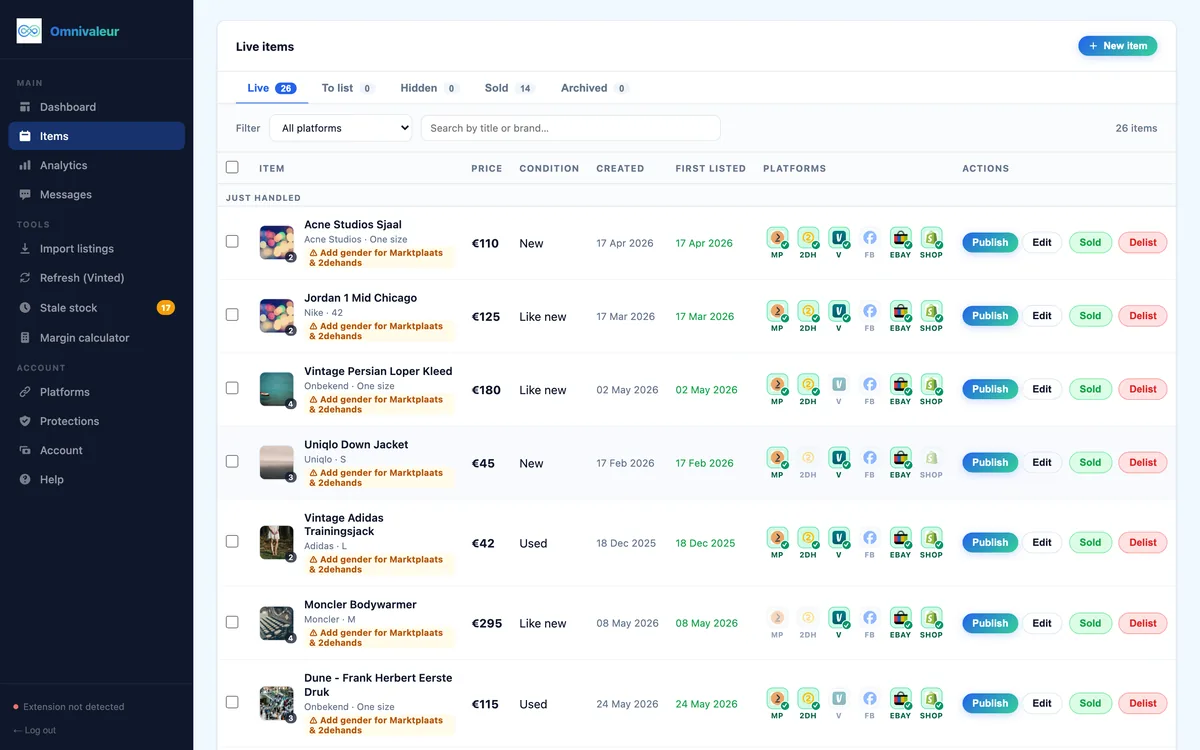
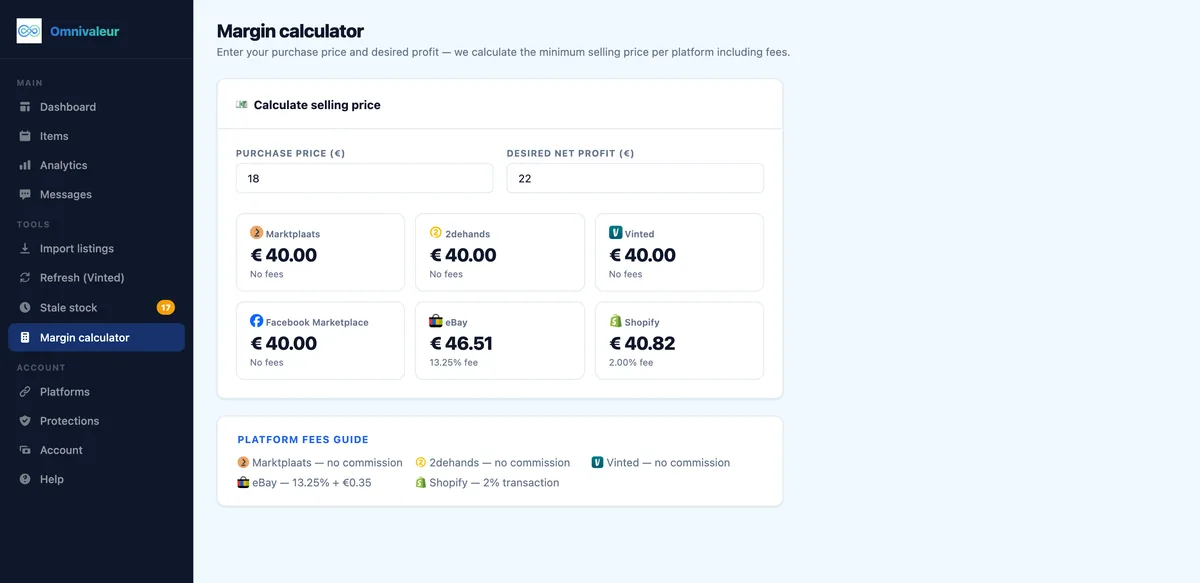
Not every platform in your cross-listing stack is worth using for every jewelry category. Vinted works well for costume and fashion jewelry under €50 but has a smaller audience for fine jewelry over €200. Etsy still dominates for vintage and handmade pieces, provided you follow its handmade/vintage disclosure rules carefully. eBay remains the strongest channel for branded and estate jewelry because of its authenticity guarantee program on watches and fine jewelry over certain price thresholds.
| Platform | Best jewelry category | Typical fee | Notes for 2026 |
|---|---|---|---|
| Vinted | Costume / fashion jewelry under €50 | Buyer protection fee, no seller fee | Best for volume, weak for fine jewelry |
| Etsy | Vintage, handmade, gemstone | 6.5% transaction + listing fee | Strict vintage age (20+ years) disclosure rules |
| eBay | Branded, estate, watches | ~13.25% final value fee | Authenticity Guarantee applies over set thresholds |
| Marktplaats | Local pickup, higher-value pieces | Free to list, paid boosts | Strong for avoiding shipping insurance risk |
| Shopify | Your own brand, repeat buyers | Monthly subscription, no per-sale cut | Best margin once you have traffic |
If you're moving jewelry stock between Marktplaats and Shopify to build a repeat-buyer brand, the Marktplaats to Shopify crosslisting guide covers the account-linking steps in detail. And if Vinted is your starting point for costume jewelry, the Marktplaats to Vinted crosslisting guide walks through the listing-field mapping most resellers get wrong on their first batch.
How do DAC7 tax rules affect jewelry resellers in 2026?
DAC7 reporting is not optional and it does not care whether you sell jewelry, sneakers or vinyl. Once you cross 30 transactions or €2,000 in sales on a single platform within a calendar year, that platform is required to report your sales data to tax authorities under EU rules. Jewelry resellers hit that €2,000 threshold fast — a single gold bracelet or a small batch of estate rings can clear it in a handful of sales. The Belastingdienst's DAC7 guidance for sellers lays out exactly what gets reported and when, and the European Commission's DAC7 overview explains how this applies across every EU member state, not just the Netherlands.
Practically, this means keeping accurate cost-basis records per item is no longer just good bookkeeping — it's the difference between reporting profit and reporting turnover. If you bought an estate ring lot for €300 and sold five pieces for €180 each, your reportable figure should reflect that spread, not the full €900 in gross sales. A cross-listing tool that tracks purchase cost against confirmed sale price per item saves hours when tax season and DAC7 reports land at the same time.
What jewelry-specific listing details do cross-listing tools need to handle?
Generic bulk-listing software treats every product like a t-shirt with a different photo. Jewelry needs its own field structure to avoid buyer disputes:
- Metal purity — 9k, 14k, 18k gold, or sterling silver stamped hallmarks, listed exactly as marked on the piece
- Plating vs solid — gold-plated and gold-filled are not the same thing, and mislabeling either triggers returns on eBay and Etsy alike
- Stone authenticity — natural, lab-grown, or simulated, disclosed in the first line of the description, not buried at the bottom
- Weight in grams — buyers of gold and silver jewelry increasingly check scrap value against spot price before buying
- Hallmark and maker's mark photos — a close-up macro shot of the stamp closes more sales than a lifestyle photo
Vintage and designer jewelry resellers who already cross-list vintage cameras or vinyl know this drill — the same disclosure discipline that applies to a camera's serial number or a record's pressing year applies here. Our vintage camera reselling automation guide covers a similar attribute-heavy workflow if you're running mixed collectible categories alongside jewelry.
How should you price and track profit on jewelry resale?
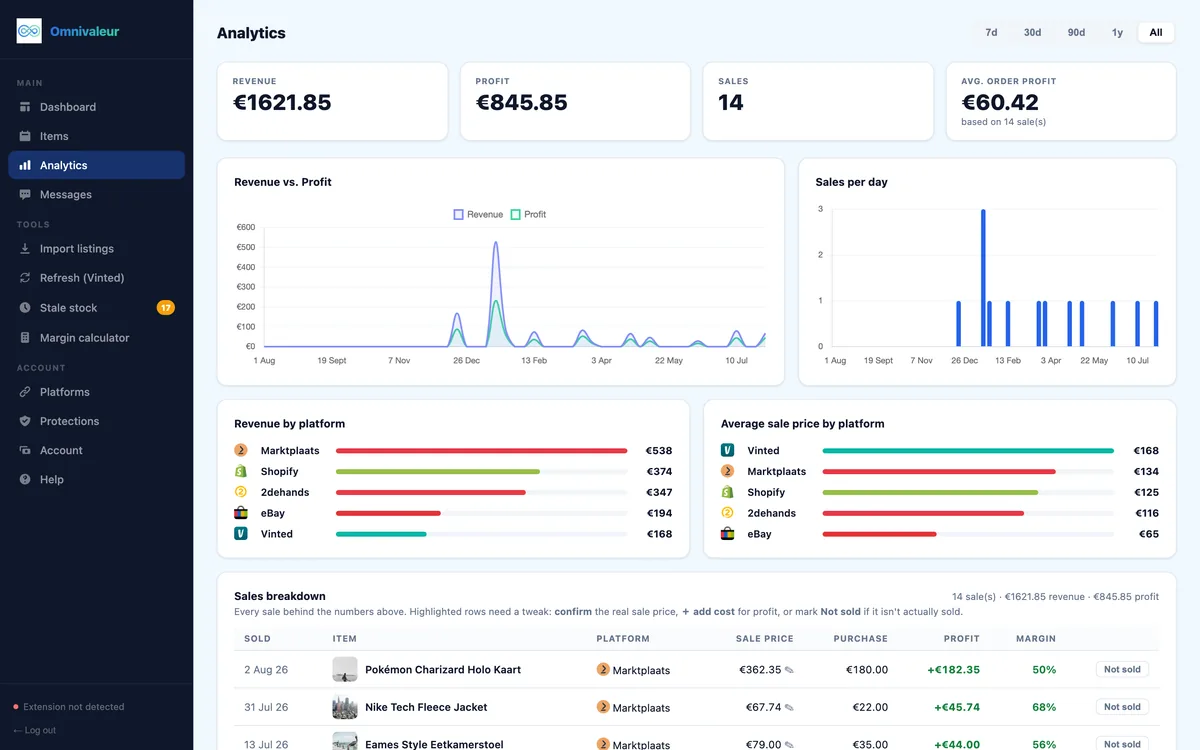
Pricing jewelry off the asking price is a common beginner mistake, and it inflates your perceived margin. On second-hand marketplaces the confirmed sale price typically lands 10-20% below the original asking price once buyers negotiate or platforms apply fee adjustments. Omnivaleur's analytics deliberately calculate profit from the real sale price that sellers confirm per transaction, not from what the listing was priced at — because tracking margin off an asking price that never actually got paid gives you a false picture of which jewelry categories are actually worth restocking.
Say you list a silver bangle at €45. It sells after a negotiation at €38. If your spreadsheet still logs €45 as revenue, your margin calculation is wrong by 15% on that single item — and multiplied across 50 pieces a month, that's a meaningfully distorted view of which supplier or category is actually profitable. Tools that only track listing price rather than confirmed sale price are quietly overstating your business's health.
How often can you safely refresh jewelry listings on Vinted?
Refreshing bumps a listing back to the top of Vinted's search results, and jewelry sellers rely on it heavily because jewelry photos age faster in the feed than clothing does — buyers scroll past static jewelry photos quickly if there's no new listing signal. Omnivaleur's Vinted refresh tool caps itself at 8 free refreshes per day, and that cap exists for a reason: no automation tool, from cross-list to any competitor, can guarantee that a marketplace won't flag an account for excessive refreshing. Vinted's own systems watch for unnatural refresh patterns, and a tool that promises "unlimited safe refreshes" is making a claim it can't back up.
The safer approach is spacing refreshes across your catalog rather than blasting all of them at once. Refresh your highest-value pieces — gold, gemstone, branded jewelry — first, and let lower-priced costume pieces refresh on a slower rotation. If you're weighing whether Vinted-specific automation tools are worth the subscription cost for a jewelry-heavy shop, the Vinted reselling automation guide breaks down what refresh and relisting tools actually do versus what they claim.
What are common mistakes jewelry resellers make when scaling?
Three mistakes show up constantly once resellers move from 20 listings a month to 200:
- Reusing one description across all platforms. Etsy rewards keyword-dense, SEO-written titles ("Vintage 1970s Sterling Silver Statement Ring") while Marktplaats and Vinted buyers respond better to short, plain descriptions. A tool that force-fits one template everywhere loses conversion on at least one platform.
- Ignoring buyer protection and returns policy differences. Under EU consumer law, buyers generally have a 14-day right of withdrawal on distance sales, which applies differently depending on whether you're selling as a private individual or a registered business. The Your Europe consumer rights overview is worth bookmarking before you scale past a hobby-level jewelry side hustle.
- Not tracking which platform actually converts jewelry best. Watches move fastest on eBay, fashion jewelry on Vinted, vintage pieces on Etsy — but without per-platform profit tracking, resellers keep listing everywhere equally instead of doubling down on what actually sells.
If you're already running a mixed shop — jewelry alongside handbags, vintage clothing or collectibles — comparing tool coverage matters more than picking the cheapest subscription. The Omnivaleur vs Vendoo comparison and Omnivaleur vs OneShop comparison both break down which platforms each tool actually supports for jewelry-category attribute fields, since not every cross-lister handles gemstone and metal fields equally well.
Jewelry resellers who also handle designer handbags or accessories often run into the same authentication and hallmark-photo discipline — see the luxury handbag reselling automation guide for the crossover workflow if you're expanding beyond jewelry into a broader accessories niche in 2026.
Is it worth automating a small jewelry reselling side business, or only a full-time shop?
Automation earns its keep faster in jewelry than in most categories because the manual listing work — photographing hallmarks, writing metal disclosures, calculating grams-to-spot-price — takes longer per item than folding a t-shirt for a photo. Even at 15-20 new jewelry listings a month, cross-listing software that pushes to Vinted, Etsy and Marktplaats simultaneously saves several hours a week compared to manual re-entry on each platform. The break-even point comes faster than resellers expect, usually within the first month of consistent listing volume.
Frequently asked questions
Do I need a business registration to resell jewelry across multiple platforms in 2026?
Can I cross-list the same jewelry photos across Etsy, Vinted and eBay without editing them?
How do I handle jewelry sizing when reselling rings across borders?
What's the biggest risk of automating jewelry listings without checking each platform's category rules first?
Should I insure shipments for higher-value jewelry pieces when cross-listing internationally?
Keep reading
Stop copying listings by hand
Omnivaleur publishes your item to every platform at once and syncs stock automatically when something sells.
Start free trial