Used Clothing Reselling Automation in 2026: The Complete Guide
Used clothing reselling automation means listing an item once and publishing it to Marktplaats, 2dehands, Vinted, eBay, Etsy and Shopify from a single intake form, instead of retyping titles, sizes and photos six times. Tools like Omnivaleur also sync sold status and track sales for DAC7 reporting, publishing one platform at a time to avoid rate limits.
Key takeaways
- Omnivaleur publishes to six marketplaces (Marktplaats, 2dehands, Vinted, eBay, Etsy, Shopify) from one intake form
- Cross-listing runs one browser tab at a time by design, because parallel publishing gets accounts rate-limited
- DAC7 reporting kicks in at 30 transactions or €2,000 in a calendar year, whichever comes first
- eBay now suppresses clothing listings without structured item specifics like size, brand and material
- Vinted, Marktplaats and Etsy each grade "used" condition differently, so manual tagging still beats blind auto-fill
What does used clothing reselling automation actually mean in 2026?
It means separating the work into two parts: describing the item once, and pushing that description everywhere it sells. A reseller with 40 items a week does not have time to write six titles, resize six photo sets and re-enter six size charts per garment. Automation software takes one intake form — photos, brand, size, condition, price — and formats it correctly for each marketplace's fields, categories and character limits.
This is different from a simple copy-paste workflow. Marktplaats wants a Dutch-language title and a fixed category tree. eBay wants structured item specifics or it quietly suppresses your listing in search. Vinted wants a specific size taxonomy (EU/UK/US mapped automatically) and flags brand mismatches. A proper automation tool translates one input into six correct outputs, rather than one sloppy copy stretched across six sites.
If your stock is mostly one category — say vintage pieces or designer labels — a specialised workflow can go further than a general clothing setup. Sellers focused on older or collector-grade garments often get more from a vintage clothing reselling automation platform, while sellers moving Chanel, Burberry or other labelled stock benefit from a designer clothing reselling automation guide built around authenticity fields and higher price brackets.
Which marketplaces should you actually cross-list used clothing to in 2026?
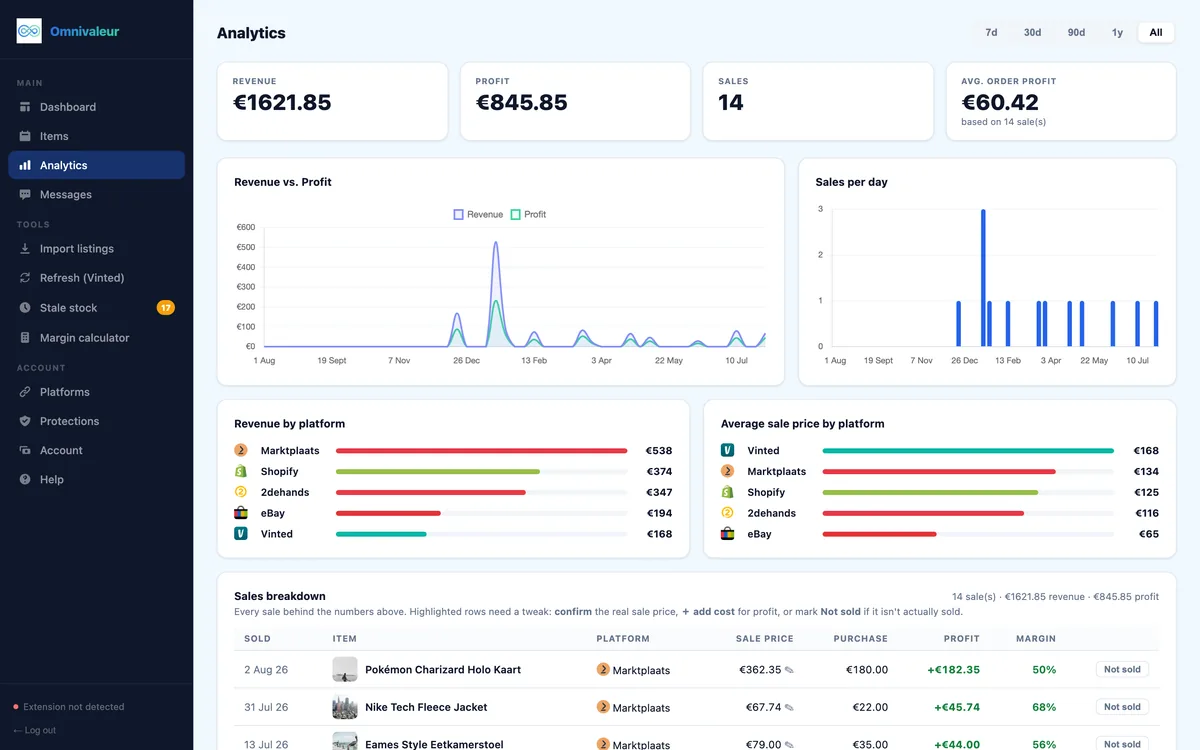
Not all six platforms are worth your time for every item. A €4 fast-fashion top does not belong on eBay's international shipping tiers, and a €180 leather jacket is wasted on Vinted's flat buyer-protection fee structure. Match the item to the platform's buyer profile.
| Platform | Best for | Seller fee | Photo limit | Notes for 2026 |
|---|---|---|---|---|
| Vinted | Casual, mid-price fashion, bundles | Free to list; buyer pays protection fee | 20 photos | Closet size caps trigger review above ~500 active listings |
| Marktplaats | Local pickup, bulk lots | Free for private, paid boosts optional | 20 photos | Dutch-language titles rank better, even for English brands |
| 2dehands | Belgian buyers, same mechanics as Marktplaats | Free for private sellers | 20 photos | Separate account required; not synced with Marktplaats natively |
| eBay | Branded, sized, higher-value pieces | ~12% final value fee | 24 photos | Missing item specifics now suppresses ranking |
| Etsy | Genuine vintage (20+ years), curated resale | $0.20 listing + ~6.5% transaction | 10 photos | Non-vintage used clothing gets flagged if mistagged as "vintage" |
| Shopify | Your own storefront, repeat buyers | Monthly subscription, no per-item fee | Unlimited | No marketplace algorithm risk, but you drive your own traffic |
Moving inventory between just two of these is often the fastest first step. A lot of resellers start by clearing local Marktplaats stock onto Vinted's larger buyer pool, which is exactly what our Marktplaats to Vinted crosslisting guide walks through step by step.
How do you handle sizing and condition grading across six platforms?
Every platform grades "used" differently, and this is where automated listings quietly break. Vinted uses a five-tier scale from "new with tags" down to "satisfactory." eBay uses its own condition dropdown that does not map one-to-one onto Vinted's tiers. Marktplaats has no formal condition field at all — sellers describe it freely in the body text, and buyers judge from photos.
Size is worse. A UK 12 is roughly an EU 40 and a US 8, but "roughly" is the problem — brand cut varies enough that a hard auto-conversion misleads buyers and drives returns. The fix most resellers land on: store the measured chest/waist/inseam in centimetres in your intake form, then let the tool auto-fill the platform-specific size field from that measurement rather than from a size label alone. This single habit cuts size-related return disputes dramatically, because the buyer is checking a real number instead of trusting a label that varies by decade and country.
Condition should be graded once, honestly, using the strictest platform's language (usually Vinted's), then let each platform's own dropdown map down from that. Overstating condition to make a listing look better costs more in returns and buyer complaints than it gains in conversion.
What 2026 platform rules and limits catch used-clothing resellers off guard?
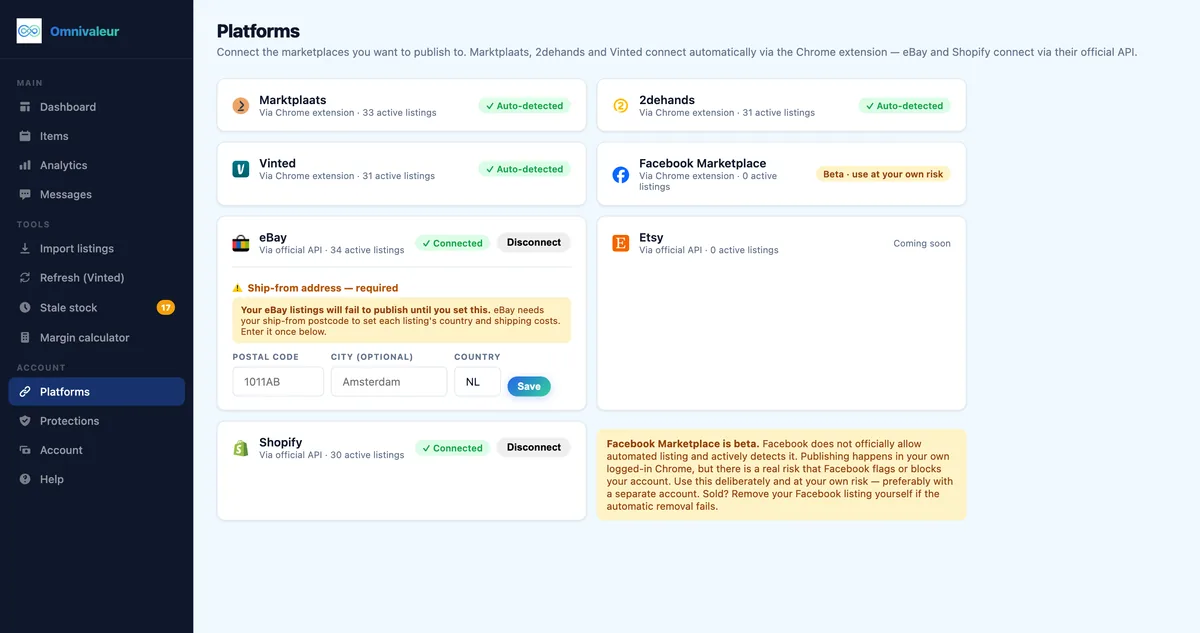
Platform rules shift every year, and 2026 brought a few changes that trip up resellers who set up their workflow in 2023 and never revisited it.
- eBay item specifics enforcement: listings missing size, brand, material or colour in structured fields now rank lower in search, even if that information is in the description text.
- Vinted closet caps: accounts pushing past roughly 500 simultaneously active listings get flagged for manual review, which can pause new listings for days.
- Marktplaats duplicate detection: near-identical titles and photos across multiple accounts (a common bulk-lister trick) now get auto-hidden more aggressively than in 2024.
- Etsy vintage mislabelling: used clothing under 20 years old tagged as "vintage" to access Etsy's vintage search filter gets delisted on report, not just warned.
- Shipping label mismatches: buyers under the EU's consumer shopping rights can request returns on used clothing sold cross-border if the listed condition doesn't match what arrives, so condition photos matter more than they did two years ago.
None of these are theoretical. They are the exact rules that turn a decent listing volume into a suspended account if the automation tool behind it isn't built to respect them.
How does DAC7 tax reporting affect high-volume clothing resellers?
If you sell used clothing regularly across marketplaces, DAC7 reporting probably already applies to you, whether you've noticed or not. Under the EU's DAC7 rules, digital platforms must report seller data to tax authorities once a seller crosses 30 transactions or €2,000 in payouts within a calendar year — whichever threshold comes first. For a clothing reseller moving items at €15-25 average sale price, that's roughly 100-130 sales a year, which many casual sellers hit without realising it.
Marktplaats, Vinted and eBay all collect the data required for this reporting directly at account setup — tax ID, address, bank details. The Belastingdienst's DAC7 information page spells out exactly what gets reported and when, and it's worth reading once rather than guessing. The practical takeaway for automation: keep a running export of sales across all six platforms in one place, because reconciling scattered CSVs from six different dashboards in January is a bad way to spend an evening.
This is also why cross-listing tools that sync sold status matter beyond convenience. If an item sells on Vinted but stays live on eBay for another week, you risk a double sale — and a messier sales record right when accurate numbers matter most.
How should you photograph and price used clothing at scale?
Photos sell used clothing more than copy does. A flat-lay on a plain background, one close-up of any flaw, and one shot of the size label covers the three things buyers actually check before messaging you. Do this once per item and reuse the same set across every platform — there's no rule requiring fresh photos per marketplace, and resizing for each platform's aspect ratio is something automation tools should handle for you.
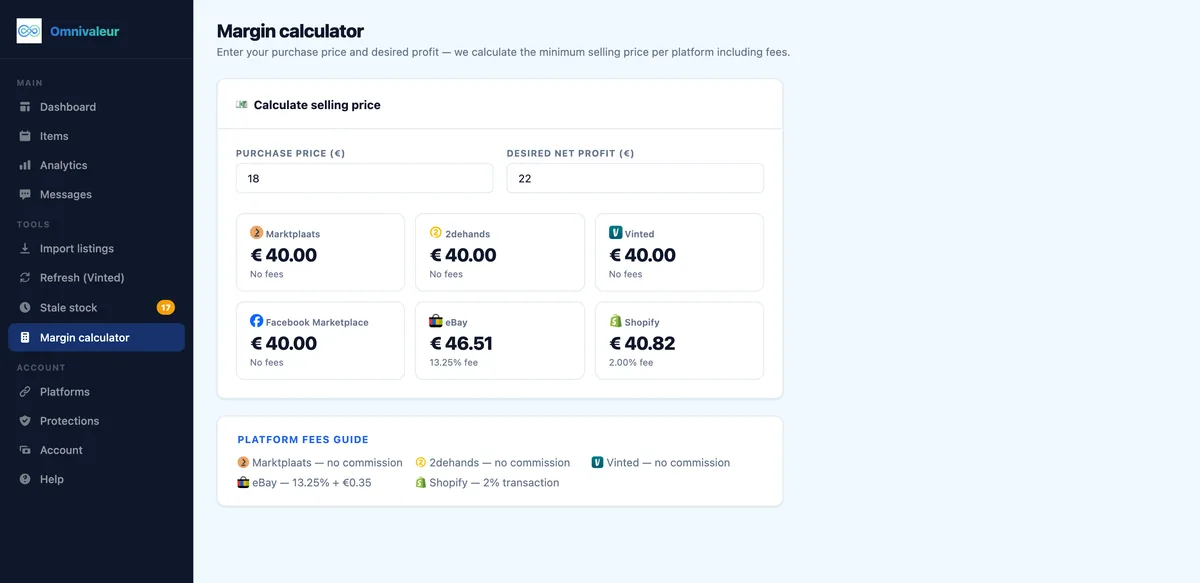
Pricing needs slight platform adjustment even for the same item. Vinted buyers expect to negotiate, so list roughly 10-15% above your floor price. eBay's fee structure means you need to price a few euros higher just to net the same amount after the ~12% final value fee. Marktplaats and 2dehands buyers respond well to round numbers and local pickup discounts. Etsy buyers pay a premium for curation, so a well-photographed used cardigan can outprice the identical item on Vinted by 30-40% if it's framed as a curated find rather than a bulk listing.
How does one-tab cross-listing actually protect your seller accounts?
Speed feels like the obvious goal when you're listing 50 items a week, but speed is also what gets accounts flagged. Marketplaces watch for bursts of near-simultaneous activity from one IP or one device fingerprint — that's what parallel bulk-listing tools trigger, and it's the fastest route to a temporary shadow-ban on Vinted or a listing cap on Marktplaats.
Omnivaleur's cross-listing runs one browser tab at a time, on purpose. It's slower per listing than a tool that fires off five platforms simultaneously, but it behaves like a human seller working through their inventory one marketplace at a time — which is exactly what keeps accounts in good standing over months, not just for the first busy week. Six marketplaces, one intake form, one tab at a time: that pacing is a design choice, not a limitation.
For resellers who already move stock between specific platform pairs, dedicated crosslisting guides go deeper on the exact field mapping. Selling internationally from Belgium, for example, often means checking the 2dehands to Etsy crosslisting guide before assuming category fields translate directly.
Which automation tool actually fits a used clothing reselling business?
Most comparisons on this topic focus on feature checklists rather than how a tool behaves under real weekly volume. A few things worth checking before committing to a subscription: does the tool support all six marketplaces you actually use, does it sync sold status back across platforms, and does it store measurements rather than just size labels?
If your stock is Vinted-heavy specifically, a Vinted-first workflow can be worth setting up separately — see the dedicated Vinted reselling automation guide for the field mapping unique to that platform. For a broader head-to-head on pricing and support quality, the Omnivaleur vs List Perfectly comparison covers what actually differs between the two once you're past the marketing pages.
Used clothing resale in 2026 isn't harder than it was three years ago, but it is more structured. Platforms reward sellers who fill in the correct fields, respect the correct pacing, and keep clean sales records. Automation that respects those constraints outperforms automation that just types faster.
Frequently asked questions
How many items can I list per day on Vinted before I get flagged in 2026?
Do I need a business registration to resell used clothing at volume?
Can I reuse the same photos across Marktplaats, Vinted and eBay?
What happens to my stock sync when an item sells on Vinted but is still listed on eBay?
Is used clothing reselling still profitable in 2026 given rising shipping costs?
Keep reading

Stop copying listings by hand
Omnivaleur publishes your item to every platform at once and syncs stock automatically when something sells.
Start free trial