Used Book Reselling Automation in 2026: The Complete Guide
Used book reselling automation means scanning ISBNs, batch-photographing condition, and publishing one listing to Marktplaats, 2dehands, Vinted, eBay, Etsy and Shopify at once, then syncing stock so a sold copy disappears everywhere. In 2026, tools like Omnivaleur cut a 50-book box from a weekend job to under an hour.
Key takeaways
- A typical used paperback nets €2-6 profit once shipping and fees are subtracted, so volume and speed matter more than per-item polish.
- Batch scanning 50 books takes under 45 minutes with a barcode reader instead of 4+ hours of manual typing.
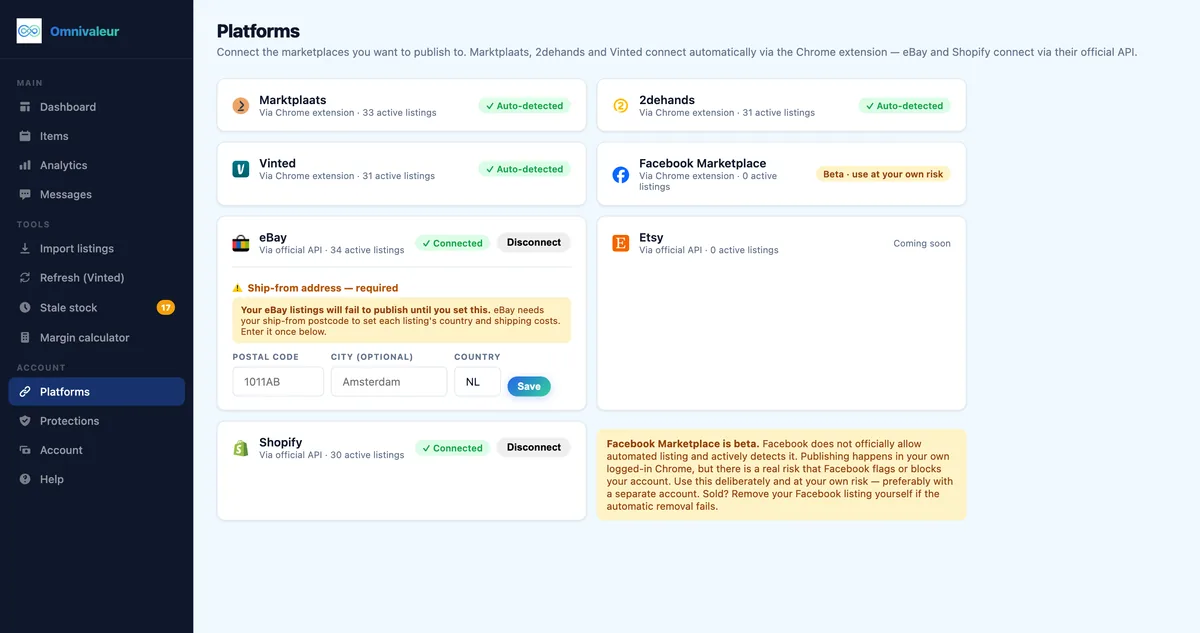
- Omnivaleur publishes to six marketplaces from a single intake form and tracks each platform's listing status separately.
- A single book listing usually stays live on 3-5 platforms at once, so stock sync prevents double-selling.
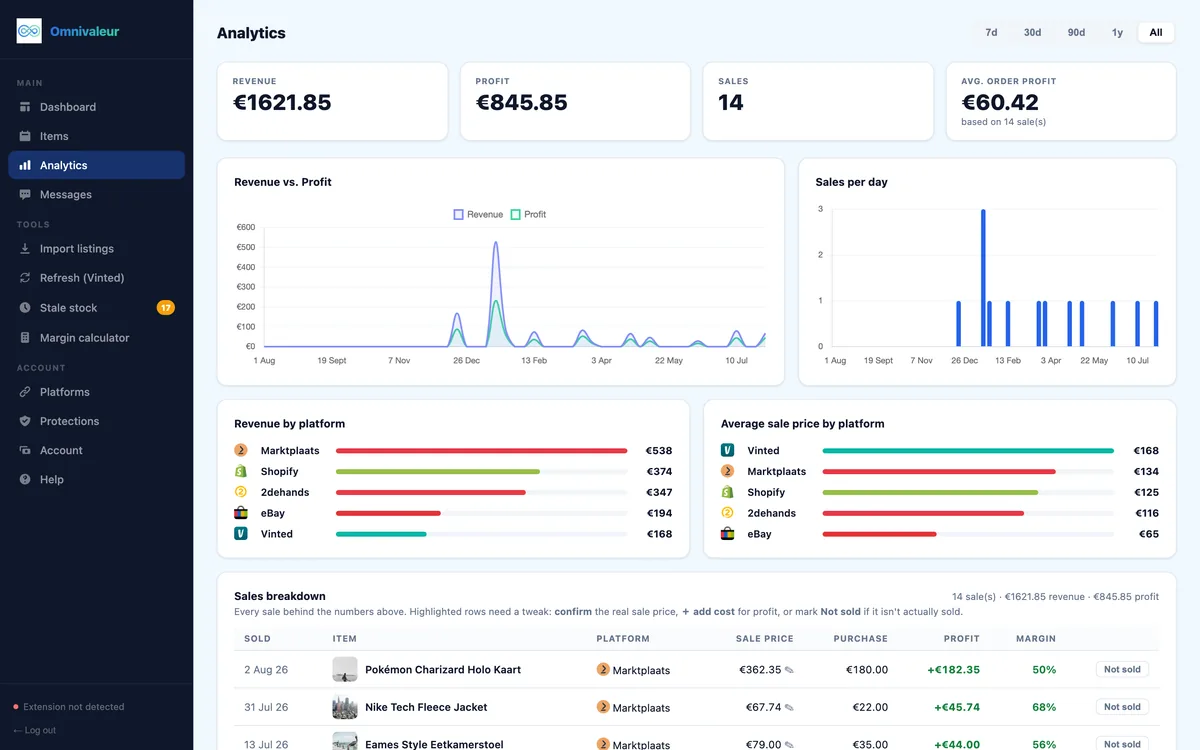
- DAC7 reporting kicks in once you cross 30 sales or €2,000 in a calendar year on most EU platforms.
What actually counts as "used book reselling automation" in 2026?
It is not the same job as flipping rare first editions. Used book reselling automation covers the high-volume end of the trade: recent paperbacks, textbooks, book club editions, and mass-market fiction bought in bulk from charity shops, library sales, or clearance pallets. The margins per unit are small — often €2 to €6 — so the entire model depends on moving many books fast, not on writing a beautiful description for each one.
That distinction matters because if you're dealing with pre-1980 editions, signed copies, or anything collectible, the pricing and photography rules are different. Our Vintage Book Reselling Automation full guide and the companion Vintage Books Reselling Automation Guide cover that side in detail. This article is about the everyday reseller moving boxes of ordinary used books through six channels at once.
With Omnivaleur, you fill in one intake form per book — title, ISBN, condition, price — and it publishes to Marktplaats, 2dehands, Vinted, eBay, Etsy and Shopify simultaneously. That's the automation part: one entry, six storefronts, instead of six separate uploads.
How much can you actually earn per used book once fees and shipping are subtracted?
Run the numbers before you buy a box. Say you pick up a paperback for €0.50 at a charity shop and list it at €7.99.
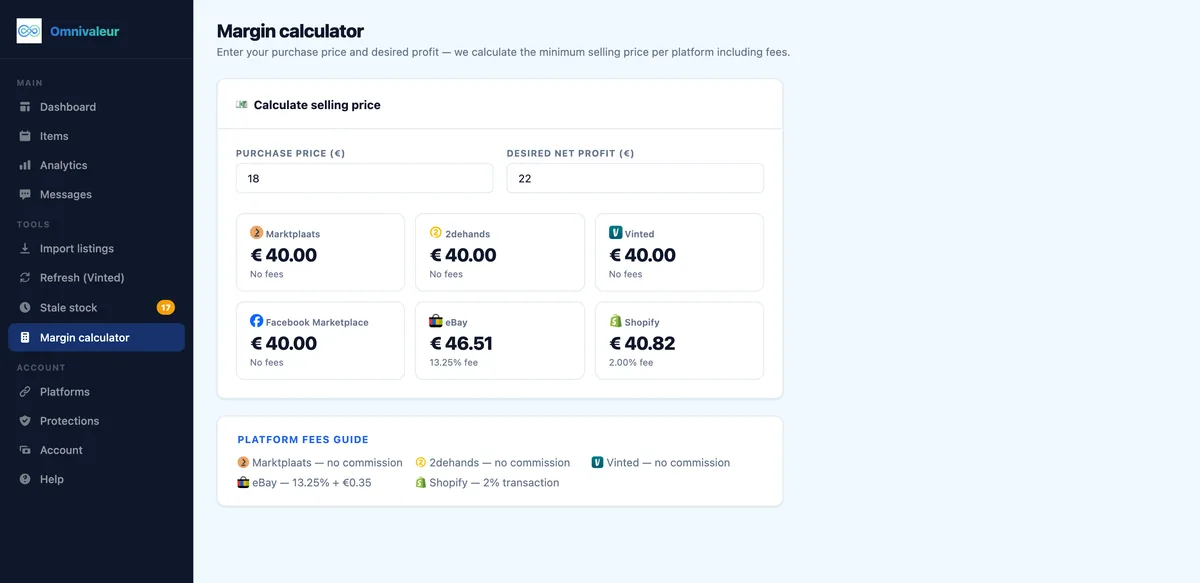
| Platform | Typical fee | Shipping cost (small packet) | Net after €0.50 cost |
|---|---|---|---|
| Vinted | Buyer pays protection fee, seller keeps price | ~€3.50 (Vinted label) | ~€3.99 |
| eBay | ~12.8% + fixed fee | ~€3.90 (own label) | ~€2.60 |
| Etsy | 6.5% + payment fee | ~€3.90 | ~€3.00 |
| Marktplaats / 2dehands | Free for private listings, ad fees for pro accounts | Often local pickup, €0 | ~€7.30 |
| Shopify | Card processing only (~1.5-2.9%) | Depends on carrier | ~€6.80 minus own shipping |
Marktplaats and 2dehands look best on paper because local pickup avoids shipping entirely, but they only reach domestic buyers. Cross-border volume comes from eBay and Etsy, at the cost of a few euros in fees and postage. This is exactly why cross-listing across all six pays off — you catch the local pickup buyer and the international shopper without doing double work. If you're weighing whether to push inventory from a classifieds site into a paid marketplace, the Marktplaats to eBay Crosslisting 2026 guide walks through the fee math in more depth.
Which sourcing channels actually produce good margins on used books?
Not all sourcing is equal. Ranked by real-world margin per hour spent sourcing:
- Library sale bag deals — often €5-10 per grocery bag, best cost-per-unit if you're willing to sort through duds.
- Charity shop clearance shelves — usually €0.50-1.50 per book, condition varies but most are sellable.
- Estate sale pallets — cheap per unit but slow to sort; good for bulk lots you resell unsorted on eBay.
- Online bulk lots (Marktplaats, 2dehands "gratis af te halen" listings) — free stock, but you inherit whatever the previous owner didn't want.
A good rule of thumb: if more than 30% of a batch turns out to be textbooks older than five editions or damaged beyond resale, the source isn't worth repeating. Track this per source in a simple spreadsheet for your first month — it tells you fast which thrift shop or sale is actually profitable.
How do you batch-process a box of 50 used books without losing a whole weekend?
Manual listing kills profitability at this price point. Typing out 50 individual descriptions by hand takes four or five hours; at €3-4 net profit per book, that's unpaid labor. The workflow that actually works:
- Scan each ISBN with a barcode scanner app — this pulls title, author, and cover image automatically instead of you typing them.
- Photograph condition in batches: stack similar-condition books together and shoot cover, spine, and any damage in one pass per group.
- Use a saved condition template (Like New, Good, Acceptable) rather than writing fresh condition notes for every copy.
- Feed everything into one intake form that publishes across all six marketplaces at once.
With this pipeline, 50 books typically take under 45 minutes from scan to live listing. A single book listing usually ends up carrying 3-5 active listings across different platforms at once, and Omnivaleur tracks each platform's status separately — so you always know whether a specific copy is still live on eBay even after it sold on Vinted.
What shipping and packaging rules actually trip up used book resellers?
Books are heavy and cheap, which makes shipping the single biggest margin killer if you get it wrong. A few concrete numbers:
- Most EU carriers charge by weight bracket — a 250g paperback usually falls in the cheapest small-packet tier (€3-4), but a hardcover over 500g jumps to the next bracket, sometimes doubling the cost.
- Padded mailers cost €0.15-0.30 each in bulk — factor this into your per-unit cost, it's easy to forget.
- Cross-border shipments (say, Netherlands to Germany or France) can trigger customs paperwork above certain value thresholds, even within the EU single market, particularly for platforms shipping to non-EU buyers via eBay's international program.
- Buyers increasingly expect tracked shipping, not just a stamped envelope — untracked "letter post" style shipping leads to more buyer disputes when a book goes missing.
Weigh a sample book from each condition category before pricing a whole batch. Guessing at "probably under 500g" is how a €4 profit margin turns into a €1.20 loss once the actual postage bill lands.
How do EU consumer return rights affect used book sales in 2026?
If you sell as a business (not a genuine private individual clearing your own shelf), EU consumer protection rules generally give buyers a 14-day right of withdrawal on distance sales — including used books bought through your Shopify store or an eBay business account. Private-to-private sales on Marktplaats or 2dehands between two individuals typically fall outside this rule, which is one reason many casual resellers keep a private account for slow-moving stock and a business account for volume.
The Your Europe consumer shopping rights page lays out exactly when the withdrawal right applies and what exceptions exist (sealed goods, digital content, and a few others). For used books specifically, there's rarely an exception — a returned paperback just goes back into your stock and gets relisted, so build that into your inventory buffer rather than treating every return as a lost sale.
Which platform rules for used books actually changed heading into 2026?
A few shifts worth knowing before you list your next batch:
- Vinted has tightened its book category descriptions to require ISBN or a clear title match, partly to cut down on mismatched listings — automated ISBN lookup solves this instantly.
- eBay continues to favor tracked shipping in its seller performance metrics, which nudges media-mail-style untracked shipping further out of favor for books shipped domestically.
- Etsy still restricts the platform to handmade, craft supplies, or genuinely vintage (20+ years) items — meaning a 2019 paperback generally doesn't belong there, only pre-2006 editions with vintage appeal.
- Marktplaats and 2dehands remain the best fit for local pickup and bulk lots, since buyers there expect to collect in person and avoid shipping costs entirely.
- Shopify gives you a fee-free storefront for repeat buyers, but you carry all the shipping and customer service load yourself.
If you're deciding which combination of these six to actually run listings on, the platform mix matters more for books than for most other categories, because Etsy's vintage rule quietly excludes most of your stock. Cross-listing tools that let you select platforms per item — rather than blasting everything everywhere — save you from Etsy policy strikes for listing non-vintage paperbacks.
What should you do with the books that just won't sell?
Every batch has duds — water-damaged copies, outdated textbook editions, duplicate stock you overbought. Three practical exits:
- Bundle lots — group 10-15 similar-genre unsellable singles into one "mystery box" listing on eBay or Marktplaats; buyers pay €10-15 for the bundle even when no individual title would sell alone.
- Donate for a tax receipt — many charity shops issue donation receipts, which at least offsets some cost if you're running this as a registered business.
- Paper recycling — genuinely damaged stock with no resale value at all just goes in the recycling bin; don't let dead stock clog your storage space waiting for a buyer who won't show up.
If your reselling extends beyond books into other bulk-friendly categories, the same batching logic applies to collectibles reselling automation — sorting fast and cutting dead stock loose early is the pattern that keeps margins healthy across every low-unit-value category.
Do you need to worry about tax reporting once book sales scale up?
Once you cross roughly 30 sales or €2,000 in a calendar year on a given platform, most EU marketplaces are required to report your sales data to tax authorities under DAC7. Marktplaats, 2dehands, Vinted, eBay and Etsy all collect the data needed to file these reports. The Belastingdienst's DAC7 information for sellers explains the Dutch reporting process directly, and the European Commission's DAC7 overview covers how it works across the EU generally. For used book resellers moving 50-100 units a month, this threshold is easy to hit by spring, so keep basic purchase records from day one rather than reconstructing them later.
Which automation setup actually fits a used-book volume seller?
Compare tools on the things that matter for books specifically: ISBN lookup speed, bulk photo handling, and per-platform stock sync. A detailed platform-by-platform comparison lives on our Book Reselling Automation 2026: Best Tools & Setup page, and if you're weighing Omnivaleur against a specific competitor, the Omnivaleur vs List Perfectly comparison breaks down pricing and feature gaps side by side. For resellers who split inventory between Vinted's fashion-heavy audience and Etsy's vintage buyers, the Vinted to Etsy crosslisting guide is worth a look too, since some used book sellers run both a clothing and a book stream through the same account.
Whatever tool you pick, judge it on one number: how long does it take to go from a stack of physical books to six live listings. If the answer is measured in hours instead of minutes, it won't survive contact with a 50-book box.
Frequently asked questions
How do I price used books that have no clear "used copy" comps online?
Can I sell textbooks the same way as regular paperbacks?
What's the minimum viable batch size for automation to make sense?
Do damaged or ex-library books still sell?
Is it worth listing the same used book on all six platforms if it's a low-value paperback?
Keep reading

Stop copying listings by hand
Omnivaleur publishes your item to every platform at once and syncs stock automatically when something sells.
Start free trial