Vintage Books Reselling Automation: The Complete 2026 Guide
Vintage book reselling automation means listing a title once and syncing it automatically across Marktplaats, Vinted, eBay, Etsy and Shopify, so stock, price and sold status update everywhere. In 2026, tools like Omnivaleur import photos and condition notes and auto-delist sold copies, cutting per-book listing time from roughly 7 minutes to under 90 seconds.
Key takeaways
- Cross-listing one vintage book by hand across five marketplaces takes 6-8 minutes; automation tools cut that to under two minutes per title.
- Etsy and eBay buyers reward detailed edition and condition data, while Vinted shoppers respond mainly to price and photo quality.
- DAC7 reporting rules kick in once a seller crosses roughly 30 sales or €2,000 a year, which many book flippers hit faster than they expect.
- Real profit should be calculated from the confirmed sale price, not the asking price — on second-hand marketplaces the two typically differ by 10-20%.
- Books that don't sell in the first 60 days rarely sell later without a price cut, so tracking stale stock matters more here than in most categories.
A single vintage book listing needs a different photo, a different title format and a different condition scale on every marketplace. Multiply that by a box of 40 books picked up at an estate sale, and manual listing turns into a weekend project. Automation software solves the repetitive part: you write the description once, upload photos once, and the tool republishes that listing to Marktplaats, 2dehands, Vinted, eBay, Etsy and Shopify in the right format for each.
Book resellers have a specific problem that clothing or electronics sellers don't: condition grading is subjective, editions matter enormously for value, and a book that sells for €45 on Etsy as a first-edition collectible might list for €4 on Vinted as a reading copy. Automation tools built for general secondhand goods often ignore this. This guide covers what actually changes for book resellers in 2026, where the rules differ by platform, and where automation genuinely saves hours instead of just moving the same manual work around.
What does vintage book reselling automation actually mean in 2026?
It means three things working together, not one single feature. First, cross-posting: one listing template pushed to multiple marketplaces without retyping it five times. Second, sync: when a book sells on eBay, the Vinted and Marktplaats copies get pulled automatically so you never sell the same first edition twice. Third, tracking: knowing which titles actually made money after fees, shipping and the time spent photographing them.
Most resellers start with the first piece and stop there. That's a mistake. A tool that cross-posts but doesn't sync creates the worst possible outcome for a book seller — a buyer paying for a copy that already left the shelf, followed by a refund, a bad review, and a DAC7-relevant transaction that never should have existed. If you're comparing general-purpose tools, the book reselling automation setup guide walks through the baseline tooling before you specialise into vintage and rare titles specifically.
Which marketplaces actually matter for vintage and rare books?
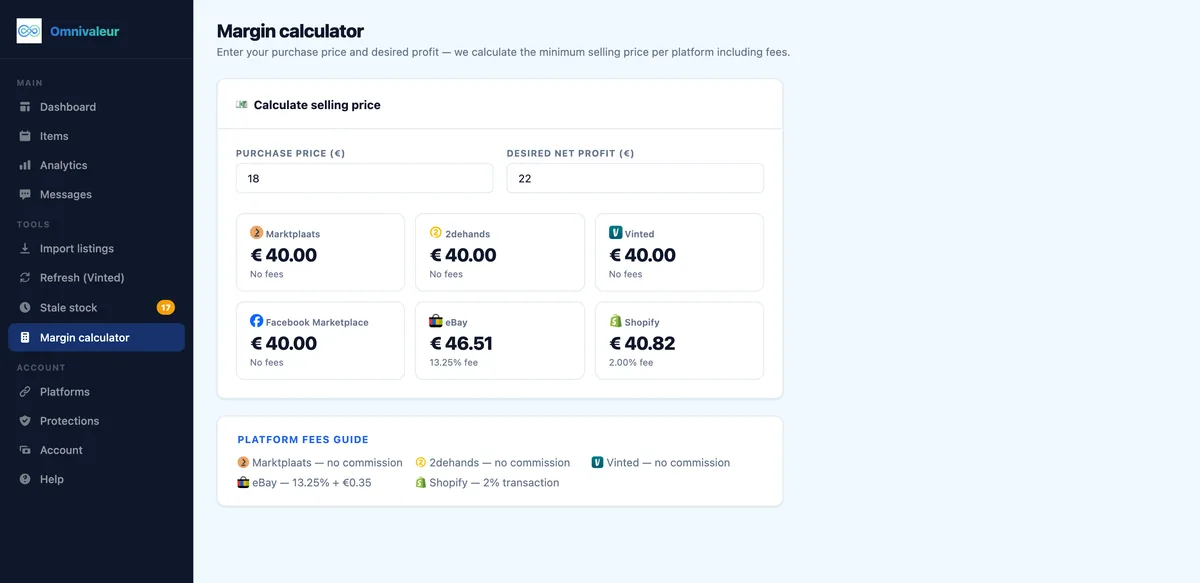
Not all six platforms perform the same for books. Here's how they actually behave for vintage and collectible titles as of 2026:
| Platform | Best for | Fee structure | Buyer expectation |
|---|---|---|---|
| Etsy | Rare, illustrated, first editions | ~6.5% transaction fee + payment fee | Detailed edition, printing year, provenance |
| eBay | Signed copies, collectible sets | ~12-13% final value fee | Grading photos, dust jacket condition |
| Vinted | Reading copies, bulk lots | Buyer pays service fee, seller keeps sale price | Low price, fast shipping |
| Marktplaats / 2dehands | Local pickup, bulk boxes | Free listings, paid boosts optional | Local buyers, negotiation expected |
| Shopify | Your own catalog, repeat book buyers | Monthly subscription, no per-sale cut | Brand trust, no marketplace fee comparison |
The practical pattern: rare and valuable titles go to Etsy and eBay first, where buyers actively search by edition and author. Bulk reading copies and duplicates go straight to Vinted or Marktplaats, where price wins over provenance. If you already move stock between these platforms for other categories, the workflow overlaps heavily with the one described in the Marktplaats to eBay crosslisting guide.
How do you price vintage books without underselling first editions?
The single biggest pricing mistake with vintage books is treating them like clothing — checking three sold listings and averaging them. Book value swings on details that don't show up in a quick search: printing number, dust jacket presence, signature authenticity, and whether it's a book club edition versus a true first. A 1962 first edition with a torn jacket can be worth less than a 1962 second printing in mint condition.
Before listing anything that looks old or scarce, check:
- The copyright page for printing number ("first edition, first printing" vs. later printings)
- Publisher marks that indicate book club editions (usually worth 70-90% less)
- Whether the dust jacket is original or a facsimile reprint
- Foxing, spine cracking and previous owner markings, described honestly in the listing
Once you've graded it correctly, price for the platform, not the book. A signed first edition might do €120 on eBay to a collector actively bidding, but sit dead on Vinted at the same price because Vinted's buyer base isn't shopping for collectibles. Cross-listing the same item at two different price points across platforms is legal and common — just remember to pull the other listings the moment one sells.
What platform rules and limits changed for book sellers in 2026?
A few shifts matter specifically for used and vintage book sellers this year. eBay tightened its "used" condition category to require a visible condition note for any book listed above €25, after complaints about vague grading. Etsy expanded its vintage age threshold enforcement, meaning items marketed as "vintage" but printed after 1996 now get flagged more aggressively in search — a real issue for resellers who label anything old-looking as vintage regardless of print year.
Vinted also adjusted its category structure for media items, separating "books" from general "home & media," which changed how search ranks older listings that weren't recategorised. If your book listings from 2023 or 2024 are still sitting in the old category, they're effectively invisible to current search filters until you relist or edit them.
None of this is catastrophic, but it's the kind of small rule change that silently kills visibility for sellers who set up listings once and never touch them again. Resellers running the same playbook across other niche categories — cameras, vinyl, tools — hit similar category drift every year; the vinyl record reselling automation guide covers a near-identical pattern for media listings.
How does DAC7 tax reporting affect vintage book resellers?
If you sell more than roughly 30 items or earn over €2,000 in a calendar year through a marketplace, that platform is required to report your sales data to tax authorities under EU rules. Book flippers who work estate sales and thrift stores regularly cross both thresholds without realising it, because dozens of €5-15 books add up fast in unit count even when total revenue looks modest.
The rule itself comes from the DAC7 directive, and the reporting obligation sits with the marketplace, not the individual buyer — but you're still the one who needs clean records if the numbers get questioned. The Belastingdienst's DAC7 seller information page lays out the Dutch specifics, and the European Commission's DAC7 overview covers the EU-wide framework if you sell across borders. Buyers also have protections worth knowing before disputes come up, laid out on the Your Europe consumer rights page.
Practically, this means tracking cost basis per lot (what you paid per box, divided across titles) rather than treating each book as free profit. It's tedious by hand, and it's exactly the kind of record-keeping automation tools should be doing for you already.
How do you track real profit and stale stock across dozens of book listings?
Book reselling has a quiet profit-killer that other categories don't deal with as much: negotiated discounts. A book listed at €18 on Vinted very often sells at €14 after a message exchange, and if you're calculating margin off the €18 asking price, your actual profit is overstated by roughly 15-20% on every single sale. That gap compounds fast across a 100-title inventory.
Omnivaleur's analytics calculate profit from the real, confirmed sale price you enter per transaction, not the asking price — because on second-hand marketplaces, those two numbers routinely differ by 10-20%, and using the wrong one quietly inflates every profit report you look at.
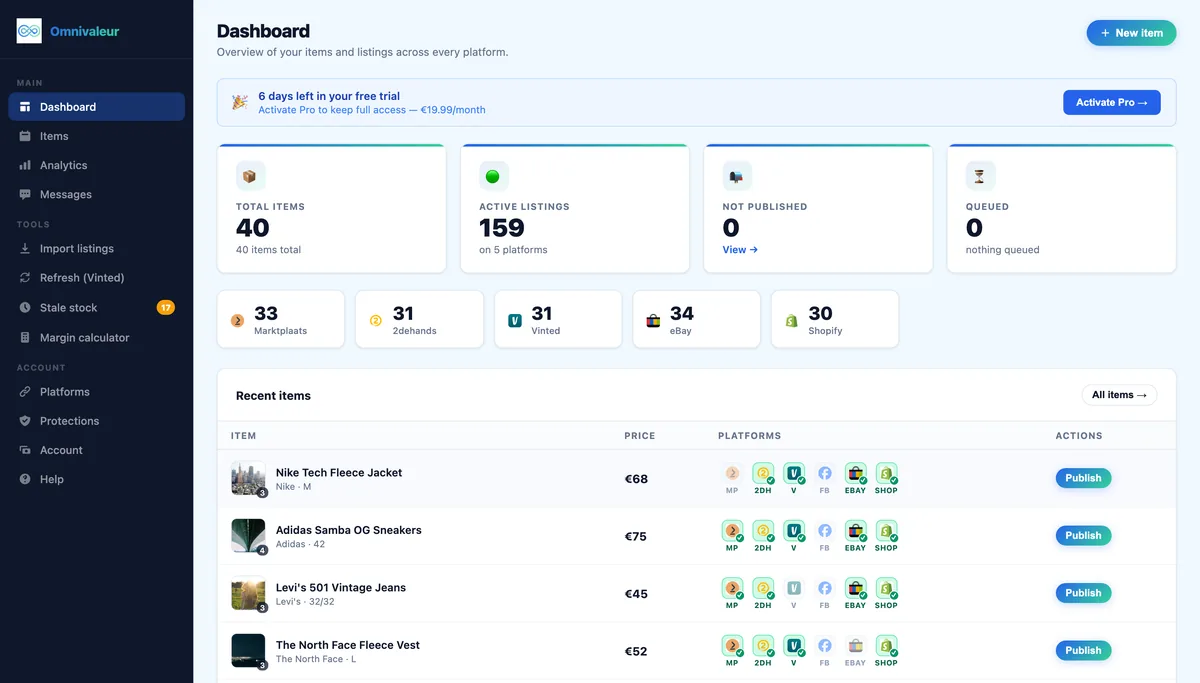
Stale stock is the second issue. A niche philosophy paperback or an out-of-print regional history book can sit for four months with zero views while your newer listings push it down the page. Without a way to surface it, that book effectively disappears from your own inventory view. Omnivaleur's stale-stock view flags listings that have been sitting unsold instead of letting them sink silently, so you know which titles need a price cut, a better photo, or a move to a different platform entirely rather than just gathering dust in a box.
What's the fastest realistic workflow for cross-listing books across six platforms?
A workable weekly routine for a mid-size book reseller looks like this:
- Photograph the cover, spine, copyright page and any damage in one batch session — good lighting once, not five times per book.
- Write one master description with title, author, edition, printing, condition and any provenance notes.
- Let the cross-listing tool adapt that master description to each platform's format and character limits automatically.
- Set platform-specific prices where collector value differs (Etsy/eBay higher, Vinted/Marktplaats lower for reading copies).
- Confirm the real sale price at checkout so profit tracking stays accurate, and let sold copies auto-delist everywhere else.
This is the same core workflow resellers use for other collectible categories, just with book-specific grading fields swapped in. If you're deciding between tools, the comparison in Omnivaleur vs List Perfectly breaks down feature differences that matter for niche inventory specifically, and the collectibles reselling automation guide covers overlapping ground for sellers mixing books with other collector items in the same boxes.
One more practical note: if a good portion of your stock is genuinely rare rather than bulk reading copies, list those separately on Etsy first with a longer hold period before dropping them to Vinted or Marktplaats. Rare-book buyers search slowly and deliberately; rushing a first edition onto a low-price platform after two quiet weeks usually means leaving money on the table that a patient Etsy buyer would have paid.
Frequently asked questions
Can I list the same vintage book on Etsy as "vintage" if it was printed after 2000?
How much should I budget for shipping when cross-listing heavy hardcover books?
Do I need to disclose foxing or water damage even on a cheap reading copy?
What happens if the same rare book sells on two platforms at once?
Is it worth automating listings for a collection under 50 books?
Keep reading

Stop copying listings by hand
Omnivaleur publishes your item to every platform at once and syncs stock automatically when something sells.
Start free trial