How to Cross-List from Marktplaats to eBay in 2026

Cross-listing from Marktplaats to eBay means posting the same item on both platforms simultaneously, then syncing stock so it's removed everywhere once sold. In 2026, tools like Omnivaleur automate this by mapping fields, tracking each platform's status separately, and pulling a listing down within minutes of a sale to avoid duplicate orders.
Key takeaways
- Cross-listing works best for items with resale value beyond your local Marktplaats radius, like electronics, collectibles or branded goods.
- DAC7 rules mean both Marktplaats and eBay report your sales data to tax authorities once you pass 30 transactions or €2,000 a year.
- A typical Omnivaleur item carries 3-5 active listings at once, with each platform's status tracked independently to prevent double-selling.
- eBay's per-listing fields (item specifics, condition IDs, category-specific requirements) don't exist on Marktplaats, so automatic field mapping matters more than manual copy-paste.
- No cross-listing tool, including Omnivaleur's own rate-limited refresh feature, can guarantee a marketplace will never flag an account for unusual activity.
What Actually Changes When You List the Same Item on Marktplaats and eBay in 2026?
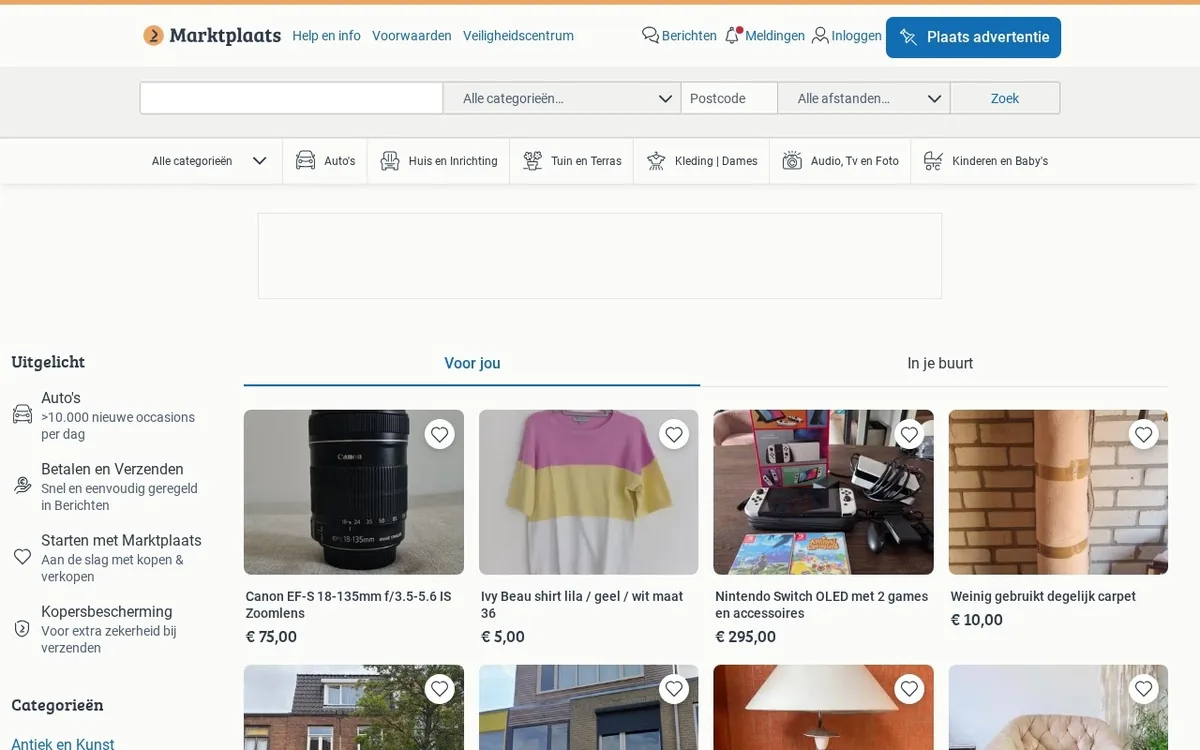
Marktplaats is a local classifieds board. eBay is a global auction-and-fixed-price marketplace with buyer protection, seller ratings and international shipping baked in. Cross-listing sounds simple: same photos, same title, two places. In practice, the two platforms disagree on almost everything except the item itself.
Marktplaats listings are loose. You write a title, add a price, pick a rough category, upload photos, done. eBay wants a specific category ID, a condition code, item specifics (brand, size, material, model number depending on category), a return policy, a shipping profile and often a compliance disclosure for certain product types. If you paste a Marktplaats description straight into eBay, you'll get a listing that ranks poorly in eBay search because the item specifics fields sit empty.
This is the actual gap most crosslisting guides skip: it's not just "post it twice," it's translating a loose local ad into a structured global listing that eBay's algorithm can actually surface.
How Do eBay's 2026 Fee and Policy Updates Affect Marktplaats Sellers?
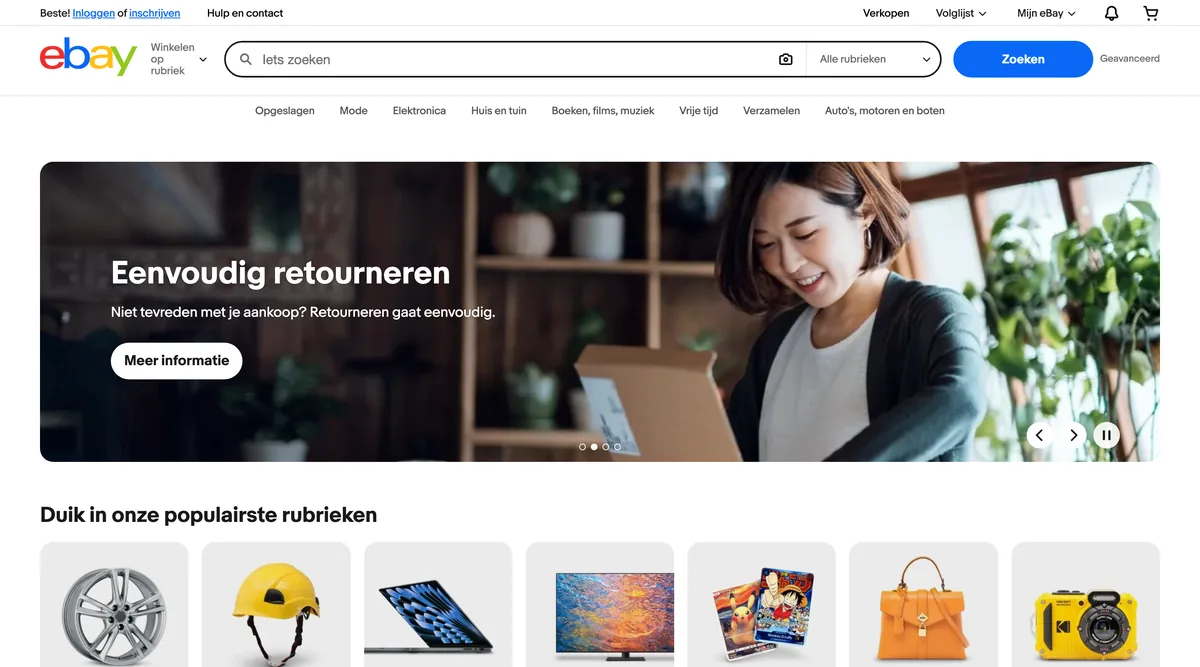
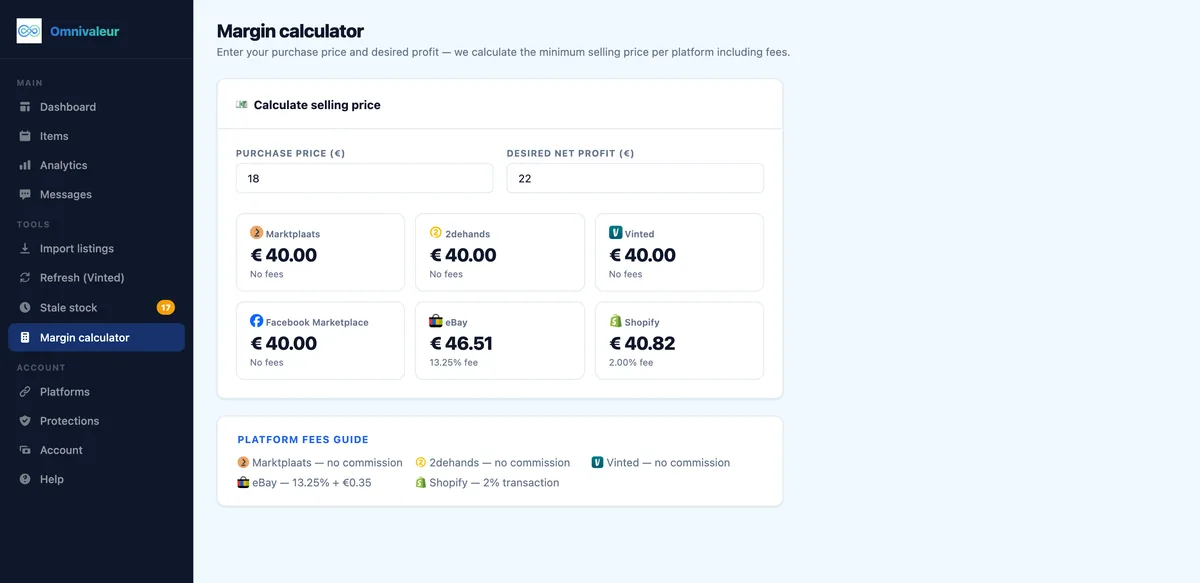
eBay adjusts its final value fee tiers and category-specific rates most years, and 2026 is no exception. For private and business sellers moving inventory from Marktplaats — where a Marktplaats Pro ad costs a flat fee or nothing at all for casual sellers — the jump to eBay's percentage-based final value fee (typically in the 10-15% range depending on category, plus a fixed transaction fee) is the first shock. A €150 item that nets you €140 on Marktplaats after a buyer picks it up in person might net closer to €125 on eBay once fees, packaging and shipping are subtracted.
eBay also tightened its listing policy documentation this year around prohibited items, authenticity guarantees for sneakers, watches and handbags, and mandatory item condition disclosures. Read the current rules directly on eBay's listing creation and management help page before you push your first batch over — a listing that violates category policy gets pulled, and repeated pulls hurt your account standing.
If you're weighing eBay against a domestic platform instead, our Marktplaats to 2dehands crosslisting guide covers the cross-border Belgium/Netherlands angle, which carries none of eBay's international fee complexity.
A Quick Fee Comparison
| Cost item | Marktplaats | eBay |
|---|---|---|
| Listing fee | Free (basic) / paid boost options | Free up to a monthly quota, then per-listing insertion fee |
| Final value fee | None — private sale | ~10-15% depending on category |
| Shipping | Usually local pickup, buyer's own transport | Seller arranges tracked shipping, often international |
| Payment processing | Cash or bank transfer, no cut | Included in final value fee |
How Does DAC7 Tax Reporting Apply When You Sell on Both Marktplaats and eBay?
DAC7 is the EU rule that requires online marketplaces to report seller income to tax authorities once you cross either 30 transactions or €2,000 in a calendar year on that platform. The key detail resellers miss: the threshold applies per platform, not combined. Sell 25 items on Marktplaats and 25 on eBay and you might dodge reporting on either individually, while your actual total activity is 50 sales.
Tax authorities don't see it that way for long. The Dutch Belastingdienst's DAC7 seller information page spells out how this data gets shared, and the European Commission's DAC7 overview confirms this is an EU-wide obligation, not a Dutch quirk. If you're running inventory across three or four platforms through a cross-listing tool, keep your own spreadsheet of total sales rather than assuming each platform's individual report tells the full story.
This matters more the bigger your operation gets. Resellers scaling into electronics or collectibles — categories with high per-item value — hit the €2,000 threshold fast. Our guide on electronics reselling automation platforms walks through record-keeping habits that make DAC7 season painless instead of a scramble in January.
How Many Active Listings Can You Safely Run Across Both Platforms?
There's no official published cap that says "run 200 listings, not 201." What actually limits you is a mix of eBay's seller level (new accounts start with lower monthly listing and sales caps that increase as you build feedback) and the practical risk of duplicate orders when the same item sits live in two places at once.
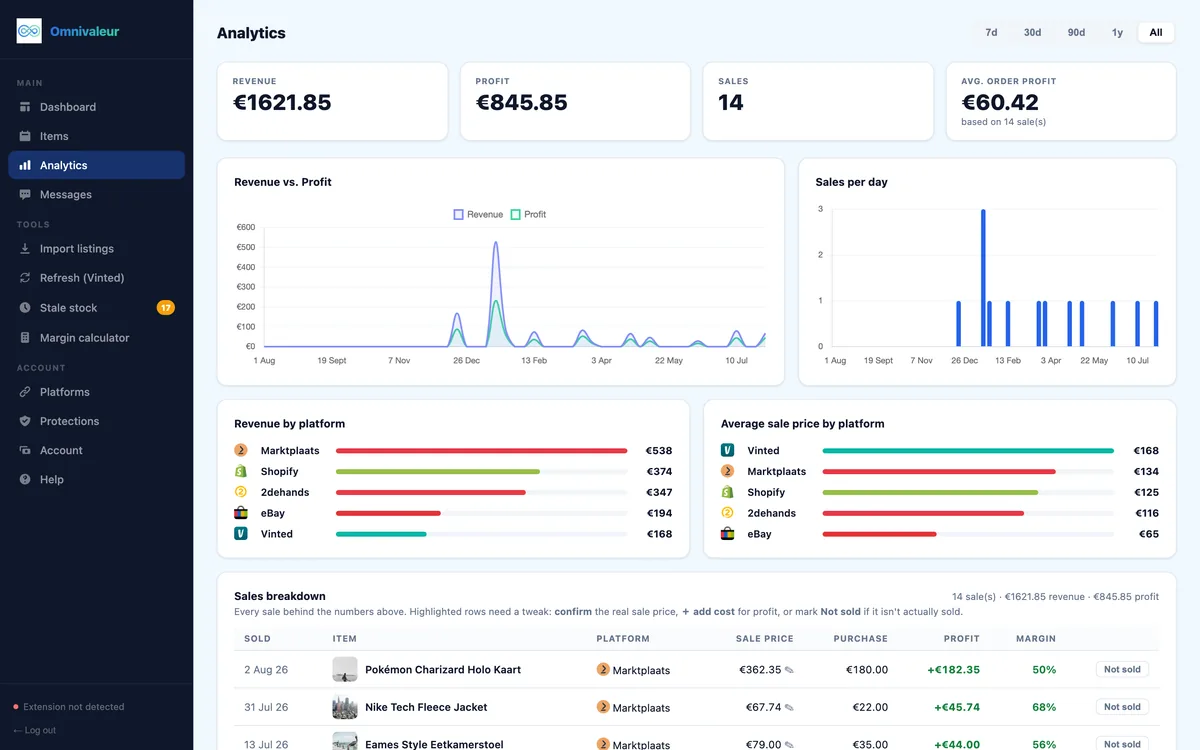
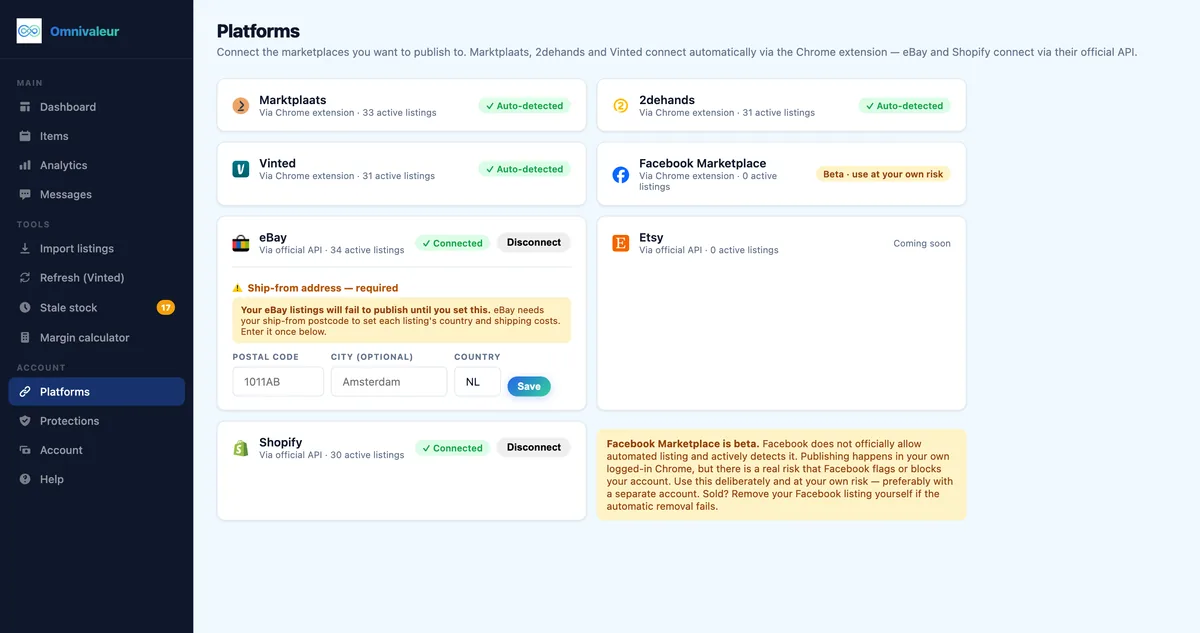
Here's the number that matters in practice: a single item managed through Omnivaleur typically carries 3-5 active listings at once, spread across Marktplaats, eBay and whichever other platforms you use, and the app tracks each platform's sold/active/removed status independently rather than assuming they're all in sync. That separation is what prevents the classic problem — an item sells on Marktplaats at 2pm, a buyer on eBay tries to pay for it at 2:15pm, and now you're issuing a refund and an apology.
Manual cross-listers without this kind of independent status tracking usually cap themselves around 15-20 simultaneously listed items before the bookkeeping becomes unmanageable by hand. Automated tools push that ceiling into the hundreds, but the ceiling isn't really about volume — it's about how fast your removal logic reacts to a sale.
Worth being blunt about here: no cross-listing tool, including features like Omnivaleur's own Vinted refresh tool (which deliberately caps itself at 8 free refreshes a day), can promise a marketplace will never flag your account for unusual activity. Platforms watch for patterns — rapid listing creation, identical photos across accounts, sudden volume spikes — and the honest approach is to build in conservative limits rather than pretend automation makes you invisible.
What Item Categories Need Extra Fields or Are Restricted on eBay but Not on Marktplaats?
Marktplaats lets you list almost anything with a category and a price. eBay is stricter, and the strictness varies wildly by category:
- Electronics — eBay often requires a specific model number field and battery/hazmat disclosures for anything with a lithium battery.
- Sneakers and handbags — high-value items in these categories may route through eBay's Authenticity Guarantee, which adds shipping steps and delays payout.
- Vintage toys and collectibles — eBay wants a condition grade (New, Used, For Parts) that maps to a specific ID, not a free-text description.
- Books — ISBN fields matter far more on eBay for search visibility than on Marktplaats, where a title and photo usually suffice.
- Furniture — bulky items face eBay's freight/large-item shipping category, which Marktplaats simply doesn't have since most furniture sells local pickup-only.
If your inventory leans toward any of these, it's worth checking category-specific playbooks before you cross-list blind. See our notes on vintage toy reselling automation, luxury handbag reselling automation, or book reselling automation for the field-mapping quirks specific to each.
How Do Shipping and Returns Differ Between a Local Marktplaats Sale and an eBay Sale?
Marktplaats sales are overwhelmingly local pickup, cash-in-hand, no formal return policy expected. eBay flips that entirely. Buyers expect tracked shipping, and eBay's Money Back Guarantee means a buyer can open a case and often get a refund even if you dispute the reason.
Under EU consumer protection rules, buyers also have statutory rights that go beyond whatever return policy you set — the Your Europe consumer shopping rights page is a useful reference if you're new to distance selling and unsure what you're actually obligated to accept. Private sellers get more leeway than registered businesses here, but "private seller on eBay" doesn't mean "no rules," it means fewer of them.
Practically, this changes your pricing math. A Marktplaats item priced at €80 with free local pickup becomes an eBay listing priced closer to €90-95 once you bake in shipping costs, packaging materials and the buffer for the occasional return. Sellers who skip this recalculation consistently underprice their eBay listings and wonder why margins evaporate.
How Does Omnivaleur Keep Marktplaats and eBay Stock in Sync?
The mechanics are straightforward once you've set them up: you list an item once inside Omnivaleur, choose which platforms it should appear on, and the app pushes a version of that listing to each — reformatted to match each platform's required fields rather than a blind copy-paste. When one platform reports a sale, the others get pulled down automatically, usually within minutes rather than the hours it takes to notice manually and delete by hand.
This is also where the "3-5 active listings per item" figure becomes practically useful. If you're running 40 items through the system, that's potentially 120-200 individual listings live at once across platforms — a volume no human tracks reliably in a spreadsheet, but one an automated status tracker handles without breaking a sweat, because it treats each platform's listing as its own record rather than a single shared one.
Sellers coming from a pure Marktplaats background sometimes ask whether it's worth adding a third platform once eBay is in the mix. If your inventory includes handmade, vintage or craft items, our Marktplaats to Etsy crosslisting guide covers that combination. For clothing-heavy inventories, the Vinted to eBay guide covers a similar structural challenge — a casual, low-friction platform paired with a formal, fee-heavy one.
Before committing to any tool, check what the official rules actually say rather than trusting a reseller forum thread from two years ago. Marktplaats occasionally updates its listing and account policies — the Marktplaats Help and Info center is the current source, not a cached version from 2023.
Which Cross-Listing Tool Actually Fits This Combination?
Not every tool handles the Marktplaats-to-eBay pairing the same way, mostly because Marktplaats has a thin, mostly-local API footprint compared to eBay's fully documented seller API. Some competing tools focus purely on Vinted-adjacent fashion platforms and treat eBay as an afterthought. If you're comparing options, our Omnivaleur vs Vendoo comparison and Omnivaleur vs OneShop comparison break down how each handles field mapping for exactly this kind of cross-border, cross-format listing pair.
The short version for 2026: pick a tool that maps condition and category fields automatically rather than one that just duplicates text, keep your own DAC7 log across platforms rather than trusting a single report, and price your eBay listings with shipping and fees baked in from the start rather than adjusting after the first few sales disappoint you.
Frequently asked questions
Can you cross-list from Marktplaats to eBay.de or eBay.co.uk instead of eBay.nl?
Does Marktplaats charge extra fees if you're clearly cross-listing the same item elsewhere?
What happens if a Marktplaats buyer and an eBay buyer both try to pay for the same item?
Is it worth cross-listing low-value items (under €20) from Marktplaats to eBay?
How do you handle VAT if you're registered as a business seller on both platforms?
Keep reading
Stop copying listings by hand
Omnivaleur publishes your item to every platform at once and syncs stock automatically when something sells.
Start free trial