Vintage Watch Reselling Automation: Cross-List Across 6 Marketplaces in 2026
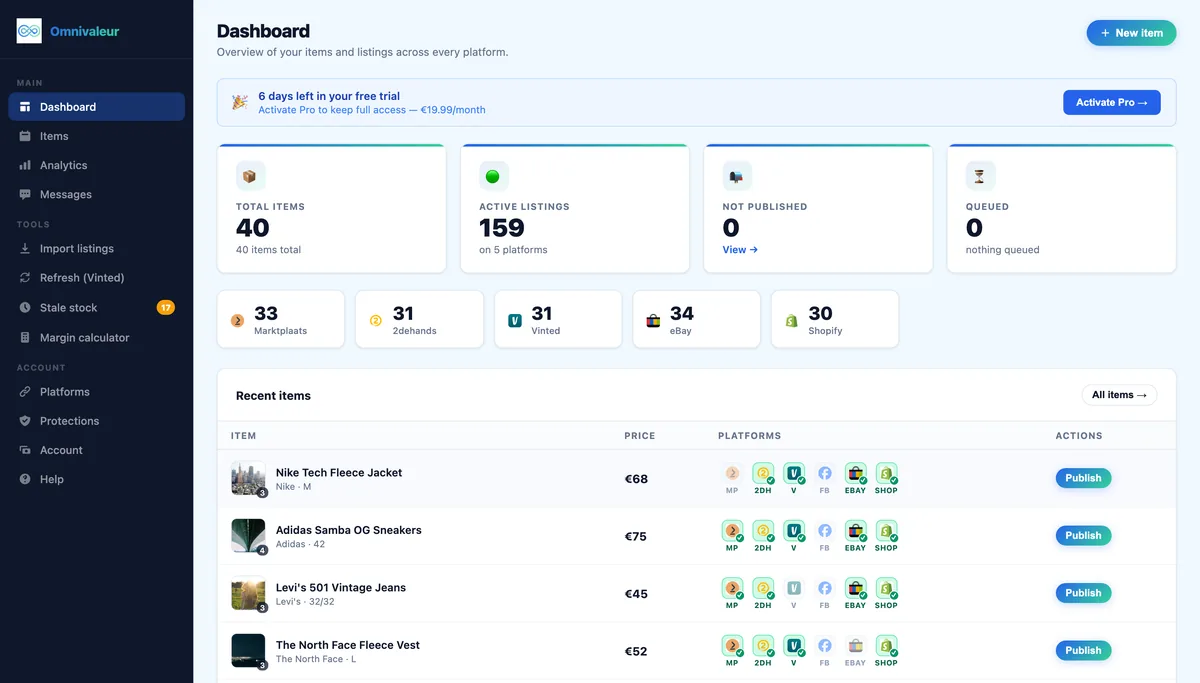
Vintage watch reselling automation means writing one master listing (photos, movement, caliber, condition) and pushing it to Marktplaats, 2dehands, Vinted, eBay, Etsy and Shopify from a single dashboard, instead of retyping specs six times. In 2026, the real work is matching each platform's authentication rules, tax reporting and value limits — not just publishing faster.
Key takeaways
- A single vintage watch worth €2,500 can trigger eBay's Authenticity Guarantee verification before payout even reaches you.
- Selling five vintage watches privately can already cross the DAC7 reporting threshold, since it counts total transaction value, not just item count.
- Cross-listing tools that publish to all platforms in parallel are the fastest route to a rate-limited account.
- A stale-stock view that flags unsold watches after a set number of days stops slow inventory from quietly rotting at the bottom of your list.
- Movement details, caliber and lug width need platform-specific formatting, not a copy-paste from one listing to the next.
What does vintage watch reselling automation actually mean in 2026?
It is not "sell watches with a robot." It means building one master listing — photos of the dial, caseback, movement and serial number, plus a written condition report — and letting software push a formatted version of that listing to every marketplace you sell on. You write once. The tool adapts the title, category fields and price to each platform's rules.
For clothing or vinyl, this is fairly mechanical: title, size, condition, done. Watches are different. A single Omega Seamaster from 1968 needs a movement caliber, a running/serviced status, a case diameter, a strap or bracelet note, and often a serial number that a buyer will check against a database before paying. Automation that just copies a description across six sites without adapting these fields gets listings rejected, flagged, or worse — bought by someone who disputes authenticity two weeks later.
Which marketplaces actually work for vintage watches, and what do they charge?
Not every platform suits every price point. A €90 quartz Seiko and a €4,500 vintage Rolex Datejust belong on different marketplaces, and treating them the same is where new resellers lose margin.
| Platform | Typical fee | Best for | Watch-specific quirk in 2026 |
|---|---|---|---|
| Marktplaats / 2dehands | No listing fee, no commission | €30–400 local sales, fast cash | No buyer protection by default, so higher-value pieces attract more scam attempts |
| Vinted | Buyer protection fee, no seller commission | Fashion-adjacent quartz and mid-range watches | Extra photos of the caseback and movement are often requested for anything priced as "designer" or "luxury" |
| eBay | ~10-13% final value fee | Global reach, higher ticket vintage mechanical pieces | Authenticity Guarantee applies above set price thresholds, adding verification days before payout |
| Etsy | 6.5% transaction fee + listing fee | True vintage (20+ years old) with a curated, story-driven buyer | Etsy enforces its 20-year vintage rule strictly; borderline pieces get delisted |
| Shopify | Monthly subscription, no per-sale marketplace cut | Building your own watch brand with repeat buyers | No built-in trust signal, so you carry the authentication burden yourself |
Resellers running multiple categories often use this same platform mix for other niches too — the logic for pairing item value with the right marketplace is very close to what works for luxury handbag reselling automation, another category where authentication and buyer trust matter more than raw traffic.
How does eBay's Authenticity Guarantee change vintage watch cross-listing?
This is the single biggest content gap in most vintage watch guides, and it changes your workflow. Since eBay expanded its watch Authenticity Guarantee program, watches listed above a set price threshold (roughly €2,000, depending on category and region) get shipped to an eBay-approved verification partner before the buyer receives them or you get paid. That means:
- Your listing photos need to be good enough that the verification center's findings match what you described — mismatches trigger returns.
- Payout is delayed by several business days versus a Marktplaats or Vinted sale, so factor that into cash flow if a chunk of your stock sits above the threshold.
- Serial numbers increasingly need to be entered as a structured field rather than buried in the description, especially for Rolex, Omega and Cartier.
If most of your inventory sits comfortably under that threshold, none of this applies and eBay behaves like any other cross-listing target. But if you specialize in higher-end mechanical pieces, this single rule should shape which platform you list to first.
How does DAC7 tax reporting affect vintage watch resellers?
Vintage watches push private sellers into DAC7 territory faster than almost any other category, purely because of unit value. DAC7 requires marketplaces to report sellers who complete 30 or more transactions, or exceed €2,000 in total sales, within a calendar year. Sell five watches at €450 each on Vinted and you have already crossed the value threshold with a fraction of the transaction count clothing resellers need. Marktplaats, Vinted and eBay all report this data to national tax authorities under the same EU framework.
The Belastingdienst's DAC7 information for sellers explains exactly what gets reported and when in the Netherlands, and the European Commission's DAC7 overview covers how the same rule applies across the EU if you sell into Belgium, Germany or France. If you are cross-listing watches across borders, this is worth reading before you list your first piece, not after your account gets flagged.
There is also a consumer-side angle worth knowing: buyers purchasing from you as a private seller versus as a registered business have different protections. The Your Europe guide to EU consumer shopping rights lays out where those lines sit, which matters if a buyer asks about returns on a €1,800 vintage chronograph.
How do you keep movement, caliber and lug width consistent across six platforms?
Every extra platform is another place a typo or missing spec can cost you a sale. A caliber number copied wrong from Marktplaats to eBay is the kind of mistake that gets a listing reported by a collector who actually knows the reference. The fix is a master template with fixed fields — case diameter, lug width, movement type, running condition, last service date — that gets reformatted per platform rather than retyped.
This matters more for watches than almost any other resale category because the buyer pool is unusually knowledgeable. A vinyl record buyer checks the sleeve grade. A watch buyer checks the movement photo against three reference forums before clicking buy. The same discipline that works for detailed, spec-heavy categories applies here — it is the same logic behind cross-listing setups for vintage toy reselling automation and collectibles reselling automation, where condition detail sells the item more than the headline photo does.
How do you avoid stale inventory and rate limits when automating watch listings?
Two operational problems show up constantly once you scale past ten or fifteen watches in rotation, and neither gets solved by publishing faster.
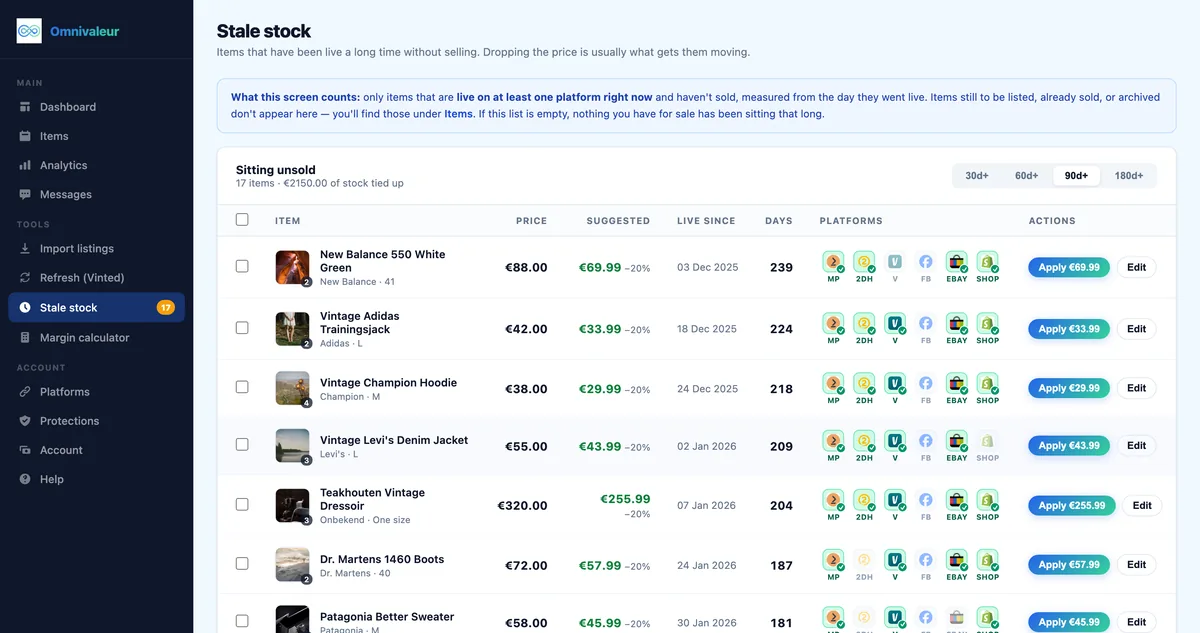
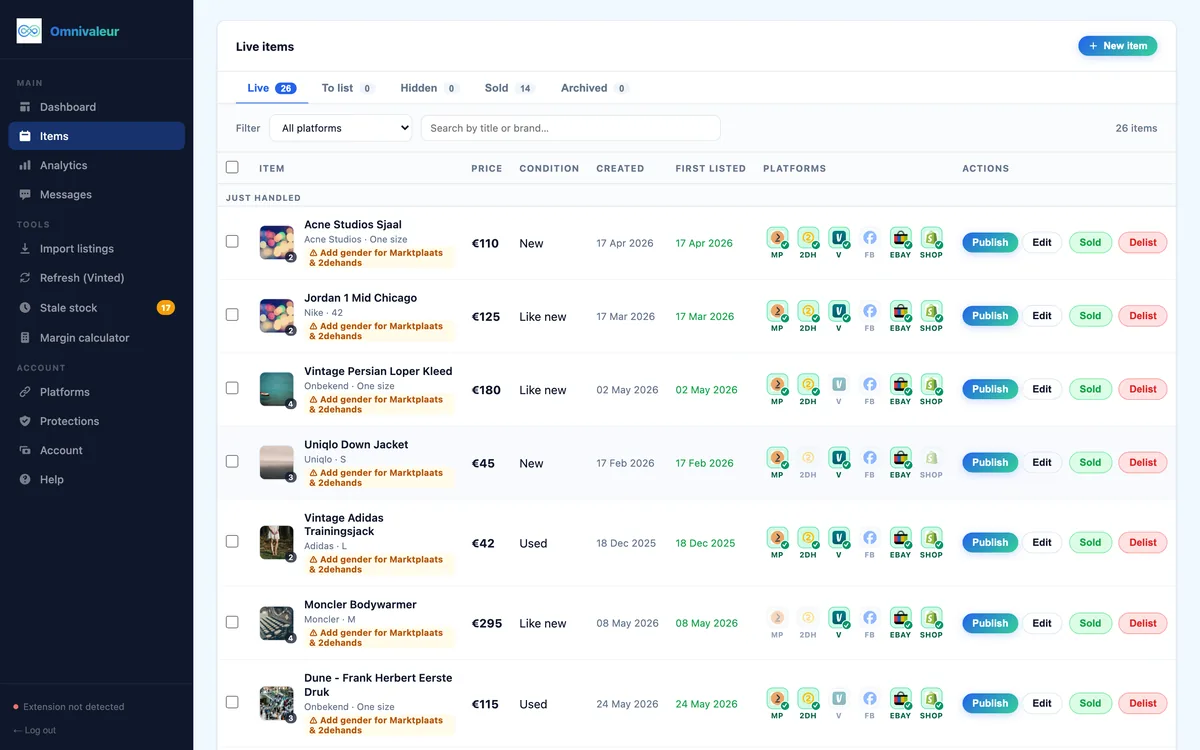
The first is stale stock. A watch that has not moved in six weeks is usually mispriced, poorly photographed, or listed on the wrong platform for its price point — but it is easy to lose track of which one in a spreadsheet of forty items. Omnivaleur's stale-stock view flags listings that have been sitting unsold for longer than your set window, so slow inventory surfaces at the top of your dashboard instead of quietly sinking to the bottom of the list where you forget about it.
The second is rate limiting. It is tempting to fire off a watch listing to all six platforms at once and assume faster is always better. It is not. Marketplaces watch for automated, simultaneous activity across many listings and treat it as bot behavior, which gets accounts flagged or shadow-limited. That is why cross-listing in Omnivaleur runs one browser tab at a time on purpose: publishing sequentially rather than in parallel is what keeps your Marktplaats, Vinted and eBay accounts inside normal usage patterns instead of tripping automated abuse detection.
What does a realistic vintage watch reselling automation workflow look like?
Here is the sequence that actually holds up once you're moving more than a handful of pieces a month:
- Source and physically inspect the watch — wind it, check the crystal, confirm the crown screws down if it claims water resistance.
- Photograph the dial, caseback, movement (through a display back or via a watchmaker if closed), serial number, and any papers or box.
- Write the master listing once: brand, reference, caliber, case size, lug width, condition report, service history.
- List first on Marktplaats or 2dehands for pieces under roughly €300, since local buyers move faster there than waiting for global shipping logistics.
- Cross-list simultaneously-but-sequentially to Vinted, eBay, Etsy and Shopify using a tool built for this — manual retyping across six platforms is where most resellers quietly cap their own growth.
- Watch the stale-stock flag weekly and adjust price or photos on anything sitting past your threshold.
- Delist everywhere the moment one platform confirms a sale, so you never double-sell a one-of-one piece.
That last step matters more with watches than with almost anything else you resell. A t-shirt in a size run has duplicates. A 1971 Speedmaster does not — sell it twice and you're issuing a refund and an apology, not just a restock.
How should you price the same watch differently across marketplaces?
Vintage watch buyers behave differently depending on where they're shopping, and pricing flat across platforms leaves money on the table either way.
| Platform | Buyer behavior | Pricing approach |
|---|---|---|
| Marktplaats / 2dehands | Local, price-sensitive, wants to inspect in person | Price 10-15% below your eBay ask |
| eBay | Global, comparison-shops sold listings, tolerates auction format | Price at or slightly above market, factor in final value fee |
| Etsy | Pays a premium for curated storytelling and true vintage status | Price 10-20% above eBay if the listing includes provenance detail |
| Vinted | Fashion-first buyers, less watch-literate | Price competitively, lean on lifestyle photos over technical specs |
Resellers already running a Marktplaats-to-eBay pipeline for other categories can lift a lot of this pricing logic directly — the mechanics of moving inventory from a local classifieds site to a global marketplace are covered in the Marktplaats to eBay crosslisting guide, and the same applies in reverse when moving Vinted stock onto eBay via the Vinted to eBay crosslisting guide.
The trap most people fall into is setting one price and letting automation sync it everywhere, then wondering why the Marktplaats listing sits for three weeks while the eBay one sells in two days. Build your pricing rules into whatever tool you use for cross-listing so the spread gets applied automatically at the point of posting, not adjusted manually after the fact. If you're doing this across six platforms by hand, you will eventually just default to one number everywhere out of fatigue — and that's exactly when the margin disappears.
What's the realistic time cost of running six marketplaces?
Be honest with yourself here. A single watch listing done properly — decent photos of the movement, dial, caseback, and any papers, plus a description that mentions reference number, movement type, and condition honestly — takes maybe 20 minutes to write once. Multiply that by rewriting for tone on Etsy, stripping technical jargon for Vinted, and adjusting price on each platform, and you're looking at close to two hours per watch if you're doing it manually across all six. That math only works if you're selling high-value pieces or moving serious volume.
This is where most resellers either quit after a month or finally set up proper cross-listing software that pushes one master listing out with platform-specific price and copy rules attached. The second group is the one still doing this in 2027. If you're still deciding whether it's worth the setup time, run the numbers on your last ten sales first — you'll usually find the answer faster than any spreadsheet will tell you.
Keep reading
Stop copying listings by hand
Omnivaleur publishes your item to every platform at once and syncs stock automatically when something sells.
Start free trial