Vinted to eBay Crosslisting 2026: The Complete Reseller Guide
To cross-list from Vinted to eBay in 2026, export your item data, adapt titles and shipping policies for eBay's search algorithm, and publish. Because Vinted has strict bot detection, automation tools must publish one tab at a time to prevent rate limits. Sync your inventory immediately when an item sells on either platform to avoid double-selling penalties.
Key takeaways
- Vinted and eBay cater to different buyer demographics requiring distinct pricing strategies.
- Sequential tab automation prevents marketplace account bans caused by aggressive parallel requests.
- Shipping rules differ significantly between Vinted's integrated labels and eBay's custom postage.
- Stale stock identification helps rotate slow-moving inventory before platform algorithms penalize visibility.
If you run a reselling business in Europe, keeping your catalog confined to a single marketplace limits your revenue potential. Vinted dominates fast fashion, vintage clothing, and budget-friendly household goods across the Netherlands, Belgium, France, and beyond. eBay, by contrast, attracts international collectors, electronics enthusiasts, and buyers willing to pay top dollar for unique items. Bridging these two platforms unlocks a broader buyer pool, but manual copy-pasting wastes hours every week.
Managing inventory across multiple sales channels requires understanding platform-specific rules, fee structures, and technical limits. Whether you are expanding your closet or scaling a professional inventory, mastering this workflow changes your daily operations.
Why Cross-List from Vinted to eBay?
Many sellers ask: Why cross-list at all? The short answer is speed of sale and audience reach. Vinted buyers hunt for bargains, often negotiating prices down via the chat function. eBay buyers tend to use the "Buy It Now" feature or bid in auctions, frequently purchasing items at higher price points without messaging the seller first.
When you list an item on Vinted, you capture local and regional European buyers. When you import vinted to ebay, your listings become visible to a global audience, including collectors searching for rare items. Diversifying your channels also protects your revenue. If Vinted hides your listings due to an algorithm shift, your eBay store keeps generating orders.
For specialized niches, cross-listing transforms slow inventory into active cash flow. For instance, sellers moving vintage electronics or collectibles can pair this workflow with insights from the Best Electronics Reselling Automation Platforms 2026 to maximize their catalog visibility.
Which Platform for Which Item?
Not every item belongs on both platforms. Understanding where your inventory converts best saves you from paying unnecessary listing fees or dealing with mismatched buyer expectations.
| Category | Best Platform | Pricing Strategy |
|---|---|---|
| Fast Fashion & Modern Apparel | Vinted | Competitive, budget-friendly |
| Vintage Designer & Luxury | Both (Vinted & eBay) | Higher on eBay to cover international shipping |
| Electronics & Gadgets | eBay | Fixed price with tracked shipping |
| Collectibles & Niche Hobbies | eBay | Auction or fixed price |
Apparel sellers should consult the Fashion Reselling Automation Platforms 2026 Guide to optimize clothing descriptions for search engine optimization across both sites.
Can You Crosslist to Vinted Automatically?
Yes, but with strict technical constraints. Many beginners wonder: Can you crosslist to Vinted automatically? Vinted uses sophisticated anti-bot software to block automated scripts, web scrapers, and bulk upload tools that flood the site with spam.
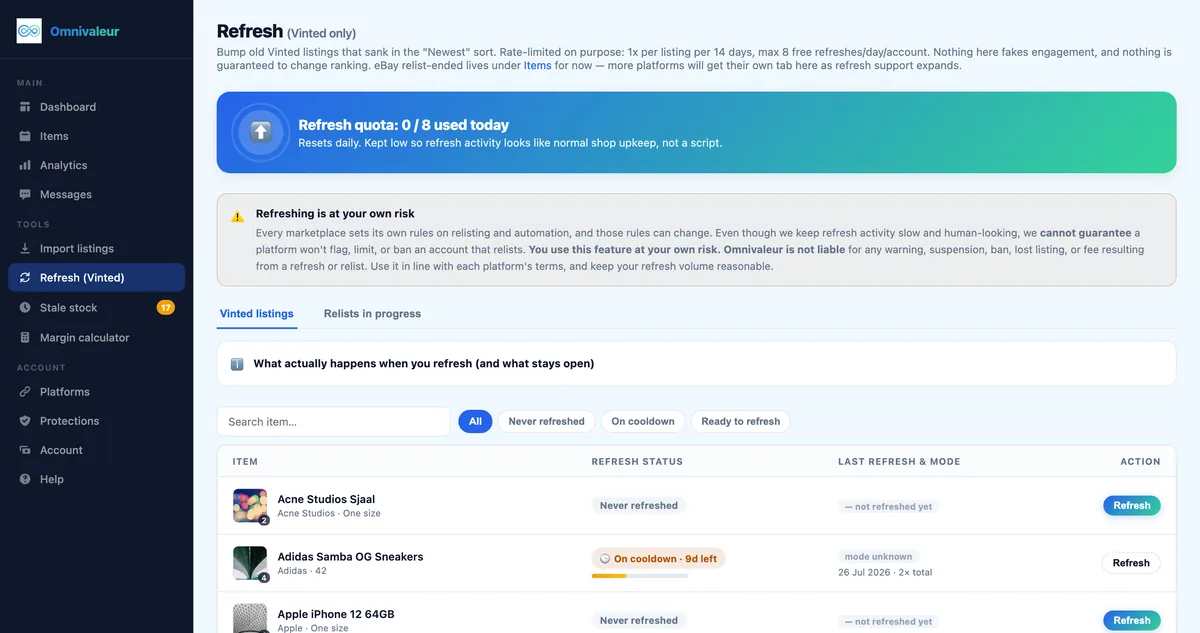
Most third-party software fails because Vinted detects simultaneous browser requests. To circumvent this without risking account suspension, cross-listing in Omnivaleur runs one browser tab at a time on purpose. This sequential publishing mimics human behavior, ensuring your account remains safe from automated rate limits and permanent bans.
To understand how software handles this securely, review the platform comparison in Omnivaleur vs Crosslist: Honest 2026 Reseller Comparison.
How Does Vinted to eBay Integration Work?
Bridging Vinted and eBay involves extracting your existing listing data—photos, titles, descriptions, and item specifics—and reformatting it to meet eBay requirements. Because eBay requires structured item specifics like brand, size, color, and condition, a direct raw copy often results in incomplete listings.
When you pull data from Vinted, the listing tool maps those fields to eBay categories. For example, Vinted’s simple size dropdown maps to eBay’s granular sizing taxonomy for shoes, apparel, and accessories. Once mapped, you review the preview and publish.
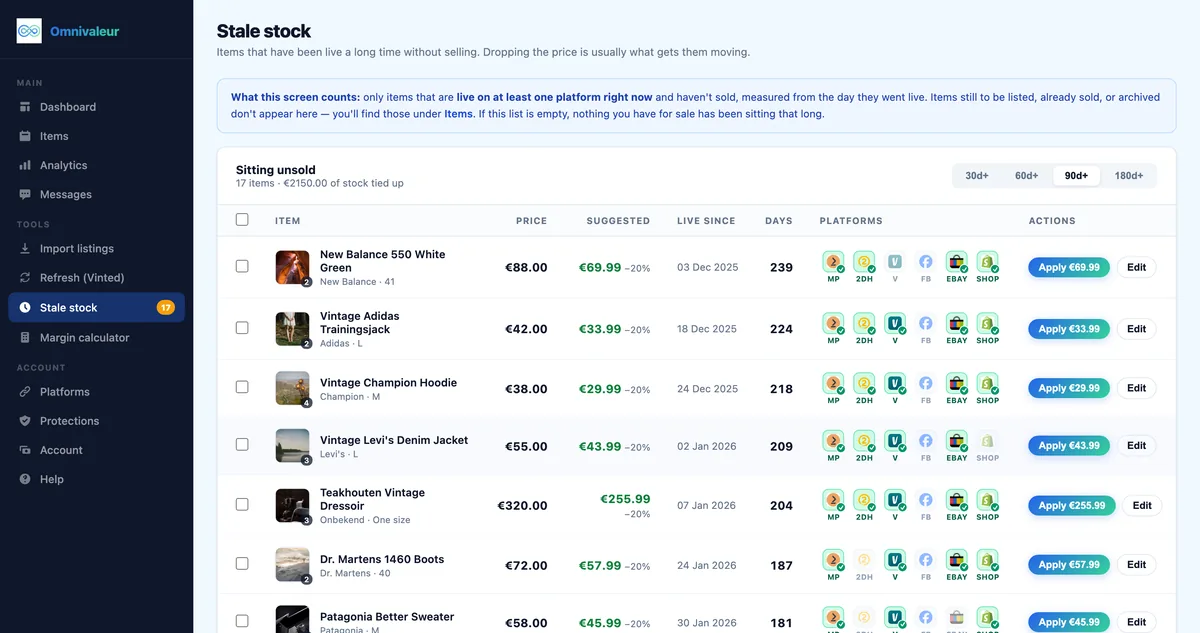
When items sit unsold for weeks, managing them becomes a chore. Omnivaleur's stale-stock view flags listings that have been sitting unsold, so slow inventory surfaces instead of sinking down the list. You can then drop the price, end the listing, or cross-list it to a third marketplace like Marktplaats or 2dehands.
- ✓Audit your existing inventory on Vinted before moving any data
- ✓Extract and map your listing data to match eBay categories
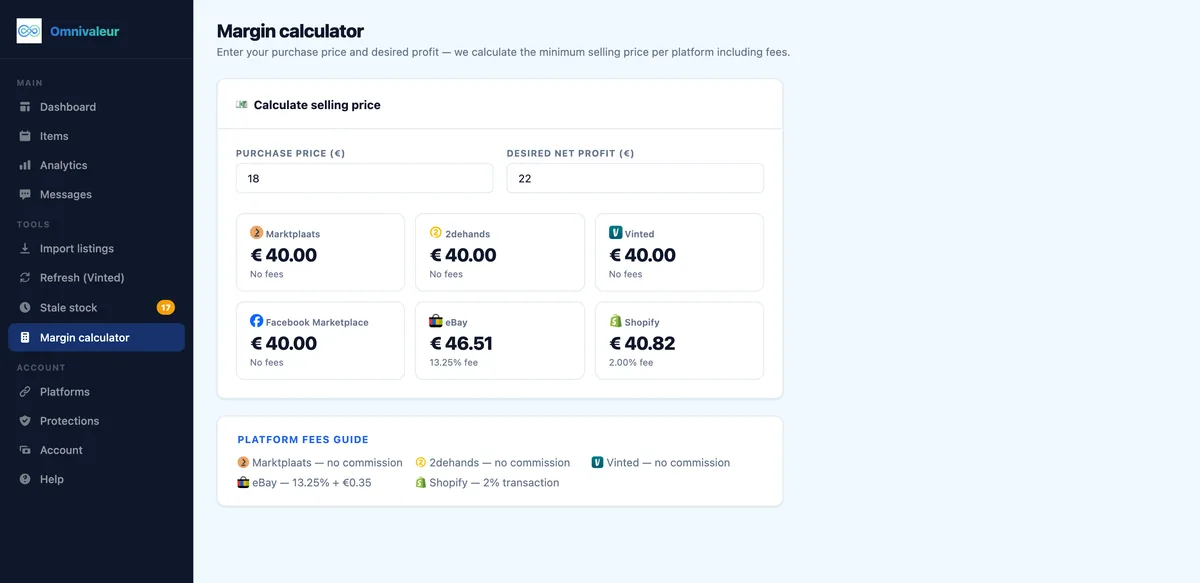
- ✓Adjust your pricing to account for eBay final value fees
- ✓Publish items sequentially to avoid triggering platform rate limits
- ✓Enable inventory sync to close listings when an item sells
The Fee Picture and Tax Compliance in 2026
Before expanding your catalog across platforms, you must account for commission structures and regulatory reporting. Selling across European borders means tracking the DAC7 tax directive, which requires marketplaces to report your earnings to tax authorities once you exceed 30 transactions or 2,000 euros in a calendar year.
For official guidelines on tax reporting obligations, review the European Commission DAC7 overview and the Belastingdienst DAC7 information for sellers.
Fee structures also impact your profit margins:
Make sure to read the Vinted Help Selling rules and the eBay Help creating and managing listings documentation to stay compliant with platform terms of service.
A Step-by-Step Workflow to Cross-List Your Inventory
Executing a clean migration from your Vinted closet to your eBay store prevents errors, missing photos, and frustrated buyers. Follow these steps:
Consumer protection laws also govern cross-border sales. Familiarize yourself with buyer return rights outlined by Your Europe consumer shopping rights.
Common Mistakes to Avoid When Cross-Listing
Resellers rushing through multi-channel workflows often make preventable mistakes that hurt their seller metrics. Watch out for these pitfalls:
To compare different software architectures before choosing your workflow, read Omnivaleur vs List Perfectly: Honest 2026 Comparison.
Frequently asked questions
How do I import Vinted to eBay without losing my photo quality?
Why are my imported Vinted items getting low visibility on eBay?
Can I use Vinted shipping labels for items sold on eBay?
How do I prevent double-selling when using multiple platforms?
Is it allowed by marketplace terms to sell the same item on Vinted and eBay simultaneously?
Keep reading
Stop copying listings by hand
Omnivaleur publishes your item to every platform at once and syncs stock automatically when something sells.
Start free trial