Omnivaleur vs Vendoo: Which Crosslisting Tool Wins for EU Resellers in 2026?
Omnivaleur is built for European sellers, with native support for Marktplaats, 2dehands and Vinted plus euro pricing. Vendoo is a mature US-first tool covering eBay, Etsy, Poshmark and Mercari. Choose Omnivaleur if you sell on Dutch or EU marketplaces; choose Vendoo if your buyers are mostly American.
Key takeaways
- Omnivaleur natively supports Marktplaats, 2dehands and Vinted, which Vendoo does not
- Vendoo has a longer track record and a strong mobile app for US-centric resellers
- Both handle delisting after a sale, but EU platform quirks favour Omnivaleur
- DAC7 reporting now affects EU sellers regardless of which tool you pick
- Pick the tool based on where your buyers are, not brand name
Two tools, two different continents in mind. Vendoo grew up serving Poshmark and Mercari sellers in the States. Omnivaleur was built the other way round — starting from the marketplaces Europeans actually use. That single difference decides most of this comparison, so let's get into the detail instead of the marketing gloss.
Which marketplaces does each tool actually support?
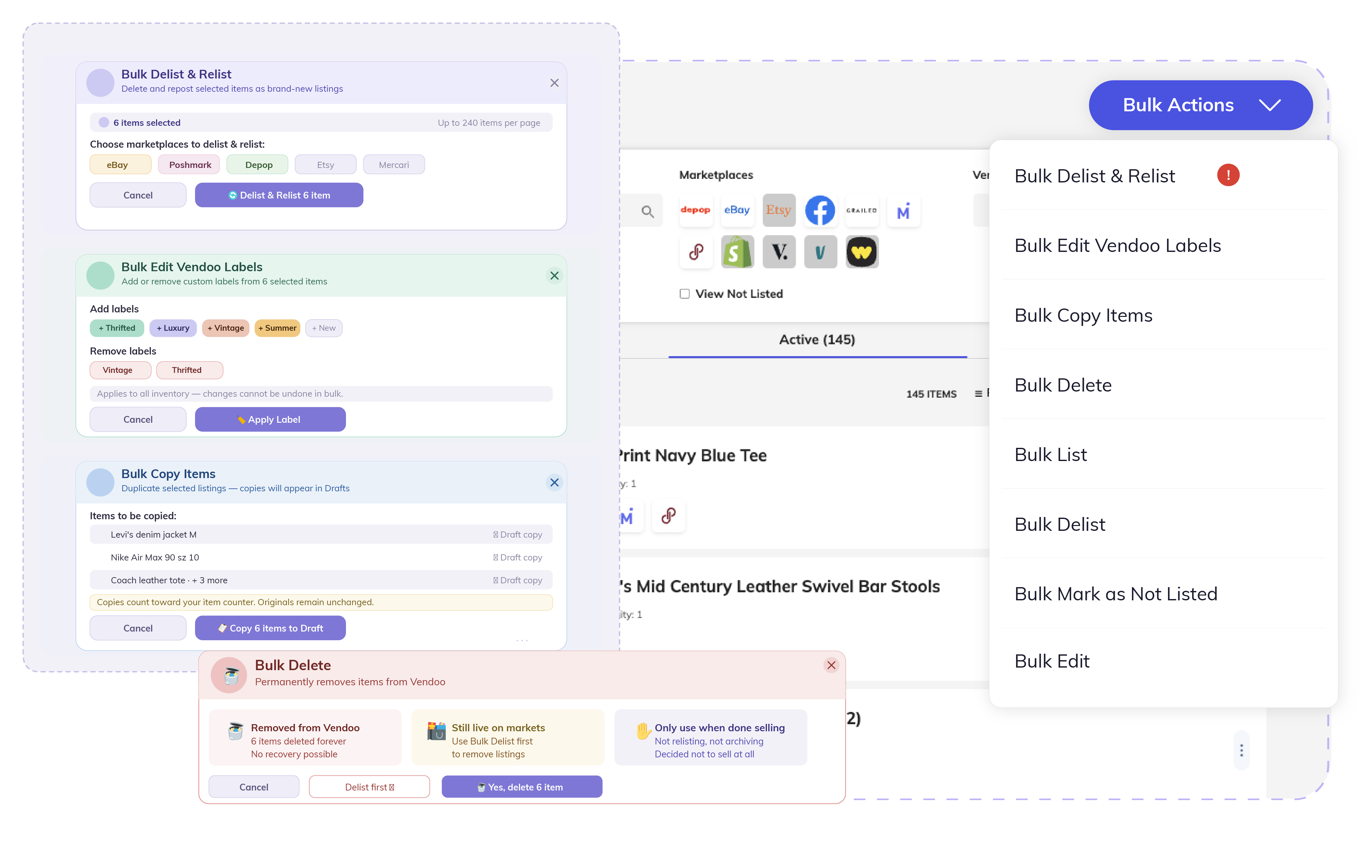
This is where the two split hardest. If you sell secondhand goods in the Netherlands, Belgium or across the EU, your bread-and-butter platforms are Marktplaats, 2dehands and Vinted. Omnivaleur treats those as first-class citizens. Vendoo, historically, has centred on North American resale platforms.
| Platform | Omnivaleur | Vendoo |
|---|---|---|
| Marktplaats | Yes | No |
| 2dehands | Yes | No |
| Vinted | Yes | Limited / varies |
| eBay | Yes | Yes |
| Etsy | Yes | Yes |
| Shopify | Yes | Varies |
| Poshmark | No | Yes |
| Mercari | No | Yes |
| Depop | No | Yes |
Read that table honestly. Vendoo covers a set of platforms Omnivaleur simply doesn't touch — Poshmark, Mercari, Depop. If those are your channels, Vendoo is the obvious pick and this comparison basically ends here. But if your listings live on Dutch and EU marketplaces, Vendoo can't help you post to Marktplaats or 2dehands at all. No US crosslister currently does.
For the EU workflows that matter most, we've documented the exact routes: Marktplaats to Vinted crosslisting and 2dehands to Vinted crosslisting are the two most common flows our users run.
How do the pricing models compare in 2026?
Both tools use tiered subscriptions based on how many active listings you manage. That's the industry norm. Neither charges a percentage of your sales, which is good — you keep your margin.
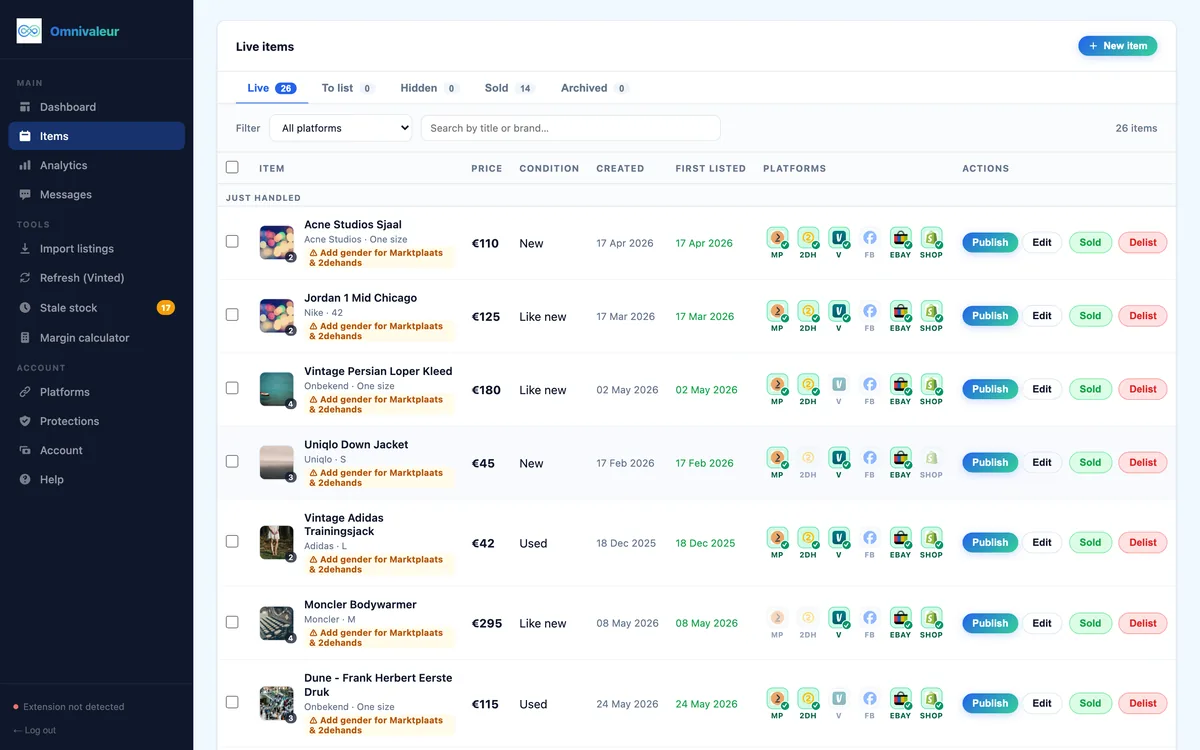
Vendoo has historically offered a free entry tier with a small listing cap, then paid plans that scale with listing volume, plus paid add-ons for extras like image editing or bulk relisting. Omnivaleur prices in euros and scales similarly by listing count, with the EU platforms included rather than bolted on.
| Aspect | Omnivaleur | Vendoo |
|---|---|---|
| Billing currency | Euro | US Dollar |
| Free / entry tier | Trial-based | Free tier with cap |
| Model | Per active listings | Per active listings |
| Sales commission | None | None |
| Paid add-ons | Fewer, bundled | Several à la carte |
One practical note for EU sellers: paying a US tool in dollars means your bill drifts with the exchange rate, and some cards add a foreign-transaction fee. Small amounts, but they stack up over a year. A euro-billed subscription is just cleaner if you're based in the eurozone. Check both providers' current pricing pages directly — tiers shift, and I won't invent numbers I can't verify today.
Which tool is easier to set up and use day to day?
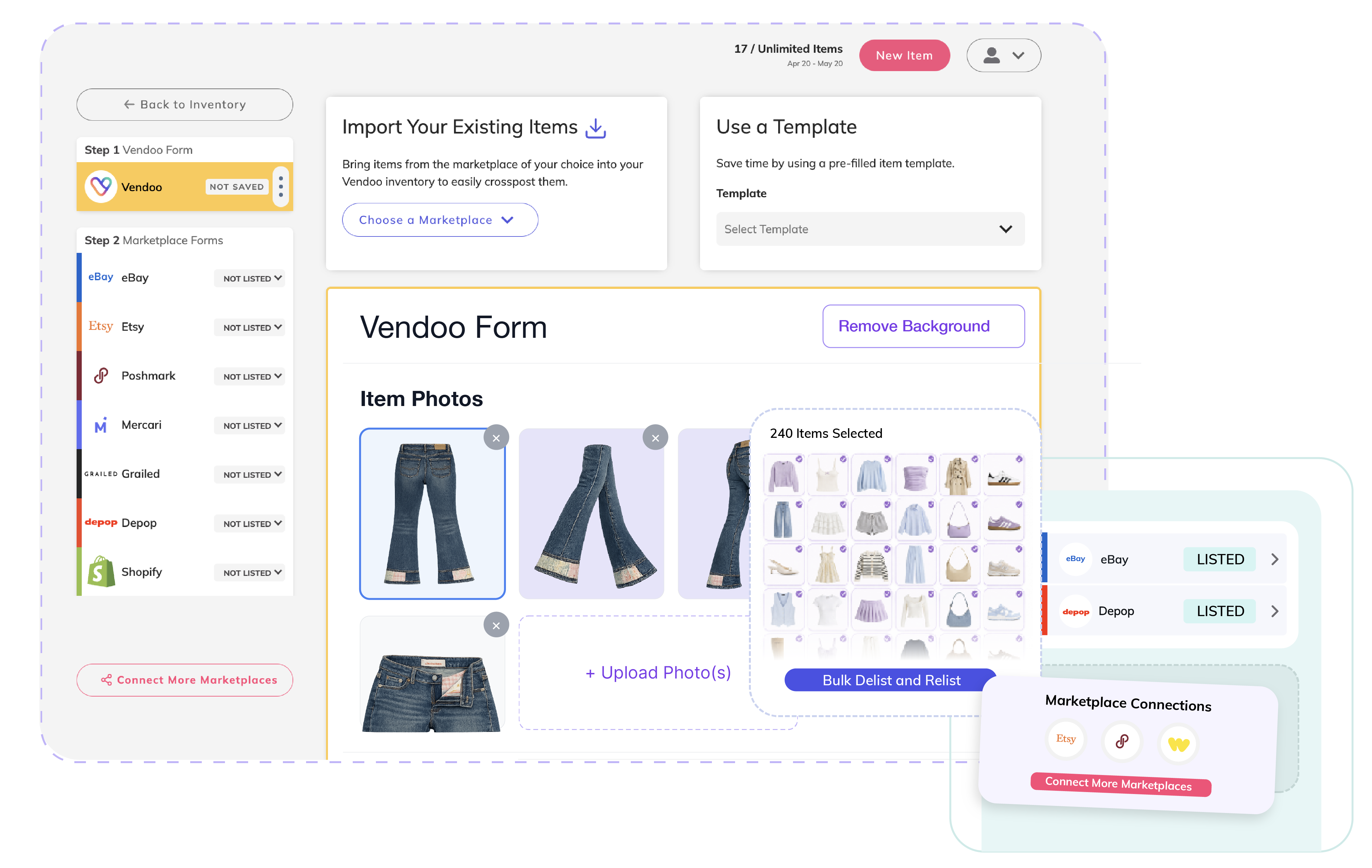
Vendoo has years of polish behind it. The interface is mature, the onboarding is well documented, and it handles bulk actions cleanly. That's a genuine strength — you feel the maturity the moment you log in. For a US reseller juggling five platforms, it's a smooth ride.
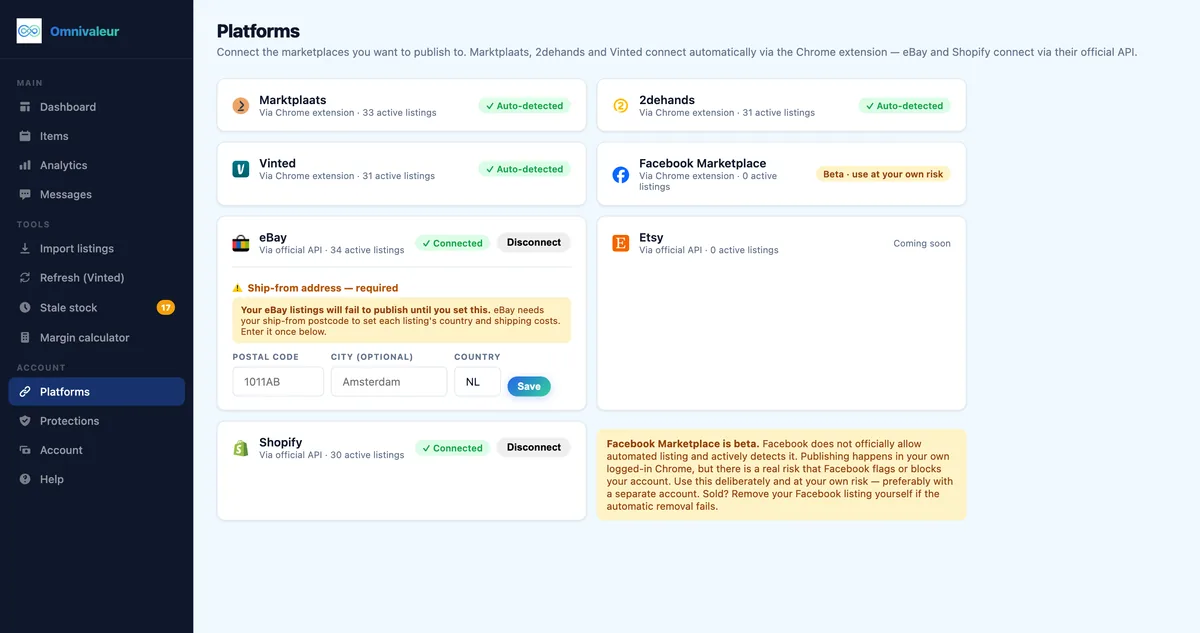
Omnivaleur keeps the workflow tight around a browser extension plus a central dashboard. You draft an item once, tick the marketplaces, and it posts. The screenshot of our dashboard shows roughly what that looks like in practice: one item, multiple channels, one status view.
Where Omnivaleur wins on ease is anything EU-specific. Category mapping for Marktplaats. Vinted's condition and brand fields. Belgian versus Dutch listing quirks on 2dehands. A US-first tool that doesn't support those platforms can't make them easier — it just can't do them. If your daily grind is Dutch marketplaces, "ease of use" isn't abstract polish; it's whether the tool speaks the platform at all.
How does each tool handle sync and relisting after a sale?
The whole point of a crosslister is avoiding the nightmare of selling one jacket on two platforms at once. Both tools address this, but the mechanics differ.
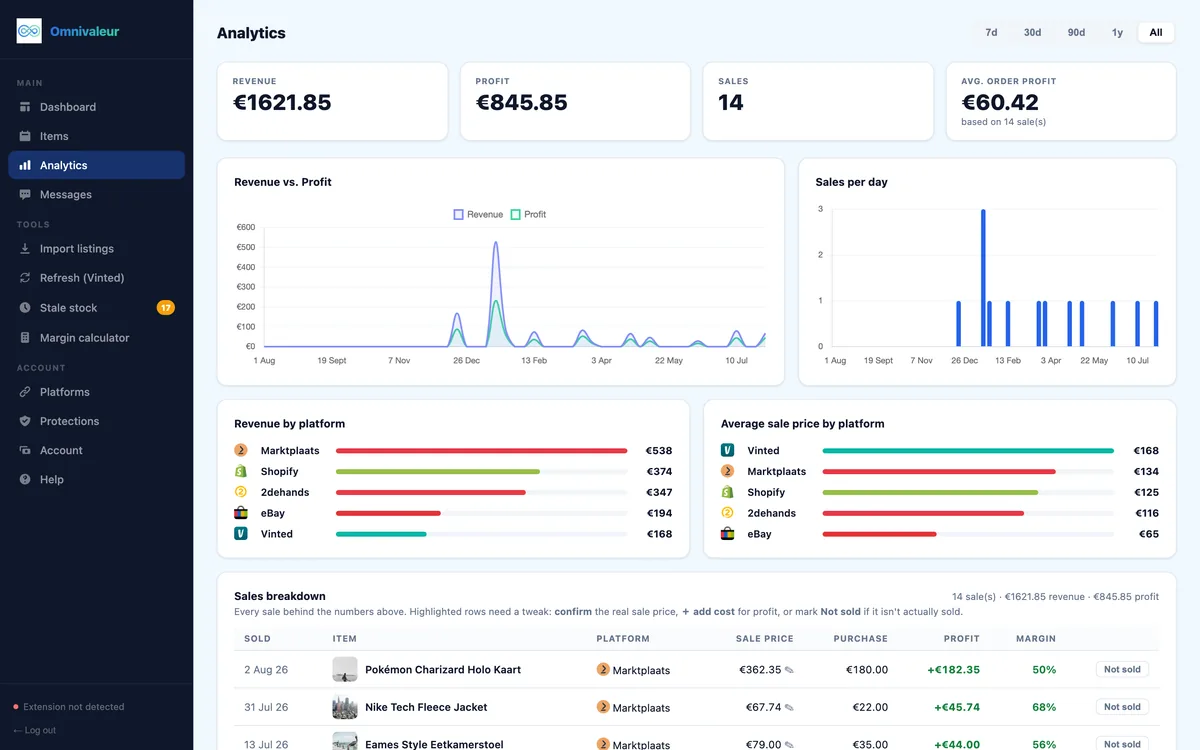
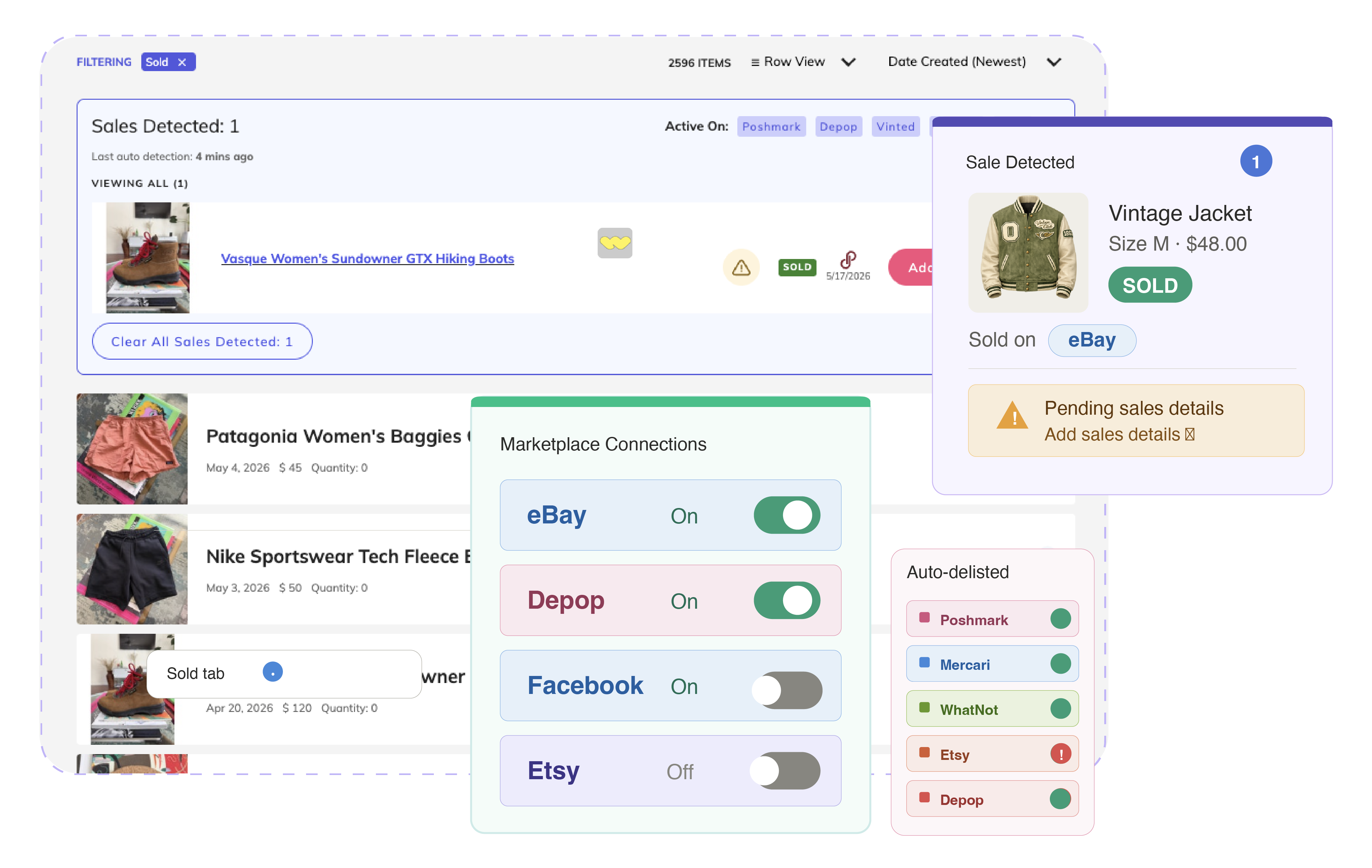
Vendoo offers delisting tools so that when an item sells on one channel, you can pull it from the others — some of this is manual-assisted, some automated depending on plan and platform. Omnivaleur focuses on the EU marketplaces where automatic delisting matters most, because Marktplaats and Vinted buyers move fast and a stale listing gets you a canceled sale and an angry message.
Relisting to stay visible
Marktplaats and 2dehands reward fresh listings — bump an item and it climbs the results. Vinted's feed rewards activity too. A crosslister that understands EU relisting rhythms keeps your items visible without you manually re-uploading every week. Vendoo has relisting features aimed at US platform algorithms; they're solid, just tuned for a different audience. If you're moving clothing volume, our guide to Vinted reselling automation covers how to keep listings active without burning out.
- ✓List which marketplaces you actually sell on right now
- ✓Check the support table to see which tool covers all of them
- ✓Note whether you price in euros or US dollars
- ✓Read the current pricing pages for both tools directly
- ✓Test the onboarding on whichever platform matters most to you
- ✓Verify the tool's DAC7 record-keeping for your tax needs
How well does each tool handle EU-specific requirements like euro pricing and DAC7?
This is the section the big comparison sites skip entirely, and it's the one that actually costs EU resellers money if they get it wrong.
Since 2023, EU marketplaces report seller earnings to tax authorities under DAC7. If you cross the thresholds — roughly 30 sales or €2,000 in a year on a given platform — Marktplaats, Vinted and the rest share your data with the tax office. The Belastingdienst DAC7 page for sellers spells out the Dutch side, and the European Commission's DAC7 overview covers the EU framework. Neither crosslister files your taxes — that's on you — but a tool that keeps clean records across your EU channels makes reconciliation far less painful come 2026 tax season.
Euro pricing sounds trivial until you're managing it. List in euros on Marktplaats, in euros on Vinted, and let the tool keep them consistent. A US-first tool built around dollar pricing and US shipping labels adds friction here even where platform overlap exists. Omnivaleur treats euro pricing and EU shipping as the default, not an edge case. And EU buyers have strong consumer rights on returns and refunds — worth knowing before you list, whichever tool you use.
Vinted's rules keep shifting
Vinted updates its selling policies regularly, and the Vinted selling rules are worth bookmarking. A crosslister maintained for the EU market keeps its Vinted integration current with those changes. If you're expanding from Vinted onto other channels, the Vinted to Etsy crosslisting guide walks through the practical steps.
What about support and reliability when something breaks?
Vendoo has a large user base and years of accumulated documentation, community threads and help articles. When you hit a snag, chances are someone already solved it publicly. That reach is real value — a mature tool has fewer surprises.
Omnivaleur's advantage is timezone and language alignment. Support that runs on European hours, understands Marktplaats category disputes and knows why your Vinted upload got flagged. When a platform changes a rule — and eBay's listing rules shift more often than you'd think — an EU-focused team feels the impact at the same time you do.
Reliability comes down to integration upkeep. Every platform tweaks its API and forms. A tool only reliably posts to platforms it actively maintains. Vendoo maintains its US-centric roster well. Omnivaleur maintains the EU roster. Neither can promise flawless uptime — anyone who does is lying — but each is strongest on the platforms it was built around.
Who is each tool genuinely best for in 2026?
No blanket winner here, because the answer depends entirely on where you sell.
Choose Vendoo if:
- Your buyers are primarily in the US.
- You sell on Poshmark, Mercari or Depop.
- You want a battle-tested tool with a huge knowledge base and a strong mobile app.
- Dollar billing and US shipping are your normal.
Choose Omnivaleur if:
- You sell on Marktplaats, 2dehands or Vinted.
- You price in euros and ship within the EU.
- You want DAC7-friendly record-keeping across European channels.
- You need support that understands EU platform quirks in your timezone.
Plenty of resellers run a hybrid: Vinted for clothing across borders, Marktplaats for local bulky items. If that's you, the tool that natively covers those specific channels wins. For the common Dutch flow, our 2dehands to Vinted crosslisting guide shows exactly how the automation handles it. The honest verdict: Vendoo is the better tool for a US-focused seller, and Omnivaleur is the better tool for a European one. Buy the one that speaks your marketplaces.
Frequently asked questions
Can I use Vendoo to list on Marktplaats or 2dehands?
Does either tool handle DAC7 tax reporting for me?
Will crosslisting the same item to Vinted and eBay get me penalised?
Which tool is better for someone just starting out with a small inventory?
Do I need a browser extension for either tool?
Can I switch from Vendoo to Omnivaleur without re-entering every listing?
Keep reading
Stop copying listings by hand
Omnivaleur publishes your item to every platform at once and syncs stock automatically when something sells.
Start free trial