Etsy to Vinted Crosslisting Automation in 2026: What Actually Works
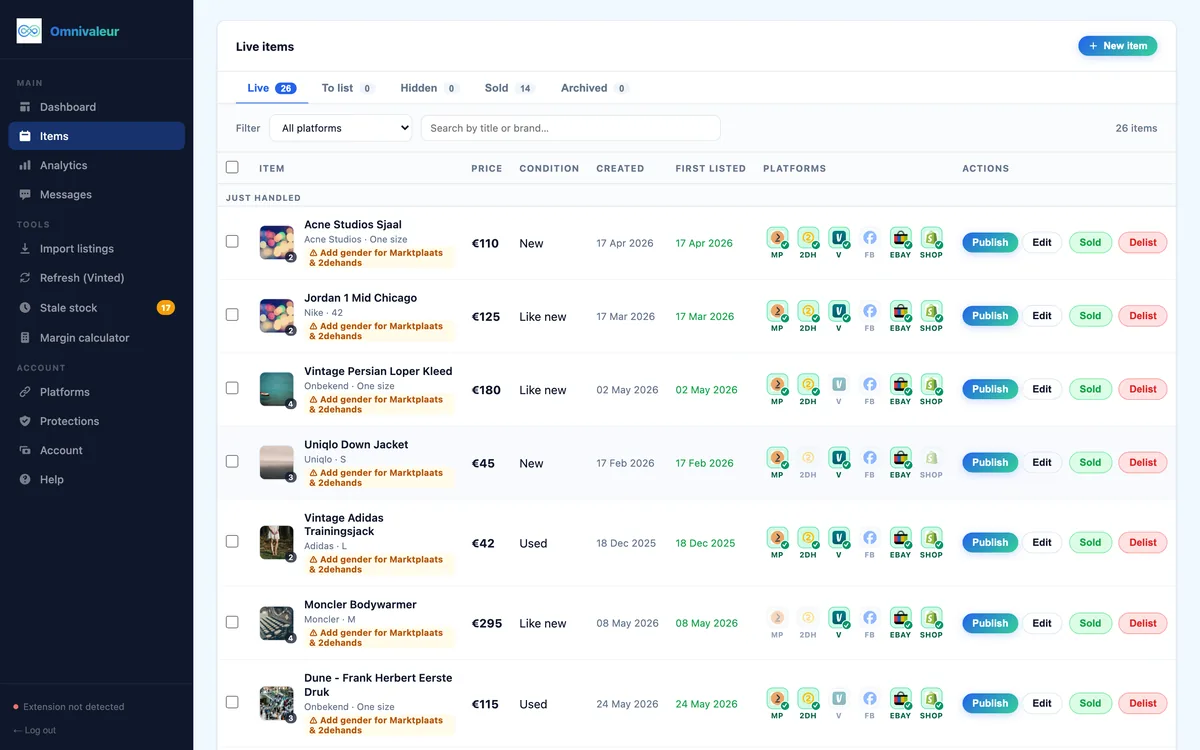
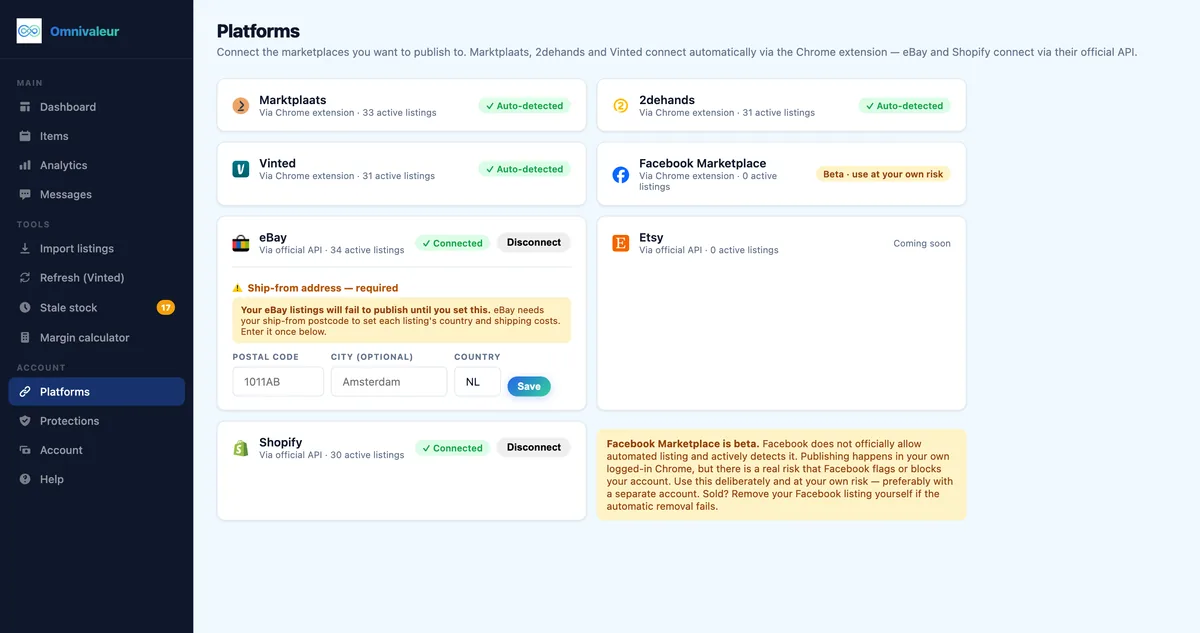
Etsy to Vinted crosslisting automation works by pulling your Etsy listings, filtering out anything Vinted doesn't allow (craft supplies, digital items, most home goods), and republishing eligible fashion and accessory pieces one at a time to avoid rate limits. Tools like Omnivaleur sync stock so a sale on one platform delists the other.
Key takeaways
- Only fashion, accessories, and wearable vintage items realistically move from Etsy to Vinted — craft supplies and digital goods don't fit Vinted's category rules
- DAC7 reporting kicks in once a seller crosses roughly 30 sales or €2,000 in a calendar year, tracked separately per platform in 2026
- Publishing listings one tab at a time avoids the account flags that come with parallel bulk uploads
- A stale-stock view that flags unsold listings matters more than raw crosslisting speed once you're running two shops at once
- Vinted buyer protection and Etsy's seller policy handle disputes differently, so the same item carries different risk depending on where it sells
Not every Etsy shop translates to Vinted, and that's the part most automation guides skip. Etsy is a marketplace for handmade goods, vintage items, and craft supplies. Vinted is strictly a C2C fashion and accessories marketplace. Before you automate anything, you need to know which slice of your Etsy catalog Vinted will even accept — then automate that slice properly.
Why doesn't every Etsy listing belong on Vinted?
Etsy sellers list three broad categories: handmade, vintage, and craft supplies. Vinted only accepts pre-owned or new clothing, shoes, bags, jewelry, and accessories. That means your Etsy craft supplies, digital downloads, home décor, and most handmade non-wearable items simply have no home on Vinted.
What does transfer well:
- Vintage clothing and vintage jewelry listed under Etsy's vintage category
- Handmade accessories — scarves, bags, jewelry, hair pieces
- Preloved fashion items an Etsy shop resells alongside handmade work
What doesn't transfer at all: patterns, digital files, craft supplies, ceramics, art prints, furniture. A real crosslisting tool filters these out automatically instead of dumping your whole catalog and letting Vinted reject half of it. If your Etsy shop leans more vintage furniture or home goods, that inventory is better routed through a vintage furniture reselling automation workflow instead, and pointed at marketplaces built for that category.
What are the 2026 fee and policy differences between Etsy and Vinted?
Fee structures on both platforms shifted again heading into 2026, and they don't map onto each other cleanly.
| Factor | Etsy | Vinted |
|---|---|---|
| Listing fee | $0.20 per item, renews every 4 months | Free to list |
| Transaction fee | 6.5% of sale price | 0% seller commission (buyer pays protection fee) |
| Payment processing | ~3% + fixed fee, varies by country | Included in buyer protection fee |
| Offsite ads fee | Up to 15% if opted in or forced above $10,000/year | Not applicable |
| Category scope | Handmade, vintage (20+ years), craft supplies | New and pre-owned fashion, accessories, home textiles |
Vinted's model is friendlier for casual resellers because there's no per-listing cost. Etsy's fees only make sense if you're pricing handmade or genuinely rare vintage pieces higher. Check the current Etsy seller policy and Vinted's selling rules before you commit to running the same price across both — margins differ enough that a flat price copy-paste often loses money on one side.
How do DAC7 tax reporting rules affect sellers who cross-list between Etsy and Vinted?
Since DAC7 came into force, both Etsy and Vinted report seller activity to tax authorities once you cross about 30 transactions or €2,000 in sales within a calendar year — and they report separately, per platform. Cross-listing the same item across two accounts doesn't halve your reporting exposure; it just means two platforms are watching the same seller identity.
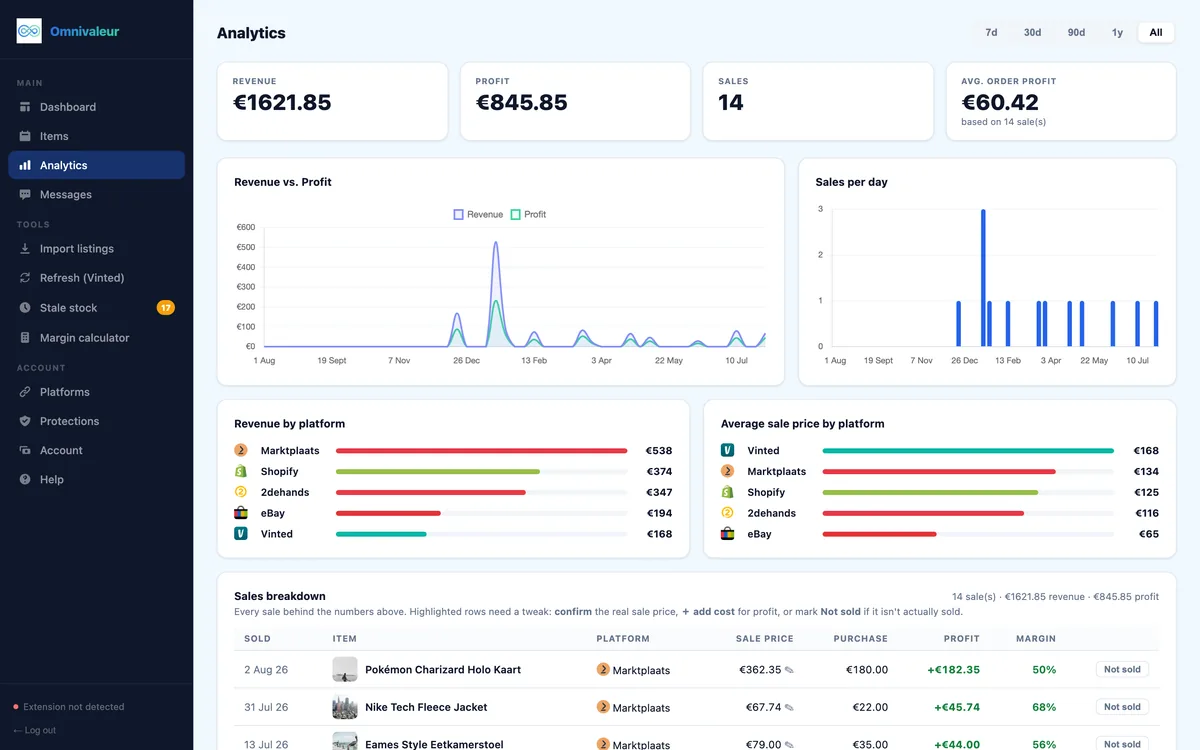
Dutch resellers in particular should check the Belastingdienst's DAC7 guidance for sellers directly, and the European Commission's DAC7 overview covers how the rule applies across EU member states. If you're already tracking sales across Marktplaats, eBay or Shopify too, the reporting math gets easier once everything funnels through one dashboard instead of four separate seller accounts.
Is automated cross-listing safe for your Etsy and Vinted accounts?
This is the gap almost nobody addresses. Bulk uploaders that fire dozens of listings in parallel are exactly what gets accounts rate-limited or temporarily locked. Marketplaces watch for burst activity that doesn't look human.
Cross-listing in Omnivaleur deliberately runs one browser tab at a time. It's slower on paper, but it mimics how a real seller actually works, and it keeps both your Etsy shop and Vinted profile out of automated-abuse detection. Speed that costs you an account isn't speed — it's a setback measured in weeks of appeals.
If you're weighing tools on this exact point, our honest comparison of Omnivaleur vs List Perfectly breaks down how each handles publishing speed versus account risk in more detail.
How do you keep slow-moving Etsy stock from disappearing on Vinted?
Once an item lists on both platforms, it's easy to lose track of what's actually selling. A listing that sat untouched on Etsy for four months often sits untouched on Vinted too — but buried under newer uploads, nobody notices until it's been dead stock for half a year.
Omnivaleur's stale-stock view solves this by surfacing anything that's been sitting unsold instead of letting it sink to the bottom of your inventory list. That's the difference between spotting a pricing problem in week three versus discovering it in month six, after you've already paid four listing renewal fees on Etsy for nothing.
What's the smartest workflow for cross-listing Etsy to Vinted in 2026?
- Filter your Etsy catalog for wearable, fashion-category items only — skip craft supplies and digital files entirely.
- Connect both accounts and let listings publish one at a time, not in parallel batches.
- Set inventory sync so a Vinted sale auto-delists the Etsy listing and vice versa.
- Check the stale-stock view weekly and re-price or delist anything that's stalled.
- Track sales against the DAC7 threshold across both platforms combined, not per-account.
The same logic applies in reverse if you're building an Etsy presence from an existing Vinted shop — our Vinted to Etsy crosslisting guide covers that direction step by step. Sellers running fashion inventory across even more channels tend to benefit from a broader fashion reselling automation platform setup rather than a single platform pair.
And if part of your catalog is genuinely collectible vintage rather than wearable fashion, routing it through collectibles reselling automation tends to find better buyers than forcing it onto Vinted's fashion-only audience. Some Etsy sellers also run a parallel path to eBay for pieces Vinted won't take at all — see our Etsy to eBay crosslisting guide for that route.
Buyer protection also differs enough to matter operationally. Vinted's buyer protection fee funds its own dispute process, described in the Vinted Help Centre, while Etsy leans on its seller policy and, for EU buyers, general EU consumer shopping rights. The same jumper can carry different return risk depending on which platform sold it — worth knowing before you price identically across both.
Frequently asked questions
Can I cross-list Etsy vintage jewelry to Vinted's accessories category?
Does Vinted allow craft supplies or unfinished handmade items?
What happens to Etsy size and color variations when I move a listing to Vinted?
Do returns and buyer disputes work the same way on both platforms?
Do I need a registered business to sell the same items on Etsy and Vinted?
Keep reading

Stop copying listings by hand
Omnivaleur publishes your item to every platform at once and syncs stock automatically when something sells.
Start free trial