Vintage Furniture Reselling Automation in 2026: The Complete Reseller Playbook
Vintage furniture reselling automation means cross-listing bulky, one-off pieces (photos, dimensions, pricing, delivery notes) across Marktplaats, eBay, Etsy and Shopify from one dashboard, without retyping listings on each site. In 2026 it also means handling DAC7 tax reporting, pickup-only logistics, and the fact that Vinted simply won't take your armchair.
Key takeaways
- Vintage furniture rarely fits Vinted's fashion-only catalog — Marktplaats, eBay, Etsy and Shopify are your real channels.
- DAC7 reporting kicks in once you hit 30 transactions or €2,000 in sales on a platform in a calendar year.
- Bulky-item automation needs dimension fields and pickup-only toggles, not just photo syncing.
- Cross-platform pricing for furniture should account for delivery cost differences, not a flat percentage markup.
- Manual relisting of a single sofa across four sites can eat 25-30 minutes — automation cuts that to under five.
Vintage furniture reselling isn't the same game as flipping sneakers or dresses. A mid-century sideboard doesn't fit in a poly mailer, buyers want to see the joinery up close, and half your traffic wants local pickup, not a courier. Automation for this niche has to solve different problems than clothing automation — and most guides skip that entirely.
What does vintage furniture reselling automation actually cover?
At its core, it's software that takes one listing — photos, measurements, condition notes, price — and pushes it to multiple marketplaces at once, then syncs stock so a sold item disappears everywhere else. For furniture specifically, that means handling extra fields most tools built for clothing ignore: depth, width, height, weight class, and whether the item ships or is pickup only.
Good automation also handles re-pricing when a piece sits unsold for weeks — furniture moves slower than clothing, often 20-40 days versus 5-10 for a t-shirt, so your tool needs patience baked in, not aggressive daily discounting meant for fast fashion.
Which platforms actually work for vintage furniture — and why isn't Vinted one of them?
This is the gap nobody talks about. Vinted's catalog structure and Vinted selling rules are built around clothing, shoes and small accessories. There's no proper furniture category, shipping labels are sized for parcels under 30 kg, and buyer expectations lean toward fashion. Listing a cabinet there is technically possible but practically pointless — it'll sit buried and unseen.
The channels that actually convert furniture:
| Platform | Best for | Delivery model |
|---|---|---|
| Marktplaats / 2dehands | Local pickup, bulky items, quick regional sales | Buyer collects, no platform shipping |
| eBay | Branded mid-century, designer pieces, wider reach | Courier freight or local pickup option |
| Etsy | Genuinely vintage (20+ years), restored, characterful pieces | Freight partners or local delivery |
| Shopify | Your own storefront, repeat buyers, no marketplace fees | You control logistics entirely |
If you're already running a Marktplaats naar Vinted crosslisten workflow for clothing, treat furniture as a separate lane inside the same tool rather than forcing it through the same channel mix.
How do 2026 DAC7 tax reporting rules affect furniture resellers?
If you sell more than 30 items or earn over €2,000 in a calendar year on a single platform, that platform reports your sales data to tax authorities under DAC7. Furniture flippers hit that threshold fast — a handful of restored dressers at €300 each and you're already reportable. Check the exact criteria on the Belastingdienst DAC7 page for sellers, and for the EU-wide framework see the European Commission's DAC7 overview. Keep purchase receipts for every piece — if you're ever asked to prove it was a personal sale rather than a business activity, those records matter more than any spreadsheet you build after the fact.
What automation pain points are unique to bulky, one-off items?
- Photo count and angles. Buyers want 8-12 photos per piece — top, underside, joints, any damage — not the 3-4 that work for a jacket.
- Dimension fields. A tool that doesn't force width/depth/height entry will bury your listing in search filters on eBay and Etsy.
- Delivery cost calculation. A €50 side table and a €50 armoire have wildly different shipping math. Flat-rate automation breaks here.
- Slower turnover. Auto-relisting rules built for fast fashion (every 3 days) are wrong for furniture — set refresh cycles closer to 10-14 days.
- Regional demand. A Danish teak cabinet sells differently in Amsterdam than in a rural province — automation should let you set city-specific pricing on Marktplaats.
How does cross-listing furniture differ from cross-listing clothing?
Clothing automation (like the workflows covered in Vinted clothing reselling automation) leans on size, brand and condition tags that map cleanly across platforms. Furniture doesn't have that shorthand. Condition needs a written note ("re-glued left leg, original finish"), and buyers expect a story: era, maker, provenance if known. Automation tools built purely for apparel often strip this nuance out when syncing between sites, so check whether your tool supports free-text condition fields per platform, not just a single shared dropdown.
- ✓Photograph each piece with consistent angles on collection day, batch all photos at once
- ✓Enter dimensions and condition notes once in your automation dashboard, include any repairs or wear
- ✓Push listings to Marktplaats and 2dehands first set to local pickup only
- ✓Wait 5-7 days for local interest, then enable freight and push to eBay and Etsy
- ✓Set auto-relisting refresh cycles to 10-14 days, not daily like fast fashion
- ✓Verify your tool supports custom dimension fields and pickup-only flags per platform
Which tools actually handle vintage furniture cross-listing well in 2026?
Most cross-listing software was built clothing-first, then bolted furniture support on later. Before picking one, check three things: does it support custom dimension fields, does it let you flag pickup-only listings per platform, and does it allow different re-listing schedules for slow-moving categories. Comparison pages are useful here — see how tools stack up on flexibility in this Omnivaleur vs List Perfectly comparison before committing to a monthly plan for a niche where volume is lower but per-item value is much higher.
How should shipping and pickup rules shape your automation setup?
Set your tool to default new furniture listings to "local pickup" on Marktplaats and 2dehands, since that's how Marktplaats policy expects bulky-item sales to work anyway. On eBay, use the eBay listing rules for creating and managing listings to configure freight shipping calculators rather than flat postage — a wrong shipping quote on a 40 kg cabinet can wipe out your margin instantly. For EU buyers, remember cross-border sales fall under standard EU consumer shopping rights, including return windows — factor that into how you price delivery-included listings.
What does a realistic weekly workflow look like?
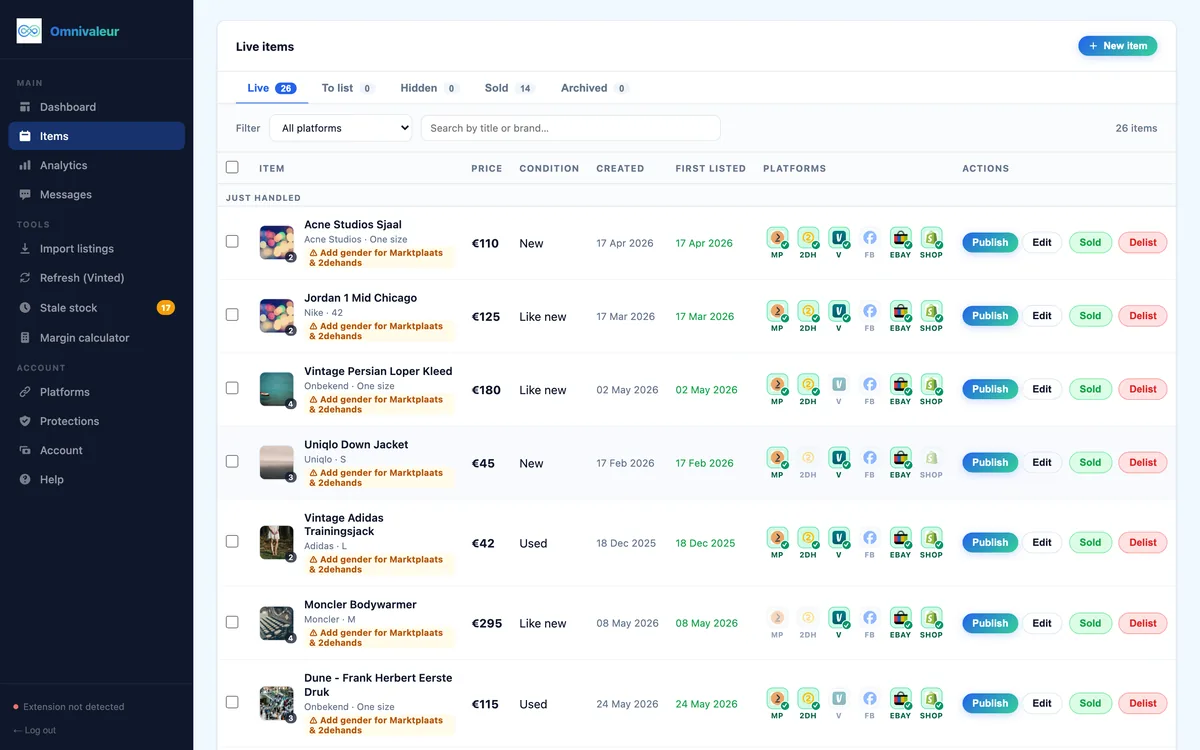
- Photograph each piece with consistent angles — batch this on collection day, not listing day.
- Enter dimensions and condition notes once, in your automation dashboard.
- Push to Marktplaats and 2dehands first for local test pricing.
- After 5-7 days with no local bite, push the same listing to eBay and Etsy with freight enabled.
- Let the tool auto-remove sold items from remaining channels — this alone saves the double-booking headaches that come with manual furniture flipping.
A single unautomated furniture listing across four platforms takes a reseller roughly 25-30 minutes to duplicate by hand. With sync tools, that drops under five — the time saved compounds fast once you're moving 15-20 pieces a month.
Frequently asked questions
Can I sell vintage furniture on Vinted at all?
Do I need a business registration to resell vintage furniture regularly?
How do I price furniture across platforms with different fee structures?
What photos actually convert for vintage furniture listings?
Is restored or repainted furniture harder to automate listings for?
Keep reading

Stop copying listings by hand
Omnivaleur publishes your item to every platform at once and syncs stock automatically when something sells.
Start free trial