Vinted to Marktplaats Crosslisting in 2026: The Complete Reseller Guide

Vinted to Marktplaats crosslisting means posting the same item from your Vinted closet onto Marktplaats without re-typing everything. In 2026, resellers do this to reach local buyers who want pickup deals, avoid Vinted's buyer fees, and sell non-fashion items Vinted doesn't allow — using tools like cross-list to sync stock and prevent double sales.
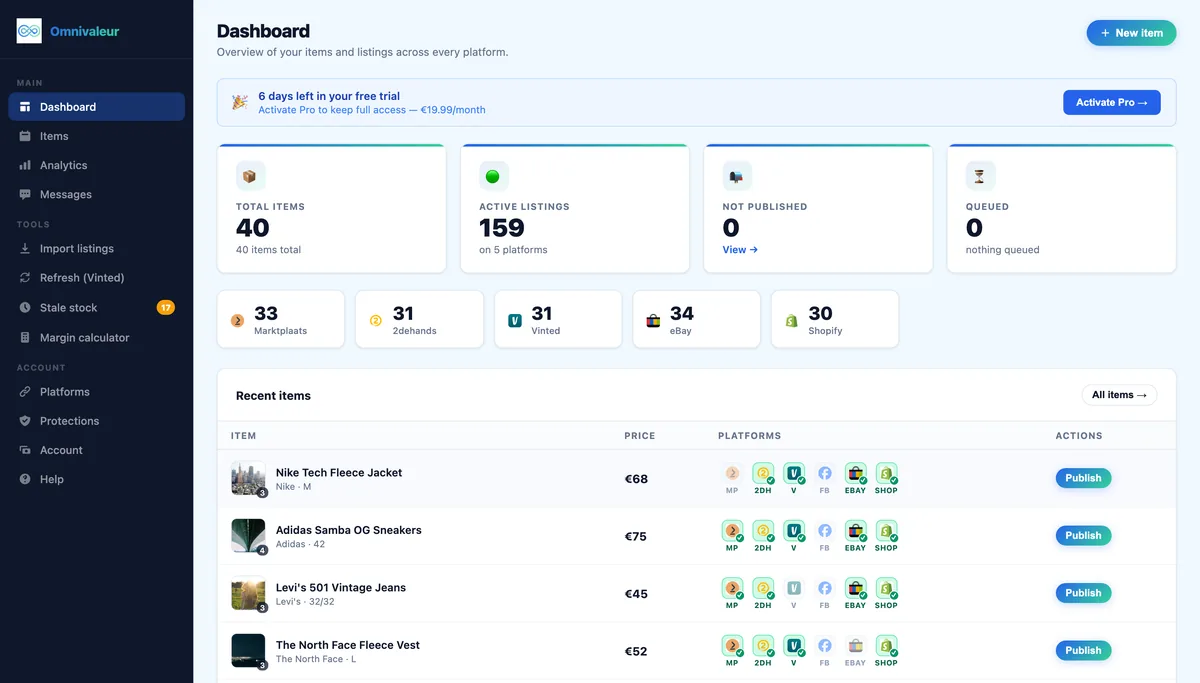
Cross-listing from Vinted to Marktplaats isn't complicated in theory: copy a listing, paste it into a new form, hit publish. The problem shows up after your third or fourth item, when you're juggling two inboxes, two sets of photos, and no idea whether that jacket already sold on the other app. That's the real friction resellers hit in 2026, and it's what this guide actually solves.
Why do resellers move listings from Vinted to Marktplaats in the first place?
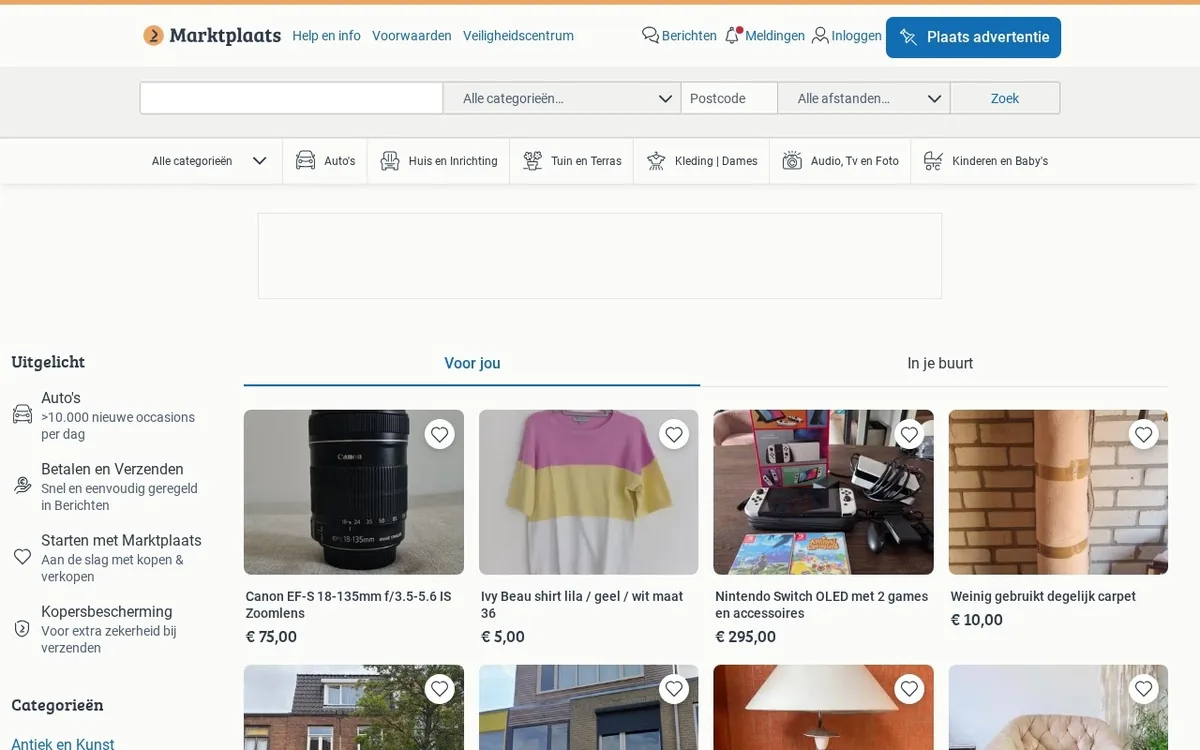
Vinted charges buyers a protection fee on every purchase, which pushes some Dutch buyers to negotiate lower or walk away entirely. Marktplaats has no buyer fee at all for private listings, so the same item often sells faster there, especially bulkier goods nobody wants to ship. Sellers also use Marktplaats to test local pickup pricing, which tends to run 10-20% below shipped Vinted prices because there's no packaging or courier hassle involved.
The other driver: category restrictions. Vinted is fashion, accessories, and home textiles only. Anything outside that — a bike, a coffee table, a drill — has to go somewhere else, and Marktplaats is the obvious Dutch destination.
What changed in Marktplaats and Vinted rules for 2026 that resellers should know?
Both platforms tightened enforcement this year rather than changing core policy. Vinted's selling rules now flag accounts that repeatedly relist identical items at different prices as potential price manipulation, which matters if you're running the same SKU on two marketplaces with different tags. Marktplaats, per its Help & Info pages, expanded automated detection of stock photos scraped from other platforms, so reusing Vinted photos without minor cropping or reordering can trigger a review flag.
Neither platform banned crosslisting outright. But both got better at spotting copy-paste behavior, which is exactly where a tool that adapts formatting per platform earns its keep.
How does DAC7 tax reporting affect sellers moving items between Vinted and Marktplaats?
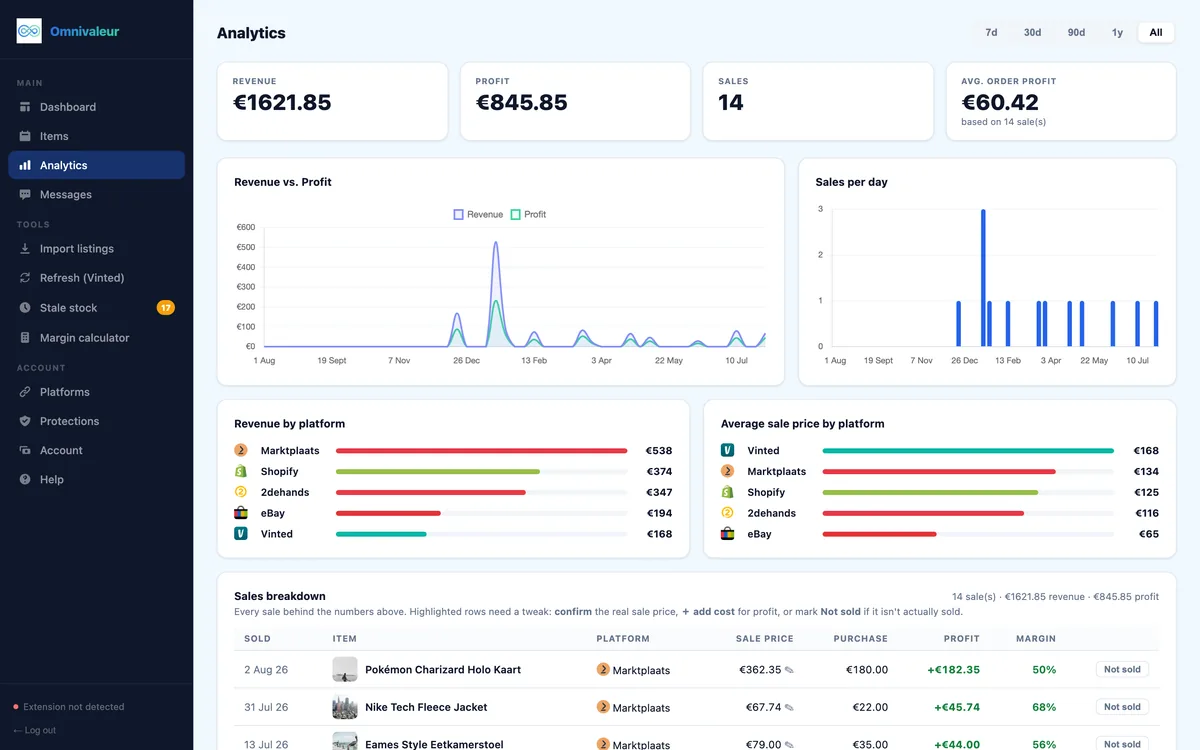
DAC7 is an EU-wide rule requiring online marketplaces to report seller income to tax authorities once you cross roughly 30 transactions or €2,000 in a calendar year — and that threshold applies per platform, not combined. Sell 25 items on Vinted and 20 on Marktplaats, and you might dodge reporting on both individually while clearly running a business overall. Dutch authorities are aware of this gap. The Belastingdienst's DAC7 guidance makes clear that occasional private sales stay untaxed, but structural cross-platform selling can still count as business income even if no single platform triggers the report.
Keep a simple spreadsheet of total sales across both apps. It's the easiest way to know, before the tax office asks, whether you've crossed into business-seller territory.
Can you avoid selling the same item twice on Vinted and Marktplaats?
This is the single biggest practical headache in dual-platform selling. Someone buys the vintage lamp on Marktplaats at 2pm; you don't notice until 6pm, by which point someone else has already paid for it on Vinted. Refunds, apologies, and a dented rating follow.
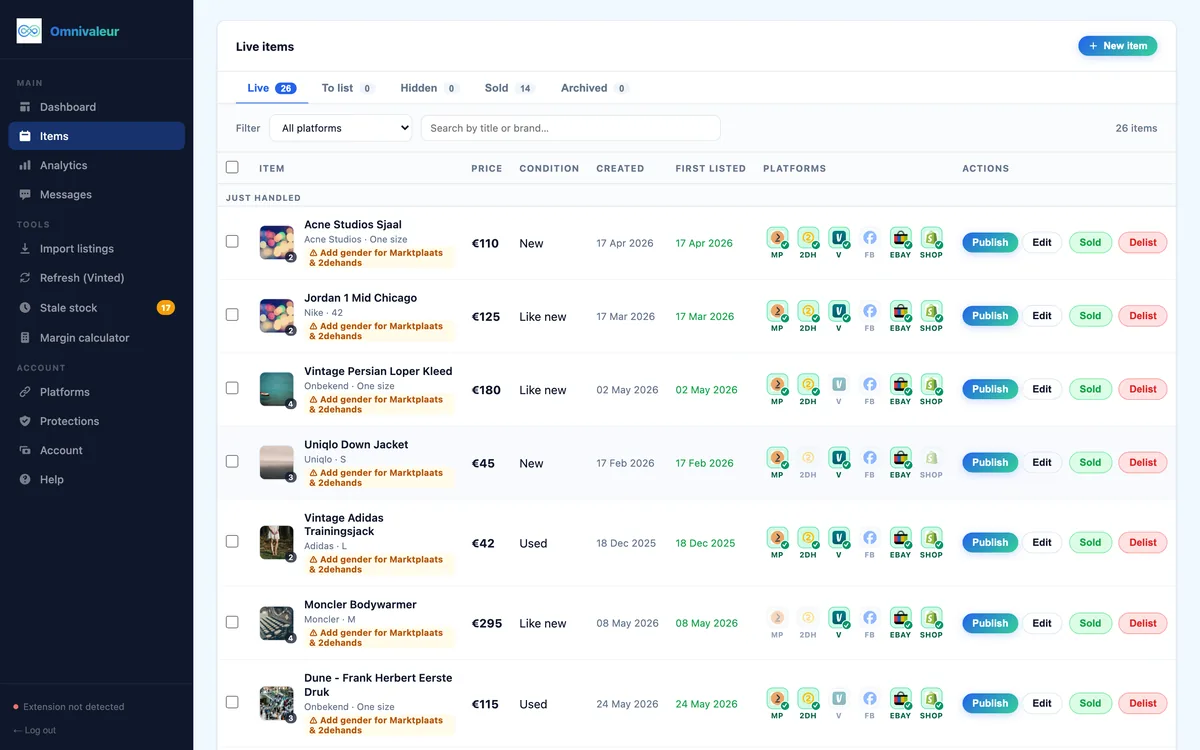
Manual sellers handle this by checking both apps constantly — not sustainable past a handful of items. Sync-based tools solve it by pulling an item down from every connected marketplace the moment it sells anywhere, which is exactly the workflow Omnivaleur's Marktplaats to Vinted guide walks through in the opposite direction.
Vinted vs Marktplaats: what's actually different for a Dutch reseller?
| Factor | Vinted | Marktplaats |
|---|---|---|
| Buyer fee | Yes, protection fee added at checkout | None for private ads |
| Delivery model | Shipped, mostly | Local pickup, often cash or bank transfer |
| Allowed categories | Fashion, accessories, home textiles | Everything: furniture, electronics, vehicles, tools |
| Audience language | Multilingual, app-driven | Predominantly Dutch, negotiation-heavy |
| Business seller threshold | DAC7-tracked internally | KVK registration expected past occasional sales |
Notice the pickup row. Marktplaats buyers routinely message asking "can I come by tonight?" — a completely different rhythm from Vinted's ship-and-forget model, and one reason listings need slightly different wording, not just a straight copy.
- ✓Check if the item fits Marktplaats allowed categories, not just Vinted fashion and home textiles
- ✓Reorder your photos to show the item in context first, not flat-lay style
- ✓Rewrite descriptions in plain Dutch sentences with measurements and pickup location, drop hashtags
- ✓Set up a sync tool or manual routine to pull the item down everywhere the moment it sells
- ✓Keep a running spreadsheet of sales across both platforms to track DAC7 thresholds
Do you need a KVK number to sell regularly on Marktplaats?
Occasional sales of your own used items stay private, no registration needed. But once you're buying stock specifically to resell — thrifted jackets, flipped electronics, whatever — Marktplaats and Dutch tax authorities expect a KVK (Chamber of Commerce) registration and VAT handling once turnover becomes structural. There's no fixed item count that triggers this; it's about pattern and intent, not a single threshold. If you're already running a business account on Vinted or eBay, treat Marktplaats the same way from day one rather than waiting for a warning.
What happens to your Vinted photos and descriptions when you cross-list to Marktplaats?
Straight copy-paste rarely reads well on Marktplaats. Vinted descriptions lean on hashtags and brand abbreviations; Marktplaats buyers expect plain Dutch sentences, measurements, and pickup location. Photos also need reordering — Marktplaats favors the item-in-context shot first, not the flat-lay Vinted prefers. A cross-listing tool that auto-adjusts formatting per platform, rather than dumping the same text everywhere, avoids both the "obviously copied" look and the photo-scraping flags mentioned earlier. If you're scaling fashion resale specifically, the workflow overlaps heavily with what's covered in Omnivaleur's Vinted reselling automation guide.
Which item categories actually perform better on Marktplaats than on Vinted?
- Furniture and vintage home goods — no shipping needed, buyers collect same-day.
- Electronics and small appliances — Vinted bans these outright.
- Bulk clothing lots — Vinted wants per-item listings; Marktplaats allows "box of 20 items" ads.
- Designer accessories over €150 — some buyers prefer meeting in person to inspect before paying.
Fashion resellers running high volume often keep Vinted as the primary channel and use Marktplaats as overflow for exactly these categories — see how that split plays out for niche shops in Omnivaleur's fashion reselling automation guide.
How does buyer protection differ between the two platforms?
Vinted's built-in buyer protection covers most shipped transactions automatically. Marktplaats leaves buyer protection almost entirely to the two parties involved, since most deals are cash-on-pickup. This isn't a gap in the platform so much as a different model — worth knowing both the Vinted Help Centre and general EU consumer shopping rights before disputes come up, especially for higher-value items sold locally.
Frequently asked questions
Does Marktplaats charge VAT or BTW on private-seller sales?
Can I run the exact same photos on Vinted and Marktplaats without issues?
What happens if an item sells on Vinted while it's still live on Marktplaats?
Is Marktplaats only usable for sellers based in the Netherlands?
How many active listings can I realistically manage across both platforms in 2026?
Should I price items differently on Marktplaats than on Vinted?
Keep reading
Stop copying listings by hand
Omnivaleur publishes your item to every platform at once and syncs stock automatically when something sells.
Start free trial