LEGO Reselling Automation Stack: The Complete 2026 Guide
A LEGO reselling automation stack combines bulk photo scanners, BrickLink price checkers, and multi-channel inventory sync tools to process bulk lots without manual spreadsheets. By connecting your workflow to software that updates listings automatically, you protect profit margins and prevent double-selling across platforms like Marktplaats and Vinted.
Key takeaways
- Bulk scanning tools identify minifigures and parts in seconds instead of manual catalog searches.
- Centralized inventory management prevents duplicate listings and eliminates manual stock updates.
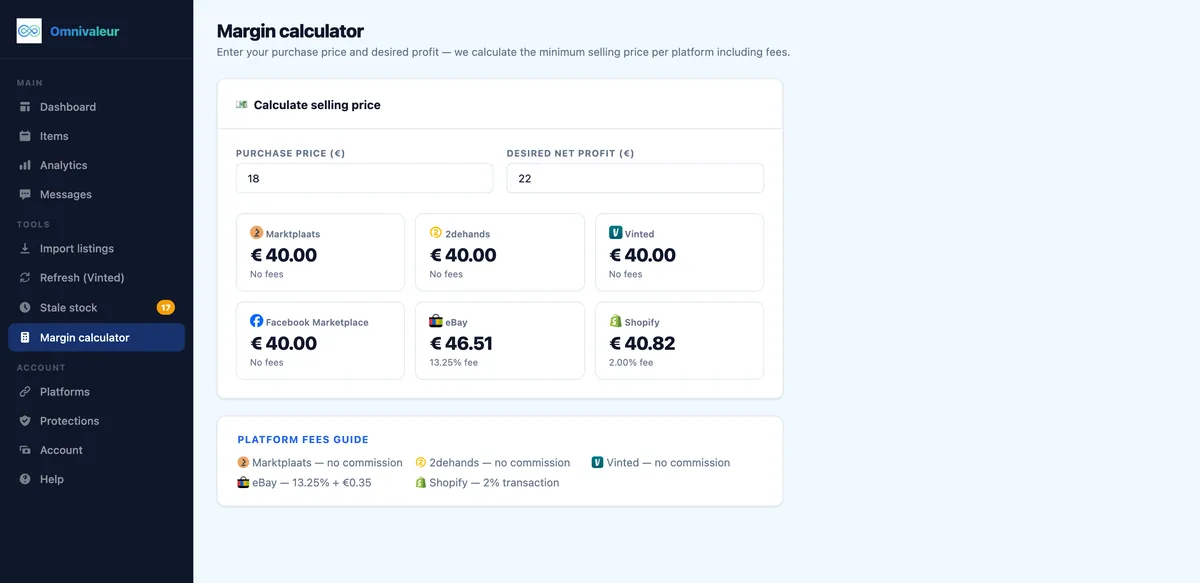
- Automated ROI calculators factor in shipping, fees, and part-out values before purchasing bulk lots.
- Cross-listing allows you to publish a single LEGO set or bulk lot across seven distinct marketplaces simultaneously.
Sourcing a 10-kilogram tub of mixed LEGO bricks is thrilling until you dump it on the kitchen table. Sorting blue pins from red technic axles, identifying rare Star Wars minifigures, and checking prices one by one takes hours. If you run a professional reselling operation, manual sorting and listing will choke your growth. Building a reliable tech stack changes everything.
Most resellers start with a pile of bricks, a kitchen scale, and a spreadsheet. Soon, the spreadsheet breaks. Prices fluctuate, buyers message on multiple apps, and keeping track of what sold where becomes a part-time job. A proper LEGO reselling automation setup handles the heavy lifting, letting you focus on sourcing and packing orders.
Let us look at what a complete automation system actually includes, how to price and identify parts instantly, and why manual inventory management is costing you money.
What Does a LEGO Reselling Automation Stack Actually Include?
An automation stack is not a single magical app. It is a connected chain of tools that handles four distinct stages of your reselling business: identification, pricing, inventory tracking, and cross-channel publishing.
Stage one is intake and identification. When you buy a bulk lot, you need to know what is inside without spending three days counting 1x1 plates. Stage two is valuation. You need real-time market data from platforms like BrickLink and BrickEconomy to calculate your potential return on investment before you hand over cash to a seller on a local classifieds site.
Stage three is inventory management. Once items are cataloged, they need a home in your storage system and a digital record in your database. Stage four is multi-channel distribution. Instead of manually copying titles and descriptions to every marketplace, you need tools that can handle collectibles reselling automation smoothly.
A mature stack connects these stages so data flows automatically. When a rare minifigure sells on one channel, your system pulls down the listing everywhere else, preventing overselling disasters.
Which Tools Actually Speed Up Minifigure Identification?
Identifying thousands of loose LEGO pieces and minifigures manually is the single biggest bottleneck in brick reselling. Traditional image search on generic apps fails because a generic black torso looks identical to hundreds of different sets.
Specialized visual recognition tools designed for the brick community use neural networks trained on specific mold numbers stamped inside LEGO elements. When you hover your phone camera over a pile of minifigure parts, the tool scans the torso print, head markings, and leg patterns against databases containing every part ever produced since 1949.
For bulk lots, sorting by color first and then scanning unique molded pieces cuts sorting time by up to 70 percent. Tools that integrate directly with your inventory database allow you to scan a rare part, pull its current market value, and push it straight into your draft listings without typing a single word.
If you also deal in other niche categories alongside bricks, similar principles apply when you configure action figures reselling automation for your wider toy inventory.
How Should I Price LEGO Inventory Without Guessing?
Guessing prices on LEGO sets is a fast way to lose money. Underprice a vintage 1990s Town set and you leave €50 on the table. Overprice a modern sealed set and it sits on your shelf for months, tying up your working capital.
Professional resellers rely on historical sales data rather than active asking prices. Active listings only show what people hope to get, not what buyers are actually willing to pay. Automated pricing tools pull six-month sales averages, factoring in whether a set is complete with instructions, box, or sealed in the original packaging.
When calculating your margins, you must also account for platform fees and tax reporting obligations. In Europe, platforms are governed by transparency directives; for details on how this affects your accounts, consult the official European Commission DAC7 overview.
Furthermore, if you are operating out of the Netherlands, make sure you understand local compliance guidelines by reviewing the Belastingdienst DAC7 information for sellers.
For general pricing strategies across different asset classes, it is also worth reading up on how to price second-hand items to keep your margins healthy.
Is It Worth Automating ROI Calculations Before Buying a Bulk Lot?
When a marketplace listing pops up offering twenty kilos of mixed LEGO for €300, you have about ten minutes to decide whether to buy it before another reseller snaps it up. Doing manual math in your car outside the seller's house leads to mistakes.
Automating your ROI calculations means plugging estimated weights, notable minifigures spotted in the blurry photos, and box conditions into a mobile calculator that applies historical valuation formulas instantly.
Let us look at a practical example:
| Cost Factor | Amount (€) | Notes |
|---|---|---|
| Bulk Lot Purchase Price | 250,00 | 20kg mixed bricks & partial sets |
| Estimated Sorting Time (4 hrs) | 60,00 | Your valued hourly rate |
| Cleaning & Supplies | 15,00 | Soap, bags, shipping boxes |
| Expected Gross Return | 650,00 | Based on individual part-out values |
| Net Estimated Profit | 325,00 | After platform fees & shipping |
If the automated calculator shows a net profit below your minimum threshold, you pass on the lot. Removing emotion from purchasing decisions saves thousands of euros over the course of a year.
What Belongs in an Automated Inventory Tracking System?
Once your LEGO is sorted, cleaned, and priced, where does it live? If you keep everything in random cardboard boxes, finding a specific Harry Potter minifigure when a buyer pays for it becomes an exhausting treasure hunt.
An automated inventory tracking system links your physical storage bins to your digital catalog. Every bin gets a barcode or a clear alphanumeric label, such as Bin A-12-3. When you list a set, the storage location is saved alongside the item details.
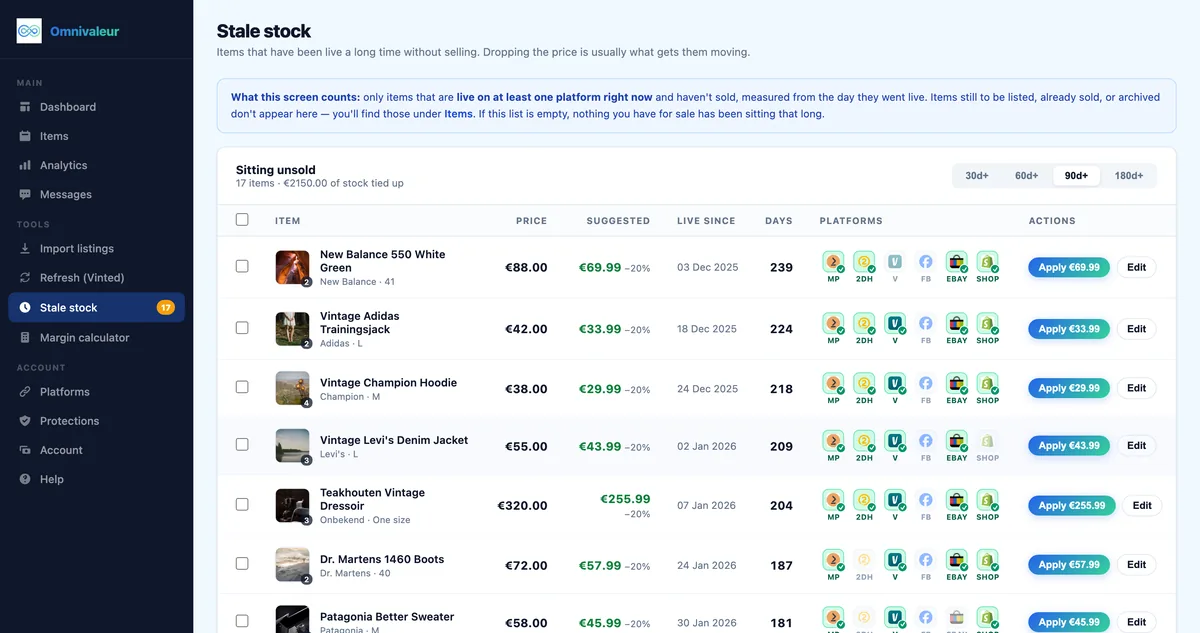
When the item sells, your picking sheet tells you exactly which bin to visit. Good systems also track your inventory age. If a set has been sitting in Bin A-12-3 for more than 90 days, your system can trigger an automated markdown or suggest cross-listing it to a fresh platform to increase visibility.
Organizing physical stock properly is essential for scale; for broader layout strategies, check out this guide on how to organize inventory for reselling.
Which Export and Listing Workflows Save the Most Time?
The biggest time sink in reselling is not sorting bricks or packing boxes—it is data entry. Writing titles, uploading photos, setting shipping profiles, and typing descriptions across five different websites eats up hours every single day.
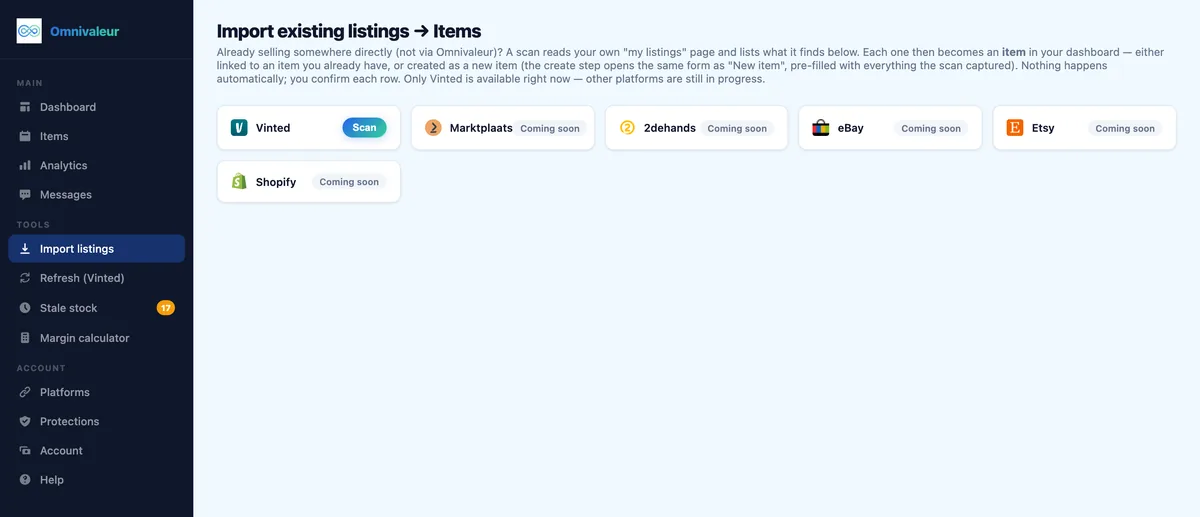
Modern cross-listing infrastructure solves this by letting you create one master listing that pushes everywhere. Omnivaleur publishes to seven channels from one intake form: Marktplaats, 2dehands, Vinted, eBay, Shopify, WooCommerce and Facebook Marketplace (beta).
A single item in Omnivaleur typically carries 3-5 active listings at once; the app tracks each platform's status separately. If your sealed LEGO Technic set sells on eBay, the system immediately pulls down the listing on Marktplaats and Vinted, preventing double-sales and angry buyers.
For sellers expanding beyond toys into other vintage goods, exploring workflows like vintage toy reselling automation or board game and tabletop reselling automation keeps your entire catalog synchronized.
What Mistakes Do Resellers Make When Building Their Tech Stack?
The most common mistake beginners make is buying enterprise-grade tools before they have enough inventory to justify the monthly subscription costs. You do not need a complex warehouse management system when you only have fifty sets listed.
Another frequent trap is ignoring platform-specific constraints. LEGO sold on Vinted has different weight limits and box dimension restrictions than LEGO sold on Marktplaats or shipped via professional courier services. Failing to configure automated shipping profiles correctly leads to heavy surcharges at the post office.
Resellers also often neglect customer protection policies. When shipping fragile collectible boxes internationally, consumer rights apply. It is wise to familiarize yourself with official regulations such as the guidelines on EU consumer rights to ensure your return policies comply with local laws.
Finally, rely on modular tools that integrate cleanly rather than trying to force mismatched software to talk to each other through messy spreadsheets.
- ✓Scan bulk lots using visual recognition tools to identify rare parts quickly
- ✓Calculate potential return on investment before buying from local sellers
- ✓Assign storage bins with clear alphanumeric labels to your digital catalog
- ✓Create one master listing to push inventory across multiple marketplaces
- ✓Monitor inventory age to trigger automated markdowns on stale stock
Do I need to buy every tool at once to automate my LEGO reselling business?
No. Trying to implement every piece of automation on day one will overwhelm you. Start by fixing your biggest daily bottleneck. If you spend all your time writing listings, set up multi-channel publishing first. If your pricing is inconsistent, invest in valuation tools before worrying about advanced warehouse bins.
Is BrickLink or BrickEconomy better for pricing LEGO inventory?
They serve two different purposes. BrickLink is the gold standard for buying and selling individual parts and sets based on real-time marketplace supply and demand. BrickEconomy is superior for tracking long-term investment trends, historical appreciation rates, and projected values of sealed sets over multi-year periods.
Can automation help me prep for a Whatnot show faster?
Yes. Live-stream selling requires rapid-fire cataloging and lot creation. By using bulk scanning apps paired with multi-channel inventory managers, you can pre-load your show inventory, print lot numbers, and push preview items to your connected storefronts before going live.
How much money can automation realistically save a LEGO reseller?
Automation typically saves an active reseller between ten and fifteen hours of administrative work per week. If your time is worth €25 an hour, that is up to €375 saved weekly in labor costs, not to mention the revenue gained by avoiding missed messages and double-sold items.
What's the first automation tool a brand new LEGO reseller should try?
Start with a centralized cross-listing tool that allows you to manage your inventory across multiple marketplaces from a single dashboard. Getting out of the habit of manually ending and recreating listings on every app frees up immediate time to source more profitable bulk lots.
Frequently asked questions
How do I handle missing pieces in a used LEGO set without ruining my seller rating?
What is the best way to store sorted LEGO bricks before listing them?
How do I deal with heavy shipping costs on large LEGO boxes within Europe?
Can I automate feedback requests for buyers after a LEGO sale?
Keep reading

Stop copying listings by hand
Omnivaleur publishes your item to every platform at once and syncs stock automatically when something sells.
Start free trial