How to Automate Sports Equipment Reselling Across Marketplaces in 2026
Sports equipment reselling automation means using software like cross-list to list bikes, skis, kayaks, golf clubs and gym gear once, then push that listing automatically to Marktplaats, 2dehands, Vinted, eBay, Etsy and Shopify. It syncs price, stock and sold status so a €400 mountain bike never sells twice, and it saves 20-40 minutes of manual re-listing per item.
Key takeaways
- Bulky sports gear like bikes and treadmills often needs local-pickup-only flags because carrier weight limits (usually around 20kg) block cross-border shipping on most platforms.
- Vinted's refresh tool is capped at 8 free refreshes per day even for Omnivaleur users, and no automation tool can promise a marketplace won't flag an account for aggressive relisting.
- Selling three to ten pieces of sports gear a year can already push a private seller past the DAC7 reporting threshold of 30 sales or €2,000.
- Profit calculated from the asking price is misleading — real sale prices on second-hand marketplaces usually land 10-20% lower after negotiation.
- eBay requires frame or serial numbers on bike listings as a theft-prevention measure that Marktplaats and 2dehands don't enforce.
Sports equipment reselling has its own headaches that clothing and sneaker resellers rarely deal with: weight limits, serial numbers, seasonal demand crashes, and buyers who want to inspect a bike frame in person before paying. Automation software doesn't fix all of that, but it removes the part that eats the most time — re-typing the same listing for a set of golf clubs on five different platforms.
What does sports equipment reselling automation actually do in 2026?
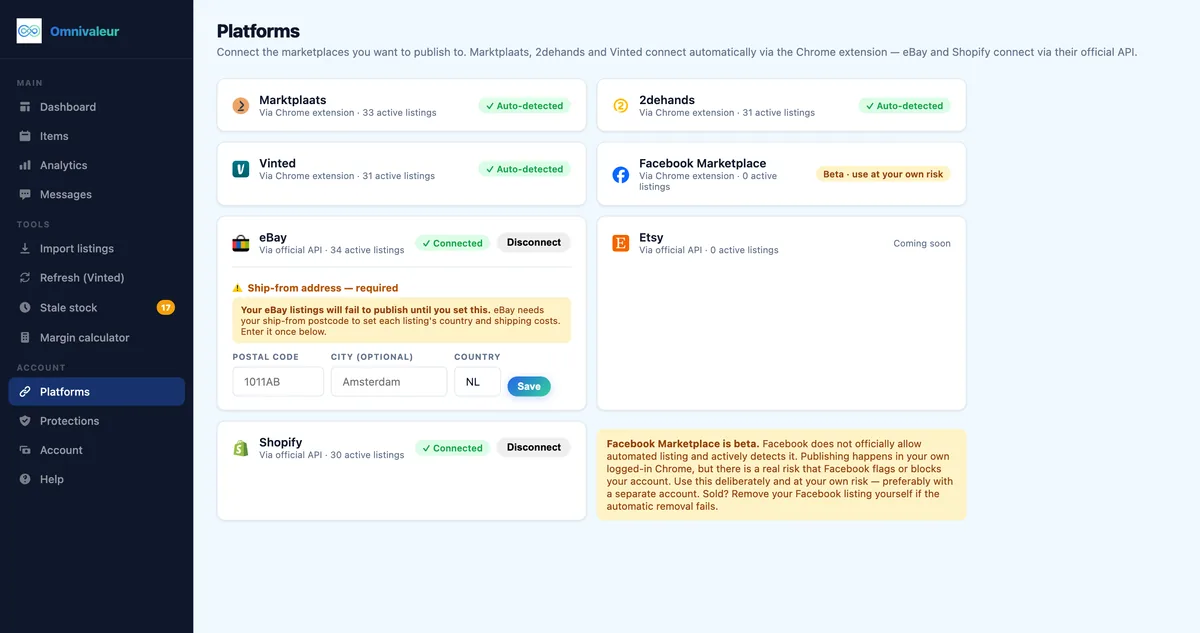
At its core, it's one listing feeding six marketplaces. You photograph a used road bike, write the description once, set a price, and the software pushes it to Marktplaats, 2dehands, Vinted, eBay, Etsy and your own Shopify store simultaneously. When it sells on one platform, the others get marked sold or delisted automatically.
For sports gear specifically, this matters more than for, say, t-shirts, because most items are one-offs. A single kayak, a single treadmill, a single set of skis. There's no "size run" to manage — just one physical object that can only be sold once, which makes cross-platform sync a genuine risk-reduction tool rather than just a convenience.
Resellers moving fitness trackers, smartwatches or connected home-gym equipment often end up straddling two categories at once — sports and electronics. If that's your inventory mix, it's worth comparing setups on the electronics reselling automation platforms guide alongside this one, since fee structures differ between the two verticals even on the same marketplace.
Which marketplaces actually work for used sports equipment, and where does each one fall short?
Not every platform handles bulky, technical, or heavy items well. Here's how the six main ones stack up specifically for sports gear in 2026:
| Platform | Best for | Practical limit | Fee note |
|---|---|---|---|
| Marktplaats / 2dehands | Bikes, treadmills, gym benches, local pickup | No shipping weight cap — most deals are pickup-only | Free basic listing, paid boosts optional |
| Vinted | Helmets, cleats, small racket sports gear, sportswear | Parcel weight generally maxes out around 20kg via integrated carriers | Buyer pays fee, seller keeps asking price |
| eBay | Bikes with serial numbers, branded golf/tennis equipment, collectible jerseys | Category-specific rules; bike listings often require frame number | Final value fee around 10-13% depending on category |
| Etsy | Vintage sports memorabilia, retro ski posters, 20+ year old gear | Must qualify as vintage or handmade — new performance gear doesn't fit | Listing fee + transaction fee + payment processing |
| Shopify | Your own storefront for repeat buyers, no marketplace fees | You handle all traffic yourself | Monthly plan + payment processing only |
Vinted is the outlier here. It's excellent for lightweight sports items — running shoes, base layers, cycling jerseys — but a full-size mountain bike or a rowing machine simply doesn't fit its shipping infrastructure. If you're already running a Vinted-heavy workflow and want to add Marktplaats or 2dehands for the heavier half of your inventory, the Marktplaats to Vinted crosslisting guide walks through exactly which categories transfer cleanly and which don't.
How do you handle bulky items like bikes, skis and kayaks across multiple platforms?
The honest answer: you don't ship most of them. A folding rowing machine at 35kg, a kayak at 4 metres long, a full-suspension mountain bike at 15kg plus a bulky box — these blow past what standard parcel carriers accept, and even where they don't, the shipping cost often exceeds what the buyer paid for the item.
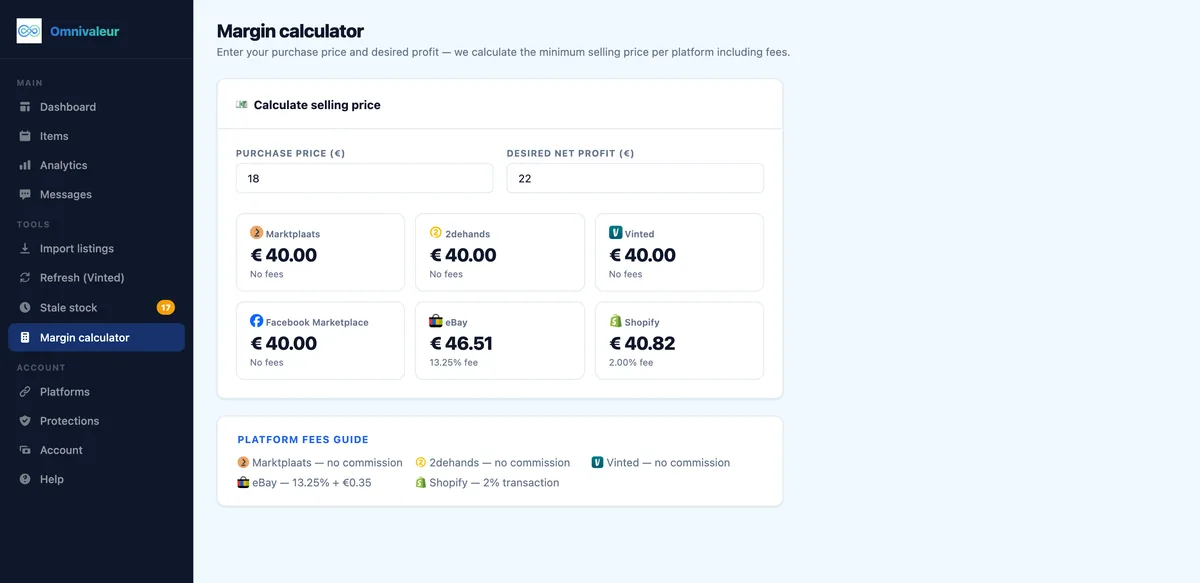
Set every bulky listing to local-pickup-only from the start, rather than discovering the problem after a buyer in another country has already paid. Good cross-listing software lets you flag this per platform, since Marktplaats and 2dehands assume local pickup by default, while eBay and Etsy default to shipping and need the override switched on manually for each listing.
For smaller sports items that do ship fine — tennis rackets, golf clubs (in a travel bag), boxing gloves, yoga mats — the calculation flips. These move well on Vinted and eBay both, and cross-listing genuinely multiplies your buyer pool instead of creating shipping headaches.
What 2026 platform rules should sports equipment resellers watch for?
A few rules changed or tightened enough in the last cycle that they're worth flagging specifically for this category:
- Bike serial numbers on eBay: listings for bicycles increasingly require a visible frame or serial number in at least one photo, part of a broader push against reselling stolen bikes. Marktplaats and 2dehands don't enforce this, but buyers increasingly ask for it anyway.
- Vinted refresh limits: out-of-season gear — skis in July, wetsuits in December — sits unsold for weeks, and sellers try to refresh listings to push them back up the feed. Omnivaleur's refresh tool caps itself deliberately at 8 free refreshes per day, and it states plainly that no automation tool can guarantee a marketplace won't flag an account for over-refreshing. Treat refreshing as a small nudge, not a substitute for repricing.
- Category restrictions on protective gear: some platforms now ask for confirmation that used helmets and safety equipment haven't been in a crash before listing them, since a helmet that's absorbed an impact isn't safe to resell even if it looks fine.
- Seasonal delisting windows: several marketplaces now auto-archive listings that go stale for 90+ days without activity, which hits winter sports gear especially hard given the six-month off-season.
If your inventory also includes gaming chairs, controllers or fitness-adjacent electronics that overlap with the sports category, the gaming equipment reselling automation guide covers similar seasonal and category-flag issues from a slightly different angle.
How does DAC7 tax reporting affect resellers of sports gear?
DAC7 requires online marketplaces operating in the EU to report seller income once a private seller crosses 30 sales or €2,000 in a calendar year, whichever comes first. Sports equipment resellers hit that threshold faster than most categories realise, because average sale prices sit higher than clothing. Three secondhand road bikes at €500-700 each, or five sets of golf clubs at €300-400 each, already puts you close to or over €2,000 well before you've listed 30 items.
The reporting obligation sits with each marketplace, so if you sell across Marktplaats, Vinted and eBay simultaneously, each one tracks and reports your sales on that specific platform independently — they don't currently share data with each other to combine your totals. That doesn't reduce your actual tax liability, it just means you need your own consolidated view rather than relying on any single platform's dashboard. Full details on how this works for Dutch sellers are on the Belastingdienst's DAC7 information page, and the broader EU framework is explained on the European Commission's DAC7 overview.
Resellers who move between platform-specific tools sometimes underestimate how much this matters until tax season. If you're evaluating whether a broader cross-listing platform handles reporting better than a single-marketplace tool, the Omnivaleur vs Vendoo comparison breaks down how each approaches sales tracking across platforms.
How do you calculate real profit on used sports equipment, not just the asking price?
This is where a lot of sports resellers overestimate their margins. Buyers on Marktplaats and 2dehands negotiate hard, and Vinted's offer feature invites lowball counteroffers as a matter of course. The gap between what you listed an item for and what it actually sold for typically runs 10-20% on second-hand marketplaces.
Take a concrete example: you list a used mountain bike at €450. It sells after two rounds of negotiation for €380 — a 15.5% drop from asking. If your spreadsheet tracks profit against the €450 asking price, you're overstating your margin by €70 on that single sale. Do that across 20 bikes a year and you've overestimated annual profit by €1,400 without noticing.
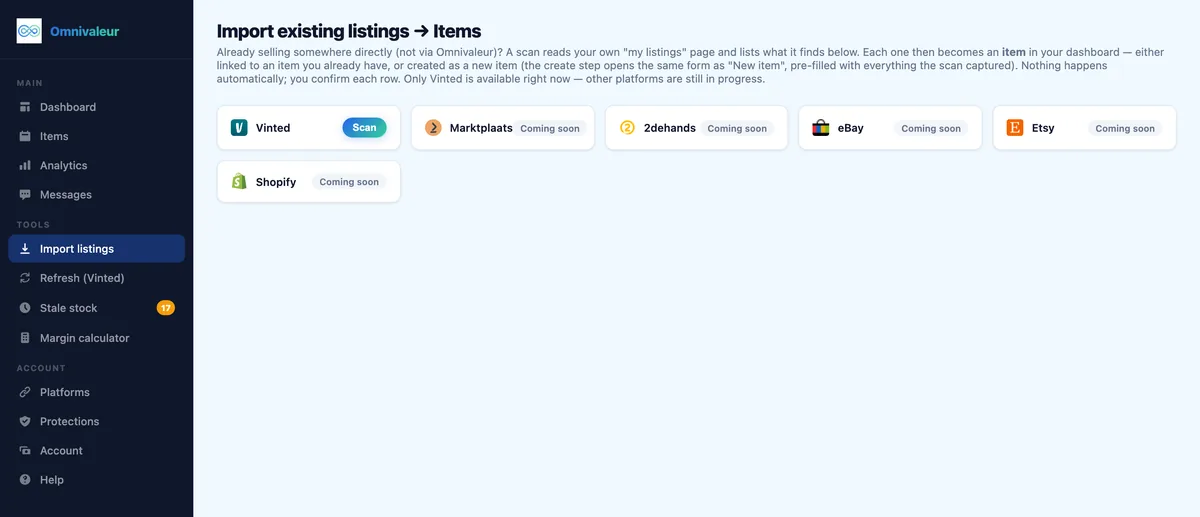
Omnivaleur's analytics deliberately avoid this trap by calculating profit from the real, confirmed sale price — the number you enter when you mark an item sold — rather than the asking price you originally listed it at. Over a full season of gear, that 10-20% gap is the difference between thinking you're profitable and actually knowing it.
How does automation prevent double-selling of one-off sports items?
Sports equipment is mostly one-off. A used tennis racket, a specific bike frame in a specific size, a single pair of ski boots — once it's gone, it's gone, and that's exactly where cross-posting without sync gets dangerous. List the same racket on Vinted, Marktplaats and 2dehands to widen your reach, and you're one weekend away from two buyers paying for the same item at the same time. You refund one of them, apologize, and eat the platform's trust score hit along with it.
Omnivaleur closes that gap by pushing a status change the moment one marketplace confirms a sale. Mark the racket sold on Vinted and the listing gets pulled from Marktplaats and 2dehands within the same sync cycle, not at the end of the day when you finally get around to it. For someone running gear across four or five marketplaces at once, that's the actual point of automating in the first place — not just saving time on relisting, but removing the window where a mistake costs you money and a bad review.
The bulk import feature matters here too, in a less obvious way. Because it reads what's already live on a marketplace rather than asking you to re-enter everything by hand, your existing listings get pulled into the same syncing system instead of sitting outside it as blind spots. That's the gap where double-sales usually happen — the item you listed six months ago and forgot was still up. Once it's imported, it's covered by the same rules as everything else.
None of this replaces knowing your gear or pricing it right — that part's still on you. What automation buys back is the boring, error-prone half of reselling: keeping listings in sync, keeping profit numbers honest, and keeping one sale from turning into two. Get that part running quietly in the background, and the sports side of your reselling starts looking less like a side hustle and more like an actual, trackable business.
Keep reading

Stop copying listings by hand
Omnivaleur publishes your item to every platform at once and syncs stock automatically when something sells.
Start free trial