Gaming Equipment Reselling Automation: The Complete 2026 Guide
Gaming equipment reselling automation means using cross-listing software to publish consoles, controllers, retro games and accessories across Marktplaats, 2dehands, eBay, Etsy and Shopify at once, while syncing inventory, condition grades and testing disclosures. In 2026 the hard part isn't listing speed — it's matching each platform's electronics and vintage-category rules.
Key takeaways
- Vinted restricts most electronics, so gaming gear sells best on Marktplaats, 2dehands, eBay and Etsy's vintage category.
- eBay and Etsy require accurate condition grading and functional testing disclosures for consoles and controllers.
- DAC7 reporting kicks in once a seller crosses 30 sales or €2,000 in a calendar year on any EU platform.
- Cross-listing automation needs real-time inventory sync to avoid double-selling a single retro console.
- Profit tracking should use the real confirmed sale price, which differs from the asking price by roughly 10-20% on second-hand marketplaces.
Gaming gear doesn't behave like sneakers or clothing when you cross-list it. A PS5 controller isn't just "an item" — it's an electronic device with a battery, a serial number, and a platform-specific category that some marketplaces flat-out reject. Automate the wrong parts of that process and you'll end up with a suspended eBay listing, a Vinted flag, or a console sold twice on the same afternoon.
Which marketplaces actually accept gaming equipment in 2026?
Not every platform in the usual reseller stack wants your PS4s and Game Boy cartridges. This is the first thing to check before you build any automation flow, because it decides which listings you even need to sync.
| Platform | Gaming gear fit | Typical fee (2026) | Note |
|---|---|---|---|
| Marktplaats | Strong — dedicated electronics/gaming category | Free basic listing, paid boosts | Best for local pickup on heavy items like consoles + TV setups |
| 2dehands | Strong — Belgian equivalent, same category logic | Free basic listing | Ideal for bundling accessories with local buyers |
| eBay | Very strong — largest retro/current-gen electronics buyer base | ~12% final value fee + fixed fee | Requires condition and functionality disclosures |
| Etsy | Vintage only — items 20+ years old | 6.5% transaction + ~3% + €0.25 payment | Great for retro consoles, terrible for a current PS5 |
| Vinted | Weak — fashion-first, electronics heavily restricted | Buyer pays protection fee | Only small accessories occasionally slip through |
| Shopify | Strong — your own storefront, no category limits | $29-$105/month + ~2.9% payment | Best for repeat buyers and bundles |
The practical takeaway: build your gaming automation flow around Marktplaats, 2dehands, eBay, Etsy (for genuinely vintage stock) and Shopify. Treat Vinted as an edge case, not a core channel. Anyone who's tried it knows the platform will pull small accessories occasionally, but a current-gen controller listing gets removed within days more often than not.
How does cross-listing automation actually work for consoles, controllers and retro games?
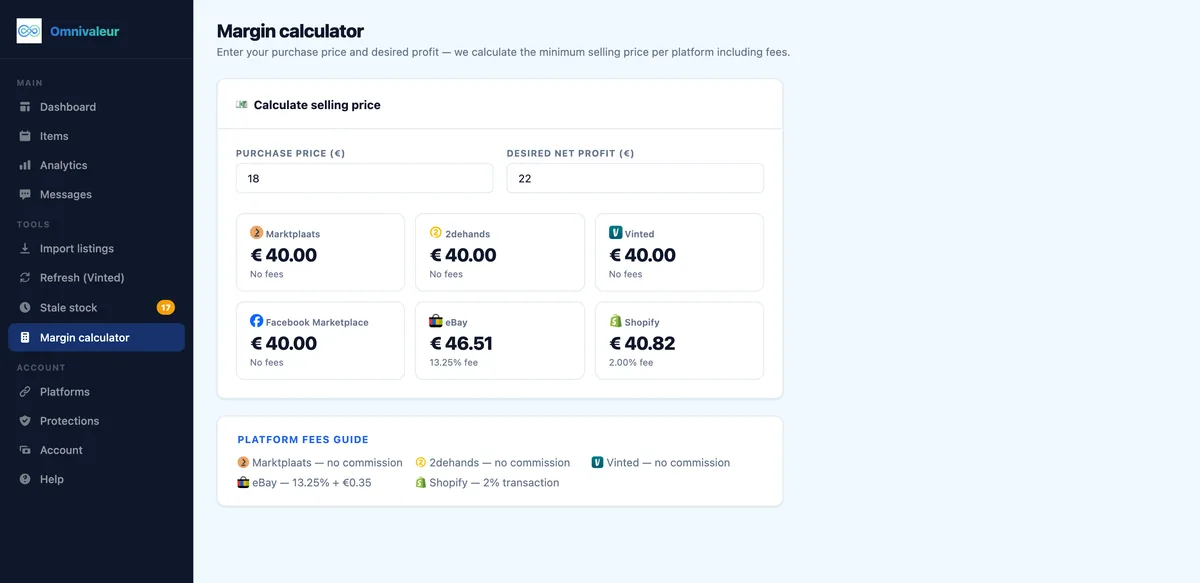
The mechanics are the same as any other category: you create one master listing, the tool republishes it to each connected marketplace, and it keeps stock levels synced so a sold item disappears everywhere else. What changes for gaming gear is the metadata you feed into that master listing.
A console needs: model, storage size, region, included cables, controller count, and whether it's been factory reset. A controller needs: connectivity type (wired vs Bluetooth), battery health if rechargeable, and drift/stick condition. Skip any of these fields in your template and you'll spend more time answering buyer messages than the automation saved you.
If you're already cross-listing from Marktplaats or 2dehands into eBay, the setup pattern is identical to what's covered in the Marktplaats to eBay crosslisting guide and the 2dehands to eBay crosslisting guide — the only real difference for gaming stock is the extra condition fields mentioned above.
What condition grading and testing disclosures should you automate?
Electronics buyers assume the item works. When it doesn't, you're the one refunding it — and on eBay, a "not as described" case counts against your seller metrics even if the buyer damaged it after unboxing.
Build a fixed testing checklist and turn it into a template field, not a manual note you rewrite every time:
- Power-on test with timestamp (photo or short clip)
- Controller drift test for analog sticks
- Disc drive read test for older consoles
- Battery cycle estimate for handhelds and wireless controllers
- Original box and cable inventory, listed item by item
This is the same discipline that works for other tricky-to-grade categories. The condition-grading logic in the collectibles reselling automation guide and the vintage toy reselling automation guide both apply directly here — gaming gear is really just electronics wearing a collectibles hat. Automate the checklist into your listing template so every platform gets the identical disclosure, worded consistently, instead of five slightly different versions.
How do battery and shipping rules affect automating gaming equipment listings?
Lithium batteries are the part most resellers forget until a shipment gets bounced back. Wireless controllers, handhelds like the Switch or Steam Deck, and rechargeable retro-console mods all contain lithium cells, and courier networks classify them differently from a plain cable or cartridge.
Three things to bake into your shipping automation:
- Declare battery type on the shipping label where the carrier asks — most EU couriers require this for anything over roughly 100Wh, which rarely applies to a single controller but does apply to bundled multi-battery lots.
- Ship batteries partially discharged when possible; some couriers flag fully-charged lithium cells for extra screening, which delays delivery.
- Never bundle loose spare batteries with a console shipment unless your courier explicitly allows it — this is one of the most common reasons a package gets held at a hub.
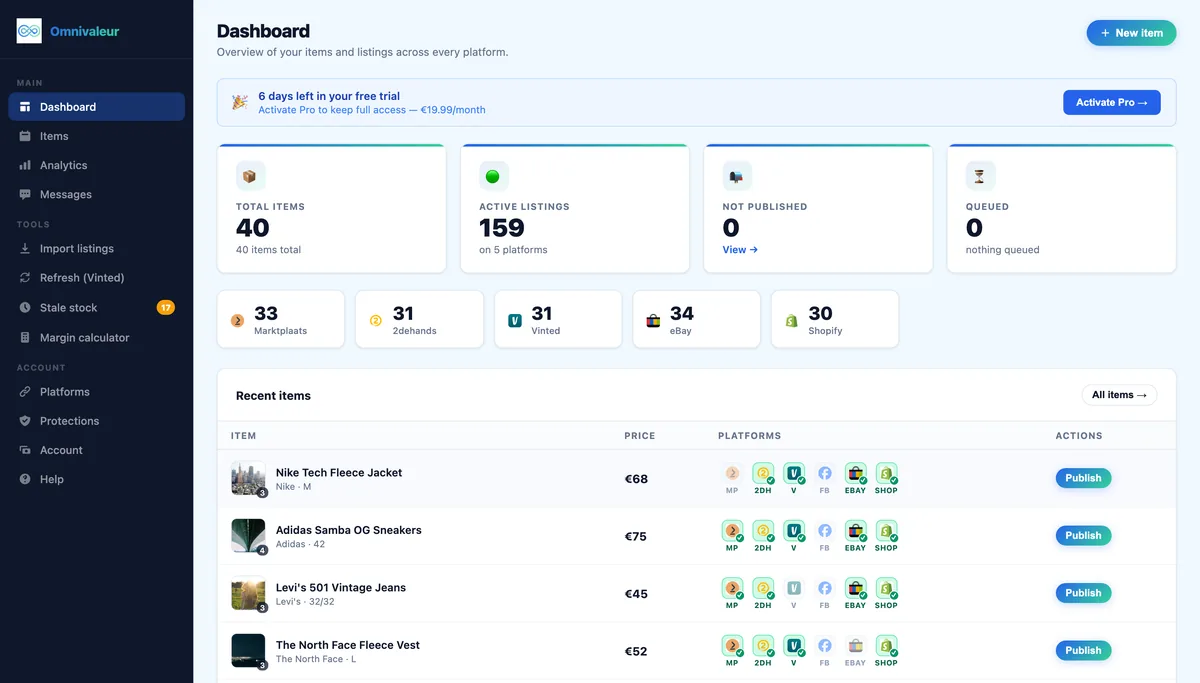
None of the current cross-listing tools, including Omnivaleur, can automate the carrier's battery paperwork for you — that part still needs a human checking the box at drop-off. What automation can do is flag "contains battery" on the product record so you never forget it when printing labels in bulk.
How does DAC7 tax reporting affect resellers who flip gaming gear at volume?
If you're moving more than 30 sales or crossing €2,000 in revenue on a single platform within a calendar year, that marketplace is legally required to report your sales data to tax authorities under DAC7 rules for sellers in the Netherlands, a framework mirrored across the EU under the European Commission's DAC7 overview. Gaming resellers hit these thresholds fast — a handful of console flips a month, plus accessory bundles, adds up quicker than most people expect.
This matters for automation planning because if you're cross-listing the same console on Marktplaats, eBay and 2dehands, each platform tracks its own thresholds separately. Thirty sales spread across three marketplaces might feel manageable, but 30 sales on one of them triggers reporting on that platform specifically. Keep a simple running total per marketplace, not just a combined spreadsheet, so you're not surprised by a report you didn't expect.
Buyers also have protections worth knowing when disputes come up over "untested" electronics — the EU's consumer shopping rights overview is the reference resellers get asked about most often when a buyer claims a controller arrived faulty.
What pricing and profit-tracking mistakes trip up gaming resellers?
Console and controller prices swing hard with release cycles, holiday demand and regional stock shortages. Manually re-pricing 40 listings every time a new model drops isn't realistic, but automated repricing without guardrails is how people accidentally sell a mint retro console for a current-gen price.
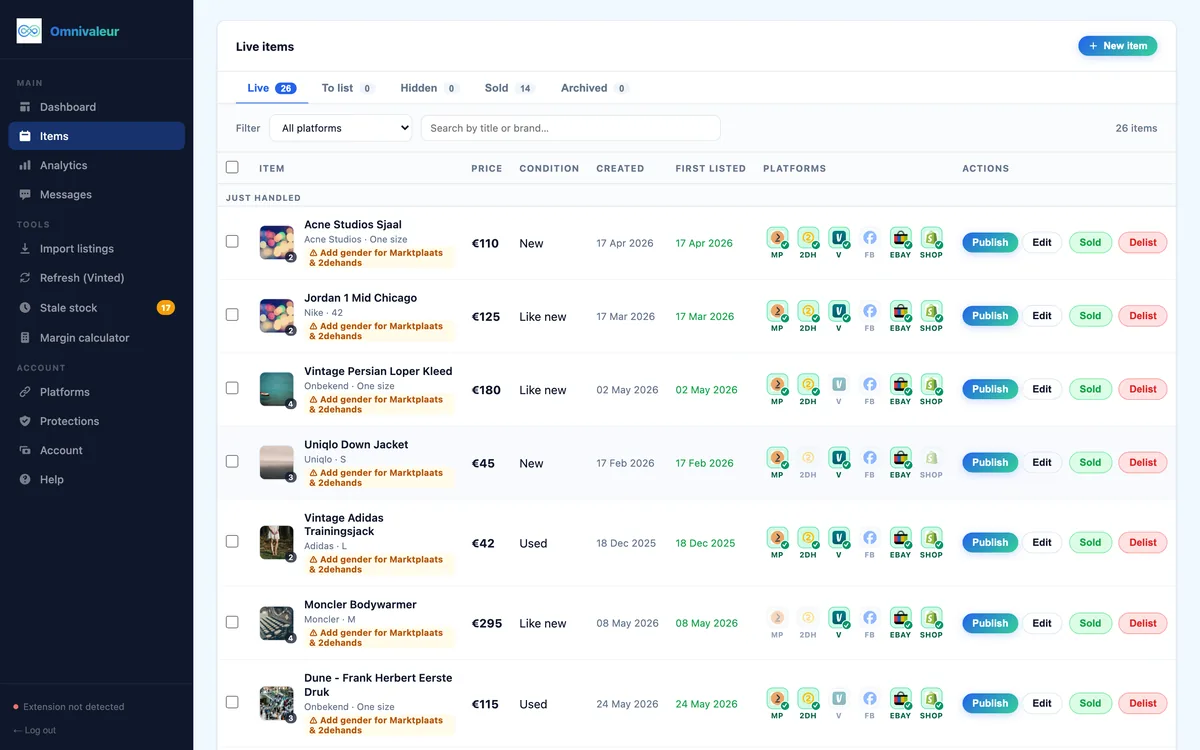
The bigger, quieter mistake is tracking profit against the asking price instead of what actually landed in your account. On second-hand marketplaces, negotiated final prices typically come in 10-20% below the listed asking price — a controller listed at €45 might genuinely sell for €38 after a buyer haggles. If your spreadsheet still says €45, your margin math is wrong on every single sale. Omnivaleur's analytics calculate profit from the confirmed real sale price the seller enters per transaction, not the original asking price, which is the only way the numbers hold up once negotiation enters the picture.
Bundle pricing adds another layer. A console-plus-two-controllers-plus-five-games bundle should be priced as a bundle, not as the sum of individual item values — buyers expect a discount for buying more, and automation tools that only handle single-SKU pricing will underprice the parts and overprice the whole.
Which automation stack actually fits a gaming equipment reselling business?
Skip generic "reseller automation" advice built for clothing racks. Gaming gear needs three specific pieces working together:
- Cross-listing with category-aware templates that carry condition, testing and battery fields to every platform automatically.
- Inventory sync fast enough to pull a sold console off Marktplaats, eBay and 2dehands within minutes, not hours — a delayed sync is how consoles get double-sold on a Saturday afternoon rush.
- Profit tracking tied to real sale price, not the listed price, so you know your actual margin per console category rather than a guess.
If you're weighing Omnivaleur against alternatives before committing, the honest breakdowns in Omnivaleur vs Vendoo and Omnivaleur vs List Perfectly cover the feature gaps that matter for electronics categories specifically, not just clothing-focused resellers. And if electronics is your broader category beyond just gaming — phones, cameras, small appliances — the electronics reselling automation platforms guide covers the wider category rules that overlap heavily with gaming gear.
One more platform-specific note worth planning around: if any of your accessory listings do end up on Vinted, the refresh tool that bumps visibility caps out at 8 free refreshes per day, and Omnivaleur states plainly that no automation tool — from any provider — can guarantee a marketplace won't flag an account for aggressive automated activity. Treat that as a ceiling, not a target, and stay well under it if gaming accessories are a small side channel on that platform rather than your main one.
Frequently asked questions
Can I cross-list a bundled listing (console plus controllers plus games) across all platforms automatically?
Do I need a different listing template for retro or vintage gaming gear versus current-gen equipment?
How do I handle serial numbers and warranty information when cross-listing electronics?
What happens if a gaming console I listed on multiple platforms sells twice?
Is it worth cross-listing gaming accessories to Vinted at all?
Keep reading

Stop copying listings by hand
Omnivaleur publishes your item to every platform at once and syncs stock automatically when something sells.
Start free trial