Omnivaleur vs Zenlister: Which Cross-Listing Tool Wins in 2026?
Omnivaleur is built around full EU marketplace coverage (Marktplaats, 2dehands, Vinted, eBay, Etsy, Shopify) with automated cross-listing and sync. Zenlister positions itself as a lighter, more focused tool, often favored by resellers who mainly work Vinted and want a simpler interface. Neither tool "wins" outright — the right pick depends on how many platforms you actually sell on.
Key takeaways
- Omnivaleur covers six marketplaces including Marktplaats and 2dehands, which most non-EU tools skip entirely.
- Zenlister's real strength is simplicity for resellers who mostly stick to one or two platforms.
- Sync and auto-relist behavior differs enough between the two that it changes your weekly workload.
- Neither tool handles DAC7 tax reporting for you — that's still on the seller.
- Pick based on platform count and sync frequency, not brand name recognition.
What do Omnivaleur and Zenlister actually do?
Both tools solve the same basic problem: you list an item once, and it appears on multiple marketplaces without you retyping titles, prices and photos five times. That's the whole category. Where they differ is scope and depth.
Omnivaleur is built specifically around the European resale stack — Marktplaats, 2dehands, Vinted, eBay, Etsy and Shopify — with cross-listing, inventory sync and auto-delisting when an item sells on one channel. Zenlister, from what's publicly documented, aims for a leaner tool footprint, typically appealing to sellers who run one or two channels heavily rather than juggle all six.
Neither tool is a marketplace itself. Both are middleware that sits between your inventory and the platforms where buyers actually browse.
Omnivaleur vs Zenlister at a glance
| Feature | Omnivaleur | Zenlister |
|---|---|---|
| Marketplaces supported | Marktplaats, 2dehands, Vinted, eBay, Etsy, Shopify | Smaller, more selective list — typically Vinted plus one or two general marketplaces (confirm current list on their site) |
| Pricing model | Tiered monthly plans scaled to listing volume | Monthly subscription; exact 2026 tiers not independently verified, check directly |
| Sync behavior | Near real-time cross-platform sync and auto-delist on sale | Sync exists but reported update frequency varies by plan tier |
| Relisting/auto-renew | Built-in scheduled relist rules | Basic relist support, feature depth unconfirmed |
| EU-specific handling (Marktplaats/2dehands/Vinted, euro pricing) | Native support, built for EU sellers first | Vinted-focused; broader EU marketplace coverage unclear |
| Ease of setup | Guided onboarding, connect accounts and import inventory | Reportedly simple UI, smaller learning curve due to fewer integrations |
Which marketplaces does each platform support?
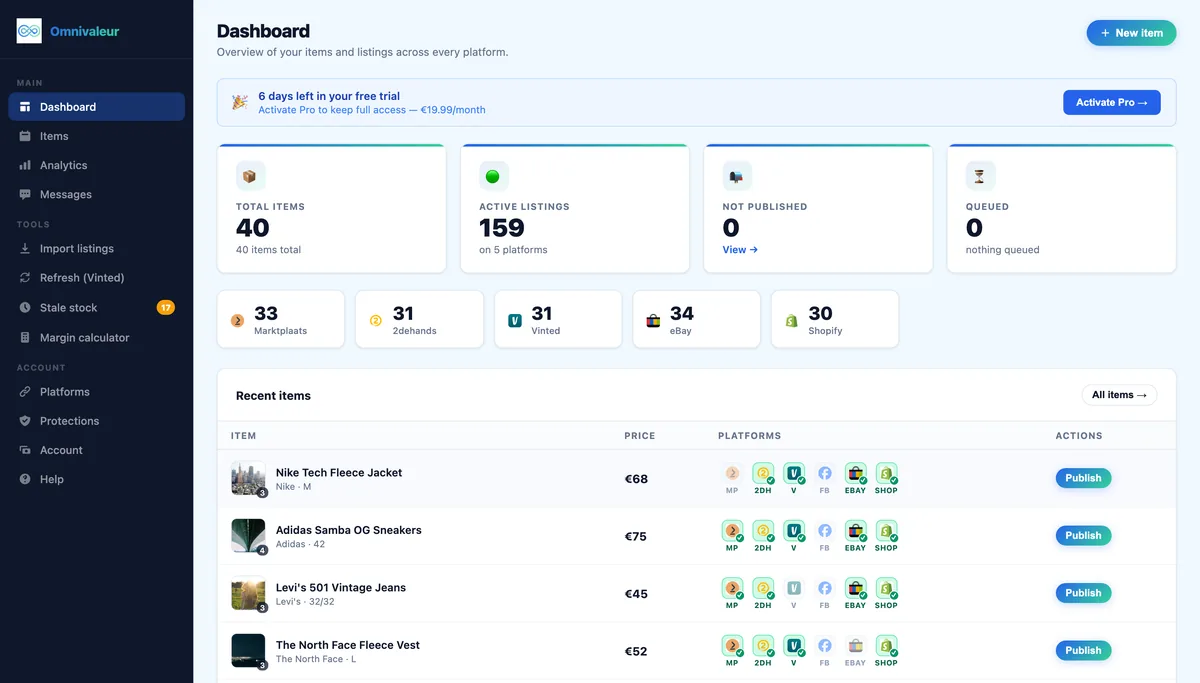
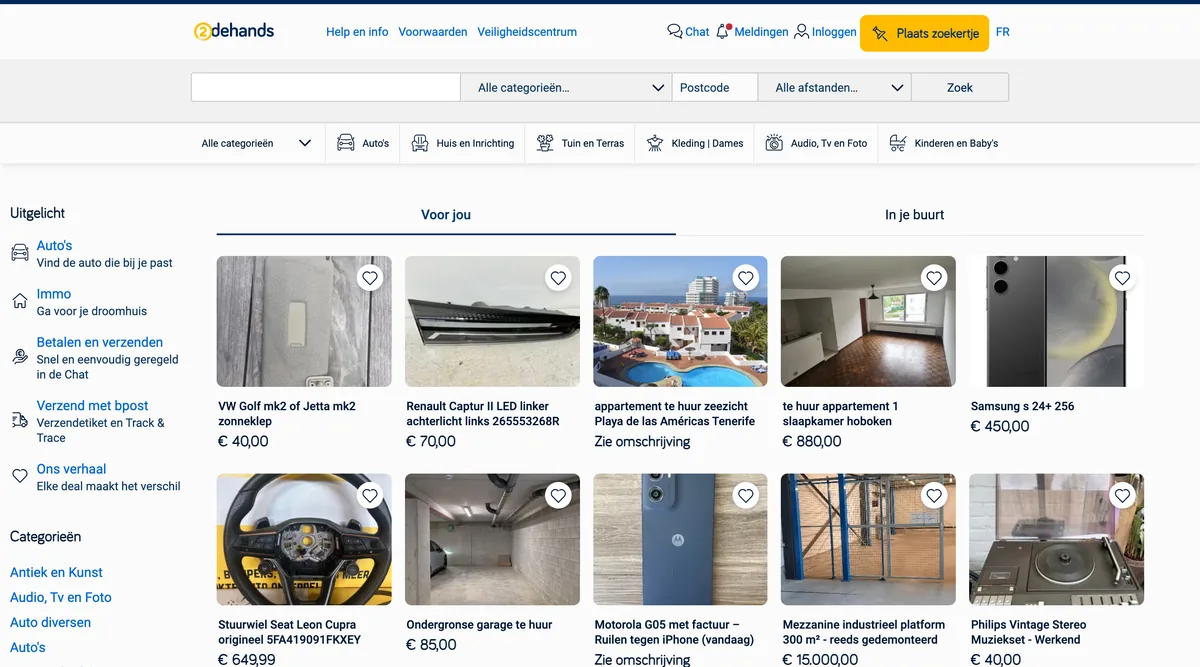
This is the single biggest differentiator. If you're a reseller working across the Dutch and Belgian second-hand ecosystem — Marktplaats, 2dehands, and Vinted — plus international channels like eBay, Etsy or your own Shopify store, Omnivaleur is designed to keep all of those in one dashboard.
Zenlister's public marketing tends to emphasize a narrower set of channels, with Vinted as the anchor. That's not a weakness by default — a lot of clothing resellers genuinely only need Vinted plus one backup marketplace. But if your inventory spans furniture on Marktplaats, electronics on 2dehands, and collectibles on eBay at the same time, a tool with fewer supported channels forces you to run two systems side by side, which defeats the point of automation.
If you already run a Vinted-heavy shop and want to expand into eBay and Shopify without re-platforming everything, our guide on Vinted reselling automation walks through what that expansion actually looks like operationally.
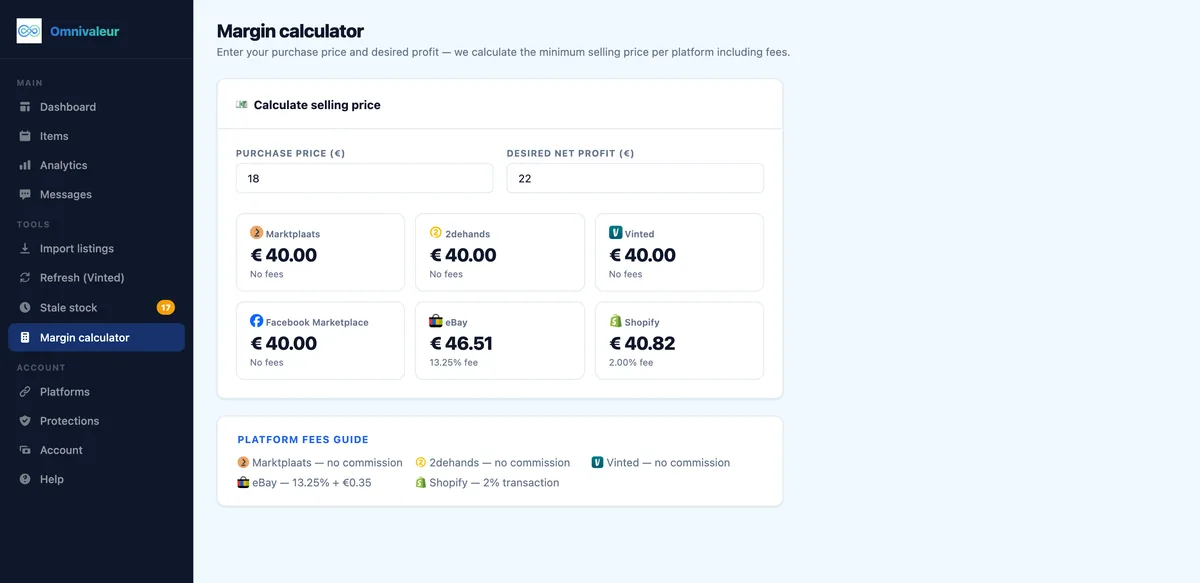
How does Omnivaleur vs Zenlister pricing compare in 2026?
Pricing for cross-listing tools generally scales with either the number of active listings or the number of connected marketplaces — sometimes both. Omnivaleur's tiers are structured around listing volume, so a seller with 50 active items pays differently than one running 500.
We're not going to invent exact euro figures for Zenlister's 2026 pricing page, because tool pricing changes often and we'd rather send you to verify it directly than quote you a number that's stale by the time you read this. What we can say honestly: in this category, the meaningful cost comparison isn't the sticker price, it's cost per marketplace supported. A cheaper monthly fee that only covers two platforms can end up costing more per listing than a slightly pricier plan that covers six.
Do the math on your own catalog before deciding. Count how many platforms you actually list on today, and how many you'd list on if the friction disappeared.
Which tool is easier to set up and use?
Fewer integrations generally means a shorter onboarding flow — that's just true, and it's a genuine point in Zenlister's favor if your needs are simple. A tool with one job tends to have a shallower learning curve than one juggling six marketplace APIs, each with different photo rules, category structures and shipping fields.
Omnivaleur's setup takes longer up front precisely because it's connecting more accounts — Marktplaats, 2dehands, Vinted, eBay, Etsy, Shopify — and mapping your categories across all of them. Most sellers report the initial import and category-matching as the slowest part, typically a first afternoon of work rather than minutes. After that, day-to-day listing is largely one-click.
If your workflow is Marktplaats-to-Vinted specifically, our Marktplaats to Vinted crosslisting guide shows exactly what that first-hour setup looks like in practice, screenshots included.
- ✓Count how many marketplaces you actually list on today
- ✓List which platforms matter most to your inventory type
- ✓Check whether you need Marktplaats, 2dehands or Vinted support
- ✓Calculate your cost per marketplace, not just the monthly fee
- ✓Ask support directly about sync speed and response times
- ✓Test setup with a small batch before importing your full catalog
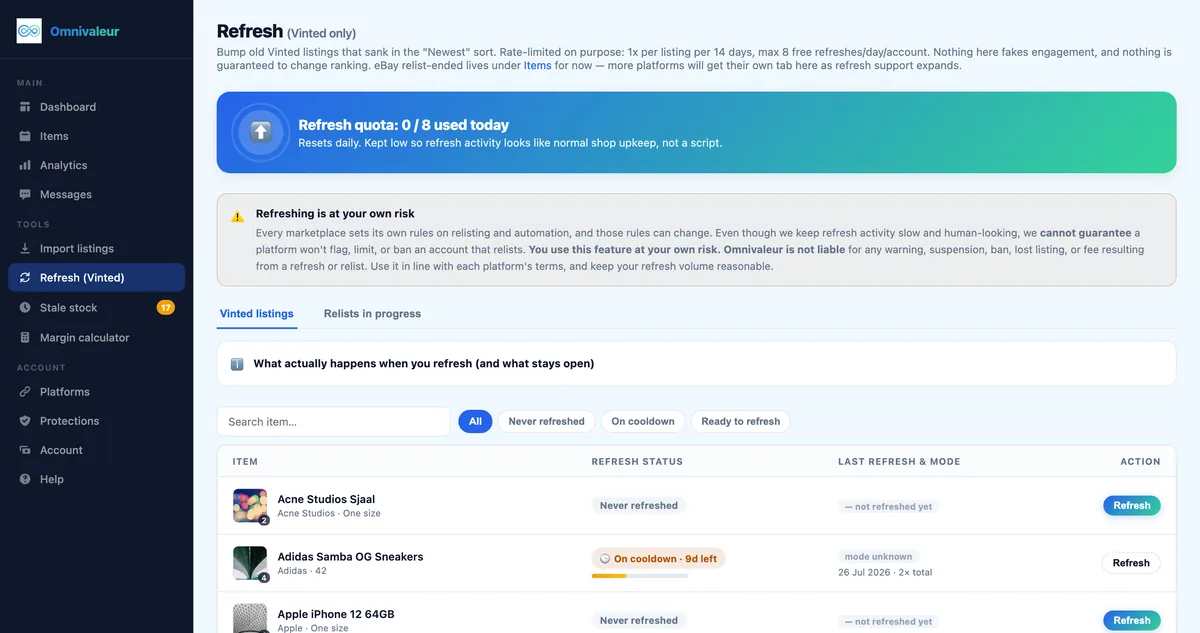
How do sync, relisting and delisting actually behave?
This is where "cross-listing" tools quietly differ the most, and it's rarely covered on marketing pages. Three behaviors matter:
- Sync speed — how fast does a sale on one marketplace get reflected as sold-out everywhere else? A delay of even 20-30 minutes can mean two buyers both think they bought the same item.
- Auto-relist — does the tool automatically bump or re-list stale items, or do you have to trigger that manually per platform?
- Auto-delist — when you manually remove an item on one channel, does it disappear from the others without you doing it six times?
Omnivaleur runs near real-time delisting specifically to prevent double-selling — a top complaint among resellers running multiple accounts manually. We haven't independently verified Zenlister's exact sync interval, so if that matters to your volume, ask their support team directly what the refresh rate is on your specific plan before committing.
Does either tool handle EU-specific marketplaces like Marktplaats, 2dehands and Vinted well?
This is arguably the most under-discussed part of any cross-listing comparison, because most tools in this space were built for the US market first and added European marketplaces later, if at all. Marktplaats and 2dehands have their own listing quirks — category trees, delivery options, and buyer messaging norms that don't map cleanly onto eBay's structure.
Omnivaleur was built with these platforms as first-class citizens rather than bolted-on integrations, which matters if you're pricing in euros, dealing with Dutch buyer expectations, or moving stock between 2dehands and Vinted regularly. See our 2dehands to Vinted crosslisting guide for the category-mapping specifics.
Zenlister's EU coverage, based on available information, leans more toward Vinted specifically rather than the full Dutch/Belgian marketplace set. If Marktplaats or 2dehands aren't part of your business, that gap won't matter to you at all.
One thing neither tool handles for you: tax reporting. Under Belastingdienst's DAC7 rules, marketplaces must report seller data once you cross 30 transactions or €2,000 in sales within a calendar year — that threshold is set at the EU level under the European Commission's DAC7 framework. Cross-listing software moves your inventory faster; it doesn't change what you owe the tax office.
How reliable is support when something breaks?
Sync tools touch third-party APIs constantly, and platforms like Vinted or eBay change their listing rules without much warning — see Vinted's own selling policies for how often terms get updated. When an integration breaks, response time to a support ticket is often the difference between losing a day of sales and losing nothing.
We can speak concretely to Omnivaleur's own support process — direct ticket access plus documentation covering common sync failures per marketplace. We genuinely don't have verified data on Zenlister's support SLA or team size, so rather than guess, we'd suggest asking them directly what their average first-response time looks like before you commit a full catalog to their system.
So who should actually choose Omnivaleur, and who should choose Zenlister?
Choose Omnivaleur if you sell across three or more marketplaces, especially if Marktplaats, 2dehands or Vinted are part of your mix and you want euro-native pricing and EU-specific category handling out of the box. It's built for resellers scaling past a side-hustle volume into something closer to a real inventory operation.
Choose Zenlister if your entire business genuinely runs on one or two platforms — say, Vinted plus a backup channel — and you'd rather have a lighter tool with less setup overhead than a full six-marketplace system you'll only use a third of.
Neither answer is wrong. The mistake is picking based on price alone without counting how many marketplaces you'll actually connect. If you're weighing other options too, our Omnivaleur vs List Perfectly comparison and Omnivaleur vs Vendoo comparison cover two more common alternatives in the same category, with the same honesty rules applied here.
Frequently asked questions
Can I run Omnivaleur and Zenlister at the same time on different marketplaces?
Does switching from Zenlister to Omnivaleur mean re-listing everything from scratch?
Does either tool guarantee compliance with eBay or Vinted's listing policy changes?
Is Zenlister a better fit for brand-new resellers with very low volume?
Do either of these tools handle EU consumer return rights automatically?
Keep reading
Stop copying listings by hand
Omnivaleur publishes your item to every platform at once and syncs stock automatically when something sells.
Start free trial