How to Cross-List from 2dehands to eBay in 2026

Cross-listing from 2dehands to eBay means republishing the same item on both platforms so it reaches local Belgian/Dutch buyers and eBay's international audience simultaneously. In 2026 this requires matching category rules, converting EUR pricing for currency differences, tracking DAC7 income thresholds, and syncing stock so a sale on one platform auto-delists the other.
Key takeaways
- Cross-listing doubles buyer reach without doubling your listing workload if you automate it correctly.
- 2dehands has no seller fees while eBay charges final value fees between 4% and 12.8% depending on category.
- DAC7 reporting applies once you cross 30 transactions or €2,000 in a calendar year across any platform combination.
- eBay listings need imperial-friendly measurements and international shipping profiles that 2dehands buyers never see.
- Manual syncing causes overselling; automated stock sync is the single biggest time-saver for this specific combo.
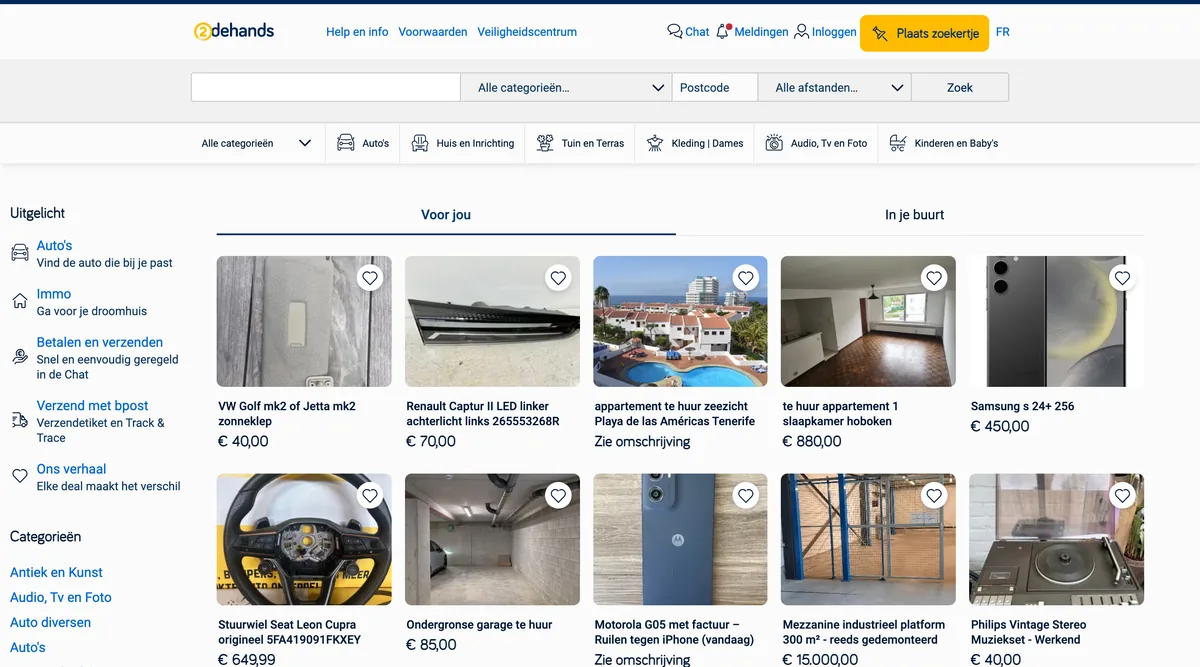
2dehands is a hyperlocal marketplace built for pickup deals within a few kilometres of the buyer. eBay is the opposite: global reach, shipped parcels, and buyers who never see your city. Selling the same item on both sounds simple until you actually try it — the category structures don't match, the currency isn't the same, and the tax rules that apply are not identical either. This guide covers exactly where those two platforms clash and how to bridge the gap without losing a sale to overselling.
Why do resellers combine 2dehands and eBay specifically?
Most Belgian and Dutch resellers start on 2dehands because it's free, local, and fast for cash-and-carry items. But 2dehands caps your audience to whoever is browsing within your region that week. eBay adds a completely different buyer pool: collectors, international shoppers, and people searching in English or German who will never open a Dutch-language listing.
The combo works especially well for items with resale value beyond the Benelux border — vintage electronics, branded clothing, tools, collectibles, sneakers. A vintage camera that sits unsold on 2dehands for three weeks often sells within days once it's visible to eBay's international audience.
What's different about eBay's listing rules compared to 2dehands in 2026?
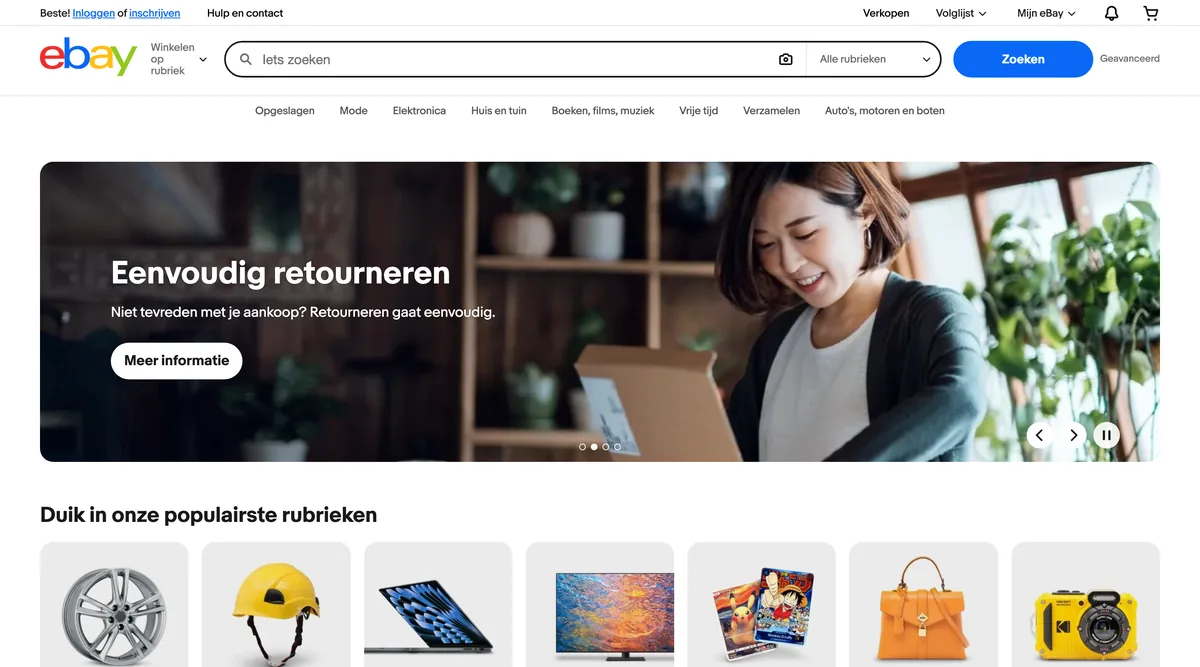
2dehands listings are loose: a few photos, a price, a short description, done. eBay expects structured item specifics — brand, size, condition, material — because its search algorithm ranks listings partly on how complete these fields are. Skip them and your listing sinks in search results even if the price is competitive.
eBay also enforces stricter photo standards (minimum 500px, no watermarks, no borrowed stock images) and requires a defined return policy field that 2dehands doesn't have at all. Check the current listing requirements directly via eBay's Help Centre on creating and managing listings before you migrate a batch of items, since these specifics get updated most years.
Category mapping is the first real headache
2dehands groups items broadly (Electronics, Home & Garden, Clothing). eBay has thousands of granular subcategories, and picking the wrong one tanks visibility. If you're cross-listing furniture pieces, for example, eBay wants a specific furniture-type category rather than a general "home" bucket — worth reviewing alongside our vintage furniture reselling automation guide if that's your niche.
How does pricing and currency actually work across the two platforms?
2dehands prices are always in euros, negotiated locally, often with room for haggling. eBay listings can attract bids or fixed prices in GBP, USD, or EUR depending on the buyer's marketplace (ebay.co.uk, ebay.com, ebay.de). If you set a fixed EUR price on eBay, the platform auto-converts at checkout using its own exchange rate, which shifts slightly week to week.
Practical rule of thumb: price 8–12% higher on eBay than your 2dehands asking price. That covers eBay's final value fee (4%–12.8% depending on category) plus payment processing, which 2dehands doesn't charge at all since it's a free classifieds site.
| Factor | 2dehands | eBay |
|---|---|---|
| Seller fees | Free (basic listings) | 4%–12.8% final value fee |
| Buyer reach | Local/regional only | International |
| Currency | EUR only | EUR, GBP, USD auto-converted |
| Shipping | Mostly pickup | Mostly shipped, tracked |
| Item specifics required | No | Yes, for search ranking |
What tax rules apply when you sell across borders like this?
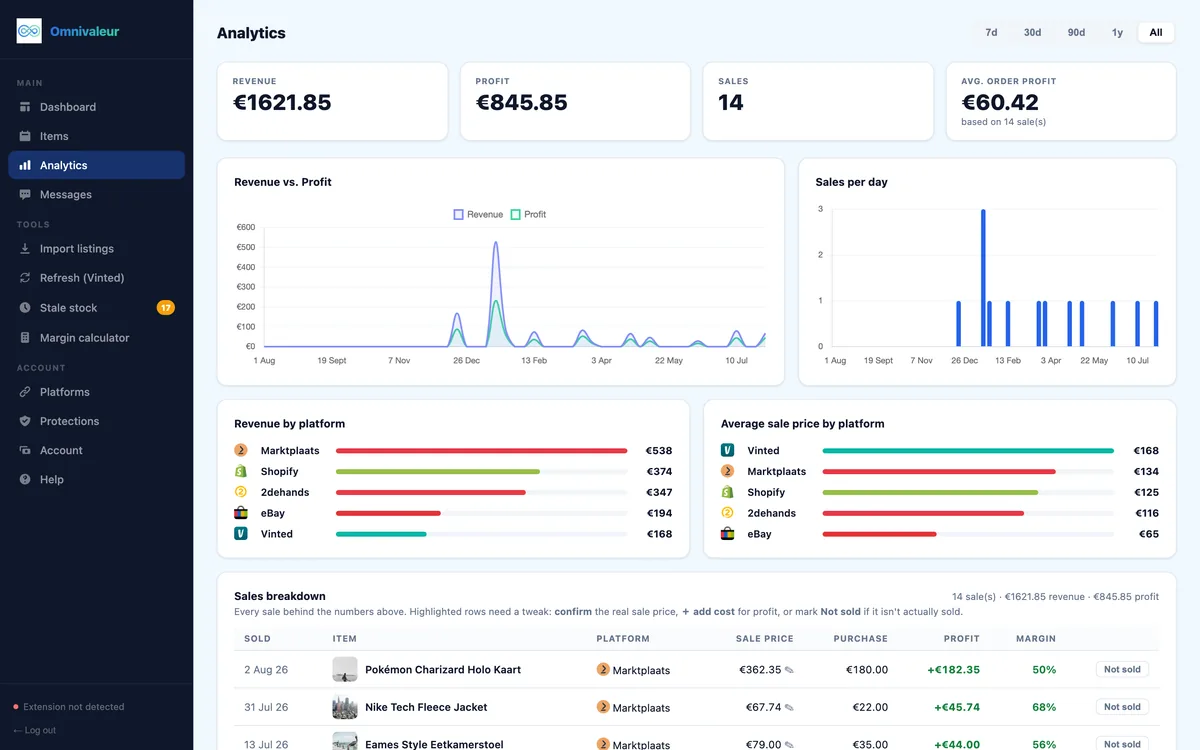
Since DAC7 came into force, every online marketplace operating in the EU — 2dehands included — reports seller income to tax authorities once you cross 30 transactions or €2,000 in a calendar year, whichever comes first. This applies per platform, but tax authorities can cross-reference totals, so selling half your stock on 2dehands and half on eBay doesn't reset the counter.
The Dutch tax authority publishes seller-facing guidance directly: see the Belastingdienst DAC7 information for sellers. For the broader EU framework and how it applies if you also sell into other member states via eBay, the European Commission's DAC7 overview is the clearest source. Keep a simple spreadsheet tracking cumulative sales per platform — most resellers who get caught off guard simply weren't counting both marketplaces together.
How do you keep stock synced so you don't sell the same item twice?
This is the actual pain point competitors' tool round-ups skip over. 2dehands and eBay have no native connection to each other. Sell an item on 2dehands at 9am, and it stays live on eBay until you manually pull it — which is exactly how resellers end up refunding an eBay buyer for an item that's already gone.
Three ways to handle this in 2026:
- Manual delisting — works for under 5 active items, breaks down fast beyond that.
- Spreadsheet tracking — better than nothing, but still relies on you remembering to update it after every sale.
- Automated cross-listing software — the item is pulled from every connected platform the moment it sells anywhere, no manual step required.
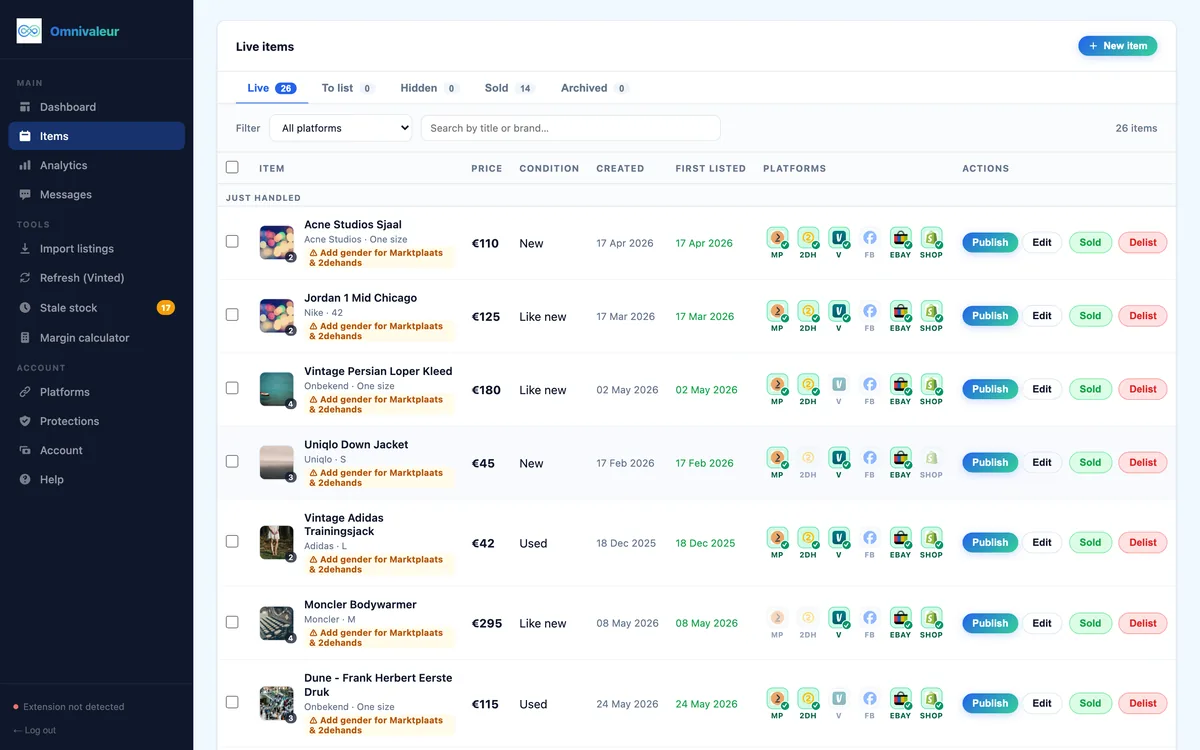
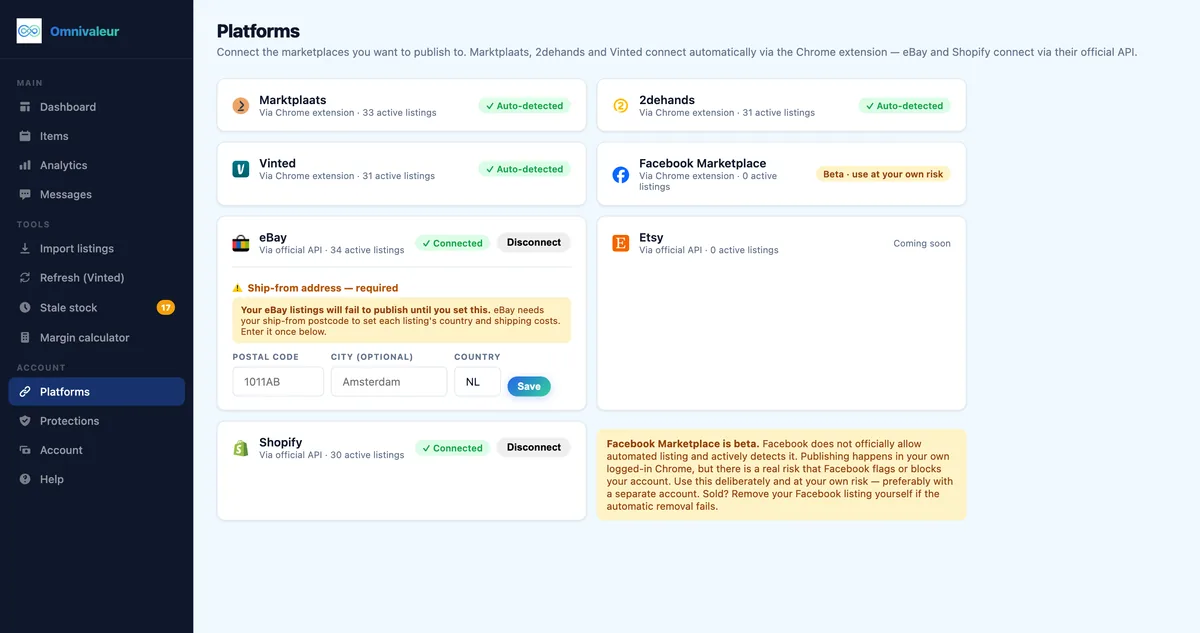
With Omnivaleur you connect both marketplaces once and the sync runs in the background — sell on 2dehands, and the eBay listing ends automatically within minutes, not hours.
What shipping and returns differences catch resellers off guard?
2dehands deals are mostly local pickup, so shipping barely enters the picture. eBay buyers expect tracked shipping, a stated handling time, and — critically — a working return policy. eBay's search algorithm actively favors listings with a defined return window, even a short 14-day one, over listings marked "no returns."
International shipping from Belgium or the Netherlands also means customs declarations for anything going outside the EU. If you're shipping into the UK post-Brexit, factor in customs paperwork and potential import duties the buyer may need to cover — worth stating clearly in the listing to avoid disputes. General EU cross-border buyer protections are outlined on the Your Europe consumer shopping rights page, useful to link in your own listing descriptions if buyers ask about guarantees.
Which item categories perform best on this specific combo?
Not everything worth listing on 2dehands is worth cross-listing to eBay. Bulky furniture, for instance, rarely justifies international shipping costs — that stays a 2dehands-only category in most cases. But these categories consistently do well across both:
- Vintage and branded clothing — check our 2dehands to Vinted crosslisting guide if fashion is your main category and you want a third platform in the mix.
- Electronics and gaming hardware — see the electronics reselling automation platforms comparison for category-specific tooling.
- Sneakers, watches, and collectibles — small, light, high resale value, ideal for international shipping.
- Books and media, especially rare or out-of-print titles that a local 2dehands buyer pool simply can't absorb.
Is this combo worth automating, or can you manage it manually?
Under 10 active listings, manual cross-posting is doable if tedious. Past that, the math flips fast. Each manual eBay relist takes 5–8 minutes once you factor in category selection, item specifics, and photo re-upload — multiply that by 30 items and you've burned half a working day on data entry alone, before a single sale happens.
Automated tools handle the category mapping, currency-aware pricing, and stock sync in one pass. If you're comparing platforms, our Omnivaleur vs List Perfectly comparison breaks down pricing and feature differences specific to multi-marketplace resellers working the Benelux-to-international combo.
Frequently asked questions
Can I use the same photos for 2dehands and eBay listings?
Do I need a Dutch and an English description for the same item?
What happens if a 2dehands buyer and an eBay buyer both want the item at the same time?
Does eBay charge more for cross-border shipments from Belgium or the Netherlands?
Should I mirror my 2dehands pickup-only listings on eBay at all?
Keep reading

Stop copying listings by hand
Omnivaleur publishes your item to every platform at once and syncs stock automatically when something sells.
Start free trial