Marktplaats to Shopify Crosslisting in 2026: A Reseller's Guide
Marktplaats to Shopify crosslisting means pushing items you list on Marktplaats into a Shopify store you own, so you sell to classifieds shoppers and webshop customers at once. In 2026 this also means new obligations: VAT registration past €20,000 turnover, 14-day EU return rights on Shopify, and a KVK number before you invoice.
Key takeaways
- A Shopify store carries EU consumer rights (14-day withdrawal) that Marktplaats private sales never had.
- Cross €20,000 in annual turnover and you likely need a Dutch VAT number, not just a KVK registration.
- Marktplaats caps free listings and photo counts per account; Shopify has no such limit.
- DAC7 reporting already applies to your Marktplaats sales — moving to Shopify doesn't remove it, it adds bookkeeping.
- Tools that sync inventory both ways prevent overselling the same item on two channels.
Cross-listing from Marktplaats to Shopify sounds like a simple upgrade: same photos, same item, a second sales channel. It isn't quite that simple in 2026. Marktplaats is a classifieds board where private sellers trade under looser rules. Shopify is a registered webshop, and the moment you open one, EU consumer law, VAT thresholds, and invoicing requirements start applying to you as a business — even if you started out flipping a few secondhand jackets on a Saturday afternoon.
This guide skips the basics already covered elsewhere (what Shopify costs, how syncing works, why DAC7 exists) and focuses on what actually trips up resellers making this specific jump: listing limits, legal status, and the tooling gap between a classifieds ad and a store product page.
What Actually Changes When You Move From Classifieds to a Real Webshop?
On Marktplaats, you're a private seller until the platform or the tax office decides otherwise. On Shopify, you're running a storefront from day one, whether you register it formally or not. That distinction matters for three things: returns, invoicing, and how buyers can complain if something goes wrong.
- Returns: Marktplaats private sales have no legal cooling-off period. Shopify sales to EU consumers do — 14 days under EU consumer shopping rights, unless you explicitly sell as a private individual clearing out a personal collection, which gets murky fast once you're running a store.
- Invoicing: Shopify orders expect a receipt or invoice. Marktplaats chats rarely do.
- Complaints: A Shopify customer can escalate through a chargeback on their card provider. A Marktplaats buyer mostly just stops replying.
How Do Marktplaats Listing Limits Affect What You Can Push to Shopify?
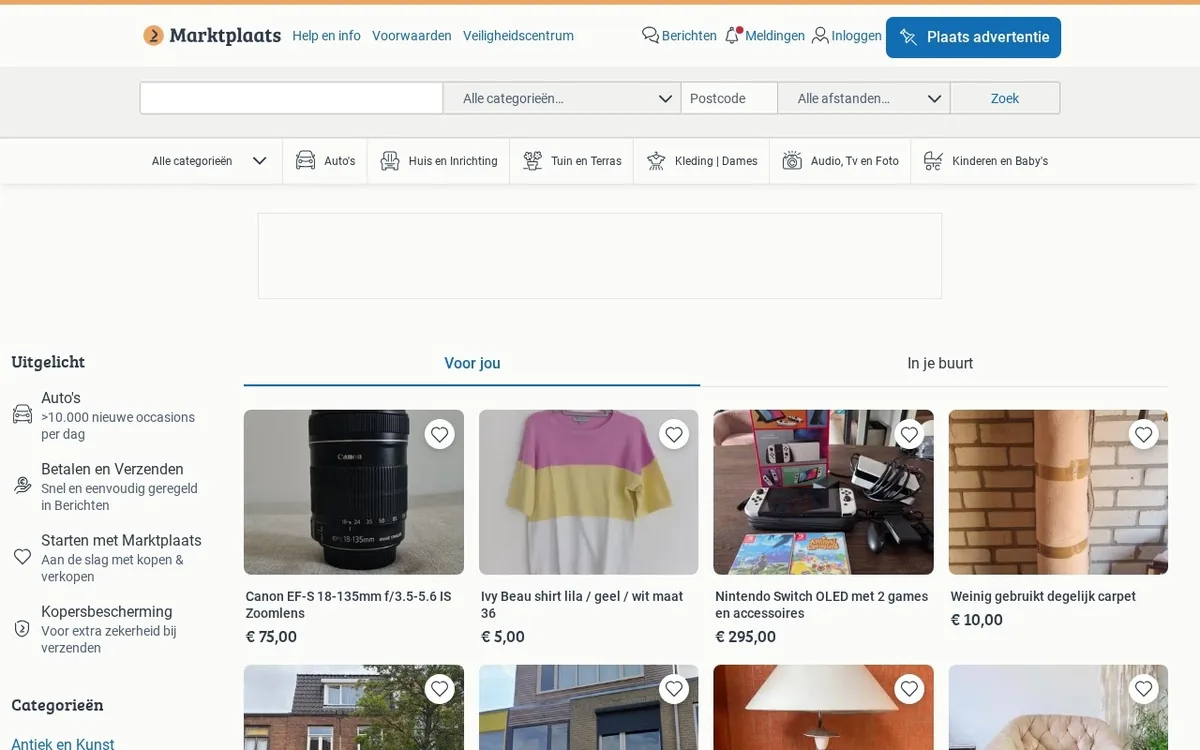
Marktplaats caps free ads per category and restricts photo counts on standard listings — check current numbers on Marktplaats Help & Info since these change yearly. Shopify has no such cap; a product page can carry unlimited images and a full description with size charts, care instructions, or provenance notes.
The practical issue: if you built your Marktplaats listing around a 4-photo, 60-character-title format, that content is too thin for a Shopify product page. Cross-listing tools that just copy-paste the Marktplaats title and first photo into Shopify will produce a store that looks unfinished. You need at least 6-8 photos and 150+ words of description per item to rank at all in Shopify's own search or in Google.
What EU Consumer Rights Apply to Your Shopify Store That Never Applied on Marktplaats?
This is the gap most crosslisting guides skip. A private Marktplaats sale is "as seen" — buyer and seller agree terms directly, no statutory return window. A Shopify store selling to EU consumers is a different legal animal: 14 days to return most items, clear pricing including all costs, and accurate condition disclosure for secondhand goods. If you're reselling vintage or used items across both channels, your Shopify listings need explicit condition grading (not just "good state") to avoid return disputes.
Vinted and eBay buyers are somewhat used to condition ambiguity. Shopify shoppers, used to new-goods retail, are not — build that expectation gap into your product copy or expect more returns.
Do You Need a KVK Number and VAT ID Before You Cross-List to Shopify?
Practically, yes, once you're running a Shopify store with recurring sales rather than clearing out a garage. The Netherlands requires KVK registration for anyone running a business activity, and VAT registration becomes mandatory once turnover crosses relevant national thresholds — for many small Dutch sellers that's around €20,000 annually before OSS/VAT obligations kick in properly, though rules and thresholds are reviewed regularly, so check current figures rather than relying on last year's number.
This sits alongside, not instead of, DAC7 reporting that already applies to your Marktplaats sales once you cross 30 transactions or €2,000 a year — see the Belastingdienst DAC7 guidance for the exact thresholds. Opening a Shopify store doesn't reset that clock. It adds a second layer of bookkeeping on top of it.
Quick comparison: obligations by channel
| Requirement | Marktplaats (private) | Shopify store |
|---|---|---|
| 14-day return right | No | Yes, for EU consumers |
| KVK registration | Optional until business activity | Required once trading regularly |
| VAT registration | Not usually | Required past national threshold |
| DAC7 reporting | Yes, above thresholds | Yes (Shopify itself isn't a reporting marketplace, but income still counts for your own tax filing) |
| Photo limit | Platform-capped, check current limits | Effectively unlimited |
How Should Product Photos and Descriptions Change Between Marktplaats and Shopify?
A Marktplaats ad optimises for a quick scroll and a fast "is it still available?" message. A Shopify page optimises for search engines and slower, more deliberate buyers. Rewrite the title to include brand, model, and material rather than the shorthand Dutch sellers use on Marktplaats. Add a size guide if you're moving clothing — this matters even more if you're already juggling Marktplaats to Vinted crosslisting alongside Shopify, since Vinted buyers expect brand-standard sizing while Shopify shoppers expect your own conversion chart.
Condition grading deserves its own line item, not a buried mention. "Used, small mark on left sleeve, no rips" reads very differently to a Shopify customer than the Marktplaats standard of "goede staat."
- ✓Get a KVK number and check current VAT thresholds with Belastingdienst before opening your store
- ✓Rewrite each Marktplaats title to include brand, model, and material for search engines
- ✓Add explicit condition grading as a separate line item, not buried in description text
- ✓Shoot 6-8 photos per item instead of relying on Marktplaats' 4-photo standard
- ✓Set up inventory sync with a tool like Omnivaleur so sold items mark across both channels
- ✓Draft a size guide or conversion chart if you're listing clothing on Shopify
Which Automation Tools Actually Sync Marktplaats Listings to Shopify in 2026?
Manual copy-paste breaks down past roughly 15-20 active listings — you'll miss price updates, forget to mark sold items, and end up overselling. Cross-listing tools solve three specific problems:
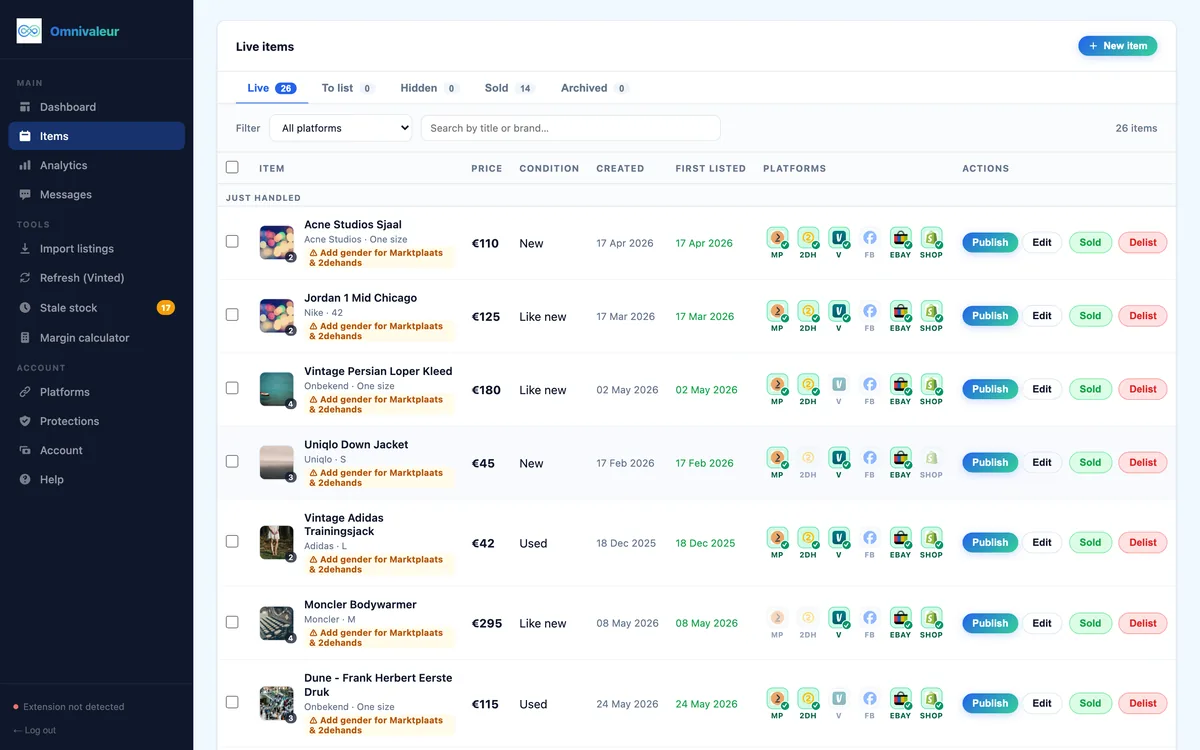
- Inventory sync so a sale on Marktplaats marks the Shopify variant as sold out, and vice versa.
- Category and field mapping, since Marktplaats categories don't map 1:1 onto Shopify collections.
- Relisting, since Marktplaats ads expire and Shopify products don't, creating a mismatch if you're not watching both.
If you're already running a multi-channel setup that includes eBay, the mechanics are close to what's covered in the eBay to Shopify crosslisting guide — the sync logic between a marketplace and an owned store repeats across platforms, only the field names change.
How Does Omnivaleur Handle This Cross-Listing Workflow?
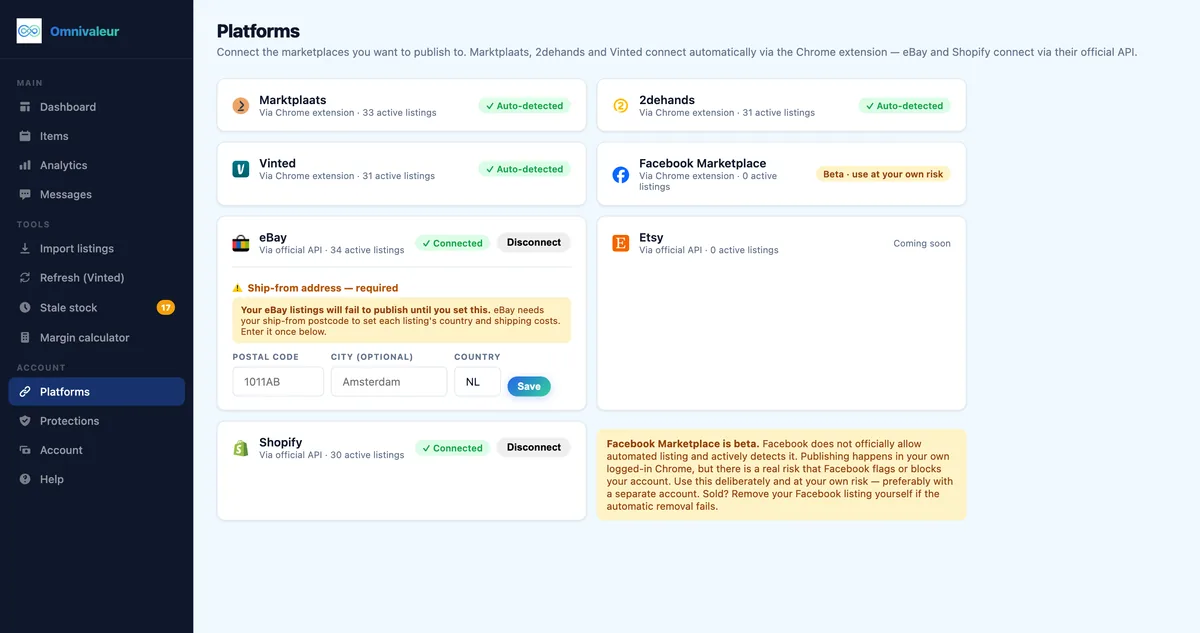
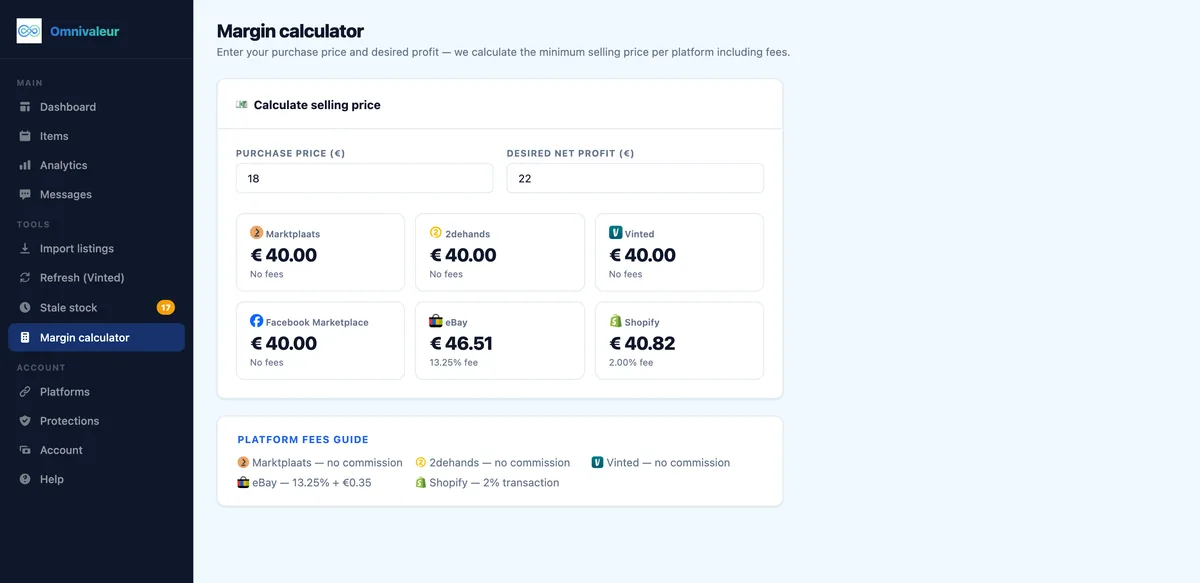
With Omnivaleur, you connect your Marktplaats account and Shopify store once, then manage stock levels, prices, and sold status from one dashboard instead of two tabs. It maps Marktplaats categories onto your Shopify collections automatically and flags items that need extra photos before they're store-ready, rather than silently publishing a thin listing.
If you're weighing Omnivaleur against other crosslisting tools before committing, the Omnivaleur vs List Perfectly comparison breaks down pricing and feature gaps side by side.
Is the Extra Legal Overhead Worth It for a Small Reseller?
Not always, not immediately. If you're moving fewer than 10 items a month, the KVK/VAT overhead of a formal Shopify store can outweigh the benefit of a second channel — stick to Marktplaats and maybe Vinted until volume justifies it. Past that point, owning a store where you're not paying a per-listing fee, and where repeat customers can find you directly, usually pays for the paperwork within a few months.
Frequently asked questions
Can the same item be listed as "used" on Marktplaats and "vintage, good condition" on Shopify?
What happens to a Marktplaats "bump" or "urgent" listing when it syncs to Shopify?
Do I need different photos for Shopify SEO than for a Marktplaats ad?
If a Shopify customer wants to return a used item bought through a Marktplaats-style listing, what are my obligations?
Is there a photo or listing limit difference I should plan around in 2026?
Should I combine Marktplaats-to-Shopify crosslisting with other channels like Etsy or eBay?
Keep reading


Stop copying listings by hand
Omnivaleur publishes your item to every platform at once and syncs stock automatically when something sells.
Start free trial