Streetwear Reselling Automation in 2026: Cross-List Without Getting Flagged
Streetwear reselling automation means publishing one item — photos, size, condition, price — to multiple marketplaces from a single intake instead of relisting it manually on each one. In 2026, the real challenge isn't listing speed; it's avoiding rate limits, syncing sold items, and staying inside DAC7 tax-reporting thresholds.
Key takeaways
- Cross-listing at one browser tab at a time avoids the account flags that parallel publishing tools trigger.
- A single intake form can reach six marketplaces: Marktplaats, 2dehands, Vinted, eBay, Etsy and Shopify.
- DAC7 reporting kicks in at 30 transactions or €2,000 in a calendar year, whichever comes first.
- Streetwear sizing (S/M/L, EU/US/UK shoe sizes) causes more mis-listings than photo quality ever does.
- Delisting sync matters more for streetwear than for most categories because sizes are one-of-one.
Streetwear moves fast, and it moves in single units. A size 42 Jordan or a medium Supreme hoodie exists once in your stock — sell it on Vinted at 9am and it needs to disappear from eBay and Marktplaats by 9:05, not by end of day. That's the actual automation problem in this category. Photo editing and description templates are the easy 20%. The other 80% is timing, sizing, and staying under the radar of marketplace anti-bot systems that got noticeably stricter through 2025 and into 2026.
What does streetwear reselling automation actually mean in 2026?
It means one intake, many outputs. You photograph and describe an item once — brand, size, condition, measurements, price — and software republishes that listing across the marketplaces where streetwear buyers actually shop, adjusting category fields and size formats per platform automatically. Fashion reselling automation platforms exist for exactly this reason: apparel has more variable fields per item than almost any other resale category, and streetwear adds brand-specific quirks (Supreme's small-batch drops, Nike's EU/US/UK size splits, Jordan collab naming) that generic listing tools handle badly.
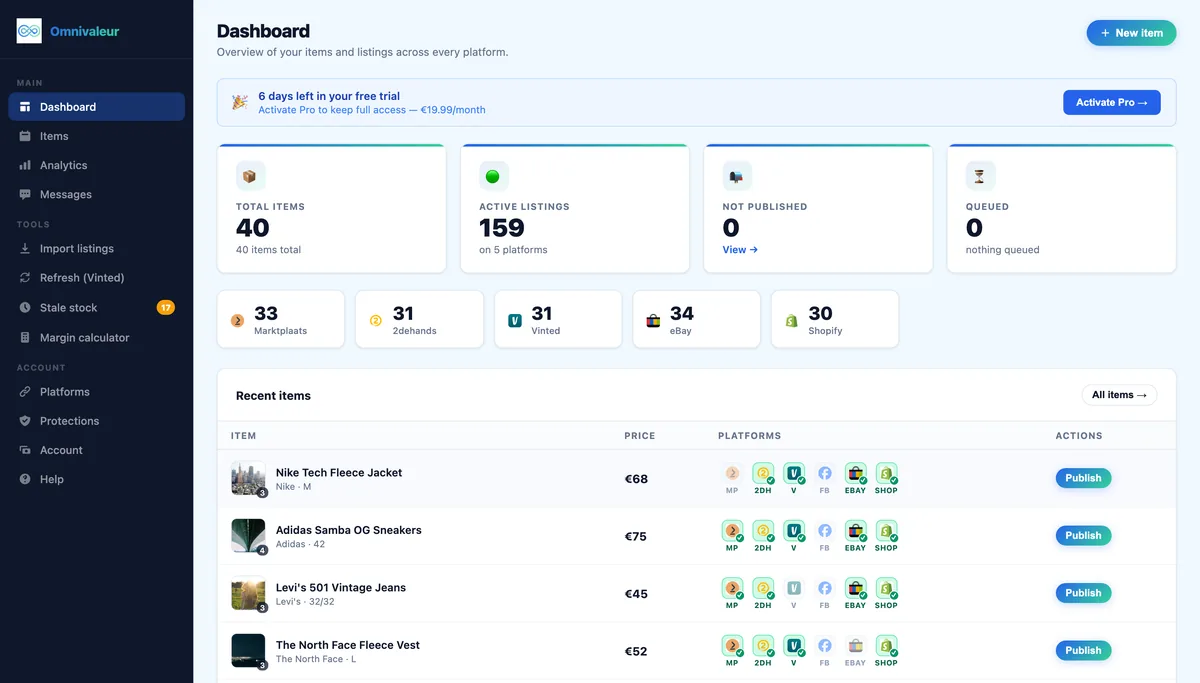
Omnivaleur publishes from one intake form to six marketplaces — Marktplaats, 2dehands, Vinted, eBay, Etsy and Shopify — which covers both the EU secondhand crowd and the global streetwear resale market without maintaining six separate listing habits.
Which marketplaces actually matter for streetwear resale right now?
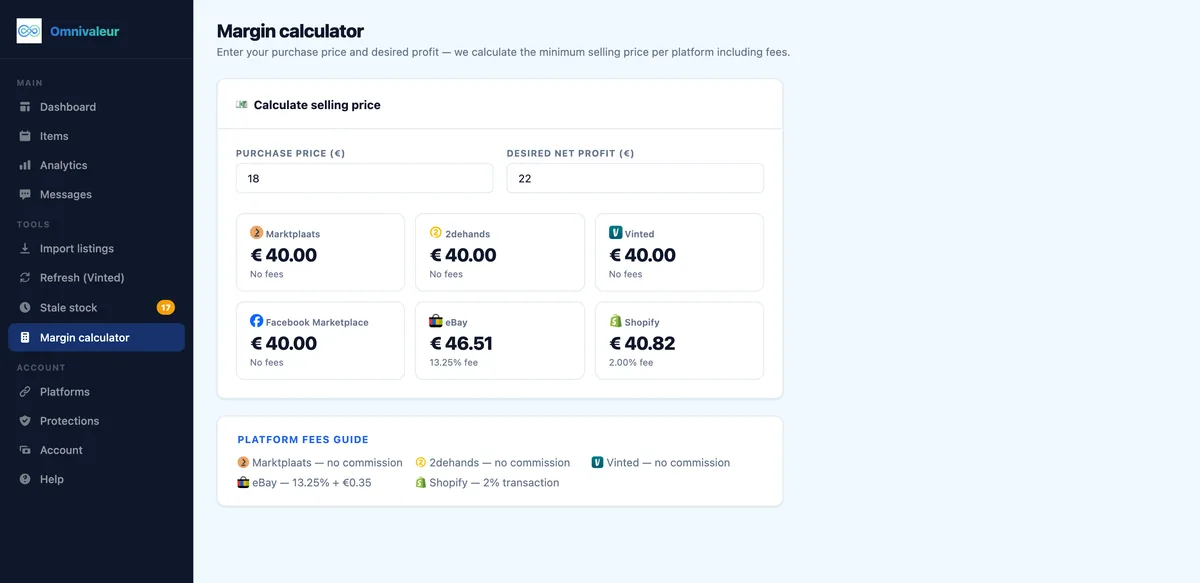
Not all six platforms carry equal weight for streetwear. Vinted dominates EU streetwear volume, especially France, Germany and the Netherlands, with near-zero seller fees. eBay still wins on rare grails and cross-border reach, partly because of its Authenticity Guarantee threshold on sneakers and select streetwear over $100. Marktplaats and 2dehands work well for local pickup on bulky items — think puffer jackets and box logos where shipping cost eats margin. Etsy barely moves streetwear unless you're framing it as vintage or Y2K archive pieces. Shopify is for resellers who've outgrown marketplace fees entirely and want their own storefront.
| Platform | Typical seller fee | Best for streetwear | Reach |
|---|---|---|---|
| Vinted | Buyer pays protection fee, seller fee ~0% | Everyday drops, mid-tier hype pieces | EU |
| eBay | ~10-13% final value fee | Grails, authenticated sneakers, rare collabs | Global |
| Marktplaats / 2dehands | Free or small ad boost fee | Local pickup, heavy outerwear | NL / BE |
| Etsy | 6.5% + listing fee | Vintage-framed streetwear, archive pieces | Global, niche |
| Shopify | ~2.9% payment processing + subscription | Brand building, repeat buyers | Owned traffic |
If you're already running Vinted-to-eBay or Marktplaats-to-Vinted flows for other categories, the same routes apply here — see the Vinted to eBay crosslisting guide and the Marktplaats to Vinted crosslisting guide for the exact field mappings.
How do you avoid getting flagged when cross-listing streetwear at scale?
This is where most automation tools quietly cause damage. Publishing to five platforms in parallel — five browser tabs, five API calls at once — looks nothing like normal seller behaviour to marketplace fraud systems. Vinted, eBay and Marktplaats all rate-limit accounts that post in bursts, and a flagged account means throttled visibility for weeks, sometimes a shadow ban that never gets explained to you.
Omnivaleur runs cross-listing one browser tab at a time, on purpose. It's slower than parallel publishing by design, because parallel publishing is exactly what gets marketplace accounts rate-limited. For a streetwear seller moving 15-20 items a week, that pacing costs a few extra minutes per batch. It's a fair trade against losing a Vinted account with 400 reviews built up over two years.
Bots built for buying (cop bots, restock monitors) work on a completely different risk model than listing tools — they're racing a checkout page, not maintaining a long-term seller reputation. If you also resell sneakers alongside apparel, the pacing logic differs enough that it's worth reading the sneaker reselling automation platforms comparison separately rather than assuming one tool handles both the same way.
What are the tax and compliance risks streetwear resellers actually ignore?
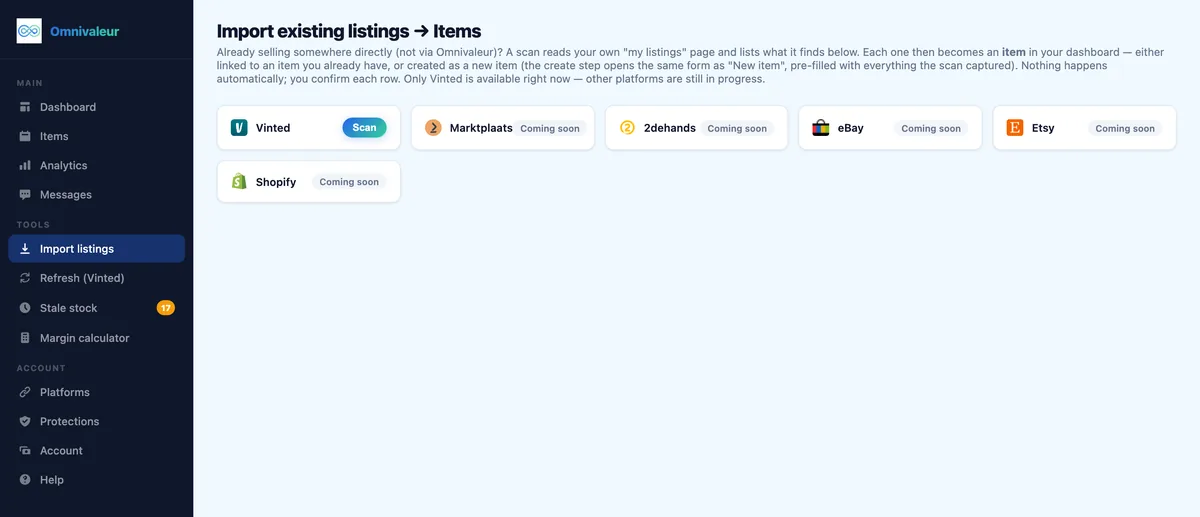
Streetwear resellers hit DAC7 thresholds faster than most categories because average sale prices are higher and volume is steady. Under the EU's DAC7 rules, marketplaces must report sellers who complete 30 transactions or earn €2,000 in a calendar year, whichever comes first. Cross a hoodie, two pairs of sneakers and a jacket in a good month, and you're already there. The Belastingdienst's DAC7 guidance for sellers lays out exactly what data Dutch marketplaces send to tax authorities, and the European Commission's DAC7 overview covers the EU-wide version if you're selling across borders.
The second risk is returns law, not tax. If you run a Shopify store alongside your marketplace listings, EU consumer protection rules give buyers a 14-day right of withdrawal on most online purchases — this doesn't apply to genuine private Vinted or Marktplaats sales between individuals, but it does apply the moment you're operating as a business seller with your own storefront. The Your Europe consumer shopping rights page is the clearest plain-language summary of what buyers can actually demand back from you.
Authentication is the third one nobody plans for. Streetwear counterfeiting is common enough that eBay applies its Authenticity Guarantee to sneakers over a certain price tier, and buyers increasingly expect proof photos (stitching, tags, box codes) even on Vinted. Build that into your listing template once and every platform benefits from it.
How does automated delisting protect you from overselling limited drops?
Overselling is the streetwear-specific failure mode that generic reselling advice glosses over. A vintage record or a used book might have three near-identical copies in stock. A size 9 Travis Scott collab has exactly one. Sell it on eBay at 2pm and forget to pull the Vinted listing, and by 2:15 someone else has bought a jacket that doesn't exist anymore. Now you're refunding a buyer, eating a negative review, and possibly triggering a Vinted account review for cancelled sales.
Automated delisting sync closes that gap by pulling an item off every other marketplace the moment it sells on one. For a seller running 20-30 live streetwear listings across three or four platforms at any given time, this single feature prevents more account damage than any amount of extra photo editing ever will. It's worth checking whether the tool you're evaluating does this in near-real time or on a delayed batch — a 30-minute delay is still long enough for a hyped item to sell twice during a drop weekend.
If you're weighing tools for this specifically, the comparisons against Vendoo and List Perfectly both cover delisting speed as a direct feature-by-feature line item, not just pricing.
Which streetwear-specific listing details actually move price and speed?
Generic apparel templates lose money on streetwear because they skip fields buyers specifically search for. Four things consistently change how fast an item sells and what it sells for:
- Size chart translation. Supreme runs S/M/L/XL with almost no numeric equivalent; Jordan and Nike split across EU, US and UK sizing that don't line up cleanly (a US 9 is a UK 8, not a UK 9). Getting this wrong on even one platform means returns, not just lost sales.
- Condition grading in reseller shorthand. "Deadstock," "VNDS" (very near deadstock), and honest defect notes with close-up photos build trust faster than a generic "used - good" tag, especially on eBay where buyers compare against grading standards from sneaker forums.
- Drop year and collab naming. "Nike x Travis Scott Cactus Jack 2021" ranks in search far better than "Nike hoodie brown." Streetwear buyers search by drop, not by generic category.
- Proof of authenticity. Box, receipt, or tag photos included in the listing itself — not just available on request — cut buyer questions and speed up the sale, particularly above the price points where eBay's authenticity checks kick in.
None of this is unique to any one platform, which is exactly why templating it once and pushing it everywhere saves more time than optimising each listing per marketplace by hand.
How much time does streetwear reselling automation actually save?
Run the numbers on a realistic week. A reseller listing 20 streetwear items across four platforms manually spends roughly 5-7 minutes per platform per item on re-entry, resizing photos, and reformatting size fields — call it 24 minutes per item, 480 minutes (8 hours) a week just on initial listings. Add delisting checks after each sale and that climbs past 10 hours. With a single intake feeding all four platforms, the per-item time drops to the few minutes it takes to write the listing once, plus a short review pass per platform before publishing — typically under 2 hours for the same 20 items.
The gap isn't magic; it's not re-typing the same size, brand, and condition fields five times. If your reselling already spans multiple categories — sneakers, vintage pieces, general apparel — it's worth setting up the intake template once and reusing it, rather than treating streetwear as a separate workflow from everything else you cross-list. The Vinted-specific automation setup is covered in more depth in the Vinted reselling automation guide, which walks through the exact field mapping Vinted expects on apparel listings.
What should you check before choosing a streetwear cross-listing tool?
Three questions filter out most bad fits fast. First: does it pace publishing to avoid rate limits, or does it fire everything in parallel? Second: does delisting happen automatically and quickly, or do you still need to manually check and pull listings after a sale? Third: does it actually support the platforms your buyers use — a tool built around US markets and Poshmark won't help much if your buyers are on Vinted and Marktplaats. Comparisons against OneShop and Zenlister both break down these three points platform by platform if you want a side-by-side before committing to one workflow for 2026.
Frequently asked questions
Can I cross-list counterfeit-risk streetwear brands like Supreme without extra verification steps?
Does Vinted limit how many streetwear items I can list per day in 2026?
What happens to my other listings if an item sells while automation is mid-publish?
Do I need a business account to resell streetwear across multiple EU marketplaces?
How do EU size charts differ from US streetwear sizing, and does automation handle conversions?
Keep reading


Stop copying listings by hand
Omnivaleur publishes your item to every platform at once and syncs stock automatically when something sells.
Start free trial