How to Photograph Clothes for Vinted: The 2026 Reseller Photography Blueprint
To photograph clothes for Vinted, use bright natural daylight near a window against a clean neutral wall. Shoot crisp flat-lays or clear mannequin shots from the front and back, capture close-ups of fabric labels and flaws, and keep images unedited. Accurate lighting builds buyer trust and drives faster sales.
Key takeaways
- Natural window light outperforms ring lights and prevents color distortion on Vinted
- Flat-lays need styling balance while hanging shots require a steaming iron first
- Close-ups of brand tags, wash care labels, and minor flaws protect your seller rating
- Square aspect ratio framing works best for the Vinted mobile feed layout
- Cross-listing well-photographed items saves hours of manual work across platforms
Taking great pictures of clothes is the single biggest factor in closing a sale on Vinted. Buyers cannot touch the fabric or check the stitching in person. They rely entirely on your photos to judge quality, color, and fit. In 2026, competition on the platform is fierce. If your lighting is dim or your images are blurry, prospective buyers scroll right past your listing.
Whether you are clearing out your personal wardrobe or running a professional secondhand clothing store, upgrading your visual workflow changes everything. Great photos also make cross-listing much more effective. When an item is listed elsewhere using tools like fashion reselling automation platforms, those same clean images draw clicks on Marktplaats, 2dehands, and Shopify too. Here is how to nail your clothing photography from setup to final upload.
What Equipment Do You Actually Need for Vinted Photography?
You do not need a DSLR camera or expensive studio strobes to sell clothes successfully. Modern smartphone cameras capture more than enough detail, provided you manage your environment. Investing in a few budget-friendly items streamlines the process.
- A modern smartphone: Any phone manufactured within the last four years has an exceptional camera sensor. Clean your lens before every session.
- Natural daylight: Position your setup within two meters of a large north-facing window. Avoid direct harsh sunlight that casts deep shadows.
- A neutral backdrop: A plain white wall, a light grey wooden floor, or a seamless paper roll keeps the focus entirely on the garment.
- A steamer: Wrinkles scream lazy listing. Steaming a shirt or pair of trousers takes three minutes and instantly doubles perceived value.
If you deal primarily in high-value vintage or designer items, read our vintage clothing reselling automation platforms guide for deeper insights into tailoring your imagery to collectors. For high-end garments, crisp detailing is non-negotiable.
Should You Use Flat-Lays, Hangers, or a Model?
Every clothing category has an optimal presentation format. Mixing and matching these methods based on the garment type yields the highest engagement in the Vinted feed.
| Presentation Style | Best For | Pros | Cons |
|---|---|---|---|
| Flat-Lay | T-shirts, hoodies, knitwear, baby clothes | Easy to arrange, shows shape well | Takes floor space, requires styling flair |
| Hanging / Mannequin | Dresses, coats, trousers, blouses | Shows drape and length realistically | Needs wall hooks or mannequin space |
| Worn / Modeled | Streetwear, designer pieces, denim | Highest conversion rate, shows true fit | Requires a model or mirror selfies |
For trousers and jeans, a flat-lay works wonders if you style the waistband neatly and smooth out the legs. For winter coats and structured blazers, a hanger against a neutral door frame gives buyers a clear view of the silhouette. Always check official platform guidelines such as the Vinted selling rules to ensure your photos comply with standard marketplace requirements.
How Do You Set Up Lighting Without Professional Gear?
Bad lighting kills sales faster than anything else. Warm indoor ceiling bulbs cast an ugly yellow tint over clothes, making white fabrics look dingy and altering colors entirely. Buyers hate receiving an item that looks navy blue on screen but arrives black.
Shoot exclusively during daylight hours. Turn off all overhead indoor lamps to prevent color temperature mixing. Position your setup perpendicular to the window so light washes evenly across one side of the garment, while a simple white foam board on the opposite side bounces light back into the shadows. This low-cost trick mimics professional studio lighting.
According to data from the Vinted Help Centre, listings featuring clear, bright images sell up to three times faster than those with dark or blurry snapshots.
- ✓Clean your smartphone camera lens before every single photo session
- ✓Position your setup within two meters of a large north facing window
- ✓Turn off all overhead indoor lamps to prevent ugly color temperature mixing
- ✓Steam the garment to remove wrinkles and instantly double perceived value
- ✓Frame the main item dead center with plenty of breathing room around edges
- ✓Capture full front and back shots plus close ups of brand and care labels
What Essential Angles and Details Must You Capture?
Vinted allows up to twenty photos per listing. Use them. Buyers appreciate thoroughness and rarely buy items with only one or two vague pictures.
- Full front shot: The garment laid flat or hanging straight, showing the entire piece from collar to hem.
- Full back shot: Essential for checking rear details, yoke construction, or back pockets.
- Brand label close-up: Proof of authenticity and sizing. Buyers look specifically for the manufacturer tag.
- Care and material label: Shows fabric composition (e.g., 100% cashmere vs acrylic) and washing instructions.
- Flaws and wear: Transparency prevents returns and negative reviews. Photograph any loose threads, pilling, or marks clearly with a coin for scale.
If you are scaling your wardrobe inventory across multiple online sales channels, managing these assets efficiently becomes vital. As noted in industry overviews, best clothing reselling automation tools for 2026 help synchronize your photo libraries so you never have to re-shoot when expanding to new marketplaces.
How Can You Optimize Your Photos for the Vinted App?
Vinted crops all main listing images into a square format. When taking your primary cover photo, frame the item dead center with plenty of breathing room around the edges. If your photo is cropped too tightly, parts of the garment will get cut off in the main search feed.
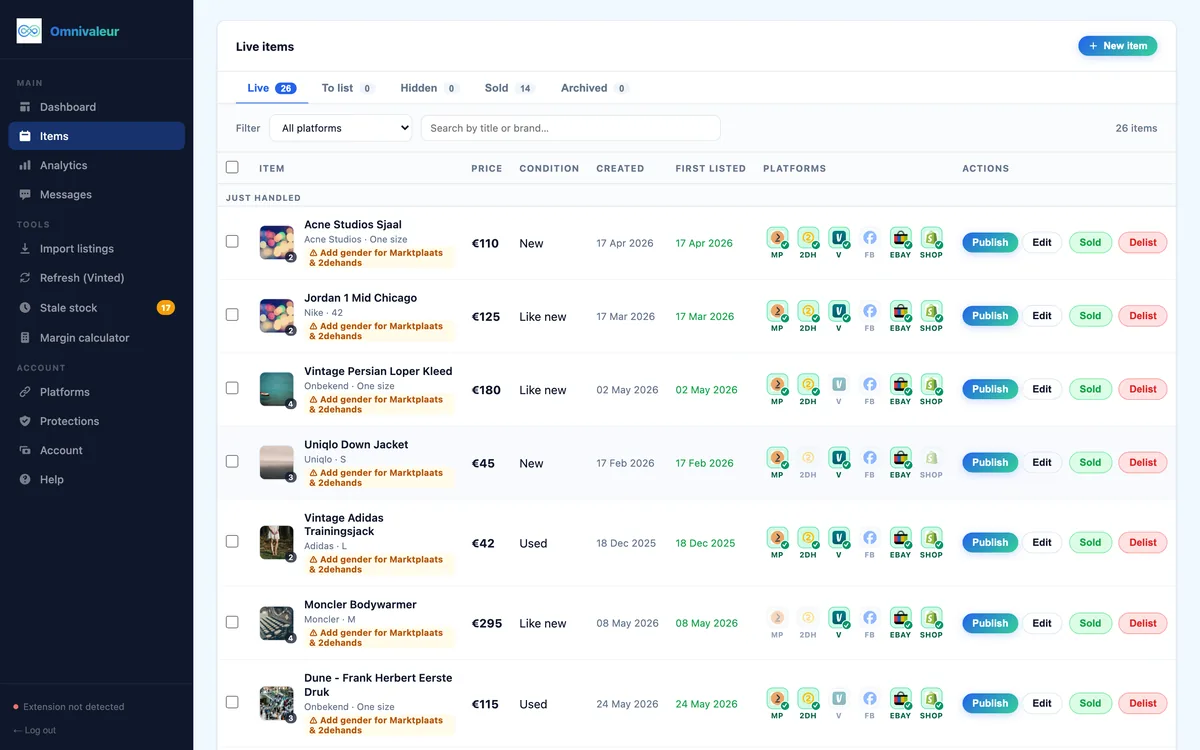
Resist the urge to apply heavy filters, high contrast adjustments, or digital stickers. Vinted's algorithm and community prefer authentic, unedited photos. If you need to brighten a photo slightly, adjust the exposure slider on your phone rather than adding saturation that misrepresents the true shade of the textile. Furthermore, keeping your photo storage organized allows you to maintain active multi-channel setups where a single item in Omnivaleur typically carries 3-5 active listings at once while the app tracks each platform's status separately.
How Do You Maintain Consistency Across Multiple Listings?
Consistency builds a recognizable digital storefront. When buyers visit your Vinted profile and see a grid of uniformly lit, cleanly styled items, they perceive you as a professional, trustworthy seller rather than someone haphazardly dumping old laundry.
Set up a dedicated photo station in your home or workspace if you list regularly. Keeping your backdrop, lighting position, and camera height fixed saves immense time. You can knock out twenty garment photos in under an hour when your workflow is dialed in.
When you are ready to expand your reach beyond Vinted, remember that Omnivaleur publishes to six marketplaces from one intake form: Marktplaats, 2dehands, Vinted, eBay, Etsy and Shopify. Taking five minutes to capture professional photos pays off exponentially when those images work across your entire cross-listing ecosystem.
Frequently asked questions
Should I remove the background from my Vinted clothing photos?
What is the best time to upload clothes after taking photos?
How many photos should I include per Vinted listing?
Can I use stock photos from the brand's official website?
How do I handle color accuracy if my camera makes the clothing look different?
Keep reading


Stop copying listings by hand
Omnivaleur publishes your item to every platform at once and syncs stock automatically when something sells.
Start free trial