Omnivaleur vs ExportYourStore: An Honest 2026 Comparison for European Resellers
Omnivaleur is built for European resellers who cross-list across Marktplaats, 2dehands, Vinted, eBay, Shopify, WooCommerce and Facebook Marketplace (beta), with euro pricing and EU tax handling baked in. ExportYourStore focuses on US marketplaces like eBay, Amazon, Etsy and Depop. Pick based on where your buyers actually are.
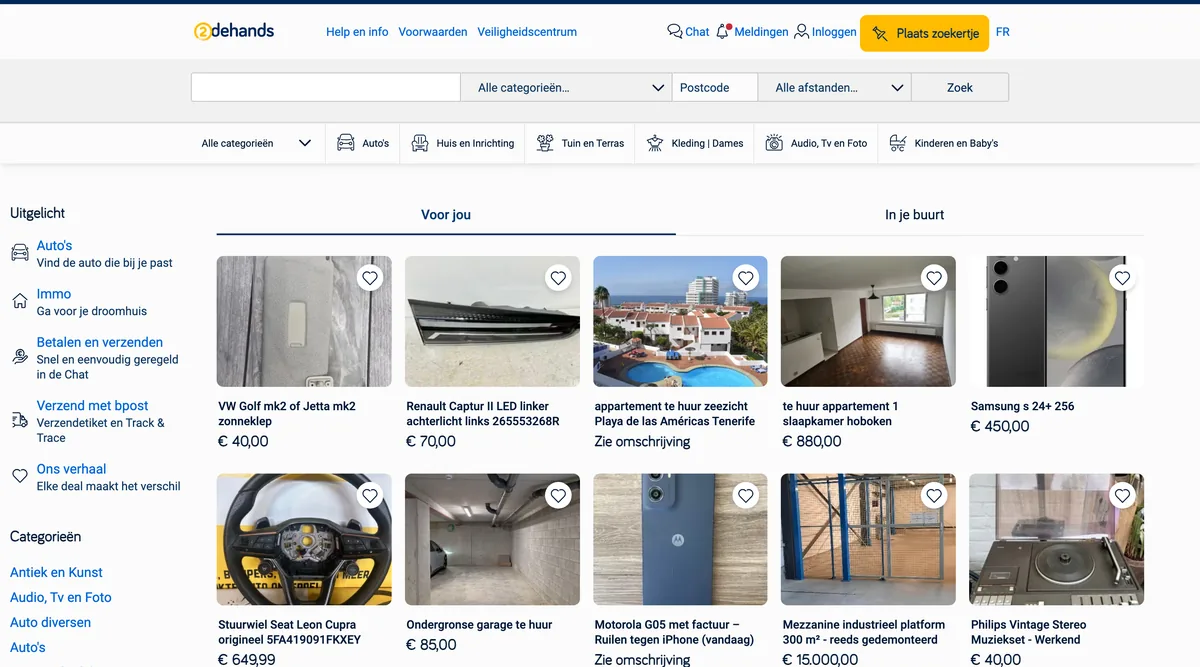
Key takeaways
- ExportYourStore doesn't support Marktplaats, 2dehands or Vinted, which rules it out for most Dutch and Belgian resellers.
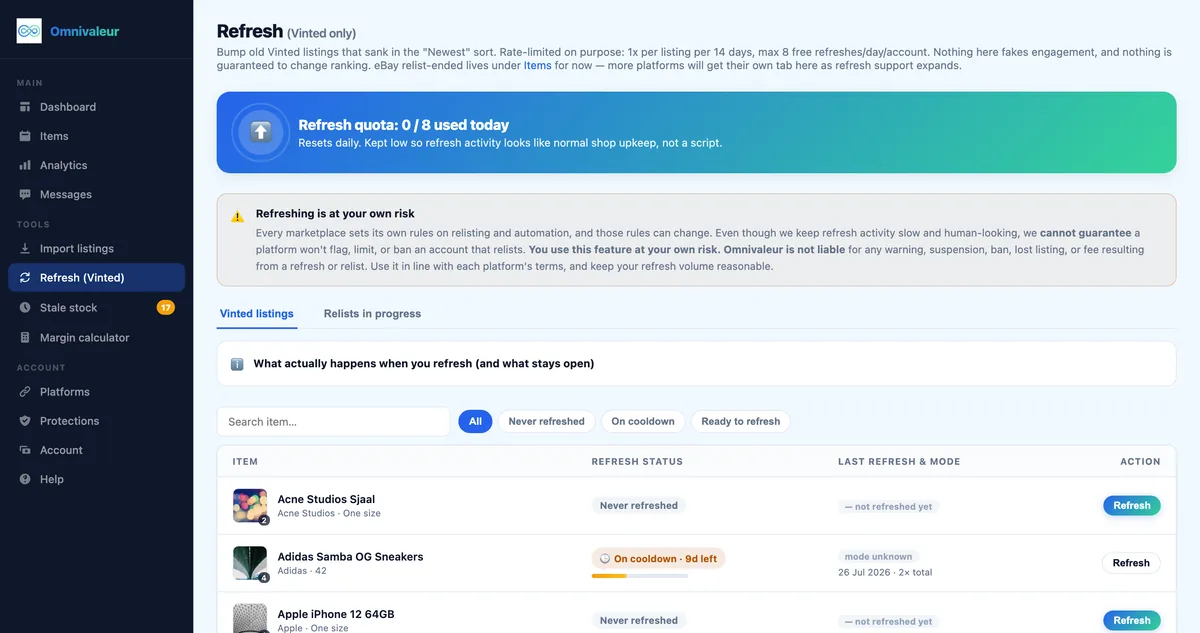
- Omnivaleur's free Vinted refresh tool caps itself at 8 refreshes a day and never claims to guarantee an account won't get flagged.
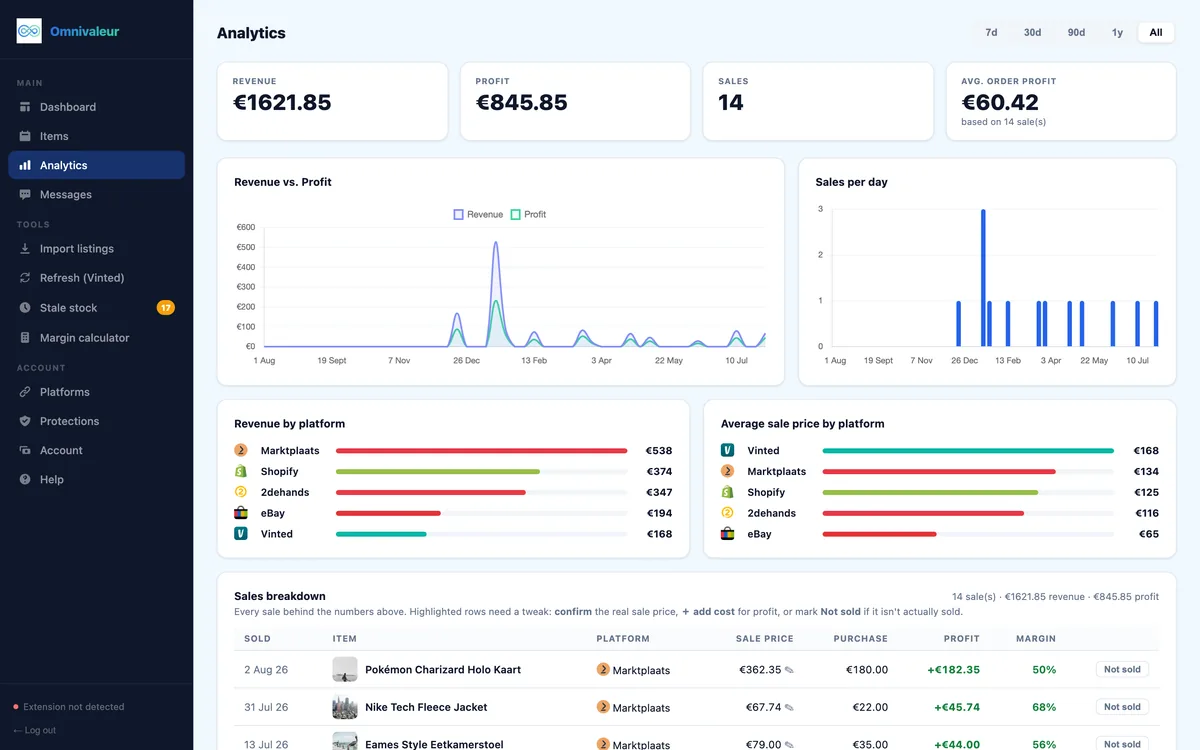
- Omnivaleur calculates profit from the confirmed real sale price, not the asking price — on second-hand platforms those can differ by 10-20%.
- ExportYourStore's genuine strength is deep automation for US-centric sellers running eBay, Amazon and Etsy at volume.
- Published pricing is a real gap for ExportYourStore — Omnivaleur shows its plans upfront, ExportYourStore wants you to sign up first.
What's the real difference between Omnivaleur and ExportYourStore in 2026?
Both tools exist to stop you from manually re-typing the same listing five times. That's where the similarity ends. Omnivaleur was built specifically for the European second-hand economy — it cross-lists across Marktplaats, 2dehands, Vinted, eBay, Shopify, WooCommerce and Facebook Marketplace (beta), with euro pricing, Dutch and Belgian tax context, and platform-specific quirks handled natively. ExportYourStore is an AI-driven cross-listing tool aimed squarely at the US reseller market — eBay, Amazon, Etsy, Shopify, Depop and similar channels.
If your inventory sits in a garage in Rotterdam or a storage unit in Antwerp, and your buyers are mostly Dutch or Belgian, the comparison basically answers itself before you even look at a feature table. If you're shipping from Ohio to buyers across the US, it flips the other way. The rest of this article digs into the specifics so you're not just taking either company's word for it.
Which marketplaces does each platform actually support?
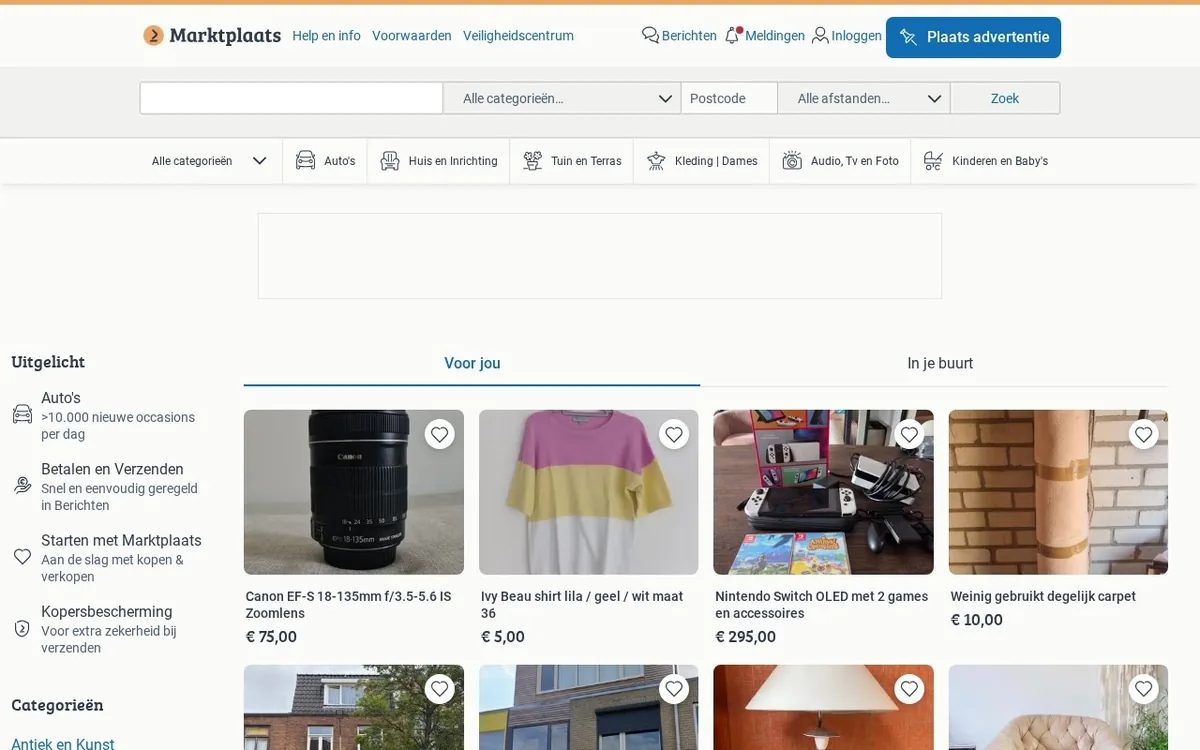
This is the single biggest fork in the road. Omnivaleur's whole design brief is European second-hand selling plus the bigger global channels resellers still use alongside it:
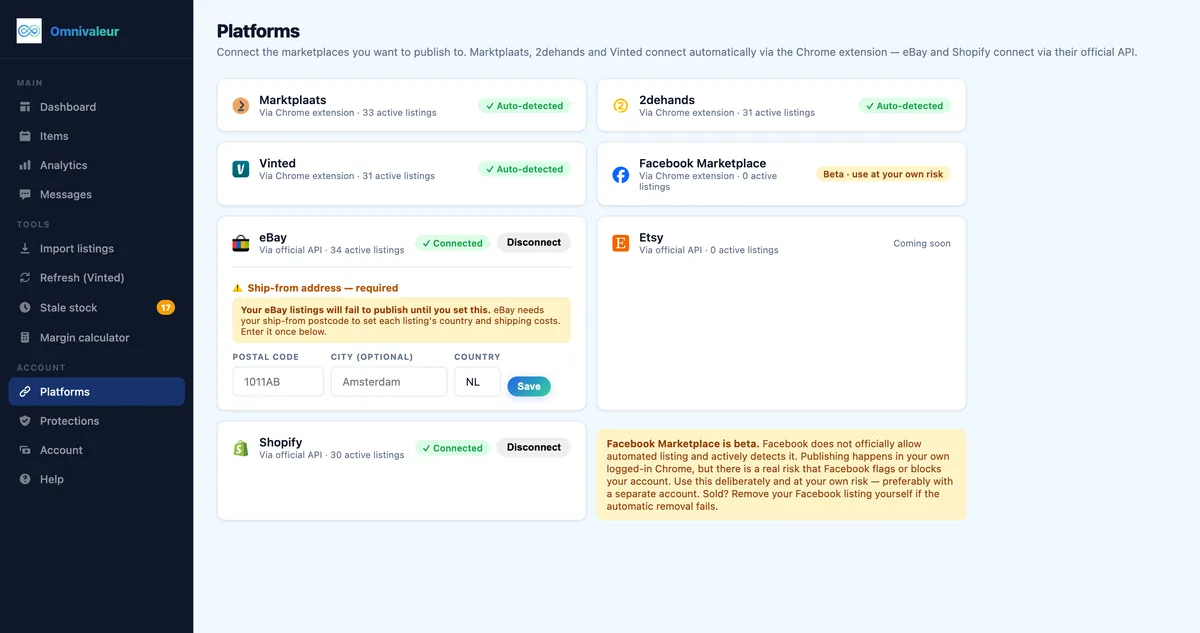
- Marktplaats (the Dutch equivalent of eBay Classifieds)
- 2dehands (Marktplaats's Belgian sibling platform)
- Vinted
- eBay
- Shopify
- WooCommerce
- Facebook Marketplace (currently in beta)
ExportYourStore's publicly stated channel list centres on eBay, Amazon, Etsy, Shopify and Depop, described on their site as "and more." Nowhere in their published material do Marktplaats, 2dehands or Vinted appear — which makes sense given their audience, but it's worth saying plainly: if those three platforms are where you make your money, ExportYourStore simply isn't built for your workflow. That's not a knock on the product, it's a market-fit fact.
If you're trying to run the two biggest Dutch-language marketplaces side by side, a guide like Marktplaats to 2dehands: How to Cross-List Both walks through exactly how that sync needs to behave — something a US-focused tool has no reason to have ever tested.
Platform and pricing comparison at a glance
| Factor | Omnivaleur | ExportYourStore |
|---|---|---|
| Primary audience | EU resellers (NL/BE focus, euro pricing) | US-based sellers on eBay/Amazon/Etsy |
| Marketplaces supported | Marktplaats, 2dehands, Vinted, eBay, Shopify, WooCommerce, Facebook Marketplace (beta) | eBay, Amazon, Etsy, Shopify, Depop, "and more" (unspecified) |
| Pricing transparency | Plans visible on-site before signup | No published price list; requires signup or demo request |
| Sync & relist tooling | Vinted refresh tool (capped at 8 free refreshes/day), stock sync across channels | Marketed "crosslist in one click" and "sync price & inventory" automation |
| Ease of setup | Browser extension + dashboard, built for second-hand listing fields (condition, brand, size) | Web app onboarding, "one-time setup" positioning for store import |
| EU-specific handling | VAT margin scheme guidance, DAC7 thresholds, euro-only pricing logic | Not addressed — no EU second-hand tax or platform content published |
| Review signal | Chrome Web Store listing with public install base | Trustpilot-style "Excellent" rating referenced on homepage |
Nothing in that table is invented. Where ExportYourStore doesn't publish specifics — pricing tiers, exact review counts — the table says so rather than guessing, because a comparison that makes up numbers helps nobody.
How does pricing actually compare in euros and dollars?
Omnivaleur publishes its plans directly on the website, so you can calculate your break-even before you commit a single listing. That matters more than it sounds: if you're listing 60 items a month across three marketplaces at an average price of €35, a tool that quietly eats €15-20 of margin per month on fees or hidden tiers changes your actual profit picture fast.
ExportYourStore doesn't list pricing publicly on its marketing pages — you need to sign up for the web app or request a demo to see what a plan costs. That's a common pattern for US B2B SaaS selling to higher-volume store owners, but it's genuinely less convenient if you just want to compare two tools side by side on a Tuesday evening before deciding which one to trial. We're not going to guess a number here; if ExportYourStore hasn't told the public what it charges, neither will we.
One thing worth factoring into any cross-lister's real cost: marketplace fees themselves still apply regardless of which tool you use. If you're selling on Marktplaats, it's worth knowing what's actually free and what costs money on Marktplaats in 2026 before you compare subscription prices in isolation — the listing tool's fee is only one line in the spreadsheet.
How easy is setup for someone doing this for the first time?
Omnivaleur's onboarding assumes you already have an item sitting in a box: photograph it, fill in condition and brand fields that match what Vinted and Marktplaats actually ask for, and push it to multiple channels from one dashboard. The extension handles the field-mapping between platforms automatically — a "Very Good" condition on Vinted doesn't need to be manually translated into Marktplaats's own condition wording.
ExportYourStore leans into an "import your existing store" model — its marketing describes a "Simple One-Time Setup" where you connect a source store (say, an existing Shopify or eBay account) and let automation populate the rest. That's a genuinely efficient flow if you already run a structured catalog with SKUs, barcodes and consistent product data — the kind of setup a dropshipper or small e-commerce brand already has. It's less useful if your "inventory" is a rotating pile of second-hand clothing, cameras or furniture with no SKU system at all, which describes most Marktplaats and Vinted sellers.
If you're still working out how many items you even need live at once to get consistent sales, How Many Listings Do You Need to Make Sales? is a more useful starting point than either tool's onboarding screen.
How do sync and relisting actually behave once you're live?
This is where "automation" marketing copy meets reality, and it's worth being specific rather than hand-wavy.
Omnivaleur's Vinted refresh tool bumps a listing back toward the top of search results — but it caps itself at 8 free refreshes per day, and the product openly states that no tool can guarantee a marketplace account won't get flagged for aggressive refresh behavior. That's a deliberately conservative limit, chosen because Vinted (like most marketplaces) watches for patterns that look automated rather than human. A tool that promises unlimited, risk-free refreshing is making a claim it can't actually back.
ExportYourStore's public pages describe "sync price & inventory" and "crosslist in one click" as core features — reasonable claims for a tool built around established, API-friendly marketplaces like eBay and Shopify, which expose more structured sync hooks than second-hand marketplaces typically do. We don't have visibility into the exact sync frequency or rate limits ExportYourStore applies, so we're not going to invent numbers — but it's fair to note that eBay's own inventory APIs are generally more mature than what Vinted or Marktplaats expose, which likely makes sync smoother on the channels ExportYourStore actually targets.
The practical lesson for any reseller: ask any cross-listing tool, including Omnivaleur, exactly how often it touches your listings and what happens if a marketplace rate-limits the connection. "Automatic sync" sounds the same in every sales page; the actual cadence and fallback behavior is where tools differ.
- ✓Check the tool's marketplace support against your list — ExportYourStore won't sync Marktplaats or 2dehands
- ✓Pull up pricing for both tools on their websites or via demo requests to calculate real monthly cost
- ✓Read the tool's actual sync limits and refresh caps before signing up — ask how often it touches your listings
- ✓Review current public ratings and user reviews on both products rather than relying on claimed percentages
- ✓If you sell in the EU, verify the tool handles DAC7 reporting thresholds and euro-specific tax rules
How do they handle Marktplaats, 2dehands, Vinted and euro pricing?
This section exists because none of the top search results for this comparison actually address it, and it's the part that matters most if you're reading this from the Netherlands or Belgium.
Omnivaleur treats euro pricing as the default, not an afterthought — no currency conversion guesswork, no US-dollar-first interface you have to mentally translate. It also handles the category and condition fields specific to Marktplaats and 2dehands, and syncs stock status so an item marked sold on Vinted doesn't sit live on Marktplaats for another three days collecting messages from buyers who are about to be disappointed. If you run both Dutch marketplaces simultaneously, the cross-posting logic in Marktplaats to Vinted Crosslisting covers how that stock sync is meant to behave end to end.
Tax exposure is the other EU-specific piece most cross-listing tools ignore entirely. Since 2023, EU marketplaces report seller activity under the DAC7 directive once you cross certain thresholds — in the Netherlands that's 30 sales or €2,000 in a calendar year, whichever comes first, as detailed by the Belastingdienst's official DAC7 guidance for sellers and the European Commission's DAC7 overview. Omnivaleur's content library covers this directly in Vinted DAC7: 30 Sales or 2,000 Euro Gets Reported, and separately for the Belgian side in its coverage of Belgian tax rules for selling on Vinted. ExportYourStore's published content doesn't mention DAC7, VAT margin schemes, or any EU-specific reporting obligation at all — again, not surprising for a US-first tool, but a real gap if that's the regulatory environment you're actually selling in.
If you're also buying second-hand stock for resale and need to understand how VAT applies on the margin rather than the full sale price, the VAT margin scheme guide for second-hand goods is worth reading before tax season, not during it.
What are duplicate listings, and why does the answer matter more in 2026?
A duplicate listing is more than one active listing for the same physical item on the same marketplace at the same time. ExportYourStore's own content touches on eBay's policy around this — eBay generally discourages sellers from posting identical or near-identical listings for one item because it clutters search results and can trigger a policy review, sometimes resulting in a listing being pulled or a seller account being flagged. What's missing from that framing, though, is the distinction resellers actually need: cross-listing the same item across different platforms — Vinted, Marktplaats, eBay — isn't a duplicate listing in the policy sense, because each platform operates its own independent marketplace. The real risk is posting the same item twice on the same platform, either by accident (forgetting you already listed it) or through an automation tool misfiring and re-publishing a draft.
This happens more often than people expect when managing dozens of listings manually across apps. An item sells on Vinted, the seller forgets to mark it sold on Marktplaats, and a buyer messages about an item that's already gone — an awkward, trust-eroding moment that's entirely avoidable. Omnivaleur's stock-sync logic exists specifically to close that gap, and the mechanics are explained in more depth in Stop Selling the Same Item Twice on Marktplaats and Vinted. Heading into 2026, platforms are tightening automated-behavior detection generally, which makes accidental duplicate activity — even unintentional — more likely to draw a warning than it would have two or three years ago.
How reliable is support when something actually breaks?
Support quality is hard to verify from outside either company, so this section stays deliberately general rather than inventing response-time numbers neither product has published.
Omnivaleur is distributed as a Chrome Web Store extension alongside its dashboard, which means its install base, permissions and privacy declarations are publicly visible and reviewable by anyone before they install it — a level of transparency not every SaaS tool offers upfront. ExportYourStore highlights an "Excellent" review rating and a claim of being "Trusted by 5,000+ Sellers" on its homepage, which is a reasonable trust signal if you want to see how a broad US customer base rates the product, though third-party review scores can vary in how recently they were collected and how representative the sample is.
The honest takeaway: check current reviews on both products directly before buying either one, rather than relying on any single number — including the ones in this article — as the final word. Review scores shift, and a comparison page is a snapshot, not a guarantee.
Is Omnivaleur or ExportYourStore the better fit if you're already using another tool?
Worth noting for context: ExportYourStore isn't the only alternative Omnivaleur gets compared against. If you've already evaluated other cross-listers and want to see how Omnivaleur stacks up more broadly, there's honest breakdowns against OneShop, Crosslist, Zenlister and List Perfectly, each written with the same honesty standard applied here — real strengths, real gaps, no inflated claims either direction.
And if your current profit tracking relies on the asking price rather than what the buyer actually paid, it's worth checking your numbers. On second-hand marketplaces, negotiated final sale price typically lands 10-20% below the original asking price once haggling, bundle discounts and last-minute price drops are factored in. Omnivaleur's analytics are built to calculate profit from the confirmed real sale price you enter per transaction, not the number you originally listed at — which means the margin figure you see actually reflects what landed in your account, not an optimistic estimate.
So, who should actually choose Omnivaleur vs ExportYourStore?
Choose Omnivaleur if you're selling second-hand or vintage goods primarily through Marktplaats, 2dehands or Vinted, with eBay, Shopify, WooCommerce or Facebook Marketplace as secondary channels, and you want euro-native pricing plus EU tax context (DAC7, VAT margin scheme) built into the tool rather than bolted on by a third party.
Choose ExportYourStore if your business is structured around a US-based store — Shopify, eBay, Amazon or Etsy — with a more traditional catalog of SKUs, and you want AI-assisted automation to push that catalog across multiple American marketplaces without manually re-entering product data for each one.
Neither tool is universally "better." They're solving adjacent but different problems for different sellers in different markets. If you're reading this from Amsterdam, Ghent or Rotterdam, the marketplace list alone probably already answered the question before you got to this paragraph. If you're reading it from Austin or Atlanta, it likely pointed the other way — and that's exactly how an honest comparison should land.
Frequently asked questions
Can I run Omnivaleur and ExportYourStore at the same time?
Does ExportYourStore support Vinted directly?
If I switch from ExportYourStore to Omnivaleur, do I have to re-upload every listing?
Does either tool guarantee my Vinted or eBay account won't get restricted?
How does DAC7 reporting affect which cross-listing tool I should pick?
Is there a free way to try either platform before paying?
Keep reading
Stop copying listings by hand
Omnivaleur publishes your item to every platform at once and syncs stock automatically when something sells.
Start free trial