Shopify to Vinted Crosslisting 2026: Selling Store Inventory as Secondhand
Shopify to Vinted crosslisting means pushing product listings from your Shopify store onto Vinted's peer-to-peer marketplace. It works technically, but Vinted's terms restrict commercial selling on personal accounts, so most Shopify sellers need a Vinted Pro setup, manual approval, or a workflow that keeps stock synced without triggering account flags.
Key takeaways
- Vinted is built for private sellers, so business inventory from Shopify usually needs a Vinted Pro account or manual listing review.
- Shopify's rich variant structure (size, color, material) has to be split into separate single-item listings on Vinted.
- Omnivaleur's Vinted refresh tool caps out at 8 free refreshes a day and never claims to guarantee an account won't get flagged.
- Real profit only shows up once you confirm the actual sale price — asking price and final price differ by roughly 10-20% on secondhand platforms.
- DAC7 reporting applies across both Shopify and Vinted once you cross a transaction threshold, and the two platforms report separately.
Shopify was built for retail. Vinted was built for a neighbor selling her old jeans. Bridging the two isn't just a copy-paste job — it's a compliance question first, a technical one second. Get the order backwards and you risk a suspended Vinted account before you've sold a single item.
Can You Legally Cross-List a Shopify Store's Products to Vinted?
Technically, yes. Practically, it depends on what you're selling and how much of it. Vinted's own selling policy is written for individuals clearing out their closets, not registered businesses moving new stock. If your Shopify store sells new, boxed, or wholesale-sourced items under a registered business, Vinted expects you to identify as a professional seller rather than list under a private profile.
This matters more in 2026 than it did a few years ago. Vinted has tightened its detection of high-volume sellers using identical product photography, matching SKUs, and near-simultaneous listing patterns — all the tell-tale signs of a Shopify feed being pushed straight through. Getting flagged as an undisclosed commercial account can mean a review, a hold on payouts, or in repeat cases a ban.
The safer path for most resellers: use Vinted for genuinely secondhand, one-off, or vintage stock pulled from your Shopify catalog, and keep clearly new wholesale inventory on channels built for it. If your business model is mixed — some vintage, some new stock — separate the two streams before you start automating anything.
What Counts as "Commercial" on Vinted?
Vinted doesn't publish a hard number, but sellers who consistently list 20+ near-identical items, use studio product shots instead of real-life photos, or ship from a warehouse address tend to get reviewed faster. If that describes your Shopify operation, plan for a Vinted Pro or business declaration from day one rather than waiting for a warning email.
How Do You Actually Cross-List Items From Shopify to Vinted?
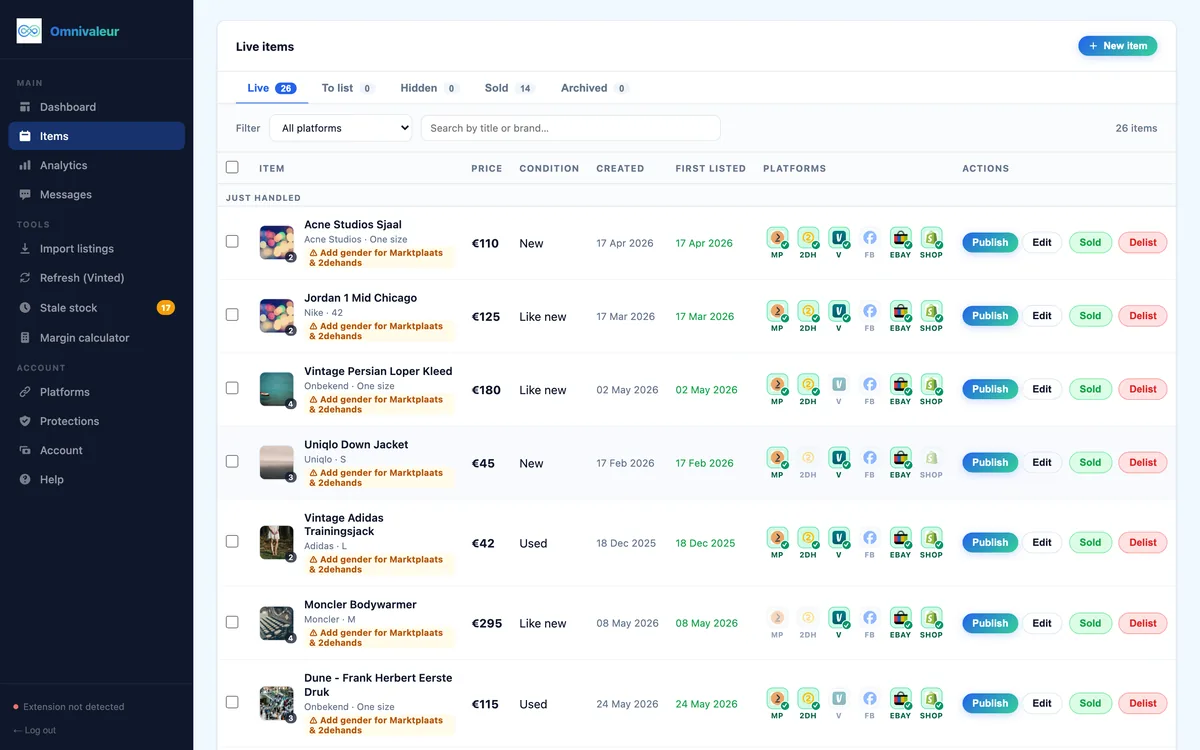
Once you've sorted out which items belong on Vinted, the workflow itself is straightforward with the right tool. A typical setup looks like this:
- Connect your Shopify store and pull in the product catalog, including images, descriptions, and variant data.
- Filter for items eligible for Vinted — generally secondhand, vintage, or single-unit pieces rather than multi-size new stock.
- Map Shopify categories to Vinted's category tree, which is far more granular for clothing, shoes, and accessories.
- Split multi-variant Shopify products into individual Vinted listings, since Vinted sells one physical item per listing, not a size/color grid.
- Set a Vinted-specific price, since buyer psychology and fee structure differ from your Shopify storefront.
- Publish, then link inventory so a sale on either side updates the other automatically.
Doing this manually for a handful of items is fine on a Sunday afternoon. Doing it for 200 SKUs a week is where sellers burn out, which is the actual reason cross-listing tools exist. If you're also running Marktplaats or 2dehands alongside Shopify and Vinted, the same logic extends — see how it plays out for a Marktplaats to Vinted crosslisting setup for the parallel workflow.
What Shopify Product Data Does Not Transfer Cleanly to Vinted?
This is the part beginners underestimate. Shopify and Vinted store product information in fundamentally different shapes, and a chunk of your data simply has nowhere to go on the other side.
- Variants: Shopify's variant system (size, color, material as one product with multiple SKUs) doesn't exist on Vinted. Each variant becomes a standalone listing with its own photos and price.
- Rich HTML descriptions: Shopify descriptions often include formatted text, embedded size charts, or brand storytelling. Vinted strips formatting entirely — descriptions are plain text with a strict character limit, so you need a condensed version, not a copy-paste.
- SEO metadata: Meta titles, alt text, and structured data that help your Shopify store rank on Google carry zero weight on Vinted, which has its own internal search algorithm based on freshness, price competitiveness, and seller rating.
- Inventory quantity above 1: Shopify lets you stock 50 units of the same T-shirt. Vinted assumes one seller, one item — you'll need one listing per physical unit if you're selling multiples of the same secondhand piece.
- Shipping profiles: Shopify shipping zones and carrier rates don't map to Vinted's built-in shipping labels, which use their own weight bands and courier partnerships.
None of this is fatal, but it explains why a "sync everything automatically" promise from a tool usually means "sync the fields that overlap, and flag the rest for manual review." For details on how Shopify structures product data on its side, its own product and inventory documentation is worth a skim before you map fields.
How Do Fees, Payouts and Pricing Compare Between Shopify and Vinted in 2026?
Pricing the same item across both platforms without losing margin means understanding two very different fee stacks.
| Factor | Shopify | Vinted |
|---|---|---|
| Platform fee | Monthly subscription (from roughly €25/month) + payment processing ~2-3% | No listing fee; buyer pays a protection fee, seller keeps sale price |
| Who sets shipping cost | Seller configures rates and carriers | Vinted's own label system, cost varies by weight and country |
| Payout timing | Instant via Shopify Payments, subject to processor rules | Released a few days after buyer confirms receipt |
| Refunds/disputes | Seller handles under EU consumer rights rules for distance selling | Vinted mediates via buyer protection |
The practical effect: an item priced at €40 on your Shopify store rarely nets the same margin at €40 on Vinted, because the buyer sees a higher total (item price plus protection fee) and often negotiates or offers lower. Most sellers price 10-15% below their Shopify equivalent to stay competitive on Vinted's search results, then absorb the difference in volume.
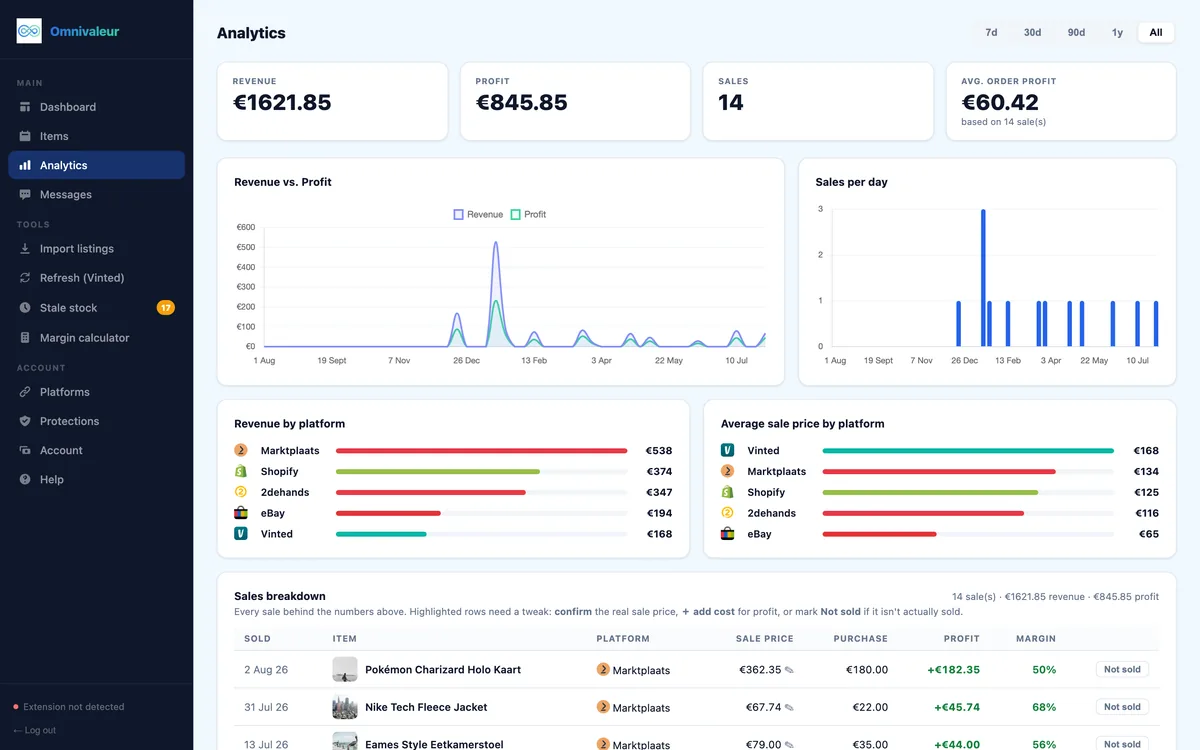
This is exactly where profit tracking gets messy if you're only looking at asking price. Omnivaleur's analytics calculate profit from the real, confirmed sale price rather than the listed price — and on secondhand marketplaces those two numbers typically differ by 10-20%. If you're reporting margins based on what you listed rather than what actually cleared, your numbers are quietly wrong every single month.
How Do You Keep Stock Levels in Sync Between a Shopify Store and Vinted?
Overselling is the single most common complaint from resellers running both a store and a marketplace presence. Someone buys the last vintage jacket on Vinted at 11pm, your Shopify listing still shows it in stock, and a second buyer purchases it on your website an hour later. Now you're refunding one of them and apologizing.
A working sync setup needs to handle three triggers:
- A sale on Vinted should immediately mark the item sold or reduce quantity on Shopify.
- A sale on Shopify should pull the matching Vinted listing down, not just mark it "reserved."
- Manual removals (damaged item, gift, personal use) need a one-click way to pull stock from both platforms at once, not two separate logins.
Delay tolerance matters here too. A sync that runs every 15 minutes is fine for a slow-moving vintage catalog. A sync that runs once a day is not fine if you're moving fast fashion or sneakers with real-time demand. Check the polling frequency of any tool before trusting it with dual-channel inventory — this is a detail competitors' setup guides tend to skip entirely.
Do Vinted's Refresh and Listing Limits Affect Shopify Sellers Who Scale Up?
Yes, and this is where Shopify-scale volume runs into Vinted-scale rules. Vinted's search ranking rewards recently "bumped" or refreshed listings, so sellers with large catalogs often try to refresh dozens of items daily to stay visible. Vinted doesn't publish a hard cap, but aggressive refresh behavior is one of the patterns that trips its automated flagging systems.
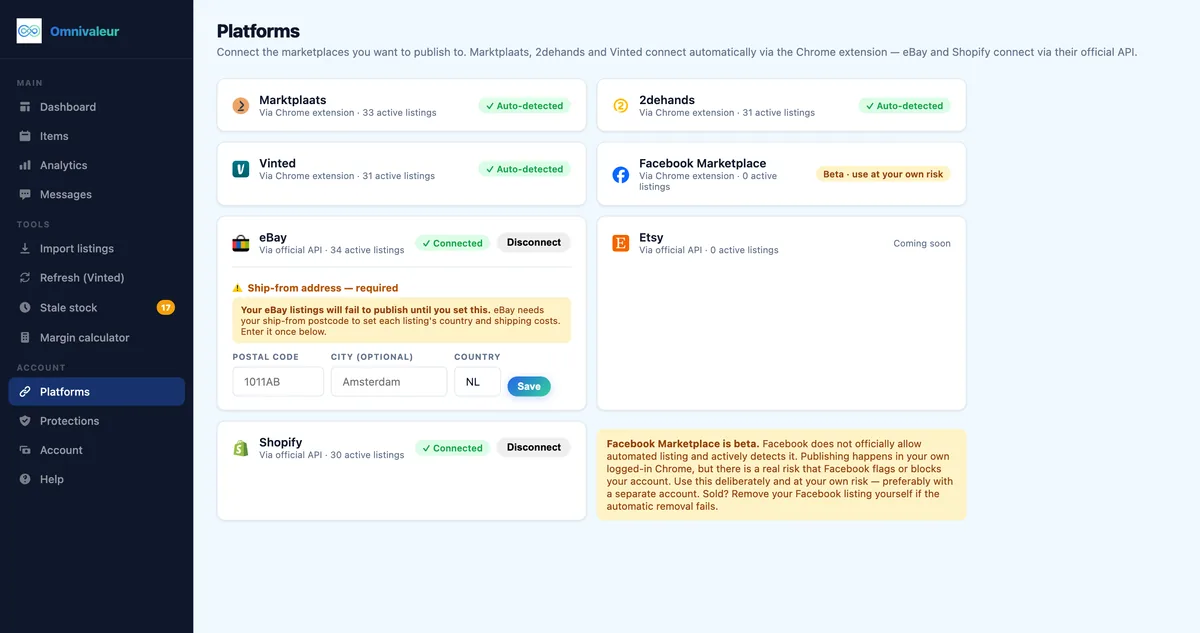
Omnivaleur deliberately caps its own Vinted refresh tool at 8 free refreshes per day, and is upfront that no tool — Omnivaleur included — can guarantee a marketplace won't flag an account for unusual activity. That's not a limitation to hide; it's the honest reality of automating on a platform you don't control. If you're moving 300 SKUs from Shopify, expect to prioritize which items get refreshed rather than blasting the whole catalog daily.
For a broader look at automating high-volume Vinted selling without tripping these limits, the Vinted reselling automation guide covers refresh cadence and account health in more depth than fits here.
What Tax Reporting Applies When You Sell the Same Inventory on Shopify and Vinted?
Running a Shopify store already means you're a registered business for tax purposes in most EU countries. Adding Vinted doesn't reduce that obligation — it adds a second reporting stream. Under DAC7, digital platforms including Vinted are required to report seller earnings to tax authorities once you cross set transaction or revenue thresholds in a calendar year.
Because Shopify and Vinted report independently, the same physical inventory can generate two separate data trails to the tax office if you're not tracking which item sold where. The Belastingdienst's DAC7 guidance for sellers and the European Commission's DAC7 overview both spell out exactly what gets reported and when — worth reading once rather than guessing every quarter.
Practically, keep a single source of truth for every sale: which platform, which item, real sale price, and date. That's the only way to reconcile two separate DAC7 reports against your own books at year-end without a scramble in January.
Which Tool Actually Handles Shopify-to-Vinted Cross-Listing Well?
Most cross-listing tools were designed for marketplace-to-marketplace moves — Vinted to eBay, Marktplaats to Etsy — not for pulling a full retail catalog out of a store platform. That's a different data shape, and it shows in how tools handle variant splitting and inventory sync. Before picking a tool, check whether it distinguishes between platform pairs; a Shopify feed needs more restructuring on the way into Vinted than, say, a Vinted to Etsy crosslisting flow where both platforms already speak "single item, one seller."
If you're weighing dedicated tools against each other, an honest side-by-side like Omnivaleur vs List Perfectly is more useful than any single vendor's feature page, since pricing tiers and refresh limits change yearly and rarely match the marketing copy exactly. And if fashion is only part of your catalog, the wider fashion reselling automation platforms guide compares options across categories rather than just this one pairing.
One more practical note for 2026: Vinted has been rolling out stricter photo authenticity checks (flagging stock photography lifted straight from a retailer feed), so even when a tool successfully imports your Shopify images, expect to swap in at least one real, unedited photo per listing to avoid review delays.
Frequently asked questions
Can I run the same product photos on Shopify and Vinted without issues?
Does Vinted allow linking to my Shopify store in listings?
What happens if a Vinted buyer wants a size that only exists on my Shopify store?
Should new-with-tags Shopify overstock go on Vinted at all?
How do returns work when an item was cross-listed from Shopify but sold on Vinted?
Keep reading


Stop copying listings by hand
Omnivaleur publishes your item to every platform at once and syncs stock automatically when something sells.
Start free trial