
Sell faster on eBay in 2026 by pricing at the median of recently <em>sold</em> comparable listings (not active ones), using Buy It Now with free shipping, filling every item specific, shooting 10+ daylight photos, and setting 1-day handling. Items priced correctly typically sell within 3-7 days instead of sitting for months.
Key takeaways
- Price against sold listings from the last 30 days, never against what other sellers are hoping to get
- Buy It Now with free shipping consistently outsells auctions for anything under roughly €150
- Filling every item specific field and a front-loaded title does more for visibility than any photo filter
- A 1-day handling time and same-day shipping scan both feed eBay's Best Match ranking directly
- DAC7 reporting kicks in at 30 sales or €2,000 a year, regardless of which EU platform you sell on
Most eBay listings that "don't sell" aren't cursed — they're priced against the wrong data, buried by a thin title, or sitting with a 5-day handling time that tanks their ranking. Fix those three things first, before you touch photo filters or promoted listing budgets.
What actually makes an eBay listing sell faster in 2026?
eBay ranks listings with an algorithm it calls Best Match, and it weighs three groups of signals: price-plus-shipping competitiveness, listing completeness (title, item specifics, photo count), and seller performance (handling time, defect rate, returns). None of these are secret — eBay's own listing documentation lays out exactly which fields it expects filled in, and skipping them is the single easiest way to get outranked by a competitor selling the same item for €3 more.
In practice this means speed comes from stacking small advantages: a tight price, a title that matches what buyers actually type, item specifics filled out completely, enough photos to answer every question before it's asked, and a handling time that doesn't make eBay nervous about late shipment defects. Each one alone moves the needle a little. Stacked together, they're the difference between a sale in 4 days and a listing still sitting there in month three.

How do you price an item so it sells in days, not months?
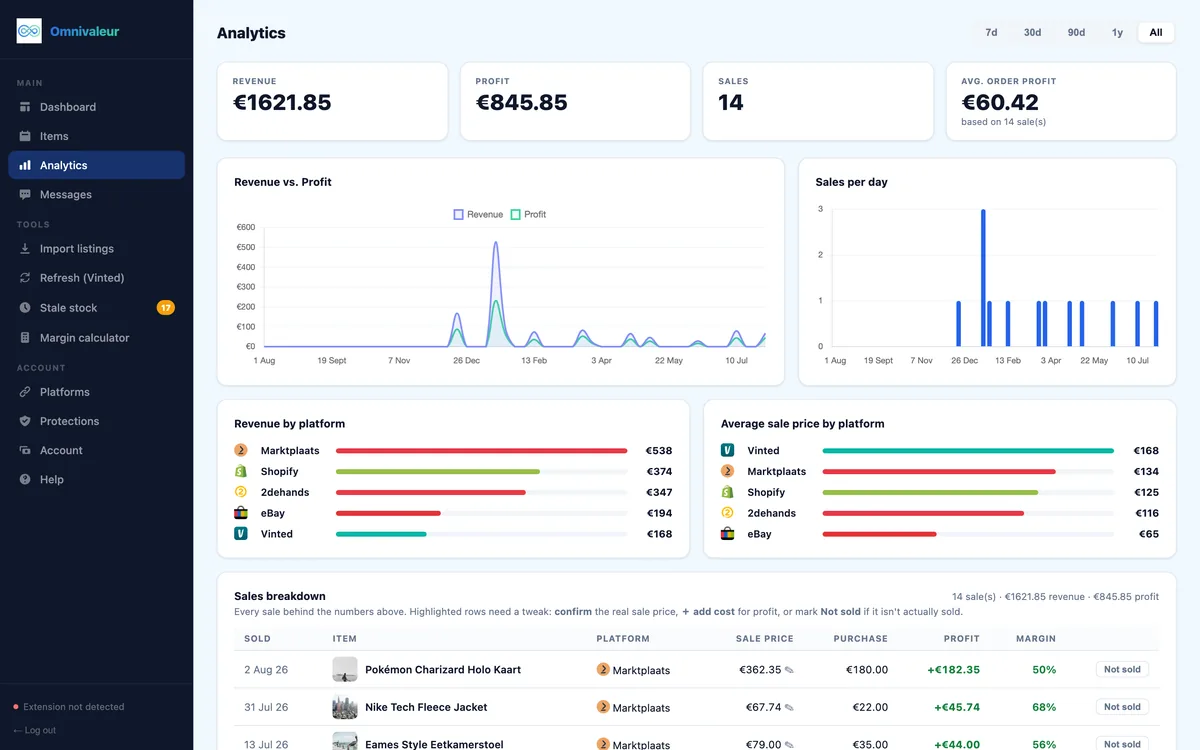
This is where most slow sellers go wrong: they price against active listings — what other sellers are asking — instead of sold listings, which is what buyers actually paid. On eBay, filter completed listings to "Sold" and look at the last 15-20 comparable sales. That's the real market, not the wishful one.
This is the practice some guides call price anchoring: setting your price relative to a known reference point so buyers perceive it as fair or as a deal, rather than pulling a number out of the air. For a reseller, the anchor should always be the median of recent sold prices, not the highest one you can find.
Worked example: you're listing a used mirrorless camera body. The last 12 sold listings on eBay.com (comparable condition, same lens mount) range from €165 to €225, with a median around €190. List at €179 with free shipping and you anchor yourself just under the median — visibly a fair price, not a discount-bin price that makes buyers suspicious of a hidden fault. That listing typically moves in under a week. List at €235 because "it's in great condition" and you're fighting the market, not selling into it.
Run this math properly and you also protect your margin. If you're not already tracking cost-to-sale-price ratios across items, it's worth working through how to calculate profit margin reselling before you set anchor prices, because a fast sale at a loss isn't a win.
How do you optimize an eBay listing for higher conversions?
Title: front-load the keywords, skip the filler
eBay titles max out at 80 characters. Buyers searching type brand, model and key attribute in that order — so your title should too. A title like "RARE vintage camera, look!! must see, L@@K" wastes 35 characters eBay's search index ignores. "Canon AE-1 Program 35mm Film Camera Black Body, Tested Working" hits brand, model, format, condition, and a trust signal in one line, and it matches the exact strings buyers type into search.
Item specifics: the fields nobody fills in properly
Every category has a set of item specifics — brand, size, material, color, model year. eBay uses these for filtered search (buyers clicking "Size: M" in the sidebar) and for Best Match scoring. A listing missing half its item specifics gets excluded from those filtered results entirely, which quietly caps your visibility no matter how good the title is. Fill every field eBay offers, even the optional ones.
Description: structure beats prose
Mobile buyers skim. Lead with a short bullet list — condition, measurements, flaws, what's included — then a couple of sentences of context underneath. A wall of unbroken text gets scrolled past on a 6-inch screen, which is most of eBay's traffic in 2026.
If you're also listing across other channels, keep measuring whether your tweaks are actually working rather than guessing. How to calculate sell-through rate for reselling walks through the formula so you can tell whether a title change genuinely cut your average days-to-sell or whether you just got lucky on one item.
Why does mobile optimization matter for eBay listings in 2026?
The large majority of eBay browsing now happens in the app, not a desktop browser. That changes what "good photos" means. A photo that looks sharp full-screen on a laptop can turn into a muddy grey square as a 200-pixel thumbnail in a mobile search grid. Your first image — the one that shows in search results — needs to work as a tiny square thumbnail first, and as a full photo second.
Practical rules for the lead photo: plain, even-lit background, item centered and filling the frame, no text overlays, no watermark logos competing for attention. Save the lifestyle or context shot (item being worn, item in use, item next to a ruler for scale) for photo 2 or 3. eBay allows up to 24 images per listing and charges nothing extra for them — use at least 10-12 on anything with real resale value. Daylight near a window beats any ring light for color accuracy, a principle that holds whether you're shooting a camera, a watch, or a jacket — the same lighting logic covered in how to photograph clothes for Vinted applies directly to eBay listings too.
Show flaws honestly in a dedicated photo. It feels counterintuitive, but a buyer who sees the scratch in the listing doesn't open a case about it three weeks later. Hidden flaws cause returns, and returns slow down your account's performance metrics, which then slows down every future listing's ranking.
Should you use an auction or Buy It Now to sell fastest?
For anything with a known, liquid market — electronics, branded clothing, trading cards, trainers — Buy It Now wins on speed almost every time in 2026. Auctions only make sense for genuinely scarce items where you're not sure what the ceiling price is, or for building urgency on the last few units of a batch.
| Factor | Buy It Now | Auction |
|---|---|---|
| Typical time to sale | 3-7 days at the right price | Fixed 1, 3, 5, 7 or 10 days — no faster |
| Best for | Known-value items, branded goods, duplicates | Rare or one-off items with uncertain ceiling |
| Buyer psychology | Impulse buy, no waiting required | Competitive bidding can push price above expected |
| Risk | Priced too high, it just sits | Can end with no bids or a low final price |
| Best Offer | Usually enabled alongside it | Not available during active bidding |
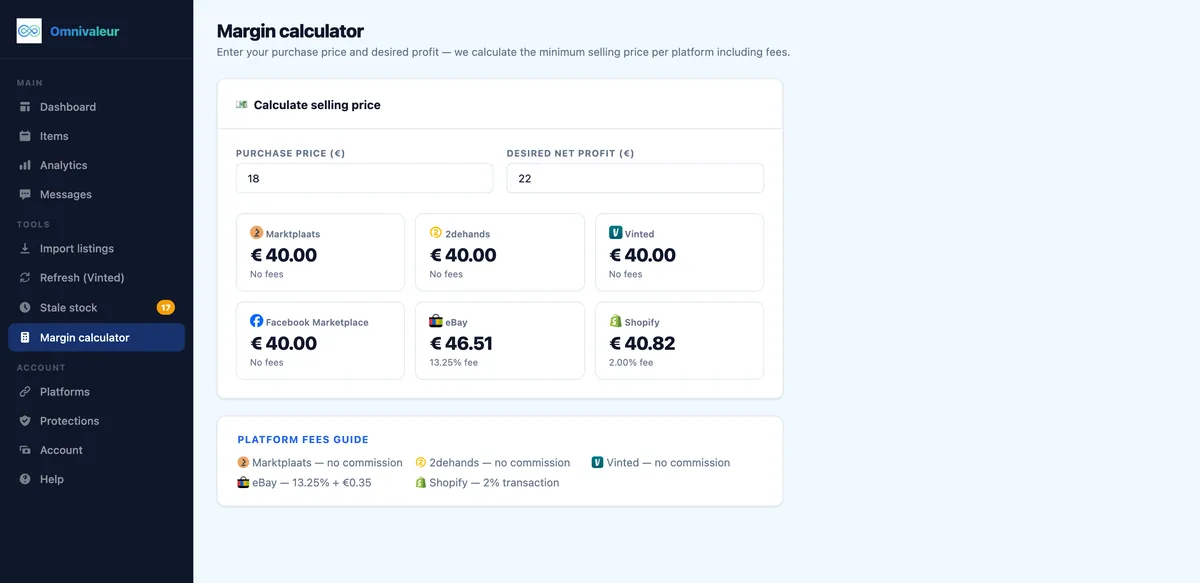
If you do run auctions, start the bid low enough to attract the first bid — a €0.99 or €1 start with no reserve gets far more watchers than a €50 starting bid on the same item, because eBay's search and watcher behavior rewards early bidding activity. Time the auction to end on a weekday evening, 7-9pm local time, when the most buyers are actually browsing rather than at work or asleep. And enable Best Offer on your Buy It Now listings — accepting a counteroffer 8% below asking almost always beats the item sitting unsold for another three weeks.
For anything too bulky or expensive to ship safely — furniture, large appliances, anything over 30kg — add local pickup as an option rather than letting the listing die on shipping cost alone. Buyers searching with a local filter will find it, and you skip packaging entirely.
What is eBay's 3-day rule and how does it actually affect fast sales?
This gets searched a lot and it's often misunderstood. There isn't a single policy literally called the "3-day rule." What people mean is eBay's handling time requirement tied to Top Rated Seller status: to qualify for Top Rated Plus (which comes with a search ranking boost and a badge buyers trust), you generally need to ship within 1 business day on most items, and your account-wide late shipment rate has to stay under 3%. Separately, many sellers set a 3-business-day handling time as a safe buffer that still keeps them inside eBay's acceptable range without promising same-day dispatch they can't always hit.
Why it matters for speed specifically: handling time is a direct input into Best Match. Two identical listings at the same price, one with 1-day handling and one with 5-day handling, will not rank equally — eBay pushes the faster-shipping listing higher because it's a better experience for the buyer. If you're combining eBay with other marketplaces and print labels manually on each one, a 3-business-day handling time is the realistic floor; promising 1-day and missing it repeatedly does more damage to your account than just setting 3 days honestly. Full policy detail sits in eBay's listing and handling time guidance.
Can you realistically make €1,000 a month selling on eBay?
Yes, but the math only works if you look at it per-item, not per-month. Take a reseller averaging €35 per sale, sourcing stock at roughly 40% of resale value, and paying eBay's standard final value fee of around 13% plus a small per-order fixed fee on most categories. Net margin per item lands near €12-13 after fees and cost of goods, before accounting for your own packaging and time.
To clear €1,000 in actual profit at that margin, you need roughly 80 sales a month — about 2.5-3 items a day. That's entirely achievable for someone running 150-250 active listings with a sell-through rate above 15-20% a month, but it's not a side-hustle-while-doing-nothing number. It requires sourcing consistently, which is where knowing where to source items for second-hand reselling matters as much as the listing optimization itself, and it requires enough active inventory to hit that daily sale count — see how many listings you need to make sales for the realistic ratio.
One thing worth planning for before you hit that volume: once you cross 30 transactions or €2,000 in a calendar year on a single platform, EU marketplaces are required to report your sales data to tax authorities under DAC7. This applies whether the sales happen on eBay, Vinted, Marktplaats or anywhere else — it's platform-agnostic by design. The official rules are published by the Belastingdienst for Dutch sellers and summarized EU-wide by the European Commission. We've broken down exactly how the thresholds work and what gets reported in our DAC7 reporting rules guide — the 30-sales-or-€2,000 trigger is identical across platforms, only the name on the report changes.
Should you sell on eBay or Facebook Marketplace for speed?
Neither wins outright — they're fast for different reasons, and the smartest resellers run both.
| Factor | eBay | Facebook Marketplace |
|---|---|---|
| Typical speed to first offer | 3-7 days (priced correctly) | Hours to 2 days for local pickup items |
| Best for | Shippable goods, branded items, buyers outside your city | Bulky items, furniture, local-only pickup |
| Fees | ~13% final value fee + payment processing | Free for local pickup; fee applies if shipped |
| Buyer protection | Strong, eBay Money Back Guarantee | Minimal for local cash/transfer deals |
| Negotiation | Best Offer, structured | Informal chat haggling, often lower final price |
| Reach | National/international | Local radius only |
For a wardrobe clear-out of local furniture, Facebook Marketplace genuinely sells faster — buyers want it today, pickup is free, and there's no shipping friction. For anything with a national or international market and real resale value, eBay's structured buyer protection and payment system move more items reliably, even if the first message takes a day or two longer. EU buyers also get baseline protections on distance sales regardless of platform — the Your Europe consumer shopping rights overview is a useful reference if a buyer disputes a sale on either channel.
How does shipping speed affect how fast an item actually sells?
It's not just about handling time ranking — it's about repeat buyers and feedback velocity, which both compound. A buyer who gets tracking within hours and the parcel in 2 days leaves fast, positive feedback. That feedback shows on your profile immediately, and new buyers checking your seller rating before committing to a purchase see recent, fast, positive activity rather than a stale profile. Feedback score itself isn't a direct Best Match input the way handling time is, but a thin or old feedback history makes cautious buyers hesitate on anything over €50, which does slow sales indirectly.
Practical shipping moves that cut real days off the process: weigh the item in its actual shipping box before listing, not an estimate — getting this wrong means either overcharging (buyers bounce) or losing money on every sale. Buy postage through eBay's own label tool rather than queuing at a counter; it's cheaper on most routes and the tracking number uploads automatically, which starts the delivery clock in the buyer's eyes immediately rather than a day later. If you're also shipping through other channels, the label workflow differs enough between platforms that it's worth a direct comparison — our guide to printing shipping labels on Marktplaats covers the equivalent process there.
One edge case worth planning for: difficult buyers who message endlessly, lowball repeatedly after a Best Offer was already declined, or threaten a bad review to extract a discount post-sale. These conversations eat real time and sometimes derail a sale entirely. Knowing when and how to cut one off matters — see how to block a buyer on eBay for the exact steps, because a blocked problem buyer frees up that listing for a buyer who'll actually complete the transaction.
What should you do with items that just aren't selling?
Three options, in order of effort: reprice against fresh sold data, relist with a different format or title, or pull the item for cross-listing elsewhere. The mistake most resellers make is leaving a dud listing exactly as-is for months, hoping it eventually finds its one buyer. It rarely does — stale listings get buried further by Best Match over time as their click-through rate drops relative to newer listings.
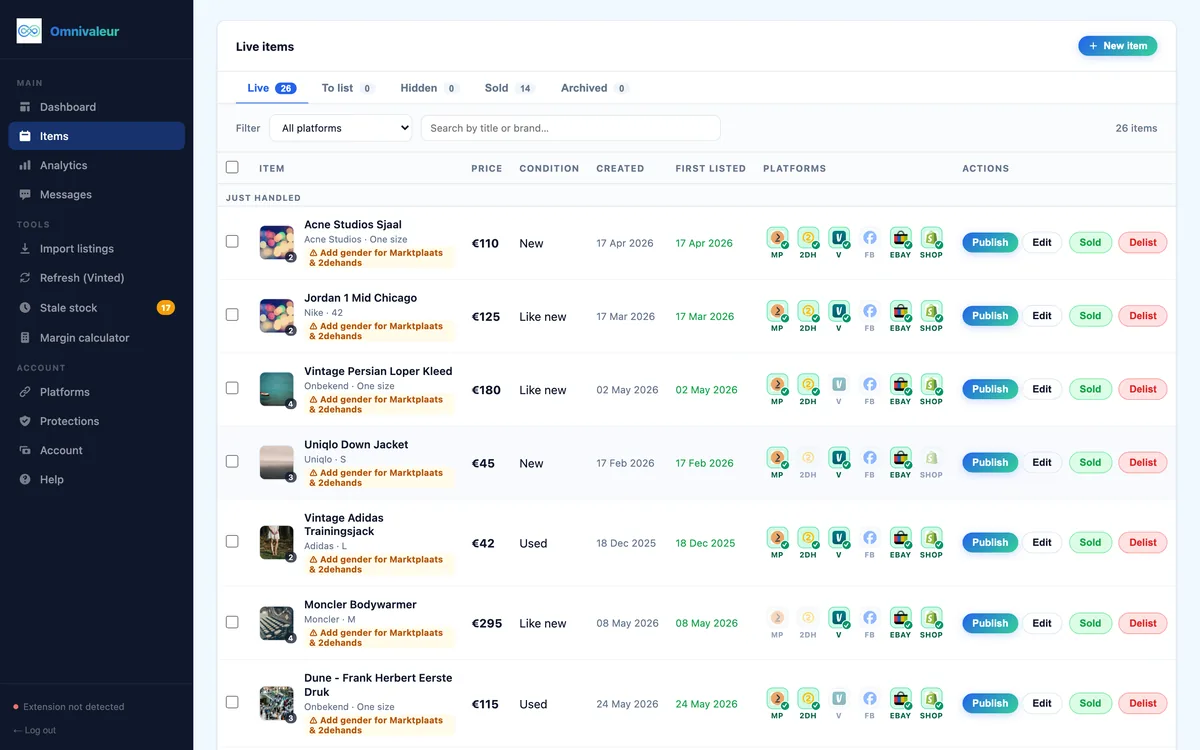
This is genuinely the hardest part of running a multi-item inventory manually: spotting which listings have gone quiet before they've been sitting for 90 days with zero views. Omnivaleur's stale-stock view exists specifically for this — it flags listings that have been sitting unsold so slow inventory surfaces at the top of your attention instead of sinking invisibly to the bottom of a long list. Once flagged, the fix is usually one of: a 10-15% price cut against new sold comps, a title rewrite, fresh photos, or a push to a second marketplace where the same item hasn't been seen yet.
Keeping inventory organized in the first place makes this whole process faster — a messy spreadsheet or a pile of unlabeled boxes means every repricing decision starts with "wait, where is this item and what did I pay for it." How to organize inventory for reselling covers a system that scales past the first 50 items, which is usually when manual tracking starts breaking down.
How does cross-listing to other marketplaces fit into selling faster on eBay?
eBay alone caps your audience to eBay's buyers. The fastest resellers in 2026 don't choose eBay or Marktplaats or Vinted — they list the same item across all of them at once, then sell to whichever marketplace's buyer shows up first, and pull the listing everywhere else the moment it sells. That's the entire mechanism behind cross-listing, and it's the single biggest lever for speed once your price and title are already optimized, because it multiplies your visible audience without multiplying your work.
The one thing to get right here: don't publish to five marketplaces simultaneously from five open browser tabs. Doing several logins and rapid-fire postings in parallel is exactly the pattern marketplace fraud systems flag as bot-like, and it's how accounts get rate-limited or temporarily restricted. Omnivaleur's cross-listing runs one browser tab at a time, by design — it's slower per-listing than parallel publishing would be, but it keeps every account looking like a normal human seller instead of a script, which matters far more for your long-term selling speed than shaving thirty seconds off a batch upload.
If you're starting from Marktplaats stock and want it live on eBay without re-typing every listing, Marktplaats to eBay crosslisting covers the field mapping between the two platforms. Going the other direction — moving a proven eBay catalog onto a Shopify store you control — is covered in eBay to Shopify crosslisting, useful once you've got enough repeat buyers to justify your own storefront outside eBay's fee structure entirely.
None of this replaces the fundamentals above. Cross-listing multiplies exposure for a well-priced, well-photographed, properly titled listing. It does nothing for one that's priced 30% over the market or missing half its item specifics — that listing will just sit slowly on five marketplaces instead of one.
Frequently asked questions
Does eBay still charge insertion fees for private sellers in Europe in 2026?
Do Promoted Listings actually make items sell faster, or just cost more?
Is it worth paying for an eBay Store subscription to sell faster?
What handling time should I set if I'm also selling on Marktplaats or Vinted at the same time?
Does feedback score actually affect how fast an item sells?
Keep reading



Stop copying listings by hand
Omnivaleur publishes your item to every platform at once and syncs stock automatically when something sells.
Start free trial