Trading card reselling automation is software that cross-lists raw and graded cards across eBay, Vinted, Marktplaats, Shopify and other marketplaces at once, keeps per-variant stock in sync, and reprices listings as card values shift. It replaces hours of manual relisting and stops the same card selling twice on two platforms.
Key takeaways
- A manual 50-card listing session often takes 2-3 hours; good automation cuts that to under 30 minutes.
- Graded and raw copies of the same card need separate listing templates, not one shared draft.
- Selling more than 30 items or earning over €2,000 on Vinted in a year triggers DAC7 reporting in the Netherlands.
- Stock sync has to fire the moment a card sells, since most singles only exist as one physical copy.
- Omnivaleur calculates profit from the confirmed sale price rather than the asking price, and on second-hand marketplaces those two figures typically differ by 10-20%.
Trading card resale runs on volume. A single box break can throw off 40 singles in an afternoon, and a decent Pokémon or sports card inventory easily sits in the thousands. Listing that by hand, card by card, across more than one marketplace is where most sellers either burn out or stop expanding past one platform. This guide covers who actually needs automation here, what breaks when you try to do it manually, and what a proper 2026 setup looks like.
Who actually needs trading card reselling automation?
Not every collector selling off a childhood binder needs software. Three groups genuinely do:
- Volume flippers buying bulk lots, breaks, and clearance boxes, then relisting singles individually. Anyone moving 100+ cards a month hits the listing wall fast.
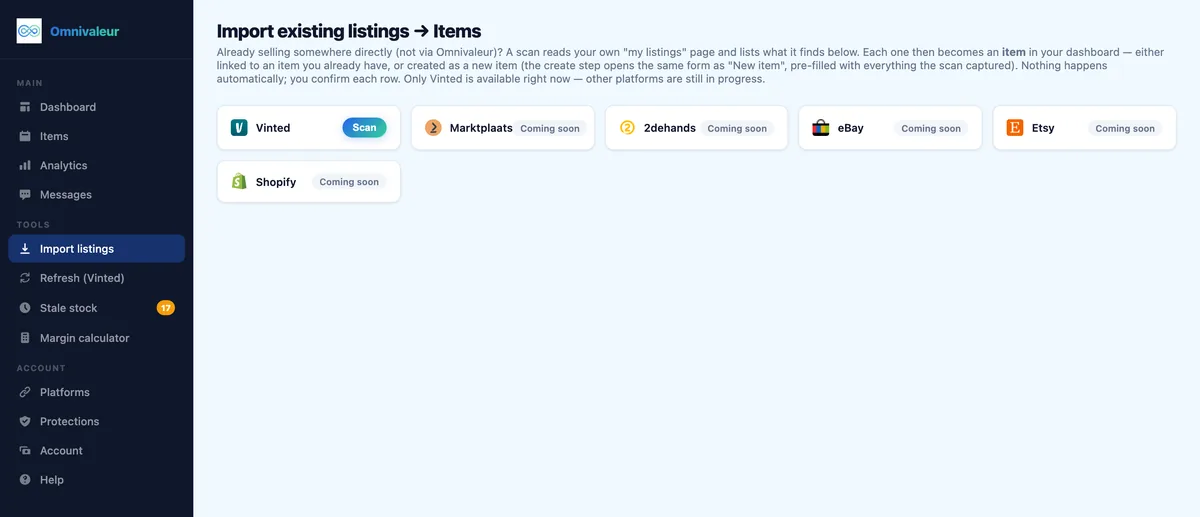
- Card shop owners running a physical or online store who also need eBay, a Shopify storefront, and local marketplaces like Marktplaats or 2dehands to clear overstock.
- Graded-card specialists flipping PSA, BGS, or CGC slabs where listing accuracy (cert number, grade, population count) matters more than photo quality.
A casual seller offloading 20 cards once doesn't need any of this. A reseller doing it weekly, across multiple marketplaces, does. If your current workflow is copy-pasting the same description into four tabs, you've already outgrown manual listing.
What makes trading cards harder to automate than sneakers or clothing?
Sneaker and clothing automation deals with a manageable set of variants: size, color, condition. Trading cards multiply that. A single card can exist as:
- Base version, parallel, refractor, or numbered /25
- Raw (ungraded) or graded by PSA, BGS, CGC, or SGC
- Different grades within the same card (PSA 9 vs PSA 10 can differ 5x in price)
- First edition vs unlimited, language variant, or print run
That means the same physical card needs a completely different SKU, title, and sometimes price tier depending on which copy you're holding. Generic cross-listing tools built for clothing or sneakers often flatten these distinctions, which causes buyers to dispute condition claims. Our collectibles reselling automation guide covers this variant problem in more depth if you're also moving coins, stamps, or comics alongside cards.
Which marketplaces should you actually cross-list trading cards across in 2026?
Not every platform treats cards the same way. Here's how the main options compare for card resellers specifically:
| Platform | Best for | Fee range | Card-specific notes |
|---|---|---|---|
| eBay | Graded slabs, international buyers | ~13.25% final value fee (varies by category) | Dedicated TCG categories, cert number fields for graded cards |
| Vinted | Casual bulk lots, younger buyer base | Buyer pays protection fee, seller fee-free | No dedicated grading fields; works better for raw bulk sales |
| Marktplaats / 2dehands | Local pickup, bulky box lots | Free listings, paid boosts optional | Strong for selling full binders or collections in one go |
| Shopify / WooCommerce | Your own storefront for repeat buyers | Monthly subscription, no per-sale cut | Best for singles you want to control pricing on long-term |
| Facebook Marketplace (beta) | Local cash sales, quick turnover | Free for local, fee for shipped | Limited category structure for TCG, treat as a secondary channel |
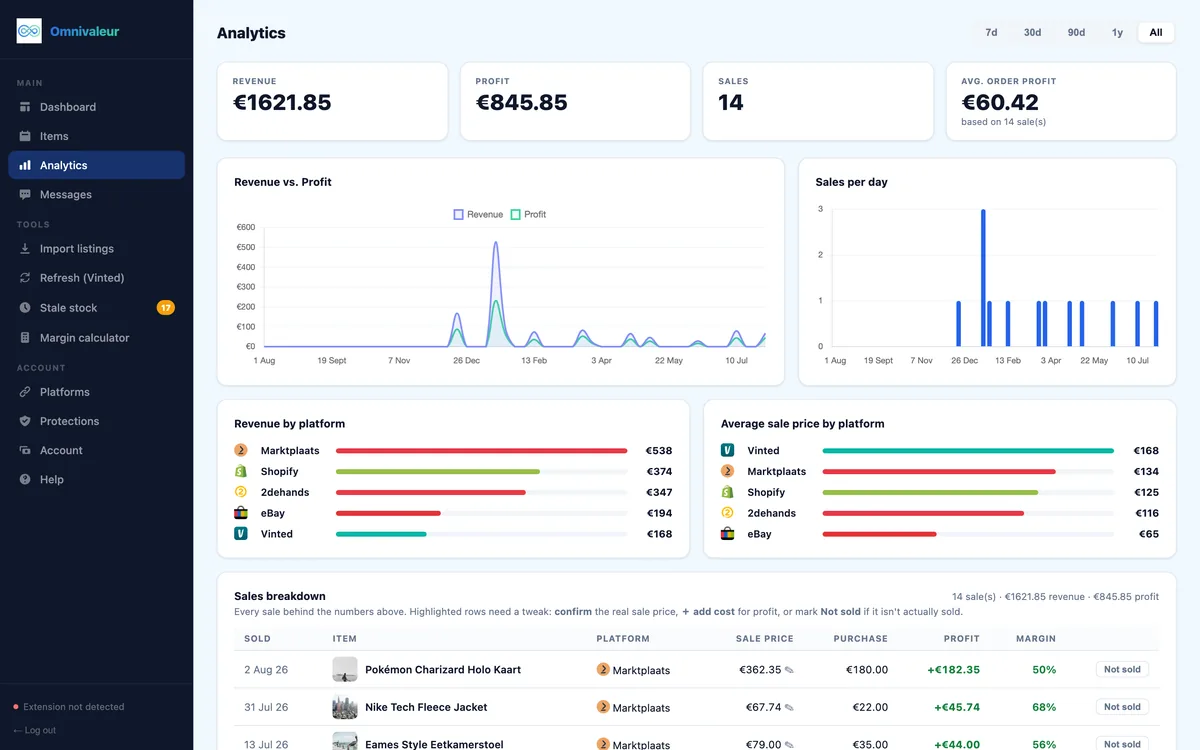
Most card sellers end up running eBay plus one local marketplace plus their own storefront. Doing that by hand means re-typing the same card description three or four times per item. For the eBay-to-storefront leg specifically, see our eBay to Shopify crosslisting guide, and for the local side, the Marktplaats to eBay guide walks through the category mapping issues you'll hit.
How should you handle grading in your listing workflow?
Graded and raw copies of the same card are not the same product and should never share a draft. A PSA 10 Charizard and a raw near-mint Charizard need separate titles, separate photos (slab front and back vs card front and back), and separate price logic. Buyers searching eBay filter by grade constantly, so a vague title costs you visibility.
A practical rule: build your template around the slab label, not the card. Include grader name, grade number, and cert number in the title and description. For raw cards, be explicit about centering, corners, edges, and surface, since EU consumer shopping rights require accurate condition descriptions, and vague raw-card listings generate the most return requests.
Avoid the duplicate-grade trap
If you own two copies of the same card at different grades, label them distinctly in your inventory system (e.g. "card-name-psa9" vs "card-name-psa10"). Tools that auto-generate SKUs from title text alone will sometimes merge these, and you'll end up shipping the wrong grade to a buyer who paid a premium for PSA 10.
What does manual listing actually cost a card reseller in time and money?
Take a realistic lot: 150 singles pulled from a bulk box purchase, worth roughly €1,800 total resale value. Listing each one manually, with photography, title, condition notes, and pricing research, takes around 4-5 minutes per card. That's 10-12 hours of pure listing work before a single sale happens.
At a conservative €15/hour value on your own time, that's €150-180 in labor cost against a €1,800 lot — roughly 8-10% of the lot's value gone before shipping or fees. Cross-listing software that drafts once and pushes to three or four marketplaces at once typically cuts that to 2-3 hours for the same lot, because photos and base descriptions only get written once.
The bigger cost is usually hidden: slow relisting means cards sit unsold while the market price moves. A card worth €25 today can be worth €18 in six weeks if a new set releases or a player gets traded. Measuring this properly means tracking your sell-through rate and running the actual profit margin formula rather than guessing from the asking price.
How do you keep card pricing accurate when values move daily?
Static pricing is the single biggest margin leak in card reselling. A card listed at €30 three weeks ago might now be selling for €22 on comparable platforms, and a listing that never gets repriced just sits. This is where a stale-stock view matters: Omnivaleur flags listings that have been sitting unsold for a set period, so slow inventory surfaces in your dashboard instead of quietly sinking to page 10 of your own listings where you forget it exists.
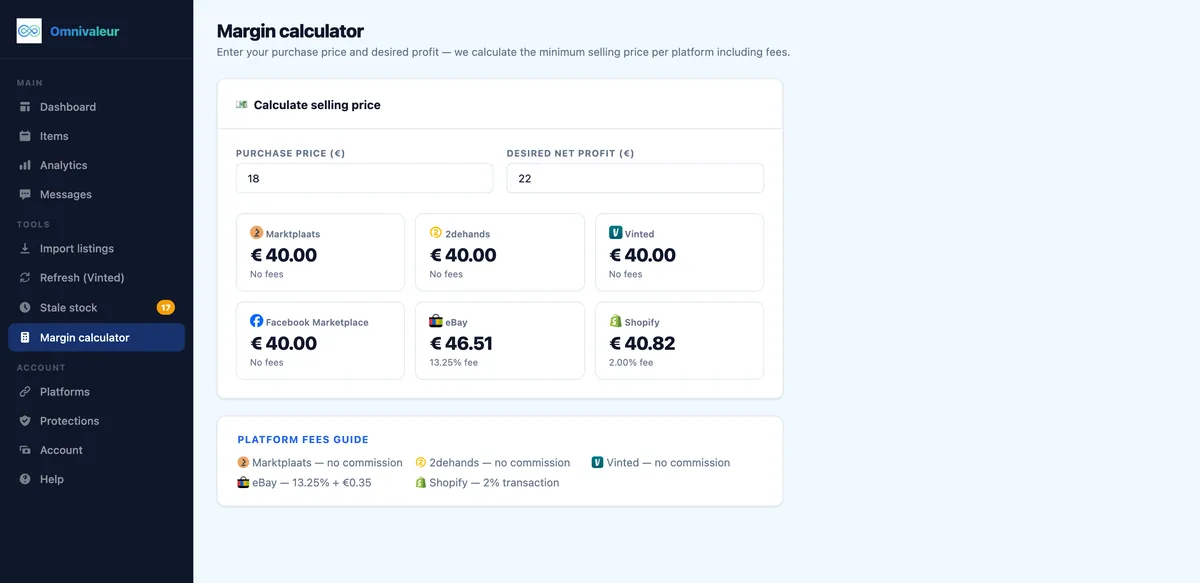
It's also why tracking profit against the asking price is misleading. Omnivaleur's analytics calculate profit from the real, confirmed sale price that sellers log per transaction, not the original listing price — and on second-hand marketplaces those two numbers typically differ by 10-20% once negotiation and bundle discounts are factored in. If you're pricing your next purchase decisions off asking prices alone, you're working with inflated numbers.
Keeping your overall inventory organized matters just as much as individual pricing; our inventory organization guide covers the binder-and-SKU system most high-volume card sellers settle on.
What 2026 tax and compliance rules should trading card resellers know?
Card reselling is high-frequency, low-average-value, which is exactly the profile DAC7 was built to catch. Under the EU's DAC7 rules, marketplaces including Vinted report sellers who cross 30 sales or €2,000 in a calendar year to local tax authorities. Given that a single bulk-box flip can produce 150+ individual card sales, many card resellers hit that threshold without realizing it. Full detail on how this plays out on Vinted specifically is in our DAC7 reporting guide for the Netherlands, and the official rules are published by the Belastingdienst and summarized at EU level by the European Commission.
If you buy collections in bulk and resell individual cards, check whether the VAT margin scheme for second-hand goods applies to your purchases — it can meaningfully change your tax position if you're registered as a business seller rather than a hobbyist. And if you're selling graded cards as a registered seller in the Netherlands, be aware of your obligations under legal warranty rules for second-hand goods, since a grading dispute can technically count as a conformity issue.
What should you actually look for in a card automation tool?
Pulltrader, Card Catalyst, and SpeedyCardLister each solve one slice of this — scanning cards, syncing eBay listings, or managing a single-shop catalog. For a reseller running multiple marketplaces at once, the checklist looks different:
- Per-variant SKU handling so grade and parallel differences don't collapse into one listing
- Real-time stock sync across every marketplace the moment a card sells, since singles are one-of-one inventory
- Stale-stock flagging so slow movers resurface instead of disappearing down your own list
- Profit tracked from confirmed sale price, not the listing price, so your margin numbers are honest
- Coverage of both resale marketplaces (eBay, Vinted, Marktplaats) and your own storefront (Shopify, WooCommerce)
If you're weighing dedicated card tools against general cross-listing platforms, our comparison pages break down the trade-offs honestly: Omnivaleur vs OneShop and Omnivaleur vs List Perfectly both cover multi-marketplace sync in detail, which matters more than scanning speed once you're past a few hundred active listings.
How does Omnivaleur fit into a trading card reseller's workflow?
Omnivaleur doesn't scan cards or grade them — that's a job for dedicated TCG scanning apps. What it does is take a listing you've already built once, with photos and condition notes, and push it to Marktplaats, 2dehands, Vinted, eBay, Shopify, WooCommerce, and Facebook Marketplace (beta) without rewriting anything per platform. Stock updates sync back so a card that sells on eBay gets pulled from Vinted automatically, which matters more in cards than almost any other category since most singles are genuinely one physical copy.
For sellers also moving adjacent collectibles — action figures from the same childhood boxes, vintage toys, or board games pulled from the same estate sale lot — the same cross-listing logic applies. Our vintage toy reselling automation guide and board game reselling guide cover those categories if your inventory crosses over, which it usually does once you're buying bulk lots.
The practical test for whether you need this in 2026: if you're spending more time typing the same card description into a second tab than you are sourcing or grading cards, the bottleneck is listing, not inventory. That's a software problem, not a hustle problem.
Frequently asked questions
Can you cross-list graded and raw versions of the same card without creating duplicate listings?
Do you need a barcode or card scanner to list in bulk?
How do you avoid counterfeit flags when selling graded cards online?
What happens tax-wise if one bulk sale pushes you over €2,000 in a single transaction?
Does Facebook Marketplace (beta) work well for trading cards in 2026?
How should you price singles pulled straight from a box break?
Keep reading

Stop copying listings by hand
Omnivaleur publishes your item to every platform at once and syncs stock automatically when something sells.
Start free trial