Building a reselling inventory from scratch means starting with 15-30 items sourced from thrift stores, estate sales or clearance racks, listing each on three to five marketplaces at once, tracking your sell-through rate, and reinvesting profit weekly. Budget €150-€400 for your first batch; expect your first ten sales within 30-45 days if priced correctly.
Key takeaways
- A healthy reselling business needs 60-100 active listings before sales become predictable
- Cross-listing one item across three to five marketplaces multiplies exposure without multiplying stock
- Sell-through rate under 30% in a month signals a pricing or sourcing problem, not bad luck
- DAC7 reporting kicks in at 30 sales or €2,000 per platform per calendar year
- Tracking inventory by SKU, not by platform, prevents the same item from selling twice
Most new resellers get this backwards. They buy fifty items first, then wonder why nothing sells, then panic about storage. The order should be: decide your category, test with a small batch, measure what moves, then scale the winners. Here is how that actually plays out with real numbers.
How much money do you need to start a reselling inventory?
You can start with as little as €100-€150 if you're sourcing from thrift stores and clearance bins. A realistic starter budget for a part-time reseller in the Netherlands or Belgium looks like this:
| Budget tier | Items bought | Average cost/item | Typical category |
|---|---|---|---|
| €100-€200 | 15-20 | €5-€12 | Clothing, kitchenware, small electronics |
| €300-€500 | 20-35 | €10-€20 | Vintage decor, tools, toys, sneakers |
| €700+ | 25-40 | €20-€45 | Watches, handbags, trading cards, cameras |
Don't spend everything at once. Buy ten to fifteen items, list them, see what sells within two weeks, then spend the rest on more of what worked. Resellers who dump their whole budget into one haul usually end up with a garage full of items nobody wants, and no cash left to pivot.
Where should you source your first batch of stock?
The biggest mistake beginners make is sourcing randomly instead of sourcing with a resale category already in mind. Pick a lane first: clothing, electronics, tools, collectibles, home decor. Then hit these sources in order of margin potential:
- Thrift stores and charity shops — lowest competition on weekday mornings, best margins on branded clothing and homeware.
- Estate clearances and house sales — bulk lots, often underpriced because sellers want the house empty fast.
- Clearance and end-of-season retail racks — predictable condition, no authenticity risk.
- Free local listings — items given away "for pickup" that just need a clean and a decent photo.
- Wholesale pallets — higher risk, only worth it once you know your category well.
For a full breakdown of channel-by-channel margins and what to avoid, see where to source items for second-hand reselling in 2026. If you're leaning toward a specific niche, the category-specific automation guides for vintage clothing, vintage cameras and LEGO walk through sourcing patterns specific to each category.
How do you decide what to buy and what to leave on the shelf?
Apply a simple filter before you buy anything: condition, demand, and margin. If an item fails two of the three, walk away.
- Condition — would you be comfortable describing it as "good" or "very good" without lying? Stains, missing pieces, and cracked screens kill resale value fast.
- Demand — search the exact model or brand on Marktplaats, Vinted and eBay. If there are zero sold listings in the last 30 days, that's a warning sign, not an opportunity.
- Margin — aim for at least a 3x markup on low-value items (under €15 cost) and at least 2x on higher-value items. Below that, shipping, fees and your time eat the profit.
Worked example: you buy a wool coat for €8 at a thrift store. Dry cleaning costs €6. You list it at €45 across Vinted, Marktplaats and eBay. After Vinted's buyer protection fee and a small eBay final value fee, you net roughly €32-€36 depending on platform. That's a 2.3-2.6x return on a single item, which is solid for clothing but would be weak for electronics, where you'd want closer to 1.5-2x on a higher absolute euro amount.
How many listings do you actually need before sales become consistent?
This is the question almost nobody answers with real numbers. From patterns across thousands of reseller accounts, somewhere between 60 and 100 active listings is the threshold where sales stop feeling random and start feeling like a business. Below 30 listings, a single algorithm change or a slow week can make it look like nothing is working when the real issue is sample size.
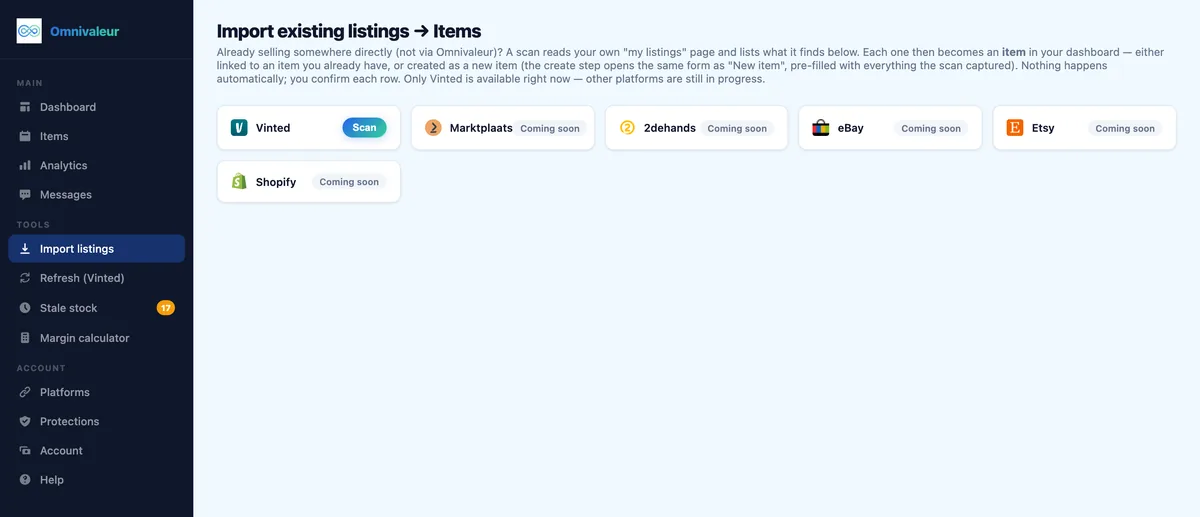
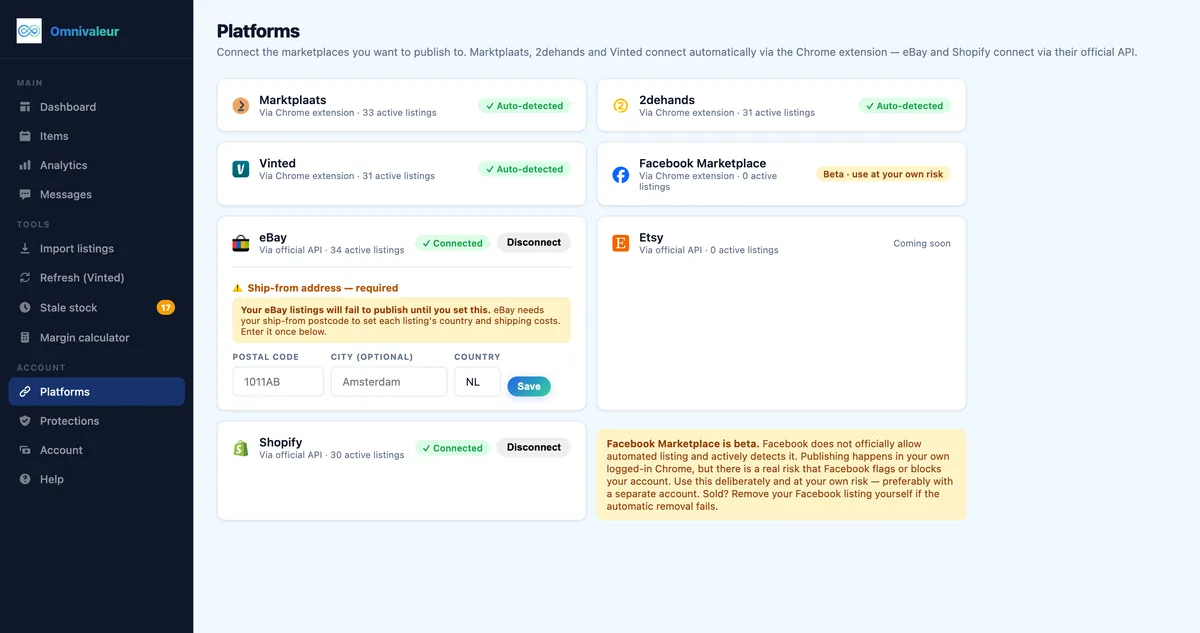
Cross-listing multiplies this fast without buying more stock. A single item in Omnivaleur typically carries 3-5 active listings at once, with the app tracking each platform's status separately — so one sweater becomes five chances to sell instead of one. If you're starting from twenty physical items, that's already 60-100 live listings once each one is cross-listed properly. The detailed math on exactly how listing volume correlates with sale frequency is covered in how many listings do you need to make sales.
How do you price inventory you've never sold before?
New resellers either price too high out of attachment to their "find," or too low out of fear it won't sell. Neither works. The fix is comparable pricing: search the exact brand and model, filter by "sold" where the platform allows it, and take the median of the last five comparable sales — not the asking price of unsold listings, which tells you nothing.
Build in room to negotiate on Marktplaats and 2dehands specifically, where haggling is the cultural norm. List 10-15% above your target price so a 10% discount still lands where you wanted. Vinted buyers expect less negotiation but respond well to bundle discounts instead — see how to create bundles on Vinted for the mechanics. For the full margin formula including fees, shipping and your time cost, the breakdown at how to calculate profit margin reselling is worth bookmarking before you set a single price.
- ✓Pick one category first, then source 15-20 items within your budget tier
- ✓Check condition, demand on Marktplaats and Vinted, and margin before buying
- ✓List each item across 3-5 platforms at once using comparable sold prices
- ✓Watch what sells in the first two weeks, then reinvest profit into more winners
- ✓Tag each item with a unique SKU and track its status on each platform separately
- ✓Pull any listing over 45 days with zero views and reprice or bundle it
How do you avoid selling the same item twice once you're listing everywhere?
Once stock is live on four or five platforms, double-selling becomes the single most common operational failure new resellers hit. A buyer pays on eBay at the same moment someone else checks out on Vinted, and now you owe a refund and an apology. Three things prevent this:
- Real-time stock sync — when one platform marks an item sold, every other listing needs to delist automatically, not manually at the end of the day.
- SKU-level tracking — tag each physical item with a unique code, not a vague description, so your records match across platforms.
- Refresh limits, respected — bumping a listing too aggressively to stay visible can get an account flagged. Omnivaleur's Vinted refresh tool caps itself at eight free refreshes per day and is upfront that no tool can guarantee a marketplace won't flag an account for suspicious activity.
The full prevention checklist, including what to do when a double-sale happens anyway, is in stop selling the same item twice on Marktplaats and Vinted.
What tax and legal rules apply once your inventory and sales volume grow?
This is the part most "how to start reselling" guides skip entirely, and it's exactly where resellers get caught off guard in 2026. Three rules matter the moment you move past casual selling:
- DAC7 reporting — platforms are required to report sellers who hit 30 transactions or €2,000 in a calendar year to tax authorities. This isn't optional and it isn't a Vinted-specific quirk; it's an EU-wide rule. See the official Belastingdienst DAC7 guidance and the European Commission's DAC7 overview for the exact thresholds.
- KvK registration — once reselling looks structural (regular buying with intent to resell, not clearing out a closet), the Netherlands expects a Chamber of Commerce registration. The specific triggers are detailed in when do you need a KvK number for reselling.
- VAT margin scheme — second-hand goods often qualify for margin VAT rather than full VAT, which changes your actual profit math significantly once you're invoicing. Walk through it in the VAT margin scheme guide for second-hand goods.
Buyers also have rights you should understand before you scale, particularly around returns and item descriptions — the Your Europe consumer rights overview covers the baseline across the EU, and legal warranty on second-hand goods in the Netherlands covers the Dutch specifics in detail. Belgian sellers should also check Belgian tax rules for selling on Vinted since the thresholds and reporting mechanics differ slightly from NL.
How should you organize inventory as it grows past 100 items?
A spreadsheet works for the first twenty items. Past fifty, you need a system or you'll lose track of what's listed where, what's sold, and what's sitting in a box unphotographed. The basics that matter:
- One unique SKU per physical item, printed on a tag or sticker, not just in a spreadsheet.
- A storage zone system (shelf, bin, or rack number) tied to the SKU so you can find any item in under a minute.
- A status field per platform: listed, sold, returned, relisted — tracked separately, not as one blended status.
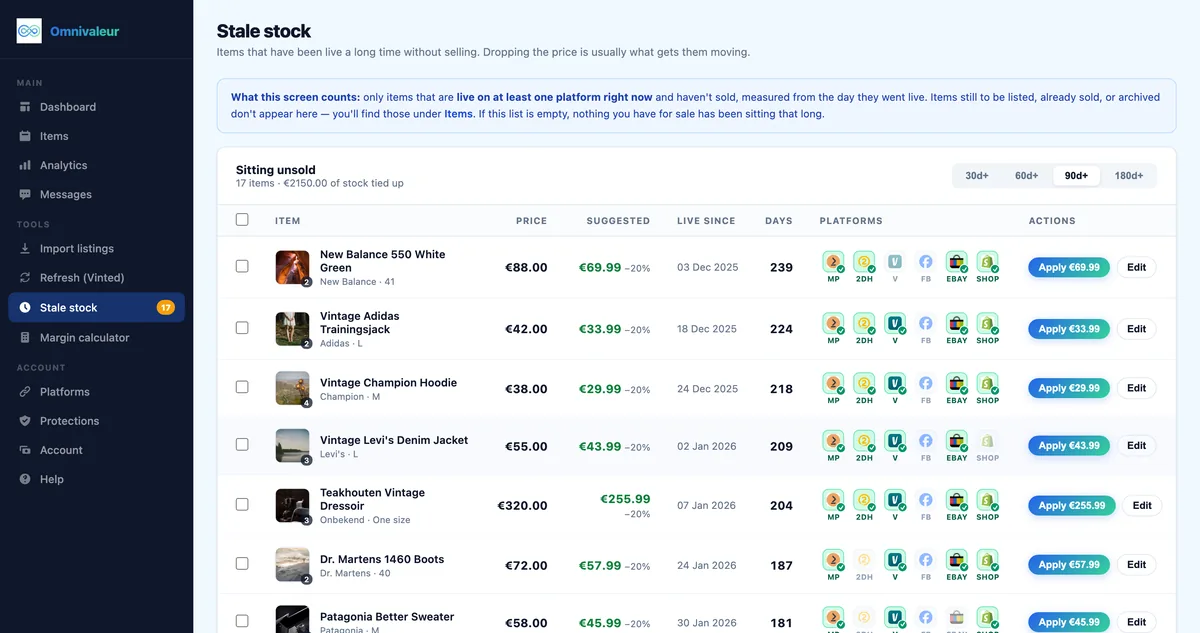
- A weekly audit: pull any item listed over 45 days with zero views and either reprice it or pull it for a bundle.
The full organizational framework, including shelving layouts resellers actually use at volume, is in how to organize inventory for reselling. Once inventory is organized, measuring whether it's actually performing matters just as much — track sell-through rate monthly using the method in how to calculate sell-through rate for reselling, and treat anything under 30% per month as a signal to adjust pricing or sourcing, not a reason to panic.
What's the realistic timeline from zero to a working inventory?
Week one: source and photograph 15-20 items. Week two: list everywhere relevant, cross-listing each item to 3-5 marketplaces rather than picking just one. Weeks three and four: expect your first 5-10 sales if pricing was done on comparables rather than guesswork. By week six or eight, reinvest profit into a second, larger batch based on what actually sold — not what you liked buying.
Resellers who try to automate cross-platform listing from day one with a tool like the one described at Marktplaats to eBay crosslisting tend to hit that 60-100 listing threshold two to three weeks faster than those listing manually on each platform one by one, simply because the manual re-entry time disappears.
Frequently asked questions
Should you specialize in one category or sell a mix of items when starting out?
How long should an item sit unsold before you reprice it?
Is it better to buy a few expensive items or many cheap items when building inventory?
Do you need a business bank account to start reselling inventory?
What's a realistic monthly sales target for someone just starting?
Keep reading

Stop copying listings by hand
Omnivaleur publishes your item to every platform at once and syncs stock automatically when something sells.
Start free trial